Last Updated: June 13, 2026
Is Extra Gum Vegan
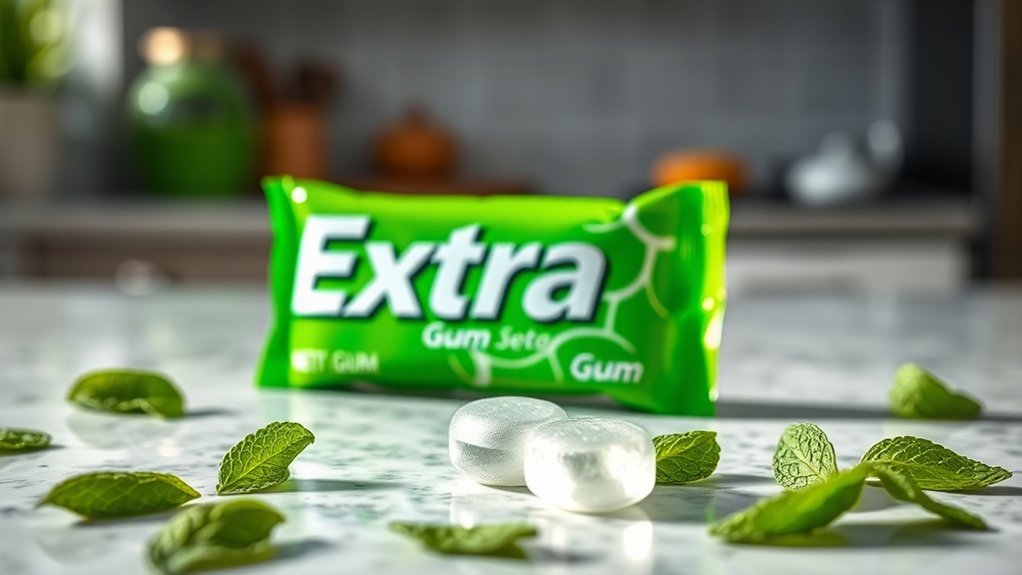
Extra Gum is technically vegan since Mars Wrigley removed gelatin and animal-derived stearic acid in their 2019 reformulation across all flavors. You’ll find the base ingredients—sorbitol, gum base, glycerol, and natural flavors—are now plant-based or synthetic. However, three components raise questions: gum base sourcing remains proprietary, glycerol’s origin isn’t always disclosed, and natural flavors lack complete transparency. The formulation’s changed, but ingredient verification challenges persist. Understanding these compositional ambiguities helps you make informed choices about what aligns with your vegan standards.
Contents
show
Is Extra Gum Actually Vegan?

Extra Gum’s vegan status hinges on a 2019 formulation change that eliminated animal-derived ingredients from its ingredient list. Since then, gelatin and stearic acid—common animal-sourced additives—are no longer present.
The compositional analysis reveals that gum base, sorbitol, and glycerol derive from plant or synthetic sources, making Extra chewing gum vegan by standard definitions.
However, you’ll encounter gray areas that complicate this classification. Sugar processing methods may involve bone char filtration, which strict vegans avoid.
Natural flavors present another ambiguity, as manufacturers don’t disclose whether these originate from plant or animal sources. If you’re wondering “is extra chewing gum vegan” with absolute certainty, you’ll need to contact the manufacturer directly.
For pragmatic vegans, Extra Gum’s ingredient profile suggests compatibility with plant-based diets.
What Ingredients Are in Extra Gum?
When examining the ingredient panel, you’ll find that sorbitol constitutes the primary component—a sugar alcohol that provides bulk and sweetness without contributing to dental caries.
The gum base provides the chewable matrix, while glycerol functions as a humectant. Natural and artificial flavors deliver taste characteristics.
Minor components (less than 2%) include hydrogenated starch hydrolysate, aspartame, mannitol, and acesulfame K—all serving as sweetening agents.
Soy lecithin acts as an emulsifier, and BHT (butylated hydroxytoluene) preserves freshness. Colorants include turmeric and blue 1 lake.
Each 2.5g stick contains 5 calories and 2g carbohydrates, with zero protein or fat.
Significantly, aspartame contains phenylalanine, contraindicated for individuals with PKU.
These ingredients contain no animal-derived components, though processing methods may concern strict vegans.
Which Three Extra Gum Ingredients Concern Vegans?
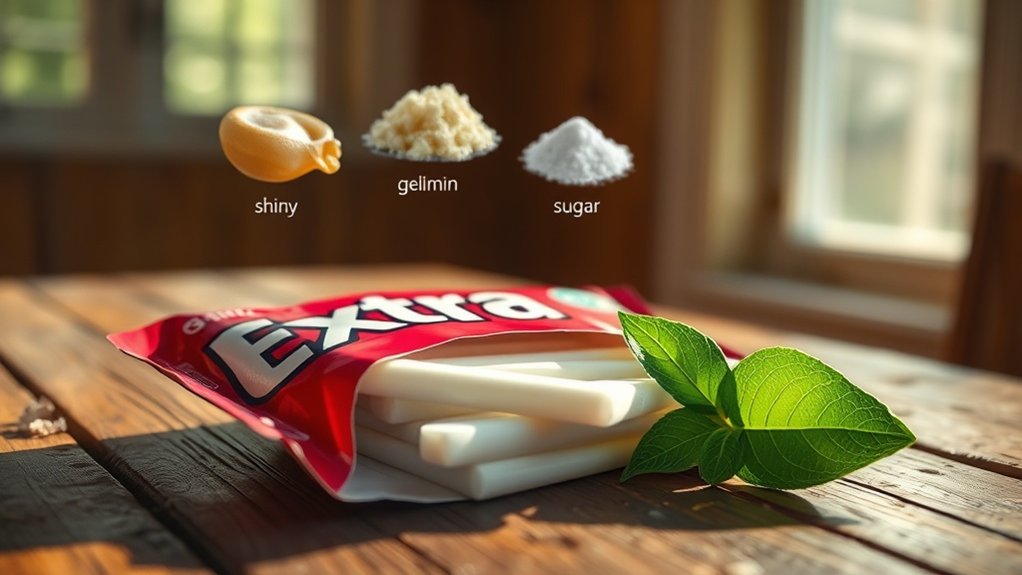
Three ingredients warrant scrutiny from the vegan community: gum base, glycerol, and natural flavors.
Gum base’s proprietary formulation may contain animal-derived elastomers or waxes, though manufacturers rarely disclose specific sources.
Glycerol presents dual sourcing potential—derived from either plant oils or animal fats through hydrolysis processes. Without explicit plant-based certification, you can’t determine its origin from ingredient labels alone.
Natural flavors pose identification challenges since FDA regulations permit this term to encompass both botanical and animal-derived compounds, including castoreum or dairy derivatives.
These three components create verification obstacles because manufacturers aren’t required to specify their sources.
While Extra Gum’s other ingredients like sorbitol and soy lecithin raise processing concerns, these three represent direct compositional uncertainties regarding animal-derived materials in the final product formulation.
Do All Extra Gum Flavors Use the Same Formula?
Formula standardization across Extra Gum’s product line addresses whether these compositional concerns apply universally or vary by flavor variant.
You’ll find that all Extra Gum flavors share virtually identical base formulations, comprising gum base, sorbitol, and glycerol as primary constituents. Since 2019, the manufacturer has confirmed complete elimination of animal-derived ingredients across all variants, establishing uniform vegan compliance throughout the range.
Flavor differentiation occurs exclusively through natural and artificial flavoring agents—whether you’re selecting Spearmint, Peppermint, or Winterfresh. These flavor-specific compounds don’t introduce animal-derived components, maintaining consistent vegan status.
The formulation approach employs standardized core ingredients with minimal variation between products.
However, you should verify current packaging labels periodically, as manufacturers occasionally reformulate products. Presently, all Extra Gum flavors maintain compositional consistency regarding animal-free ingredients, providing reliable vegan-friendly options across the complete product portfolio.
Where Extra Gum’s Vegan Claims Get Murky?
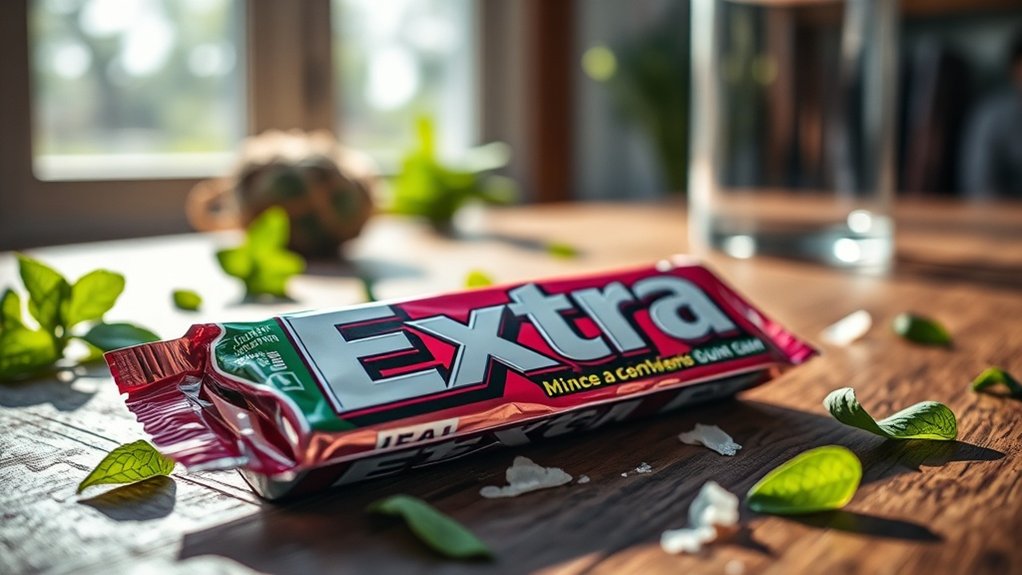
Despite Extra Gum’s animal-free ingredient list, several compositional ambiguities complicate its definitive vegan classification. You’ll encounter uncertainty in three key areas:
- Natural flavors: These proprietary compounds may derive from animal sources, though manufacturers aren’t required to disclose specific origins.
- Sugar processing: Bone char filtration remains common in cane sugar refinement, introducing animal byproducts into the supply chain.
- Color additive testing: Synthetic dyes undergo animal testing during safety evaluations, conflicting with ethical veganism principles.
While PETA designates Extra Gum as vegan-friendly, ingredient transparency limitations prevent absolute verification. The 2019 reformulation eliminated gelatin and stearic acid, yet these remaining gray areas require you to determine acceptable boundaries based on your personal vegan philosophy and sourcing standards.
What Vegan Gum Alternatives Exist Besides Extra?
If Extra Gum’s ambiguous ingredients conflict with your vegan standards, the market offers formulations with transparent sourcing and documented animal-free processing.
Simply Gum uses chicle base, organic cane sugar, and explicitly listed natural flavors—eliminating the proprietary compound uncertainty found in conventional brands.
Glee Gum employs similar chicle-derived bases without artificial sweeteners or synthetic colorants that may involve animal testing.
Pure Gum provides flavor variants manufactured without stearic acid derivatives or glycerol compounds of questionable origin.
For consumers accepting Mars Wrigley’s vegan designation post-2019 reformulation, Juicy Fruit serves as an alternative within the same corporate framework.
Mentos Pure Fresh Peppermint and Spearmint variants contain confirmed gelatin-free compositions.
Each brand maintains ingredient transparency exceeding conventional gum manufacturers, allowing you to verify vegan compliance through accessible component lists rather than traversing ambiguous “natural flavor” classifications.
This article was reviewed by Nicole Anderson, RDN.