Last Updated: July 3, 2026
Are Saltines Vegan

Most saltines you’ll find are vegan-friendly, made from flour, yeast, baking soda, and salt without any animal products. However, you’ll need to watch for hidden concerns: some brands use sugar refined with bone char, enzymes from animal sources, or ambiguous “buttery flavoring” that may contain dairy. PETA-certified options like Nabisco Premium and Sunshine Krispy guarantee vegan compliance, while certain store brands also pass the test. Understanding label terminology and processing methods will help you identify which crackers align with your dietary standards.
Contents
show
Are Saltines Vegan? What’s Inside These Simple Crackers?

Most saltine crackers are indeed vegan, containing just four primary ingredients: unbleached enriched flour, baking soda, yeast, and salt. Popular brands like Nabisco Premium and Sunshine meet vegan standards, as these components don’t contain animal products.
When you’re wondering “are saltine crackers vegan” or “are premium crackers vegan,” you’ll find they’re typically free from dairy, eggs, and meat.
However, you should check labels carefully. Some varieties include additives like buttery flavoring that may contain dairy. If you’re a strict vegan, consider that sugar processing methods can involve bone char, though most brands don’t specify their sources.
Brands like Keebler Zesta and Winco Foods also offer vegan-friendly options. Cross-contamination during production remains possible, so thorough ingredient review is essential for those asking “are soda crackers vegan.”
Sugar, Enzymes, and Palm Oil: The Ingredients That Complicate Vegan Status
While saltines appear straightforward with their basic ingredient list, three components deserve closer scrutiny: sugar, enzymes, and palm oil.
Sugar poses concerns because it’s often refined using bone char—an animal-derived filtering agent. You’ll need to verify the processing method or seek organic alternatives, which don’t use this technique.
Enzymes present another challenge. They’re added for texture improvement but may originate from animal or microbial sources. Without clear labeling, you can’t determine their vegan status.
Palm oil, though plant-based, raises ethical questions. Its production drives deforestation and habitat destruction, conflicting with many vegans’ environmental values.
These ingredients aren’t always listed with sufficient detail, making label scrutiny essential.
When uncertain, contact manufacturers directly for clarification on sourcing and processing methods.
How to Read Saltine Labels and Spot Non-Vegan Ingredients
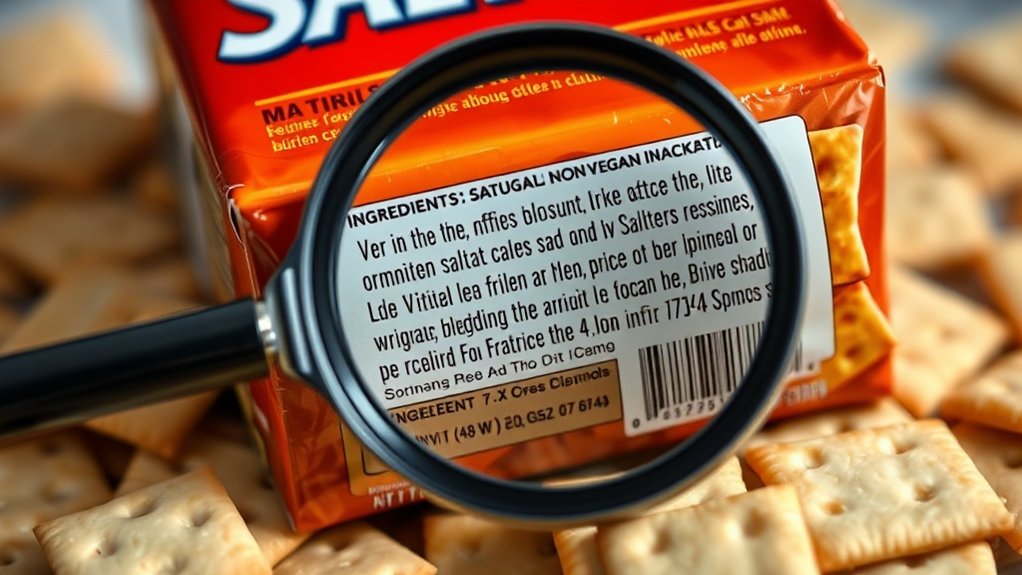
Decoding saltine labels requires a systematic approach that goes beyond scanning for obvious animal products. Start by identifying certifications from organizations like PETA, which verify vegan-friendly formulations.
Scrutinize ingredients like “buttery flavor” or unspecified flavorings, as these often contain dairy derivatives. Sugar presents particular challenges since some manufacturers use bone char during refining—opt for products listing organic or raw sugar instead.
While palm oil remains technically vegan, its environmental impact warrants consideration in your purchasing decisions.
Don’t overlook cross-contamination warnings at the label’s end; facilities processing animal products may compromise strict vegan standards.
This methodical review guarantees you’ll identify problematic ingredients that manufacturers sometimes obscure through technical terminology or vague labeling practices, helping you make informed choices aligned with your dietary principles.
Which Saltine Brands Are Vegan (and Which Ones Aren’t)?
Maneuvering the saltine aisle becomes considerably easier when you know which brands consistently meet vegan standards.
Sunshine Krispy and Nabisco Premium (including Unsalted Tops) hold PETA vegan certification, confirming zero animal products. Keebler Zesta Original, Reduced Salt, and Whole Wheat varieties share similar vegan-friendly formulations.
Store brands like Winco Foods and Harris Teeter saltines (both original and unsalted) contain no animal-derived ingredients, though Winco isn’t gluten-free or non-GMO certified.
Exercise caution with brands listing “buttery flavor,” as this may indicate dairy derivatives. Additionally, some manufacturers process sugar with bone char, technically compromising vegan status despite appearing plant-based on ingredient lists.
When uncertain, contact manufacturers directly or choose PETA-certified options for guaranteed vegan compliance.
This article was reviewed by Nicole Anderson, RDN.