Last Updated: July 5, 2026
Are Hawaiian Rolls Vegan
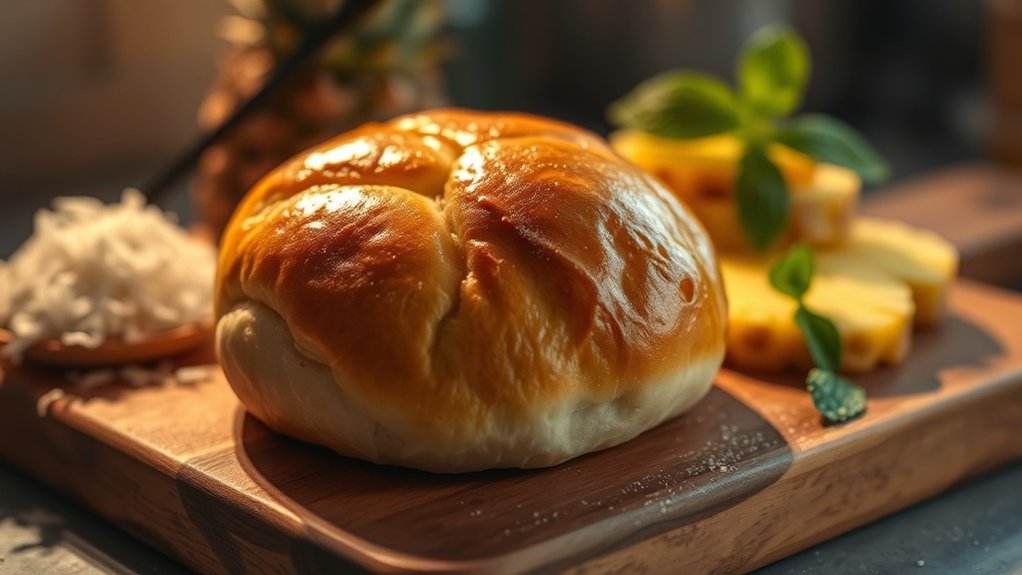
Most store-bought Hawaiian rolls aren’t vegan—they contain eggs, milk, and butter that create their signature soft, pillowy texture. Major brands like King’s Hawaiian use these animal-derived ingredients in their standard recipes. However, you’ll find vegan alternatives from specialty brands like Aloha Breads and Trader Joe’s, or you can bake your own using plant-based milk, vegan butter, and pineapple juice. Always check ingredient labels carefully, as formulations vary and emulsifiers may have animal sources. Below, you’ll uncover which brands pass the vegan test and how to make authentic-tasting versions at home.
Contents
show
Are Store-Bought Hawaiian Rolls Vegan?
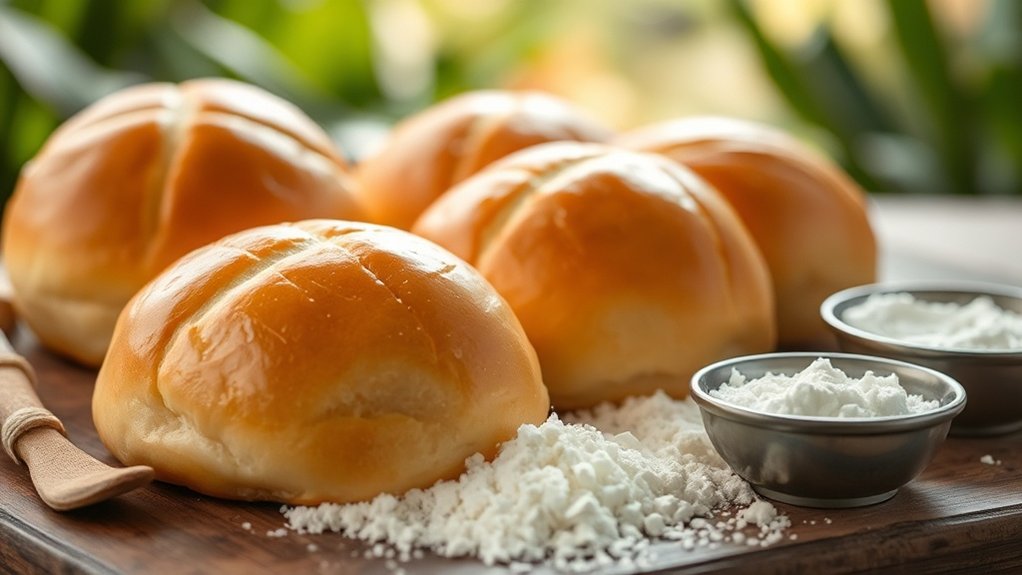
Unfortunately, most store-bought Hawaiian rolls aren’t vegan. Understanding Hawaiian roll origins helps explain why—these sweet, fluffy rolls traditionally contain eggs, milk, and butter, which create their signature texture and flavor.
Major brands like Kings Hawaiian don’t offer vegan versions of their products, as these animal-derived ingredients remain essential to their recipes.
When shopping, you’ll need to carefully examine ingredient labels for dairy products (milk, butter, whey) and eggs. These components appear consistently across conventional Hawaiian roll brands found in mainstream grocery stores.
However, you’re not without options. Specialty health food stores occasionally stock vegan roll alternatives that replicate Hawaiian rolls’ sweetness and softness using plant-based ingredients.
Additionally, online retailers and local bakeries increasingly offer homemade vegan Hawaiian roll alternatives for plant-based consumers.
Why Do Hawaiian Rolls Contain Dairy and Eggs?
Hawaiian rolls achieve their signature soft, pillowy texture through enriched dough—a baking technique that incorporates eggs, butter, and milk into the base recipe.
These ingredients serve specific structural purposes: eggs provide leavening and contribute to the rolls’ characteristic fluffiness, while dairy products create moisture retention and improve the sweet flavor profile you’ll recognize in these rolls.
Commercial manufacturers typically use high-fat dairy to achieve the tender crumb that distinguishes Hawaiian rolls from standard bread.
Without these animal-based ingredients, replicating the traditional texture proves challenging. However, modern baking has developed viable egg alternatives and dairy substitutes—such as aquafaba, plant-based milk, and vegan butter—that can approximate these results.
Understanding why traditional recipes rely on dairy and eggs helps you make informed choices when seeking vegan versions.
Which Hawaiian Roll Brands Are Actually Vegan?
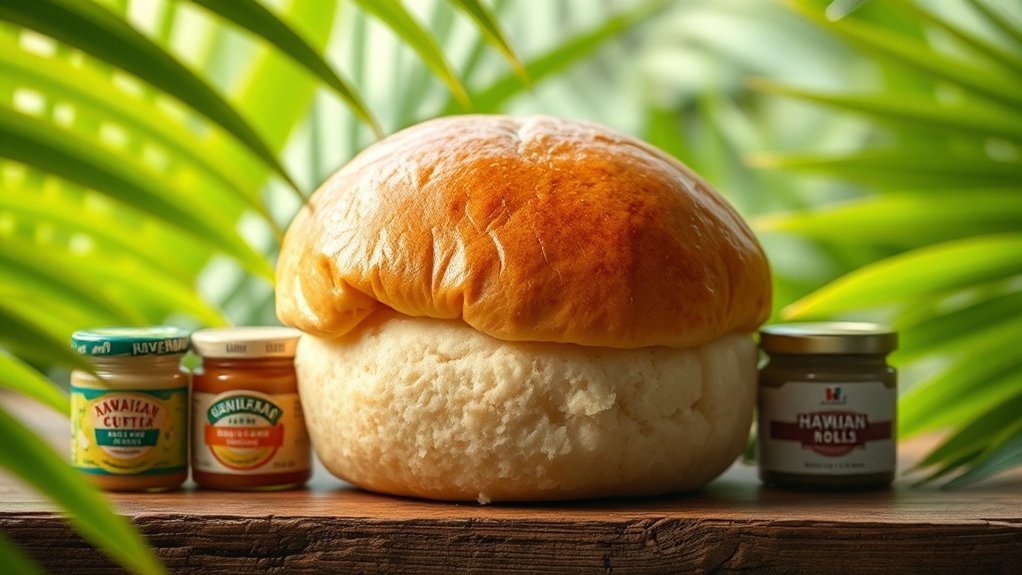
Finding truly vegan Hawaiian rolls requires careful label investigation, as most mainstream brands rely on the traditional egg-and-dairy formula. King’s Hawaiian, the market leader, produces rolls that contain both eggs and milk in their standard product line—though the company has introduced a limited vegan collection in select markets.
Fortunately, accessible vegan roll brands do exist. Aloha Breads manufactures Hawaiian roll varieties specifically formulated without animal products, using plant-based alternatives throughout their ingredient profile.
Trader Joe’s likewise offers dairy-free and egg-free Hawaiian-style rolls that meet vegan dietary requirements. However, you’ll need to verify ingredients with each purchase, as manufacturers periodically reformulate products.
Watch for hidden animal-derived components like honey, whey, or L-cysteine (sometimes sourced from feathers). When shopping, prioritize brands explicitly labeled vegan-certified whenever possible.
How to Read Hawaiian Roll Labels for Hidden Ingredients
When examining Hawaiian roll packages, you’ll need to scrutinize ingredient lists for both obvious and concealed animal-derived components that can compromise vegan status.
Many rolls contain dairy derivatives like whey, casein, or milk solids alongside eggs or egg whites, which manufacturers often list using technical names that aren’t immediately recognizable.
Understanding how to interpret nutritional information labels and identify these hidden ingredients guarantees you’re making truly plant-based choices backed by accurate ingredient analysis.
Common Non-Vegan Ingredients
Understanding ingredient labels becomes essential if you’re committed to maintaining a vegan lifestyle, as manufacturers often disguise animal-derived components under technical names.
Hawaiian rolls typically contain common dairy products like milk, butter, casein, and lactose that immediately disqualify them from vegan status. You’ll also find eggs in most traditional recipes, though egg alternatives exist in vegan versions.
Regarding sweetener options, honey frequently appears and isn’t plant-based. Hidden emulsifiers present another challenge, as ingredients like mono- and diglycerides can derive from animal fats.
Mastering label terminology helps you identify these components quickly. Look specifically for whey, lactose, casein, albumin, and L-cysteine—all animal-derived additives.
Even artificial flavors warrant scrutiny, as their sources aren’t always transparent.
Dairy and Egg Derivatives
Dairy and egg derivatives hide in Hawaiian rolls under numerous technical names that can trip up even experienced label readers. You’ll need to scan for whey, casein, and lactose—all milk-derived compounds that manufacturers use for texture and flavor improvement.
Eggs appear as albumin, lysozyme, or simply “egg whites” in ingredient lists. These proteins contribute to the rolls’ characteristic softness and golden color.
When examining labels, look beyond obvious dairy terms. “Natural flavors” may contain animal-derived sources, requiring direct manufacturer verification. Some brands incorporate honey as a sweetener, which vegans typically avoid.
Instead, seek products using dairy alternatives like coconut milk or egg substitutes such as flaxseed. Rolls with vegan certification eliminate guesswork, making sure compliance with plant-based dietary standards through third-party verification.
Reading Nutritional Information Labels
Label literacy separates confident vegan consumers from those who inadvertently consume animal products. Ingredient transparency requires systematic label decoding to identify animal-derived components in Hawaiian rolls. You’ll need to scrutinize every listed ingredient, not just obvious ones.
Essential label-reading strategies:
- Scan for dairy indicators – Terms like casein, whey, butter, and milk solids immediately disqualify products from vegan status.
- Question ambiguous ingredients – “Natural flavors” can mask animal derivatives; contact manufacturers directly for clarification when these appear.
- Investigate sugar processing – While ingredient lists show “sugar,” they won’t reveal if bone char was used during refinement.
You should prioritize brands offering complete ingredient transparency and third-party vegan certification.
Cross-reference allergen statements with ingredient lists, as manufacturers often highlight milk and egg content separately for consumer safety.
Where to Buy Vegan Hawaiian Rolls Near You
Online retailers provide convenient alternatives.
Amazon Fresh and Instacart deliver vegan Hawaiian rolls from multiple brands directly to your door.
To refine your search, use brand website store locators or download HappyCow, an app that identifies vegan-friendly products and establishments in your area.
These resources guarantee you’ll locate plant-based Hawaiian rolls that meet your dietary requirements.
How Do You Make Vegan Hawaiian Rolls at Home?
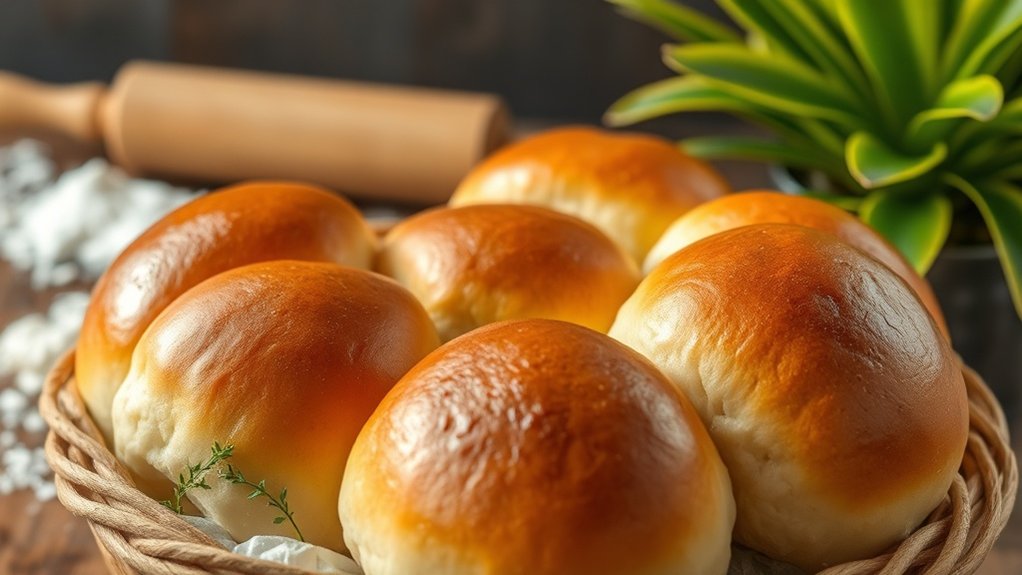
When you make vegan Hawaiian rolls at home, you’ll need to replace dairy ingredients with plant-based alternatives while maintaining the signature sweet, soft texture.
Start by proofing active dry yeast in warm non-dairy milk for 10 minutes until foamy. Combine this with vegan butter, brown sugar, and pineapple juice—the key to authentic flavor profiles in vegan baking.
Essential Steps:
- Knead your dough for 5-10 minutes until smooth and elastic, then allow it to rise in a warm location for one hour until doubled.
- Shape the dough into small balls and arrange them in a greased baking dish for a second rise.
- Bake at 375°F until golden brown, assuring proper caramelization.
The pineapple juice provides both moisture and distinctive sweetness, while brown sugar improves texture and promotes browning.
What Can You Substitute for Butter, Eggs, and Milk?
Successfully creating vegan Hawaiian rolls hinges on choosing the right substitutes for three key animal-based ingredients.
For butter, you’ll find vegan butter or coconut oil works at a 1:1 ratio, though coconut oil introduces subtle flavor notes.
Your substitute options for eggs include flaxseed meal (1 tablespoon mixed with 2.5 tablespoons water) or applesauce (1/4 cup per egg), both maintaining essential binding and moisture.
Replace milk with unsweetened almond, soy, or oat milk to preserve neutral flavor profiles.
Understanding texture impact proves vital when substituting.
Coconut milk’s richness requires dilution with water to match cow’s milk consistency.
Each alternative affects your final product differently, so adjust quantities based on your chosen ingredients’ properties to achieve authentic Hawaiian roll characteristics.
Do Vegan Hawaiian Rolls Taste Like the Original?
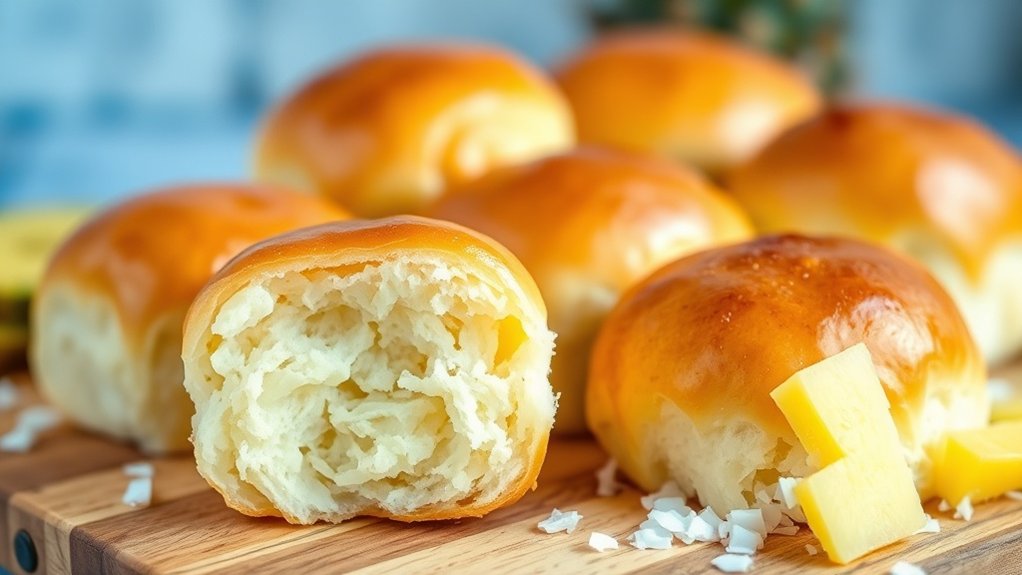
You’ll find that vegan Hawaiian rolls achieve remarkably similar texture and flavor to traditional versions when made with bread flour and vegan butter, which provide the characteristic soft, fluffy crumb.
The primary taste difference lies in sweetness intensity—vegan versions using brown sugar and pineapple juice typically register slightly less sweet than their dairy-containing counterparts, though this varies by recipe formulation.
Research on plant-based baking demonstrates that strategic ingredient selection, including vanilla extract and adjusted sugar ratios, effectively replicates the signature sweet, tender profile without compromising sensory quality.
Texture and Flavor Comparison
If you’re wondering whether vegan Hawaiian rolls can match the iconic taste and texture of King’s Hawaiian originals, the answer is surprisingly close to yes. The texture variations are minimal—coconut oil and bread flour create that signature soft, fluffy consistency you expect.
Regarding flavor profiles, vegan versions use brown sugar and pineapple juice to replicate the distinctive sweetness, though they’re typically less sweet than commercial rolls.
Key differences you’ll notice:
- Moisture retention: Non-dairy ingredients keep rolls fresh longer without drying out
- Sweetness level: Homemade vegan versions offer subtle sweetness, making them more versatile for savory applications
- Overall satisfaction: Most consumers report these plant-based alternatives deliver comparable enjoyment to traditional versions
The non-dairy formulation successfully maintains the essential characteristics that make Hawaiian rolls beloved.
Sweetness Level Differences
One element stands out when comparing vegan and traditional Hawaiian rolls: the sweetness intensity. Traditional versions derive their characteristic sweetness from dairy and eggs, while vegan alternatives rely on brown sugar and pineapple juice for flavor balance.
You’ll notice vegan Hawaiian rolls typically present a slightly lower sweetness level, creating a less rich but similarly satisfying taste profile.
This sweetness comparison reveals an interesting distinction: vegan recipes using raw sugar can introduce improved molasses notes, offering deeper complexity that some prefer over conventional sweeteners.
The reduced sweetness doesn’t compromise quality—user feedback consistently confirms that vegan versions deliver taste satisfaction comparable to store-bought options.
Without eggs contributing to structure, you’ll experience a softer, lighter texture that complements the adjusted sweetness, making these rolls an excellent choice for dietary restrictions.
How to Store and Freeze Homemade Vegan Hawaiian Rolls
Proper storage techniques maximize the shelf life and quality of your homemade vegan Hawaiian rolls. When storing rolls at room temperature, keep them tightly covered for up to 3 days to maintain ideal freshness.
For extended preservation, freezing offers an excellent solution that retains both texture and flavor for up to 3 months.
Essential freezing tips for best results:
- Wrap individual rolls in foil or parchment paper before placing them in airtight freezer-safe bags, removing excess air to prevent freezer burn.
- Thaw frozen rolls at room temperature until they’ve softened completely before serving.
- Reheat thawed rolls in your oven rather than the microwave to restore their signature soft, fluffy texture.
These evidence-based storage methods guarantee you’ll enjoy fresh-tasting vegan Hawaiian rolls whenever the craving strikes.
What Can You Make With Vegan Hawaiian Rolls?
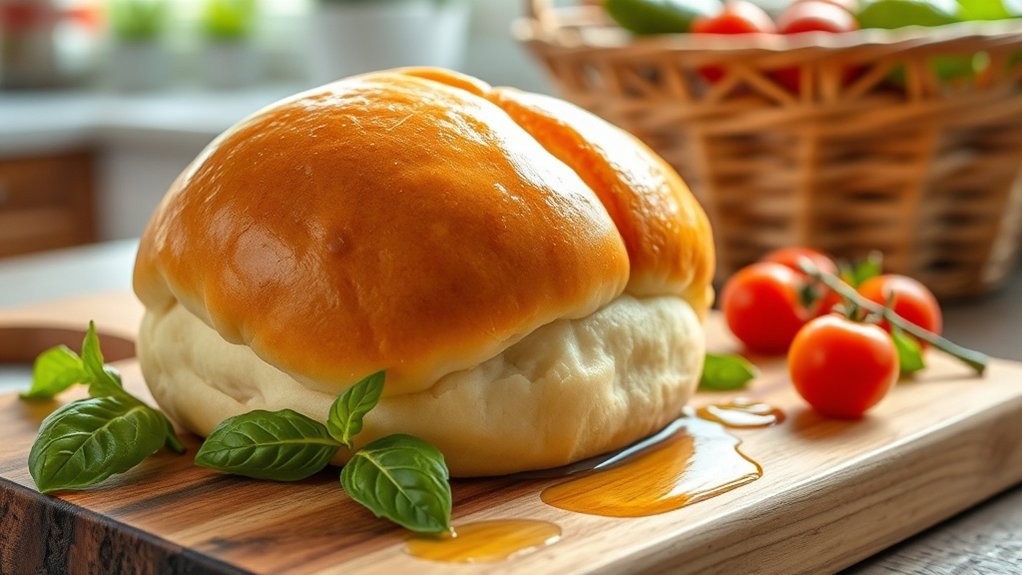
Vegan Hawaiian rolls’ versatility extends far beyond traditional dinner bread, transforming into multiple applications that capitalize on their signature sweet-savory profile.
For sliders ideas, you’ll find they’re ideal for vegan ham and cheese sandwiches.
Savory pairings include serving them alongside soups and stews, where their soft texture complements hearty dishes.
Breakfast options expand when you toast these rolls and prepare them as French toast, offering a unique morning meal.
For lunch inspirations, create mini sandwiches filled with plant-based proteins and fresh vegetables.
Dessert recipes shine when you repurpose leftover rolls into bread pudding, combining their inherent sweetness with rich custard.
Each application maintains the nutritional benefits of whole grain flour while providing creative meal solutions throughout your day.
This article was reviewed by Nicole Anderson, RDN.