Last Updated: April 16, 2026
What Veg Do Bearded Dragons Eat
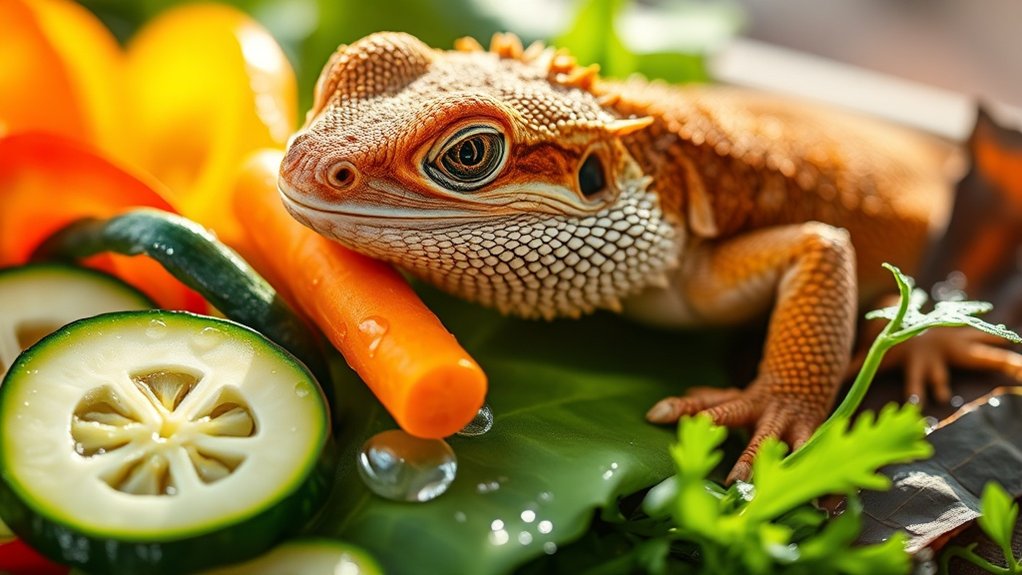
Your bearded dragon (*Pogona vitticeps*) should primarily consume calcium-rich leafy greens including collard greens, dandelion greens, and turnip greens, which maintain the critical 2:1 calcium-to-phosphorus ratio for skeletal health. You’ll want to supplement with bok choy and moderate amounts of curly kale, while strictly avoiding toxic options like avocado, rhubarb, and allium vegetables. Offer fresh, bite-sized portions during 30-minute feeding intervals, removing uneaten vegetables promptly to prevent bacterial colonization. The sections below provide thorough guidance on ideal feeding protocols and nutritional considerations.
Contents
show
Safe Leafy Greens and Vegetables for Bearded Dragons
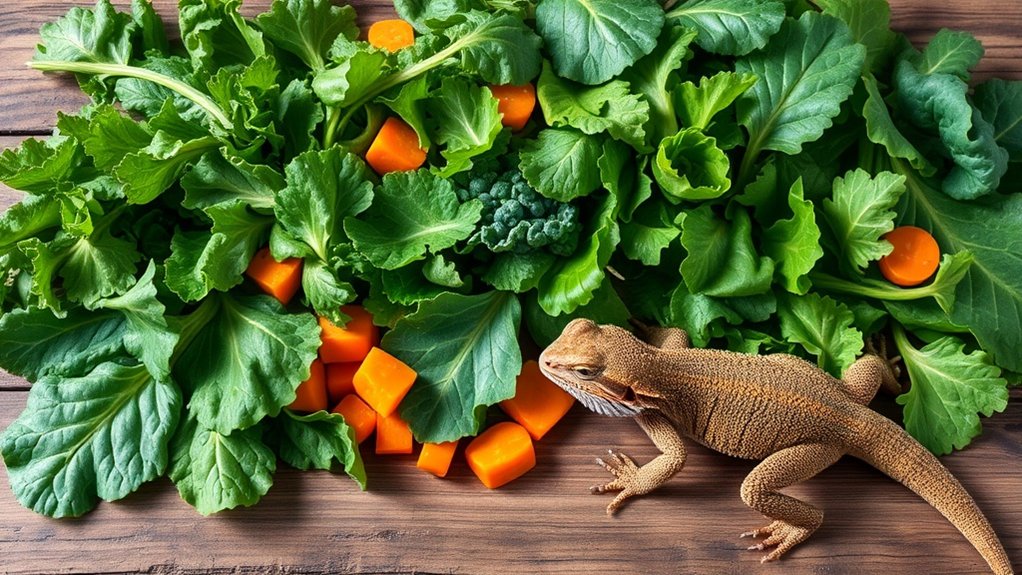
While *Pogona* species require a carefully calibrated diet for ideal health, leafy greens constitute the foundational component of their herbivorous intake.
When determining what veg can bearded dragons eat, prioritize collard greens, dandelion greens, and bok choy—these provide essential vitamins A and C alongside calcium.
Turnip greens offer an excellent calcium-to-phosphorus ratio, critical for skeletal development and maintenance. You’ll want leafy greens comprising 80-90% of plant material intake.
Curly kale remains acceptable but requires moderation due to oxalate content, which can impair calcium absorption.
Before feeding, thoroughly wash all vegetables and section them into appropriate bite-sized portions. This preparation facilitates consumption and digestive efficiency, making certain your dragon receives maximum nutritional benefit from each feeding session while minimizing potential complications.
How Often and How Much Vegetables to Feed Your Bearded Dragon?
Present vegetables for 30-minute intervals to prevent bacterial proliferation and substrate contamination.
You must establish consistent feeding schedules aligned with your dragon’s developmental phase. Monitor consumption patterns closely, adjusting portions based on appetite fluctuations and growth metrics.
Remove uneaten material promptly to maintain enclosure hygiene. This systematic approach guarantees adequate nutrient intake while minimizing waste and pathogenic risks.
Toxic Vegetables and Common Feeding Mistakes to Avoid
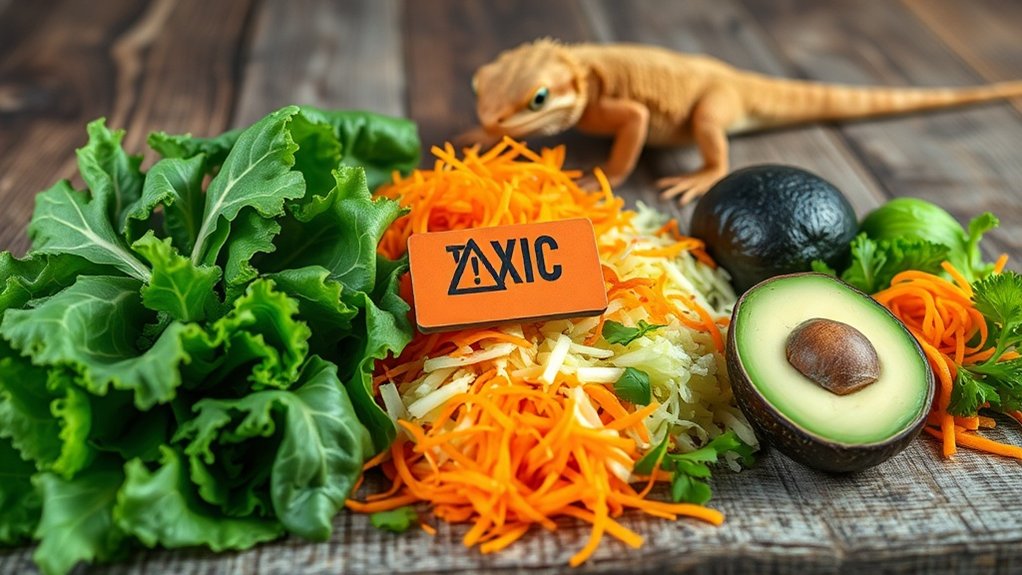
Although Pogona vitticeps demonstrates remarkable digestive resilience, certain vegetables contain compounds that prove fundamentally incompatible with their physiological systems. Understanding toxic vegetables prevents life-threatening complications:
- Avocado contains persin, a fungicidal toxin causing cardiovascular collapse and respiratory failure in reptilian species.
- Rhubarb’s oxalic acid concentration induces acute nephrotoxicity, progressing rapidly toward irreversible kidney failure.
- Allium family members (onions, garlic) trigger severe gastrointestinal inflammation through sulfur compound accumulation.
- High-oxalate vegetables (spinach, beet greens) chelate dietary calcium, precipitating metabolic bone disease through chronic hypocalcemia.
Common feeding mistakes include offering iceberg lettuce, which provides negligible nutritional density while causing osmotic diarrhea.
Monitor calcium-to-phosphorus ratios meticulously, as improper supplementation compounds oxalate-related calcium deficiencies.
Recognition of these contraindications guarantees peak metabolic function throughout your bearded dragon’s lifecycle.
This article was reviewed by Nicole Anderson, RDN.