Last Updated: April 26, 2026
Is Fruity Pebbles Vegan
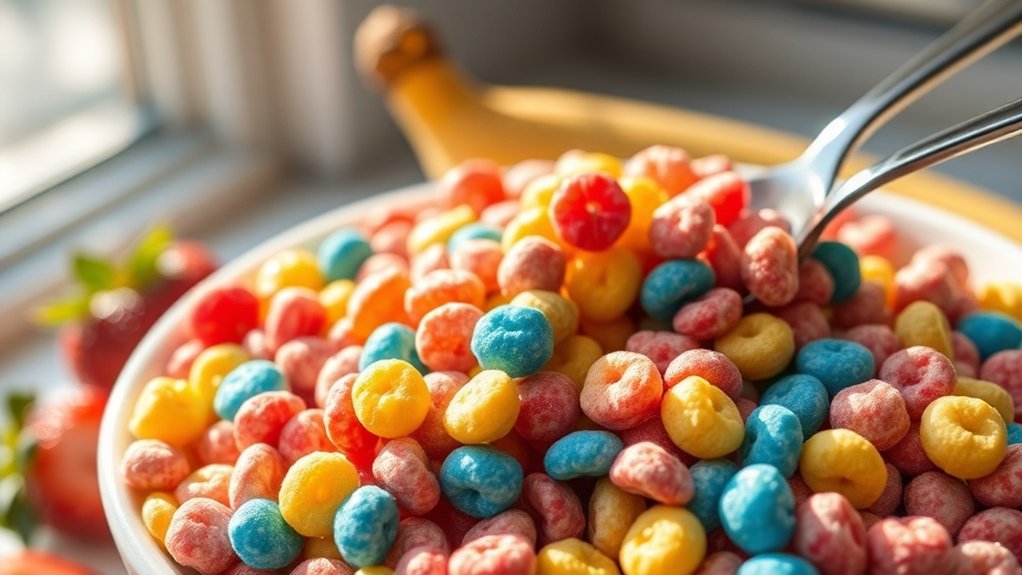
Fruity Pebbles aren’t considered vegan because they contain vitamin D3, which is typically derived from lanolin in sheep’s wool. While the cereal’s base ingredients like rice and sugar are plant-based, some varieties may also include carmine, a red coloring extracted from cochineal insects. Additionally, the artificial colors undergo animal testing, which concerns many ethical vegans. If you’re looking for plant-based alternatives or want to understand exactly which ingredients pose problems, you’ll find detailed explanations and vegan-friendly cereal recommendations below.
Contents
show
Are Fruity Pebbles Vegan? The Short Answer
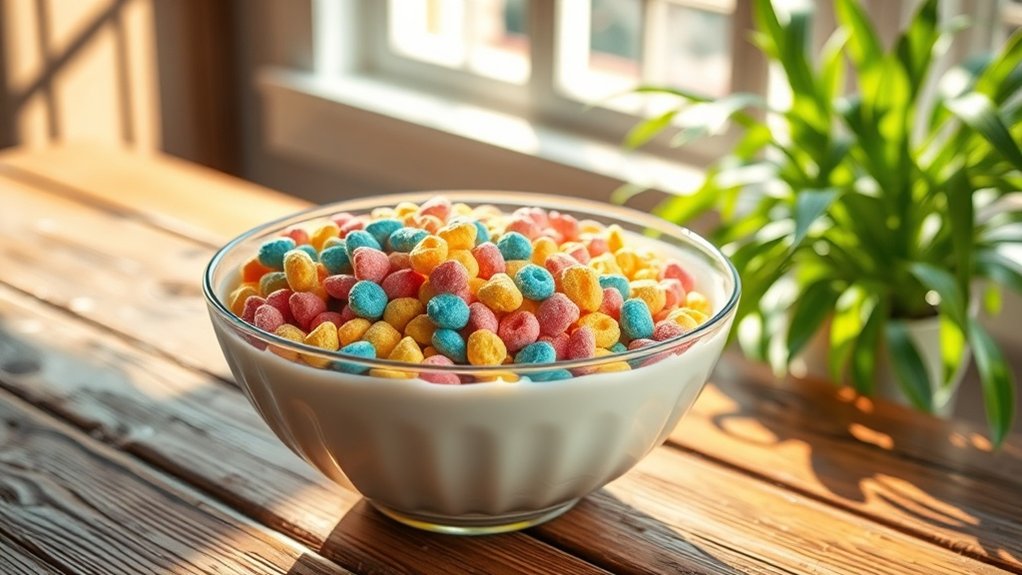
Why does a colorful breakfast cereal spark debate among plant-based eaters? Fruity Pebbles aren’t vegan. This popular cereal contains multiple animal-derived ingredients that disqualify it from plant-based diets.
The primary concern involves Carmine, a red food coloring extracted from crushed Cochineal insects, which appears in the cereal’s vibrant color palette. Additionally, Fruity Pebbles contain Vitamin D3, typically sourced from lanolin—a waxy substance obtained from sheep’s wool.
While the base ingredients like rice, sugar, and canola oil appear plant-based, the artificial flavors and synthetic dyes raise further questions about whether Fruity Pebbles are vegan.
The combination of these animal-sourced additives makes this cereal unsuitable for anyone following strict vegan principles, despite its seemingly innocent fruit-flavored appearance.
The Complete Fruity Pebbles Ingredient List
The problematic ingredients don’t stop there.
You’ll find vitamin D3, typically sourced from lanolin—a substance extracted from sheep’s wool. This animal-derived nutrient immediately disqualifies the cereal for strict vegans.
The artificial colorings present additional concerns.
While Red 40, Yellow 5, Blue 1, and D&C Red #3 can be synthetically produced, they’re often tested on animals during safety evaluations. Some batches may contain animal-derived processing agents.
Additional ingredients include canola oil, natural and artificial flavors (which may contain animal products), and various preservatives.
These components collectively compromise Fruity Pebbles’ vegan status.
Vitamin D3: The Sheep’s Wool Ingredient in Fruity Pebbles
Among all questionable components in Fruity Pebbles, vitamin D3 stands out as one of the most clearly non-vegan ingredients. This form of vitamin D is typically derived from lanolin, a waxy substance extracted from sheep’s wool during processing.
While sheep aren’t harmed during shearing, the ingredient’s animal origin conflicts with strict vegan principles that exclude all animal-derived products.
Manufacturers commonly use lanolin-based vitamin D3 in fortified cereals and processed foods to boost nutritional value, as it’s more cost-effective than plant-based alternatives.
If you’re committed to veganism, you’ll need to carefully examine ingredient labels for vitamin D3 specifically. Fortunately, numerous vegan-friendly breakfast cereals exist that use plant-derived vitamin D2 or are fortified with vegan vitamin D3 from lichen sources instead.
Why Some Vegans Avoid Fruity Pebbles’ Artificial Colors
Artificial colors in Fruity Pebbles present another significant concern for vegans beyond the vitamin D3 issue. The cereal contains synthetic dyes like Red #3, Red #40, and Yellow #5, which raise ethical and health questions within the vegan community.
Many vegans avoid these artificial colorings because:
- Animal testing concerns: Synthetic dyes often undergo animal testing for safety approval, conflicting with vegan ethics.
- Potential animal-derived sources: Some formulations may include carmine from crushed cochineal insects.
- Health implications: Research links Red 40 to DNA damage and childhood hyperactivity.
Several countries, including Japan and England, have banned certain artificial colors due to safety concerns.
Consequently, health-conscious vegans typically prefer natural color alternatives that align better with their ethical standards and nutritional philosophy.
Do Different Fruity Pebbles Flavors Use Different Ingredients?
When evaluating Fruity Pebbles’ vegan status, you’ll need to examine each flavor variant separately, as their ingredient formulations differ markedly.
The original variety primarily contains rice, sugar, and artificial colors, while specialty versions like Fruity Pebbles with Marshmallows introduce additional components that may include gelatin or animal-derived vitamin D3.
These variations in ingredient lists mean you can’t assume all Fruity Pebbles products share the same vegan status—careful label review is essential for each specific flavor you’re considering.
Original vs Flavored Varieties
While Fruity Pebbles has introduced various flavored editions over the years, the nutritional profile and ingredient composition remain remarkably similar across all varieties.
Whether you’re examining the original or specialized flavors, you’ll find the same core non-vegan ingredients that pose concerns for plant-based eaters.
The key problematic components consistent across varieties include:
- Artificial colorings (Red 40, Yellow 5) that may involve animal-derived processing agents
- Vitamin D3 supplementation, typically sourced from lanolin in sheep’s wool
- Similar flavor additives and sweeteners maintained throughout product lines
Limited editions might introduce unique flavoring agents, but they don’t fundamentally alter the base formulation.
You’ll need to scrutinize each variety’s ingredient label individually, as manufacturers occasionally modify formulations.
However, the presence of animal-derived Vitamin D3 consistently makes all Fruity Pebbles varieties unsuitable for strict vegan diets.
Ingredient Label Comparisons
Although Post Consumer Brands maintains consistent base formulations across its Pebbles cereal line, you’ll uncover notable differences when comparing ingredient labels between flavors.
Classic Fruity Pebbles contains rice, sugar, and canola oil as primary ingredients, alongside Red 40 and Yellow 5 colorings that may derive from animal sources.
Cocoa Pebbles substitutes cocoa powder for fruit flavoring while retaining similar non-vegan color additives.
All varieties typically include BHA and BHT preservatives for shelf stability.
The critical distinction affecting vegan status lies in specific additives: some flavors contain Vitamin D3, which manufacturers commonly source from lanolin (sheep’s wool oil).
This variation makes universal assessments impossible. You must examine each flavor’s label individually, paying particular attention to colorings, vitamin fortifications, and potential animal-derived preservatives before determining vegan compatibility.
Vegan Status Across Types
Different Fruity Pebbles flavors contain varying non-vegan ingredients that affect their suitability for plant-based diets.
You’ll find that classic Fruity Pebbles includes problematic components like Red 40 and Yellow 5, which may derive from animal sources. The vitamin D3 used across most varieties typically comes from lanolin, an animal-derived substance.
When examining different flavors, you should note:
- Classic Fruity Pebbles contains artificial colorings and animal-sourced vitamin D3
- Cocoa Pebbles shares similar concerns with artificial flavors and non-vegan colorings
- Limited edition varieties often maintain comparable ingredient profiles with animal-derived components
You must check each product’s ingredient label carefully, as formulations can differ by manufacturer and region.
Even seemingly similar flavors may contain different additives that impact their vegan status.
Why Fruity Pebbles Ingredients Vary by Country
When you examine Fruity Pebbles across different countries, you’ll notice ingredient variations driven primarily by divergent food safety regulations and banned substance lists.
Countries like Japan and those in the European Union prohibit certain synthetic dyes such as Red 40—commonly found in U.S. Fruity Pebbles—due to documented health concerns and stricter additive standards.
These regulatory differences compel manufacturers to reformulate products using alternative colorings and preservatives that comply with each region’s specific food safety laws.
Regulatory Standards Differ Globally
If you’ve ever wondered why Fruity Pebbles aren’t available in your local grocery store outside the United States, it’s because regulatory agencies worldwide maintain vastly different safety standards for food additives.
Japan and several European nations have banned the cereal due to concerns about synthetic dyes like Red 40, which research has linked to potential health risks.
These regulatory disparities create significant challenges for manufacturers:
- Artificial colorings: Countries with stricter regulations require removal or replacement of dyes like Red 40.
- Preservatives: Ingredients such as BHA and BHT face bans in markets prioritizing consumer safety.
- Formulation variations: Manufacturers must reformulate products to meet local standards, altering the cereal’s composition.
Understanding these regulations helps you recognize why ingredient transparency and safety expectations vary dramatically across global markets.
Banned Ingredients by Region
Across global markets, Fruity Pebbles face outright bans or require significant reformulations due to specific ingredients that violate regional food safety laws.
Japan and several European countries prohibit the cereal primarily because of synthetic dyes like Red 40, which research has linked to DNA damage and other health concerns. The preservatives BHA and BHT trigger additional regulatory barriers, as studies have associated these compounds with potential carcinogenic effects.
You’ll find that U.S. formulations contain food colorings derived from sources that stricter international standards reject.
Countries prioritizing consumer health over production costs exclude these questionable additives entirely. This regulatory divergence means the Fruity Pebbles you encounter varies dramatically depending on your location, with some markets refusing to allow the product’s sale altogether.
Food Safety Law Variations
Regulatory frameworks governing food additives create distinct product formulations across international markets, forcing manufacturers to reformulate Fruity Pebbles based on each country’s allowable ingredient list.
You’ll find that stricter European and Japanese regulations prohibit synthetic dyes like Red 40, while U.S. versions contain these controversial colorants. These legal disparities directly impact whether the cereal qualifies as vegan in your region.
Key regulatory differences affecting Fruity Pebbles include:
- Synthetic dye restrictions: European nations ban certain artificial colorings linked to health concerns.
- Animal-derived additives: Vitamin D3 from lanolin may be excluded in markets with stricter labeling requirements.
- Insect-based colorants: Cochineal-derived dyes face prohibition in vegan-conscious jurisdictions.
These variations mean you’re consuming fundamentally different products depending on your country’s food safety standards, affecting both ingredient transparency and vegan compliance.
The Best Vegan Cereals That Taste Like Fruity Pebbles
While Fruity Pebbles doesn’t meet vegan standards due to its animal-derived ingredients, several plant-based cereals deliver similar flavor profiles and colorful appeal.
One Degree Organic Foods Veganic Sprouted Brown Rice Cacao Crisps offers fruity flavors with sprouted grains that provide improved nutrient bioavailability.
Nature’s Path Lightly Frosted Amazon Flakes combines vibrant colors with gentle sweetness, containing whole grains without animal-derived additives.
Kaia Cocoa Bliss presents another alternative with healthier ingredient formulations that evoke Fruity Pebbles’ essence.
Kashi Organic Promise Sprouted Grains Cereal features fruit flavors alongside sprouted grain blends, delivering comparable taste and texture profiles.
You can also create homemade versions using oats, dried fruits, and plant-based natural colorings.
This approach allows complete ingredient control while satisfying cravings for fruity, colorful cereals.
These options demonstrate that vegan-friendly alternatives can replicate the Fruity Pebbles experience.
Nature’s Path Organic Envirokidz Amazon Flakes Review
Among the vegan alternatives that capture Fruity Pebbles’ appeal, Nature’s Path Organic Envirokidz Amazon Flakes stands out as a nutritionally sound option.
You’ll find this organic corn and rice cereal delivers the crunchy texture you’re seeking while maintaining certified organic standards—free from synthetic pesticides and artificial additives.
The product offers several compelling benefits:
- Certified vegan formula with essential nutrients and light sweetening suitable for all ages
- Environmental commitment through sales contributions to wildlife preservation programs
- Clean ingredient profile without artificial colors or flavors, meeting health-conscious standards
This cereal addresses your desire for wholesome breakfast choices while supporting sustainability efforts.
The organic certification guarantees you’re consuming ingredients created through environmentally responsible farming practices, making it an excellent Fruity Pebbles alternative.
One Degree Sprouted Brown Rice Cacao Crisps Review
One Degree Organic Foods Veganic Sprouted Brown Rice Cacao Crisps delivers a nutritionally dense vegan alternative through its sprouted grain technology, which improves mineral bioavailability and digestibility compared to conventional cereals.
You’ll find this product contains only plant-based ingredients, with coconut palm sugar providing natural sweetness instead of refined alternatives. The sprouting process boosts nutrient absorption while maintaining whole grain integrity, supporting your daily fiber requirements.
You can choose between rice flakes and maize flakes based on your texture preferences. The organic certification confirms sustainable farming practices without synthetic pesticides or fertilizers.
This cereal functions effectively as both a breakfast option and nutrient-dense snack. The cacao addition provides antioxidants while keeping sugar content moderate, making it suitable for health-conscious consumers seeking minimally processed vegan cereals.
Homemade Raw Vegan Fruity Cereal Recipe
You can create a nutrient-dense fruity cereal by combining sprouted oats, dehydrated fruit pieces, and raw nuts—ingredients that provide essential vitamins, minerals, and healthy fats absent in conventional cereals.
The preparation involves soaking raw oats, blending them with naturally sweet fruits like berries and mango, then dehydrating the mixture at 115°F to preserve enzymes while achieving a crispy texture.
This whole-food approach lets you control the sweetness with dates or minimal maple syrup while incorporating vibrant, antioxidant-rich ingredients that deliver both visual appeal and functional nutrition.
Simple Ingredient Preparation Steps
Creating your own raw vegan fruity cereal begins with preparing the fruit base. You’ll blend 1 cup of dried fruits, such as apples and figs, until you achieve a fine, cohesive mixture. This fruit base provides natural sweetness and acts as a binding agent for your cereal clusters.
Next, you’ll combine the blended fruits with complementary ingredients:
- Mix in 1 cup of raw nuts (almonds or cashews) for protein, healthy fats, and satisfying crunch.
- Add 1 teaspoon of natural sweetener (maple syrup or agave) to improve flavor without refined sugars.
- Incorporate vibrant berries (blueberries or strawberries) for color and antioxidants.
Finally, shape the mixture into small clusters and dehydrate at low temperature for several hours. This preservation method maintains nutritional integrity while creating the desired crunchy texture for your breakfast cereal.
Nutritious Whole Food Benefits
When you prepare raw vegan fruity cereal at home, you’re maximizing nutrient retention that’s often lost in commercial processing. Whole nuts and seeds provide essential omega-3 fatty acids, plant-based protein, and minerals like magnesium and zinc.
Dried fruits contribute concentrated antioxidants, vitamins, and natural enzymes that support cellular function. Adding fresh apples and bananas increases soluble fiber content, which regulates blood sugar levels and promotes healthy gut bacteria.
Unlike Fruity Pebbles with artificial additives, your homemade version delivers bioavailable nutrients your body can efficiently absorb and use. This gluten-free cereal accommodates various dietary needs while eliminating refined sugars that cause energy crashes.
You’re consuming foods in their whole state, preserving phytonutrients and naturally-occurring compounds that work synergistically to support peak health and sustained energy throughout your morning.
Colorful Natural Flavor Options
Natural pigments transform your homemade cereal into a visually stunning bowl that rivals commercial options without synthetic dyes. You’ll achieve vibrant hues while adding beneficial phytonutrients to your breakfast.
Consider these natural colorants for your raw vegan cereal:
- Beet powder creates pink to red tones while providing dietary nitrates and antioxidants.
- Spirulina delivers brilliant blue-green shades packed with protein and B vitamins.
- Turmeric produces sunny yellow pieces rich in curcumin’s anti-inflammatory properties.
You can coat your base ingredients—blended oats, buckwheat, nuts, and seeds—with these powders mixed into a small amount of plant-based milk or coconut oil.
This technique guarantees even color distribution throughout your cereal pieces.
Customize your creation by selecting dried fruits that complement your chosen color palette while maintaining complete nutritional transparency.
This article was reviewed by Nicole Anderson, RDN.