Last Updated: April 25, 2026
Is Frosted Flakes Vegan

No, Kellogg’s Frosted Flakes aren’t vegan. They contain Vitamin D3 sourced from lanolin, a sheep’s wool byproduct, making them unsuitable for strict plant-based diets. Additionally, the cane sugar may be processed using bone char from cattle bones, though Kellogg’s doesn’t publicly disclose their processing methods. While the primary ingredients like corn and sugar appear plant-based, these hidden animal-derived components disqualify traditional Frosted Flakes from vegan status. However, you’ll find several certified vegan alternatives and store brands that use plant-based Vitamin D2 instead, which we’ll examine further below.
Contents
show
Are Frosted Flakes Vegan? Here’s What’s Actually Inside
Why do so many breakfast cereals marketed as simple and wholesome contain animal-derived ingredients?
If you’re wondering “are frosted flakes vegan,” the answer is no. Despite appearing plant-based at first glance, Frosted Flakes contain Vitamin D3, which manufacturers typically derive from lanolin—a waxy substance extracted from sheep’s wool.
Additionally, the cane sugar used may be processed with bone char, an animal-derived filtering agent that concerns many vegans. While the primary ingredients include corn meal and sugar, these hidden animal products make the cereal unsuitable for a vegan diet.
You’ll need to scrutinize ingredient labels carefully, as numerous popular cereals contain similar non-vegan additives.
Fortunately, alternatives like EnviroKids Organic Lightly Frosted Amazon Flakes offer comparable taste without animal-derived components.
Why Vitamin D3 in Frosted Flakes Creates a Vegan Problem
While Frosted Flakes’ ingredient list appears straightforward, the Vitamin D3 fortification presents a significant obstacle for vegans. The vitamin itself is essential for calcium and phosphorus absorption, but its source creates ethical concerns you need to evaluate.
The D3 in Frosted Flakes typically comes from lanolin, extracted from sheep’s wool during processing. This makes the cereal unsuitable for strict vegan diets because:
- Lanolin is an animal byproduct – It’s harvested from the wool industry, directly linking the cereal to animal exploitation.
- Plant-based alternatives exist – Lichen-derived D3 offers a vegan option that Kellogg’s hasn’t adopted.
- Market demand is shifting – Many competing cereals now use plant-based Vitamin D, demonstrating viable alternatives.
This ingredient choice reflects outdated manufacturing practices rather than nutritional necessity.
Does the Sugar in Frosted Flakes Matter to Vegans?
The sugar in Frosted Flakes presents another vegan concern because it may be processed using bone char—a filtration material derived from animal bones.
While the final product contains no animal residue, some vegans avoid bone char-refined sugar on ethical grounds, though others consider this processing method an acceptable compromise.
You’ll need to evaluate whether trace involvement of animal products in sugar refinement conflicts with your personal vegan principles, as ingredient labels rarely specify the processing method used.
Bone Char Processing Explained
When examining whether Frosted Flakes qualifies as vegan, sugar processing becomes a critical yet often overlooked concern. The sugar in this cereal may undergo bone char filtration, a refining process that uses charred cattle bones to achieve white, crystalline sugar. This animal-derived processing agent creates an ethical dilemma for strict vegans.
Key considerations about bone char processing:
- Manufacturing ambiguity – Kellogg’s doesn’t explicitly disclose whether their sugar suppliers use bone char filtration methods.
- Regional variation – Sugar processing standards differ across countries, meaning the same product may contain differently processed sugar depending on your location.
- Alternative methods exist – Ion-exchange resins and granular carbon provide vegan-friendly filtration options, though manufacturers rarely specify which method they’ve employed.
You’ll need to contact manufacturers directly or seek certified vegan sugar products for complete transparency.
Vegan Perspectives on Sugar
Some vegans prioritize avoiding direct animal ingredients while accepting incidental processing methods like bone char filtration. They’ll consume Frosted Flakes without concern.
Others maintain stricter standards, rejecting any product potentially involving animal-derived materials throughout manufacturing.
This spectrum of interpretation means there’s no universal vegan stance on sugar processing. Your individual principles determine what’s acceptable.
If bone char concerns you, seek products explicitly labeled vegan or containing certified vegan sugars. Many brands now offer these alternatives, making adherence to stricter standards increasingly feasible.
Ultimately, you’ll need to evaluate whether Frosted Flakes aligns with your personal vegan values regarding indirect animal product involvement.
Identifying Vegan-Processed Sugar
Determining whether sugar in Frosted Flakes was processed with bone char requires detective work that Kellogg’s doesn’t make easy. The company doesn’t disclose their sugar suppliers or processing methods on packaging, leaving strict vegans in a difficult position.
To identify vegan-processed sugar, you’ll need to:
- Contact manufacturers directly to inquire about their specific sugar sources and processing methods.
- Look for cereals containing organic sugar, which can’t legally be processed with bone char under USDA standards.
- Choose products with sugar labeled as “vegan” or “beet sugar,” which typically uses animal-free processing.
Since Kellogg’s standard Frosted Flakes don’t specify these details, you’re making an uninformed choice. Some vegans accept this ambiguity, while others avoid products with questionable sugar entirely.
Are Store-Brand Frosted Flakes More Vegan-Friendly?
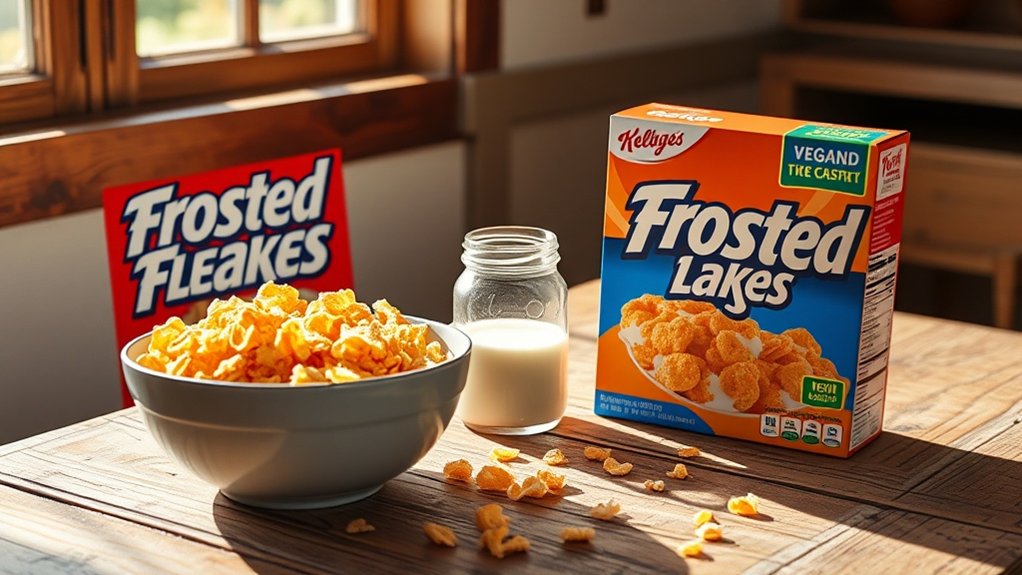
Store-brand Frosted Flakes aren’t automatically more vegan-friendly than Kellogg’s, but they offer varied formulations worth investigating. Some store brands specifically use plant-based Vitamin D2 instead of lanolin-derived D3, making them suitable for vegans.
Additionally, certain brands process their sugar without bone char and may feature organic or vegan certifications on their packaging.
However, you’ll need to scrutinize each product individually. Ingredient lists vary considerably between retailers, and what’s vegan-friendly at one store mightn’t be at another.
Check for Vitamin D3 sources, sugar processing methods, and any animal-derived additives like gelatin or natural flavors from animal sources.
Look for explicit vegan certifications or contact manufacturers directly if you’re uncertain. Store brands can be more accommodating to vegan needs, but verification remains essential.
What Makes a Frosted Flake-Style Cereal Actually Vegan?
A truly vegan Frosted Flake-style cereal requires careful scrutiny of its vitamin fortification, sweeteners, and processing methods.
You’ll need to verify that every ingredient aligns with plant-based principles.
Key Requirements for Vegan Frosted Flakes:
- Vitamin D Source: The cereal must contain Vitamin D2 or plant-based D3 from lichen, not lanolin-derived D3 from sheep’s wool.
- Sugar Processing: Sweeteners should be processed without bone char, which uses animal bones as a filtering agent.
- Complete Ingredient Transparency: Clear labeling must confirm all flavorings, vitamins, and additives are animal-free.
Brands like EnviroKids Organic Lightly Frosted Amazon Flakes demonstrate that you can enjoy the classic taste and texture while maintaining strict vegan standards.
Always examine ingredient lists and certifications before purchasing.
Vegan Frosted Flakes Alternatives That Taste Amazing
For improved nutritional value, Nature’s Path Organic Frosted Maple Pecan Whole Os combines whole grains with maple pecan flavor, delivering both taste satisfaction and substantive nutritional benefits through its whole grain composition.
This article was reviewed by Nicole Anderson, RDN.