Last Updated: May 17, 2026
Is Dijon Mustard Vegan
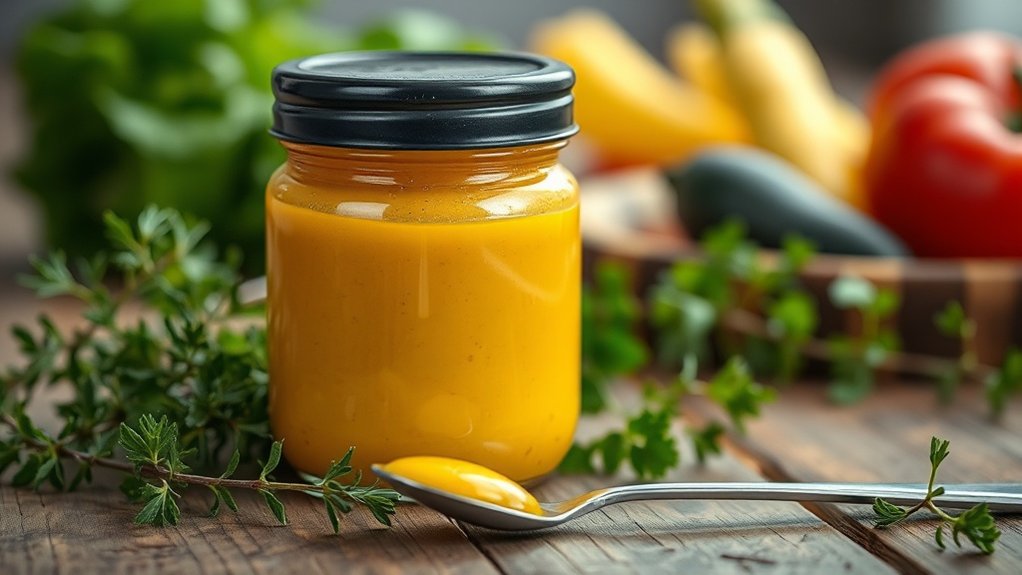
Most Dijon mustard is technically vegan since it’s made from mustard seeds, white wine, vinegar, and salt. However, you’ll need to verify each brand individually because the white wine may be processed using animal-derived fining agents like egg whites or isinglass. Brands like Primal Kitchen and Sir Kensington’s carry official vegan certification, while others like Grey Poupon contain wine that could pose concerns. You shouldn’t assume all Dijon mustards meet vegan standards—checking labels and certifications remains vital to confirm your choice aligns with plant-based requirements and addresses the wine fining question thoroughly.
Contents
show
Which Dijon Mustard Brands Are Vegan?
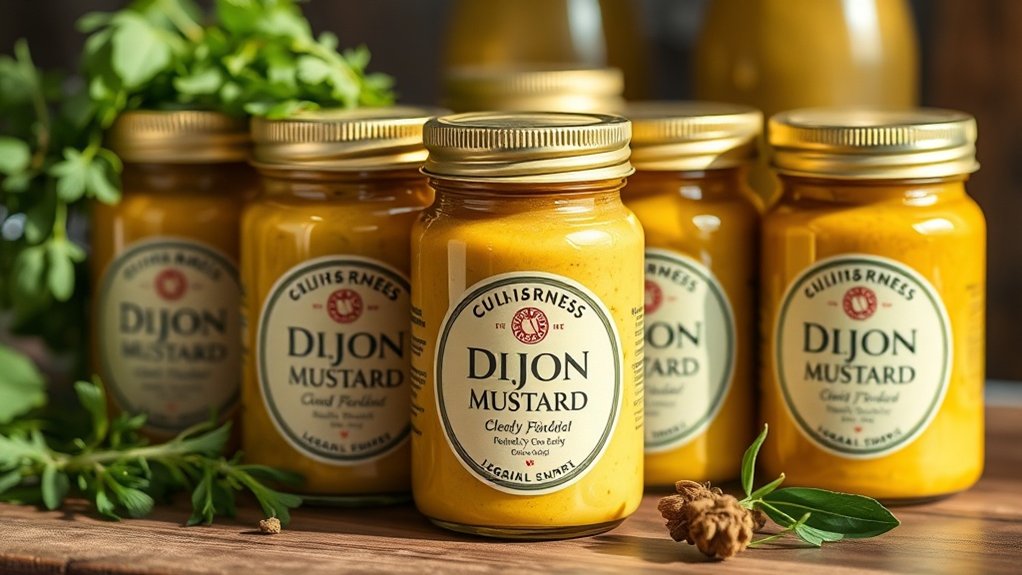
When selecting a vegan Dijon mustard, you’ll find several mainstream brands meet strict plant-based criteria through their ingredient formulations.
Primal Kitchen stands as the only Dijon mustard variety with official vegan certification, providing third-party verification for concerned consumers.
Grey Poupon contains white wine but maintains vegan status through its plant-based ingredient matrix.
Sir Kensington’s also carries vegan certification despite wine inclusion, demonstrating that fermented grape products don’t compromise plant-based compliance.
Annie’s Organic Dijon contains zero animal-derived components, making it inherently suitable for vegan diets.
Noble Made Coarse-Dijon by The New Primal uses simple, plant-based ingredients throughout its formulation.
Additionally, 365 by Whole Foods Market offers a vegan-friendly option.
When evaluating Dijon mustard varieties, you’ll want to prioritize products with transparent ingredient lists and preferably vegan certification for guaranteed compliance.
What Ingredients Should Vegans Avoid in Dijon Mustard?
While most Dijon mustard formulations maintain vegan compliance, several ingredients warrant scrutiny before purchase.
You’ll need to examine Dijon mustard ingredients carefully, as white wine used in production may undergo fining processes involving animal-derived products like isinglass or gelatin.
Though uncommon, eggs appear in certain specialty formulations and represent clear non-vegan additions.
Animal-derived additives can lurk within flavor boosters and preservatives listed on ingredient panels.
Products lacking explicit “vegan” certification require heightened vigilance, as manufacturers may incorporate non-vegan components without prominent labeling.
You should prioritize brands displaying certified vegan designations or those with established vegan-friendly manufacturing practices.
Thorough ingredient list examination remains essential—don’t assume traditional mustard formulations guarantee vegan status without verification of each component’s source and processing method.
Is Dijon Mustard Always Vegan?
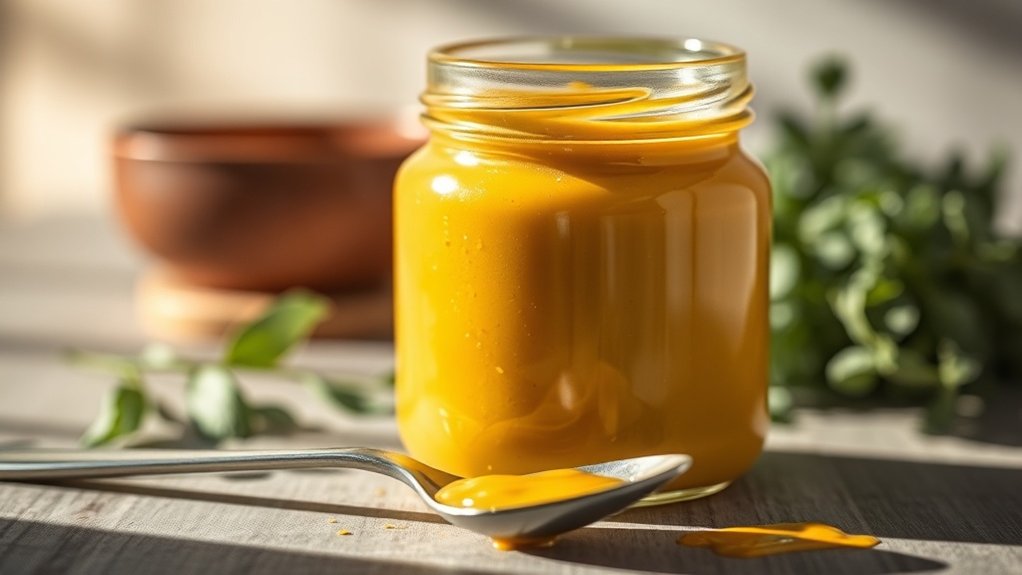
Despite its simple ingredient profile, Dijon mustard doesn’t guarantee universal vegan compatibility across all commercial formulations. Throughout Dijon history, manufacturers have incorporated white wine into their recipes, which poses concerns since some wines undergo fining processes using animal-derived filters like gelatin or isinglass.
These processing methods can compromise vegan status even when labels don’t explicitly list animal ingredients.
Different mustard varieties also employ varying production techniques. While brands like Grey Poupon, Sir Kensington’s, Primal Kitchen, Annie’s, and Noble Made maintain vegan formulations, others may include hidden animal derivatives.
You’ll need to verify each product individually by checking for vegan certification labels or contacting manufacturers directly. The lack of standardization across brands means you can’t assume all Dijon mustards meet vegan requirements without thorough investigation.
What Are the Best Vegan Dijon Mustard Substitutes?
If you can’t find a verified vegan Dijon mustard or prefer to investigate other options, several mustard-based alternatives deliver comparable flavor profiles and culinary functionality.
Spicy Brown Mustard provides similar heat intensity with its coarser texture and robust taste.
Stone Ground Mustard maintains structural integrity in recipes while offering comparable complexity.
Whole Grain Mustard adds textural dimension alongside tangy notes, making it ideal for boostd preparations.
For milder applications, Yellow Mustard works effectively, though it lacks Dijon’s characteristic pungency.
When seeking creamy consistency rather than sharpness, Vegan Mayo or Yogurt serves as texture-increasing substitutes.
These spicy alternatives guarantee you’ll achieve desired results across various recipes—from vinaigrettes to marinades—while maintaining plant-based dietary requirements.
Each substitute offers distinct characteristics suited to specific culinary contexts.
This article was reviewed by Nicole Anderson, RDN.