Last Updated: May 3, 2026
Is Chicken Broth Vegan
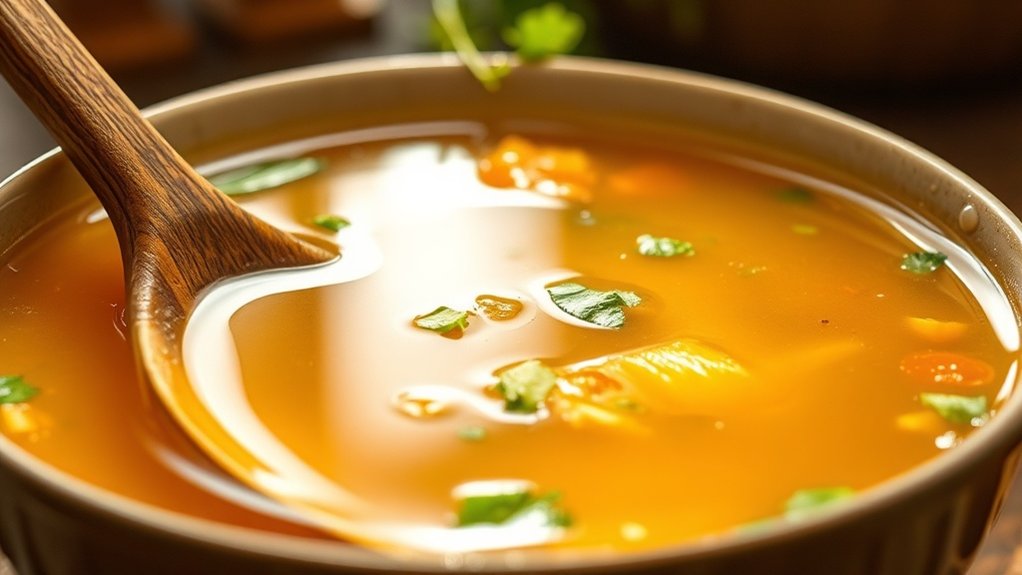
No, chicken broth isn’t vegan—it’s made by simmering chicken bones, carcasses, and connective tissues, releasing collagen, proteins, and animal-derived fats into the liquid. Even store-bought versions contain animal ingredients like gelatin, chicken fat, and hydrolyzed chicken protein. If you’re following a plant-based diet, you’ll need to choose clearly labeled “vegan” or “no-chicken” broths made from vegetables, nutritional yeast, and herbs. Understanding which ingredients to avoid and uncovering flavorful plant-based alternatives will help you guide both commercial options and homemade preparations.
Contents
show
What Chicken Broth Is (and Why It’s Never Vegan)
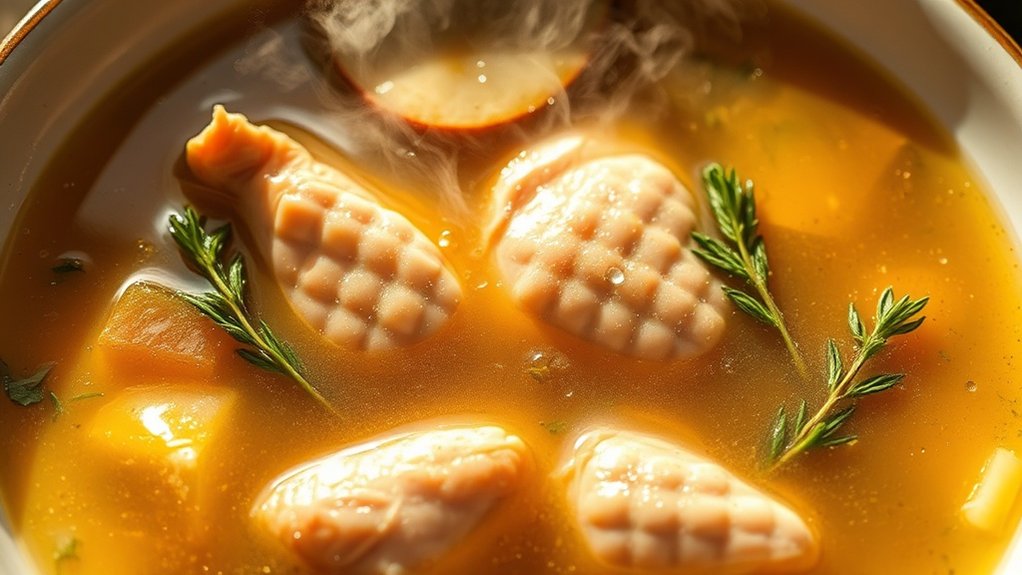
Chicken broth is fundamentally an animal-derived liquid produced through the prolonged simmering of chicken carcasses, bones, and connective tissues in water. This extraction process releases collagen, proteins, minerals, and fat-soluble compounds into the liquid, creating a nutrient-dense base that’s entirely incompatible with vegan principles.
The same applies when you’re asking “is chicken stock vegan”—the answer remains definitively no, as stock uses identical animal components.
You’ll find that commercial varieties often contain hydrolyzed animal proteins and meat-derived flavor boosters, reinforcing their non-vegan status.
The glutamate-rich umami compounds extracted from chicken tissue create the characteristic savory depth that defines meat-based broths.
There’s no ambiguity here: any product containing actual chicken components violates vegan dietary standards, which exclude all animal-derived ingredients.
5 Animal Ingredients Lurking in Broth Labels
Beyond the obvious chicken-derived components, commercial broth formulations harbor numerous animal-based additives that complicate label interpretation for plant-based consumers.
You’ll encounter gelatin, derived from collagen extracted through animal bone hydrolysis, which functions as a protein-enriching agent. Chicken fat serves as a lipid carrier for fat-soluble flavor compounds, while hydrolyzed chicken protein acts as a concentrated umami amplifier through enzymatic breakdown of poultry proteins.
The term “natural flavors” presents particular ambiguity, as this designation permits both animal and plant sources without specification.
Likewise, yeast extract and hydrolyzed vegetable protein, though potentially plant-derived, may coexist with undisclosed animal ingredients. You must verify explicit “vegan” or “plant-based” certifications rather than relying on ingredient terminology alone.
Homemade plant-based broths eliminate these label-reading complexities entirely.
The Best Store-Bought Vegan Chicken Broths
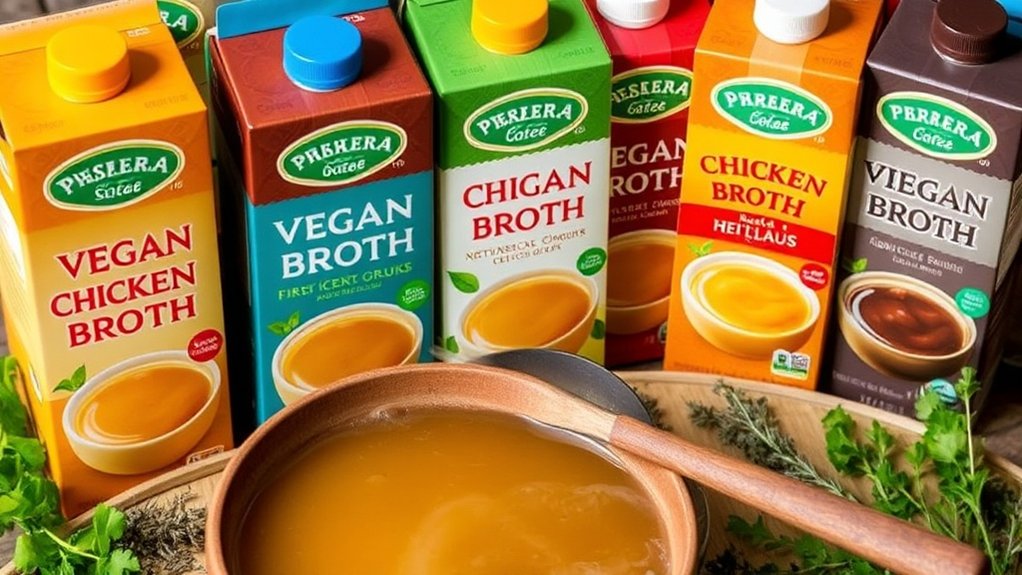
When selecting vegan chicken broth, you’ll find significant nutritional and ingredient variations among leading brands like Frontier Co-op No-Chicken Broth Powder and Better Than Bouillon’s No-Chicken Base.
Examining ingredient labels reveals that superior products feature whole food components such as nutritional yeast and vegetable extracts, while inferior options contain excessive sodium, artificial additives, or allergens that compromise their nutritional value.
You’ll need to prioritize brands offering clean labels with recognizable ingredients, adequate protein content from nutritional yeast, and allergen-free formulations that align with your specific dietary requirements.
Top Brand Comparisons
Since the demand for plant-based alternatives continues to grow, several manufacturers have developed vegan chicken broth products that deliver savory, umami-rich flavors without animal-derived ingredients.
Better Than Bouillon’s No-Chicken Base provides concentrated flavor but contains hydrolyzed corn protein and corn syrup solids, which you’ll want to evaluate if avoiding processed ingredients.
Frontier Co-op’s No-Chicken Broth Powder offers a cleaner formulation without artificial additives, making it suitable for whole-food-focused diets.
Pacific Foods produces organic vegan chicken broth that’s often gluten-free and emphasizes ingredient quality.
When comparing brands, you’ll notice sodium content varies greatly—some products exceed 700mg per serving. Examine nutrition labels carefully to select lower-sodium options.
If you’re seeking complete ingredient control, homemade versions using nutritional yeast, herbs, and vegetables remain the most customizable alternative.
Reading Ingredient Labels
Steering through store-bought vegan chicken broth labels requires attention to specific terminology and ingredient disclosures. You’ll want to identify products marked “plant-based,” “vegan,” or “no-chicken” to confirm they meet your dietary specifications.
Reputable brands like Better Than Bouillon and Frontier Co-op explicitly label their vegan options, eliminating guesswork.
Examine the ingredient list for common plant-based components: nutritional yeast, vegetables, herbs, and spices that replicate traditional chicken broth’s savory profile.
However, you must scrutinize additives carefully. Hydrolyzed proteins and certain artificial flavors may contain animal derivatives, even in products marketed as vegan.
Cross-reference unfamiliar ingredients with verified vegan databases when uncertainty arises.
This systematic approach to label reading guarantees you’re selecting genuinely vegan chicken broth alternatives that align with your plant-based nutritional requirements.
Vegetable Broth vs. Vegan Chicken-Style Broth: What’s the Difference?
While both vegetable broth and vegan chicken-style broth offer plant-based alternatives to traditional chicken stock, they serve distinctly different culinary purposes based on their flavor profiles and ingredient compositions.
Vegetable broth contains only plant-derived ingredients like vegetables, herbs, and spices, providing a neutral base for various recipes. However, it doesn’t replicate chicken broth’s distinctive savory characteristics.
Vegan chicken-style broth specifically mimics traditional chicken flavor through strategic ingredient selection. You’ll find nutritional yeast, turmeric, and poultry seasoning formulated to recreate chicken broth’s umami-rich profile without animal products.
This targeted approach makes it ideal for dishes traditionally requiring chicken stock, such as risottos and sauces.
When selecting between options, consider your recipe’s flavor requirements. Vegan chicken-style broth provides authentic taste replication, while vegetable broth offers versatile, general-purpose functionality.
Your 5-Minute Vegan Chicken Broth Recipe
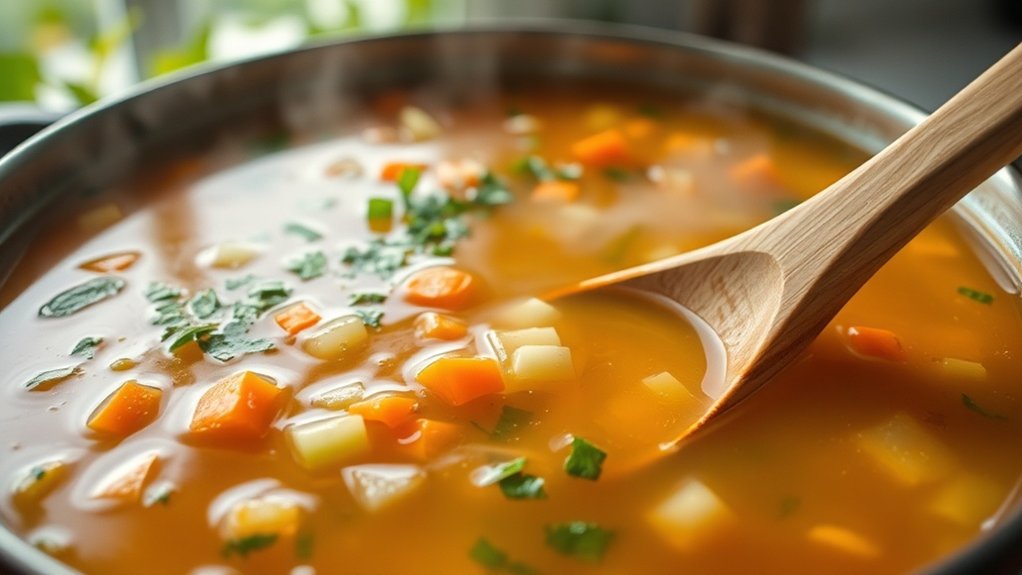
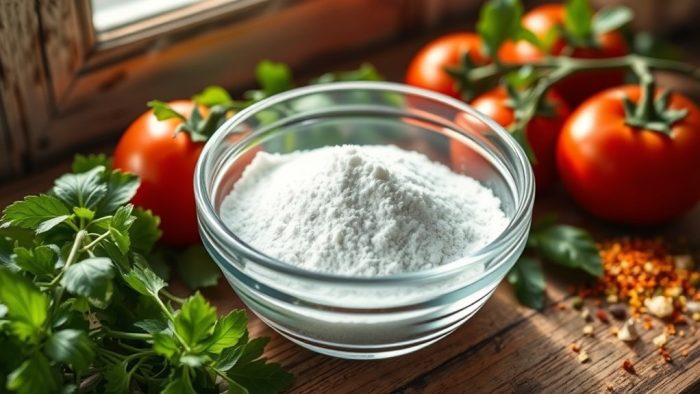
Creating homemade vegan chicken-style broth takes just five minutes and delivers superior nutritional control compared to commercial alternatives. You’ll need nine pantry staples: nutritional yeast, fine sea salt, organic cane sugar, poultry seasoning, and complementary herbs.
This formula accommodates multiple dietary requirements—it’s oil-free, gluten-free, soy-free, and nut-free while maintaining robust flavor complexity.
Mix your dry ingredients thoroughly, then reconstitute using approximately 2 teaspoons of seasoning per cup of hot water. The nutritional yeast provides B-vitamins and umami depth that mimics traditional chicken broth’s savory profile.
Store your seasoning blend in a cool, dry location where it’ll remain viable for months.
This cost-effective approach eliminates preservatives, excess sodium, and artificial flavorings commonly found in commercial bouillons, giving you complete ingredient transparency and nutritional customization.
How to Use Vegan Broth in Any Recipe
Vegan broth functions as a 1:1 replacement for conventional chicken broth across virtually all culinary applications, from grain preparations to sauce foundations. You’ll achieve excellent results in soups, stews, risottos, and pan sauces by incorporating this plant-based alternative without recipe modifications.
To improve nutritional density and umami characteristics, you can fortify your broth with nutritional yeast, which provides B-vitamins and a savory depth. Adding aromatic compounds like garlic, thyme, and rosemary further develops complex flavor profiles.
When preparing broth from scratch, combine 2 teaspoons of vegan chicken seasoning per cup of hot water for balanced savory notes.
However, you must adjust additional salt quantities based on your broth’s specific sodium content, as homemade versions demonstrate variable mineral concentrations compared to commercial preparations.
This article was reviewed by Nicole Anderson, RDN.