Last Updated: April 20, 2026
Is Teriyaki Sauce Vegan
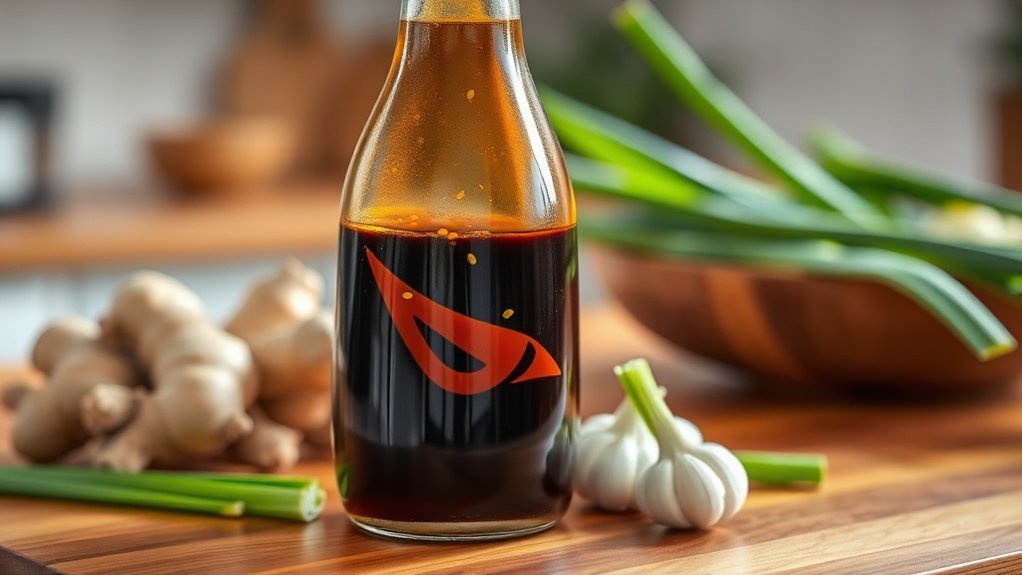
Traditional teriyaki sauce isn’t automatically vegan—while core ingredients like soy sauce and ginger are plant-based, you’ll need to watch for hidden animal products. Many recipes contain honey as a sweetener, and sake or mirin may be clarified with fish bladder. Store-bought versions can include fish sauce, anchovies, or dairy derivatives, while refined sugar might be processed with bone char. Fortunately, certified vegan brands like Soy Vay and Coconut Secret exist, and you can easily make your own version with tamari, maple syrup, and vegetable broth to guarantee complete plant-based compliance while looking into various culinary applications.
Contents
show
Is Traditional Teriyaki Sauce Vegan? (What’s Usually in It)

Traditional teriyaki sauce consists of five core ingredients: soy sauce (shoyu), sake, mirin (sweet rice wine), sugar, and ginger.
While these components appear plant-based, you’ll need to examine each carefully. Soy sauce and ginger are typically vegan-friendly, but sake and mirin—both fermented rice products—occasionally contain animal-derived ingredients during processing, though they’re generally considered acceptable.
The main concern is sugar, which may be processed using bone char, making it non-vegan for strict adherents.
Different cooking techniques and flavor variations can affect ingredient composition, so you’ll find considerable diversity across brands and recipes.
Most traditional formulations lean toward vegan status, but the sugar processing method remains the critical factor determining whether a particular teriyaki sauce aligns with strict vegan principles.
Which Teriyaki Sauce Ingredients Aren’t Vegan?
When examining teriyaki sauce labels, you’ll need to watch for several non-vegan ingredients beyond the obvious honey and fish-based additives. Some animal-derived components hide in plain sight, including certain artificial flavorings, dairy derivatives like whey or casein, and occasionally bone char-processed white sugar used as a sweetener.[1][2] Additionally, traditional recipes may contain sake that’s been clarified with isinglass (fish bladder), making even seemingly plant-based formulations problematic for strict vegans.[3]
Hidden Animal-Based Ingredients
While teriyaki sauce appears straightforward with its characteristic blend of soy sauce, sugar, and spices, several ingredients can compromise its vegan status.
Sake, a common ingredient, may be processed using animal-derived fining agents during clarification. You’ll find that hidden additives like anchovy paste frequently appear in commercial formulations, adding umami depth but eliminating vegan suitability.
Honey serves as a sweetener in certain brands, presenting another animal-based concern. Flavoring agents and artificial colorings warrant particular scrutiny, as manufacturers sometimes derive these from animal sources.
Fish-based ingredients remain especially problematic in traditional recipes. To guarantee your teriyaki sauce aligns with vegan principles, examine labels meticulously for plant-based specifications or seek products bearing vegan certifications that confirm the absence of animal-derived components.
Sugar Refinement Process Concerns
Sugar refinement presents a significant yet often overlooked concern for vegans evaluating teriyaki sauce. Many commercially produced teriyaki sauces contain refined white sugar, which may be processed using bone char—a filtration substance derived from animal bones.
This processing method renders the final product non-vegan, despite sugar itself being plant-derived. When examining sugar sourcing in teriyaki products, you’ll find this information rarely disclosed on labels, making vegan status difficult to determine.
To guarantee compliance with vegan standards, look for sauces using sugar alternatives like organic cane sugar, coconut sugar, or maple syrup. These sweeteners aren’t processed with animal-derived substances.
Brands specifically labeled as vegan typically avoid bone char-processed sugars, providing assurance that all ingredients align with plant-based principles.
Store-Bought Vegan Teriyaki Sauce: Brands That Actually Work
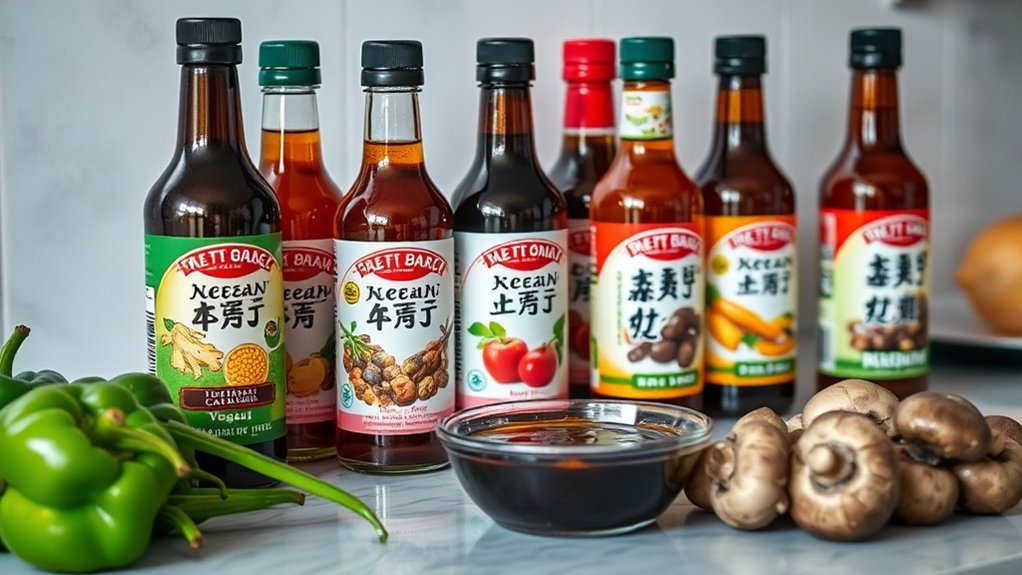
Maneuvering through the condiment aisle for vegan teriyaki sauce requires careful label scrutiny, as manufacturers frequently include fish sauce, honey, or bonito (dried fish flakes) in their formulations.
Among store bought options, Annie Chun’s and Kikkoman’s gluten-free teriyaki sauce consistently deliver authentic flavor profiles without animal derivatives. Soy Vay offers another reliable choice that’s clearly labeled vegan.
For those avoiding both animal products and gluten, Coconut Secret’s coconut aminos-based teriyaki sauce provides an excellent alternative with comparable taste complexity.
When evaluating products, you’ll want to prioritize those featuring organic soy sauce and natural sweeteners rather than refined sugars. Vegan-labeled options typically exclude common allergens, making them suitable for multiple dietary requirements.
Always verify certification marks or ingredient lists, as formulations can change between product batches.
How to Spot Hidden Animal Products on Teriyaki Labels?
When scanning teriyaki sauce labels, you’ll need to identify common non-vegan ingredients that manufacturers often disguise under technical or unfamiliar names.
Research indicates that fish-based additives like bonito extract, anchovy paste, and dashi appear frequently in traditional formulations, while animal-derived sweeteners such as honey and color additives like carmine (derived from insects) may also be present.
Understanding how to decode ingredient lists and recognize misleading terms like “natural flavors”—which can legally include animal products—will help you make truly vegan-friendly choices.
Common Non-Vegan Ingredients
Several animal-derived ingredients commonly hide in teriyaki sauce formulations, making careful label scrutiny essential for vegan consumers.
You’ll frequently encounter fish sauce or anchovies, which manufacturers add for umami depth. Honey serves as a sweetener in many brands, though vegan substitutes like maple syrup or agave provide suitable teriyaki alternatives.
Worcestershire sauce, a traditional teriyaki component, typically contains anchovies. Gelatin may appear as a thickening agent, derived directly from animal collagen.
The term “natural flavors” presents particular challenges, as it can mask animal-derived substances without explicit disclosure.
To guarantee compliance with vegan principles, you should prioritize products explicitly labeled as vegan, which confirm the absence of these hidden animal ingredients and use plant-based vegan substitutes throughout their formulation.
Reading Ingredient Lists
Identifying animal-derived ingredients in teriyaki sauce requires systematic label analysis and knowledge of industry terminology.
You’ll need to scrutinize listings for fish sauce, often disguised as “anchovy paste” or “umami seasoning.” Check for honey, which disqualifies products as vegan despite plant-based alternatives like maple syrup being readily available.
While uncommon, dairy ingredients such as milk or cream occasionally appear for richness improvement.
Ingredient sourcing becomes vital when evaluating caramel color, as some variants derive from animal sources rather than plant-based alternatives.
Label transparency varies considerably between manufacturers, so verify that “liquid aminos” originate from non-GMO soybeans without animal product contamination.
Professional nutritionists recommend contacting manufacturers directly when ingredient origins remain unclear, making sure your dietary choices align with vegan principles.
Misleading Label Terms
Although teriyaki sauce labels may appear straightforward, manufacturers frequently employ ambiguous terminology that obscures animal-derived ingredients.
“Natural flavors” represent the most problematic descriptor, as FDA regulations permit this catch-all term to encompass flavor compounds extracted from meat, seafood, or dairy without specific disclosure requirements.
You’ll need to scrutinize misleading ingredients like “seafood extract” and “anchovy paste”—both fish-based additives common in teriyaki formulations.
Marketing tactics often highlight “traditional” or “authentic” claims that correlate with animal-derived sake or fish sauce inclusion.
Honey appears as another non-vegan sweetener frequently disguised within otherwise plant-based recipes.
To direct these labeling complexities, contact manufacturers directly when ingredient transparency remains unclear, or select products explicitly certified as “vegan” or “plant-based” to eliminate ambiguity regarding hidden animal products in your teriyaki sauce selection.
Easy Vegan Teriyaki Sauce Recipe You Can Make in 5 Minutes
Making your own vegan teriyaki sauce requires just five minutes and a handful of pantry staples, delivering a healthier alternative to store-bought versions that often contain high-fructose corn syrup and excessive sodium.
You’ll combine low-sodium soy sauce or tamari, vegetable broth, maple syrup, sesame oil, fresh ginger, and garlic with cornstarch as your thickening agent.
Homemade variations and flavor improvements include:
- Sweetness adjustment – Add extra maple syrup to balance saltiness or accommodate personal taste preferences.
- Heat incorporation – Mix in red pepper flakes for a spicy kick that complements the savory-sweet profile.
- Storage optimization – Refrigerate in an airtight container for up to one week, or freeze for extended shelf life.
This customizable sauce works perfectly for stir-fries and marinading plant-based proteins.
What to Cook With Vegan Teriyaki: Stir-Fries, Tofu, and Rice Bowls
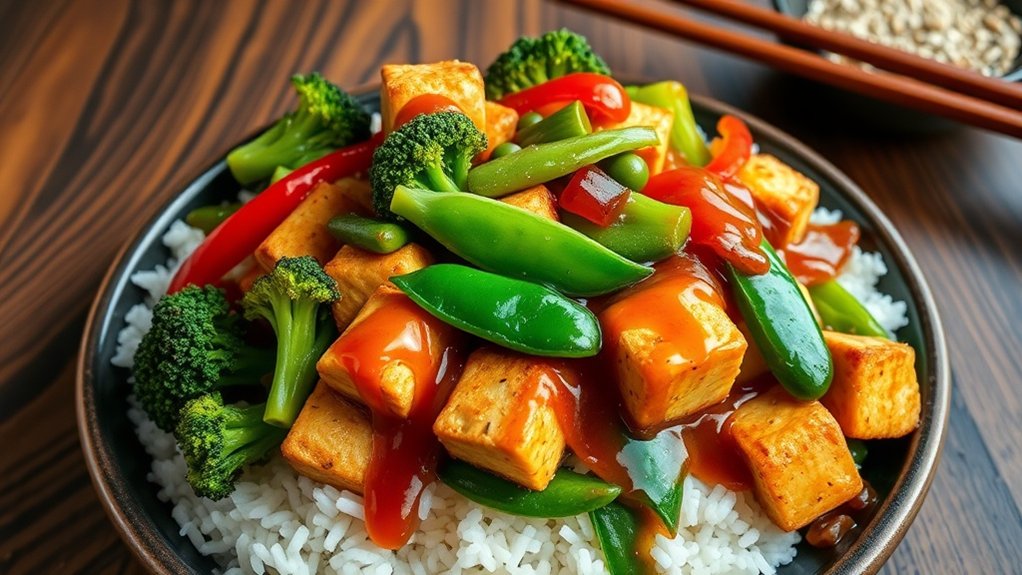
Vegan teriyaki sauce transforms ordinary plant-based ingredients into restaurant-quality meals through its balanced umami profile and caramelization properties.
You’ll achieve excellent results with stir fry variations by sautéing broccoli, bell peppers, and snap peas in the sauce, allowing the natural sugars to caramelize while maintaining vegetable texture.
For protein-rich preparations, tofu marinades work exceptionally well—submerge cubed tofu in the sauce for 30 minutes before baking or air frying to develop a crispy exterior with deep flavor penetration.
You can drizzle the sauce over rice bowls containing brown rice or quinoa, or toss it with noodles for complete coverage.
Chickpeas and tempeh also benefit from teriyaki glazing, providing versatile umami-rich toppings for salads and grain-based meals.
This article was reviewed by Nicole Anderson, RDN.