Last Updated: June 5, 2026
Is Rice a Veg
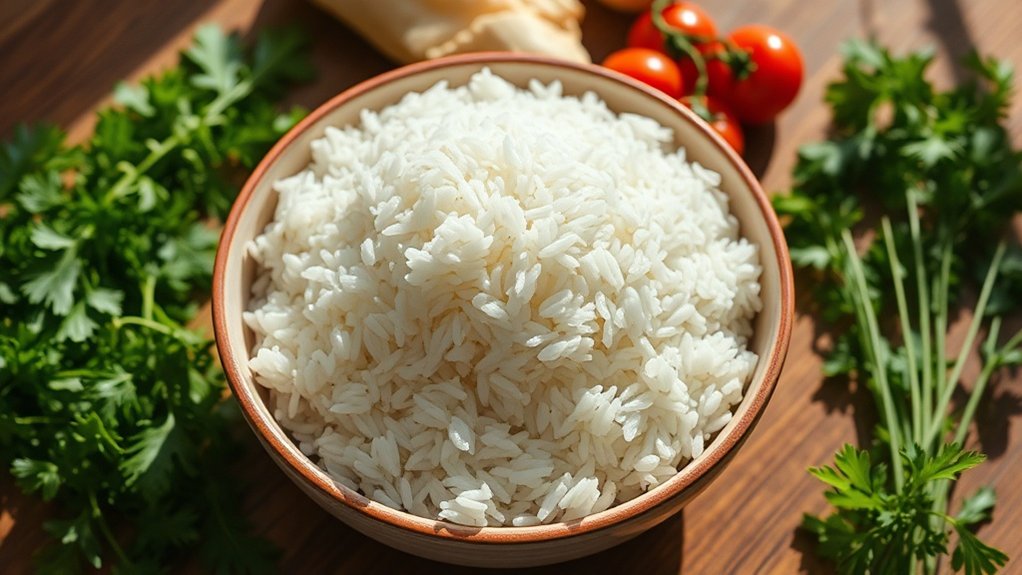
Rice isn’t a vegetable—it’s a caryopsis, a specialized dry fruit you’re eating from *Oryza sativa*, a semi-aquatic grass in the Poaceae family. Unlike vegetables derived from photosynthetic tissues like leaves or roots, rice grains contain an embryo surrounded by starch-filled endosperm tissue and protective layers including the pericarp, testa, and aleurone. You’re consuming a glucose polymer storage organ, not cellulose-rich vegetable matter. The confusion stems from culinary presentation alongside vegetables, though rice’s cellular structure and taxonomic classification clearly distinguish it as a cereal grain with distinct nutritional properties worth understanding.
Contents
show
What Exactly Is Rice? a Grain From Grass Seeds
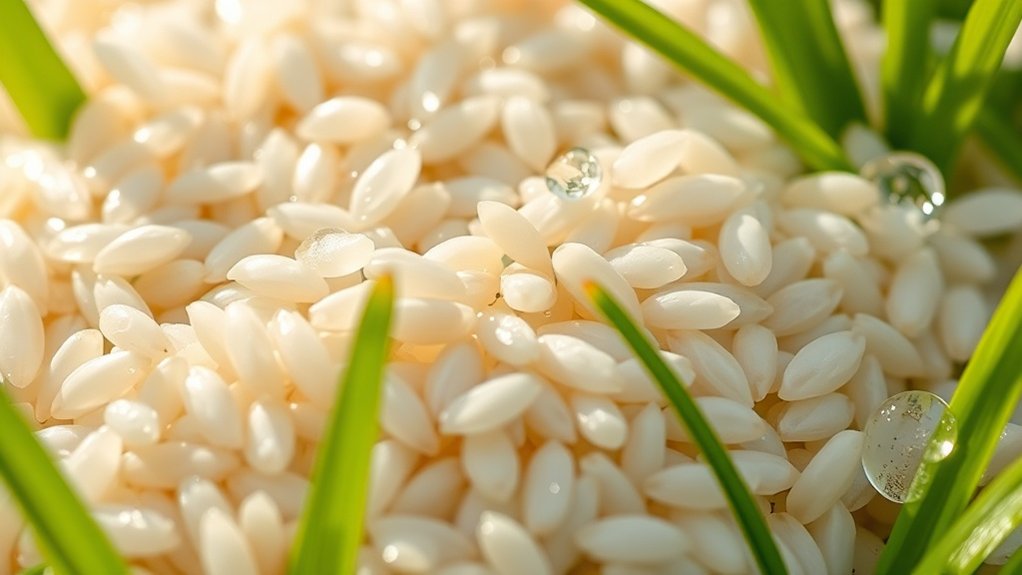
Rice (*Oryza sativa*) constitutes a caryopsis—a dry, one-seeded fruit where the ovary wall fuses with the seed coat—produced by a semi-aquatic grass species within the Poaceae family.
You’ll find this grain exhibits distinct characteristics: an embryo positioned at one end, endosperm comprising starch-filled cells, and protective layers including the pericarp, testa, and aleurone. These grain characteristics distinguish it from vegetables, which derive from roots, stems, or leaves.
During rice cultivation, you’re growing seeds that’ll undergo germination, tillering, and reproductive phases over 3-6 months.
The plant’s specialized anatomy—including aerenchyma tissue for oxygen transport—enables growth in flooded paddies.
Whether you’re promoting long-grain, medium-grain, or short-grain varieties, you’re harvesting grass seeds optimized for carbohydrate storage, not vegetative plant tissue.
Why Does Rice Get Confused With Vegetables?
Why do consumers conflate this monocotyledonous caryopsis with dicotyledonous vegetative organs? You’ll find the answer in culinary overlap—rice’s frequent pairing with actual vegetables in stir-fries and composite dishes creates visual and contextual confusion.
The grain’s presentation alongside pigmented vegetable tissues obscures its botanical classification as Oryza sativa endosperm tissue. Cultural perceptions compound this taxonomic misunderstanding; rice functions as a staple carbohydrate source in plant-based diets, leading you to mentally categorize it with vegetables rather than recognizing it as a grass-derived grain.
When you encounter terms like “fried rice,” the vegetable components dominate your perception, overshadowing rice’s true identity as a cereal grain. You’re simply unaware that this starchy endosperm represents fundamentally different cellular structures and taxonomic origins from the vegetative plant organs you consume.
Is Rice a Vegetable or a Grain?
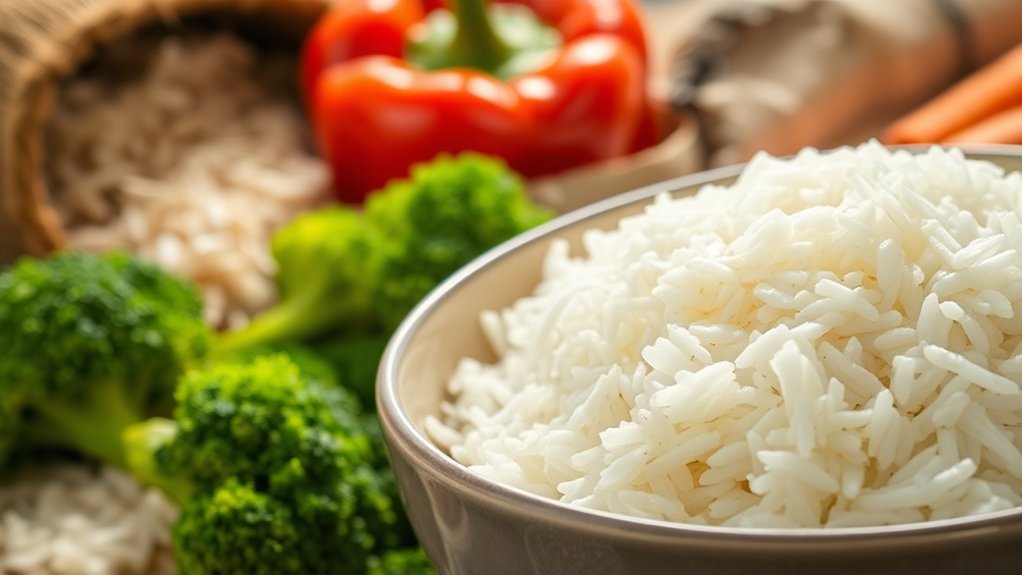
You’ll find that rice (*Oryza sativa*) belongs to the taxonomic family Poaceae, definitively classifying it as a cereal grain rather than a vegetable.
Grains derive from the caryopsis—a single-seeded fruit where the ovary wall fuses with the seed coat—while vegetables originate from various plant organs including roots, stems, and leaves with distinct cellular structures.
This botanical distinction translates to significant nutritional differences: rice’s endosperm cells store primarily starch granules and limited protein bodies, contrasting sharply with the cellulose-rich parenchyma cells and diverse phytochemical profiles found in vegetable tissues.
Rice Classification as Grain
This structural characteristic distinguishes rice from vegetables, which originate from diverse plant organs.
You’ll find rice varieties categorized by endosperm composition and amylose content: Indica types exhibit long, separate grains, while Japonica variants produce shorter, stickier kernels.
The grain benefits stem from concentrated carbohydrate stores—specifically starch granules within the endosperm—designed to support embryonic development.
This energy-dense composition makes rice fundamentally different from nutrient profiles typical of leafy, root, or stem vegetables.
Vegetables Versus Grains Explained
When examining food classification at the cellular and taxonomic level, rice definitively falls within the grain category as a caryopsis—a dry, one-seeded fruit where the seed coat fuses with the fruit wall.
Understanding grain characteristics versus vegetable types requires recognizing fundamental botanical distinctions:
- Grains originate from grass family (Poaceae) seed structures, containing endosperm tissue rich in starch.
- Vegetable types encompass diverse plant organs: roots (carrots), leaves (spinach), stems (celery), and modified structures.
- Cellular composition differs greatly—grains store energy as concentrated carbohydrates, while vegetables contain higher water content and varied nutrient profiles.
- Taxonomic classification places rice (*Oryza sativa*) squarely within Poaceae, distinguishing it from eudicot vegetables.
You’ll find this distinction isn’t arbitrary—it’s rooted in plant morphology and evolutionary biology, informing nutritional understanding.
Nutritional Differences Between Both
Beyond taxonomic placement, the biochemical architecture of rice grains contrasts sharply with vegetable tissues in ways that directly impact your dietary intake. Rice endosperm contains mainly amylose and amylopectin—complex carbohydrates that serve as concentrated energy reserves.
You’ll find approximately 80% carbohydrate content in polished white rice, whereas vegetables typically contain 2-10%, offering instead abundant micronutrients and phytochemicals within their cellular matrices.
The nutritional benefits differ considerably: vegetables provide essential vitamins A, C, and K through their photosynthetic tissues, while rice delivers sustained caloric energy.
Brown rice’s aleurone layer and germ retain B-vitamins and dietary fiber—approximately 3.5 grams per cup—though this pales compared to leafy vegetables’ 5-7 grams.
Understanding these compositional differences helps you construct metabolically balanced meals combining both food categories effectively.
How Does Rice Compare Nutritionally to Vegetables?
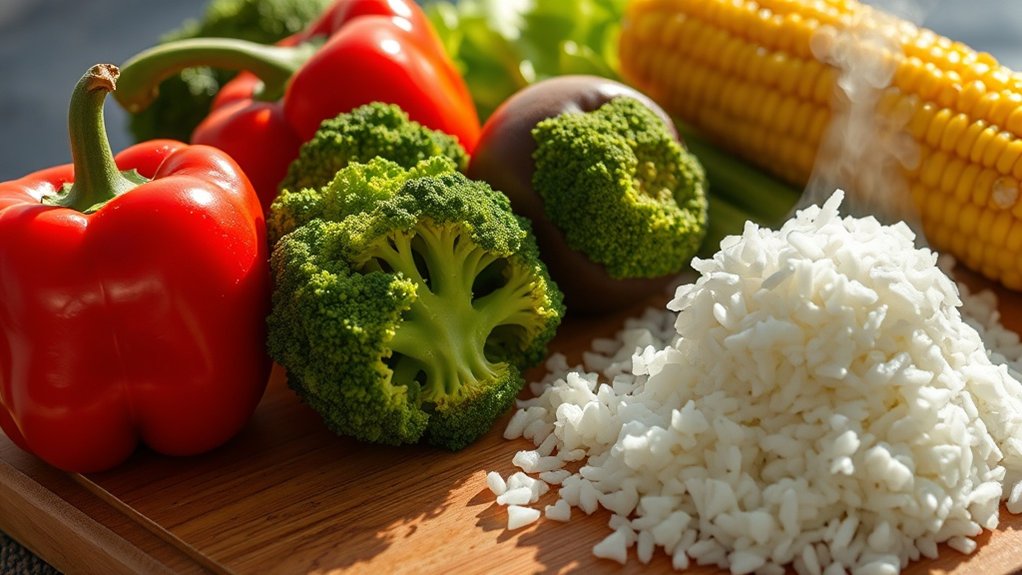
Nutritionally, rice and vegetables occupy distinct biochemical niches in human dietary matrices, with rice functioning primarily as a glucose polymer storage organ while vegetables represent diverse photosynthetic tissues rich in micronutrient cofactors.
When you compare rice nutrients to vegetable benefits, you’ll observe fundamental compositional disparities:
- Rice delivers concentrated carbohydrate energy (29% per serving) with minimal protein (2%), whereas vegetable tissues provide superior vitamin C, K, and potassium concentrations.
- Brown rice’s endosperm contains moderate fiber levels, yet cruciferous vegetables like broccoli demonstrate improved cellulose content for gastrointestinal motility.
- Rice exhibits greater caloric density, optimizing energy storage in staple-dependent populations.
- Vegetables maintain heightened water percentages, promoting cellular hydration and satiety responses without caloric surplus.
Your nutritional requirements determine which plant tissue serves your metabolic demands most efficiently.
White Rice vs Brown Rice: Which Grain Is Healthier?
Which grain optimizes your cellular metabolism more effectively?
Brown rice benefits your body at the molecular level through its intact bran and germ layers, delivering 3.5 grams of fiber per cup that facilitates digestive enzyme activity and glucose regulation. Its lower glycemic index prevents insulin spikes, supporting mitochondrial energy production and cardiovascular function.
White rice drawbacks stem from processing that removes nutrient-dense outer layers, leaving less than 1 gram of fiber per cup. While manufacturers add iron and B vitamins through enrichment, this doesn’t replicate brown rice’s natural phytochemical matrix.
You’ll find brown rice requires 45 minutes of preparation versus white rice’s 18-20 minutes, but the cellular advantages—improved nutrient absorption, improved gut microbiome diversity, and superior metabolic regulation—justify this commitment.
Arsenic in Rice: What You Need to Know
Mitigate arsenic exposure through these evidence-based protocols:
- Rinse grains thoroughly before cooking to remove surface contamination.
- Cook rice using excess water methods, reducing arsenic levels by 60%.
- Select white rice varieties where milling removes arsenic-rich bran layers.
- Source grains from California, India, or Pakistan regions with lower soil contamination.
The FDA recommends grain diversification strategies, particularly for vulnerable populations experiencing cellular development.
Children require special consideration given heightened health risks from chronic arsenic exposure through regular Oryza sativa intake.
Smart Ways to Add Rice to Your Meals
Rice’s metabolic versatility allows you to integrate this glucose-dense grain across multiple meal architectures.
You’ll maximize nutrient absorption in rice stir fries by combining pre-cooked grains with phytonutrient-rich vegetables and protein matrices, enabling sauce compounds to permeate the endosperm structure.
Grain bowls function as complete nutritional systems when you layer rice beneath legumes, roasted vegetables, and animal proteins.
Rice salads deliver ideal phytochemical retention through cold preparation—you’ll combine cooled grains with fresh herbs, lipid-rich nuts, and acid-based vinaigrettes.
In soups and stews, rice acts as a thickening polysaccharide while contributing complex carbohydrates to the aqueous medium.
You can even investigate rice desserts like pudding, where amylopectin molecules create creamy textures through gelatinization, demonstrating this grain’s remarkable culinary adaptability across sweet applications.
This article was reviewed by Nicole Anderson, RDN.