Last Updated: March 2, 2026
Is Caprese Pizza Protein Vegan
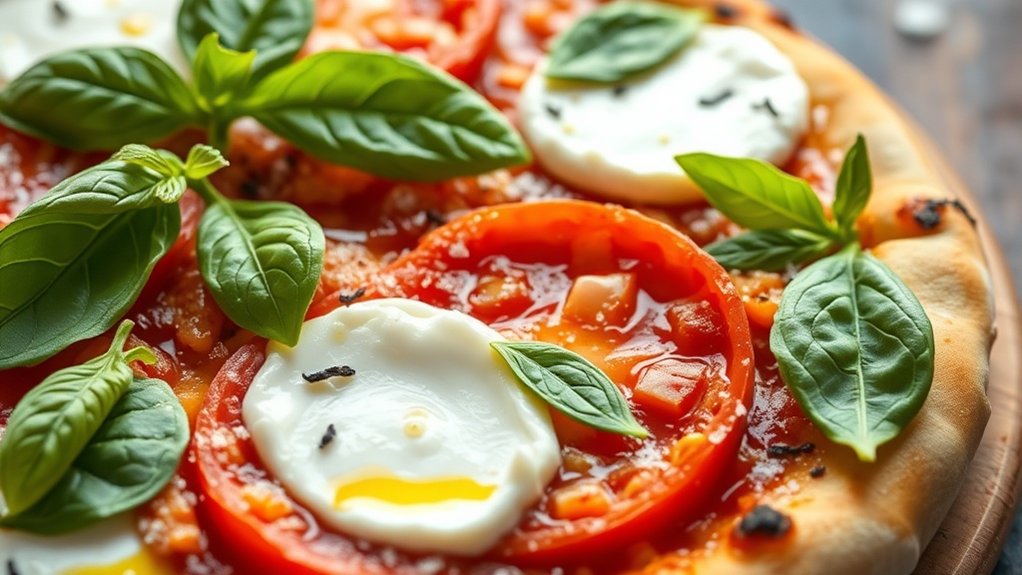
Traditional Caprese pizza isn’t vegan since it contains dairy mozzarella, which provides 6-8 grams of protein per slice. You’ll find vegan versions deliver only 1-3 grams of protein unless you fortify them with chickpea flour crusts (22g per cup), tofu-enhanced cashew ricotta (10g additional), or pea protein-based mozzarella (6-8g per serving). Nutritional yeast adds another 8 grams per 2 tablespoons while maintaining authentic flavor profiles. Strategic ingredient selection can boost your vegan Caprese pizza to 12-15 grams of complete plant-based protein per serving.
Contents
show
How Much Protein Is in Caprese Pizza?
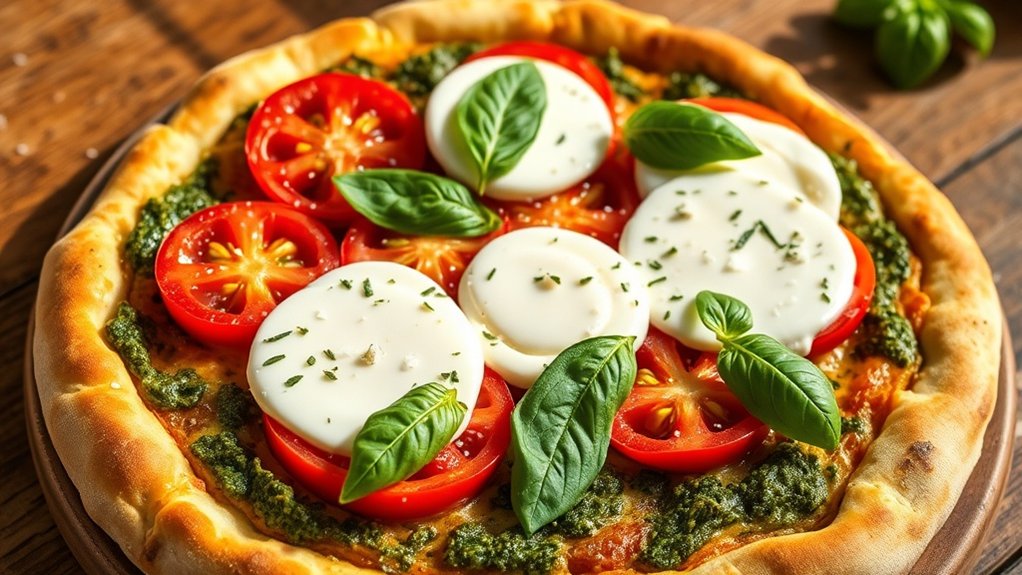
How does Caprese pizza measure up nutritionally when prepared with plant-based ingredients?
When you’re considering caprese pizza vegan protein content, you’ll find approximately 12.1 grams of protein per serving. This macronutrient profile derives primarily from cashew ricotta and vegan cheese alternatives. The cashew ricotta provides not only protein but essential fatty acids, establishing nutritional density in this plant-based preparation.
Your protein intake can vary based on specific ingredient selection. Nut-based or soy-derived vegan mozzarella alternatives contribute additional protein.
If you’re targeting higher protein consumption, you can fortify your Caprese pizza with chickpeas or hemp seeds as supplementary toppings. These additions markedly improve the amino acid profile while maintaining the traditional flavor components of this Italian preparation.
Traditional vs. Vegan Caprese Pizza: Protein Comparison
When comparing protein profiles between traditional and vegan Caprese pizza, you’ll observe significant variations in macronutrient density.
Traditional versions deliver 6-8 grams of protein per slice from mozzarella cheese, maintaining consistent amino acid profiles. Conversely, standard vegan alternatives using plant-based cheese typically provide only 1-3 grams per slice, representing a 50-75% reduction in protein content.
However, you can optimize vegan versions through strategic ingredient fortification. Adding cashew ricotta and protein-rich pesto enhances protein levels to 10-12 grams per slice, potentially exceeding traditional variants.
Both preparations maintain similar caloric ranges of 200-300 calories per serving.
To match traditional protein density, you’ll need to incorporate high-protein plant sources such as tofu crumbles or chickpea flour into your vegan Caprese pizza base.
Mozzarella, Cashew Ricotta, and Chickpea Crust Protein Breakdown
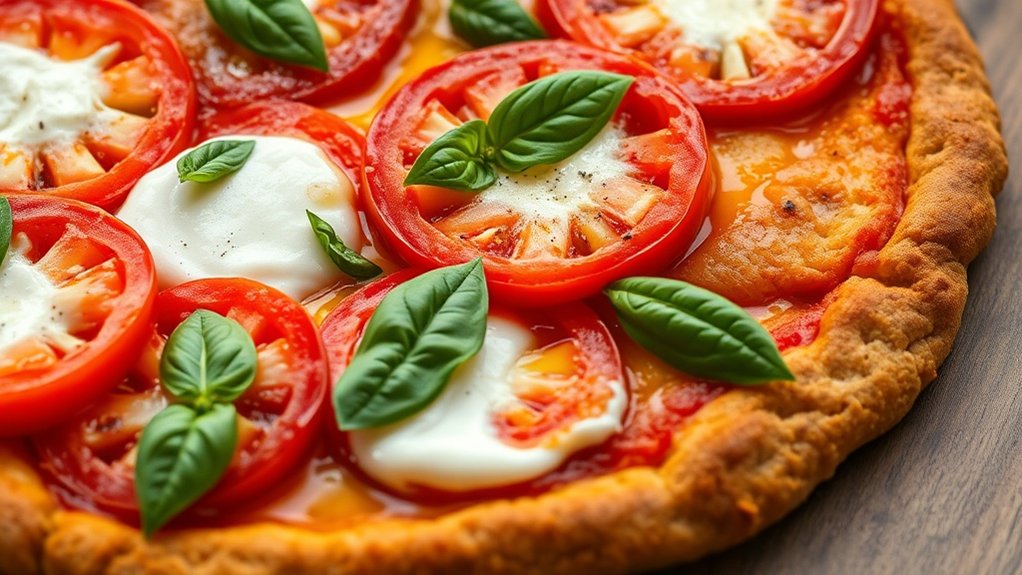
When you construct a vegan Caprese pizza, you’ll obtain 1-3 grams of protein from plant-based mozzarella, 4-6 grams from cashew ricotta per ounce, and 6-8 grams from chickpea crust per 1/4 cup serving.
This combination delivers approximately 12-15 grams of protein per serving, though the exact amount depends on portion sizes and specific product formulations.
Chickpea flour stands out as the most protein-dense component, providing essential amino acids alongside fiber and micronutrients like folate and iron.
Vegan Cheese Protein Content
Understanding the protein composition of vegan Caprese pizza components enables you to optimize your nutritional intake while adhering to plant-based dietary principles.
Vegan cheese alternatives demonstrate variable protein concentrations based on formulation methods and base ingredients:
- Vegan mozzarella delivers 1-3 grams of protein per ounce, representing a lower protein density compared to dairy-derived variants due to its plant-based matrix composition.
- Cashew ricotta provides 4-5 grams of protein per 1/4 cup serving, leveraging the inherent amino acid profile of cashews as a nutrient-dense legume source.
- Chickpea crust contributes 10-15 grams of protein per cup through chickpea flour’s high protein concentration, establishing it as the primary protein contributor.
This combination yields 12-22 grams of protein per serving, demonstrating that strategic ingredient selection compensates for individual component limitations in plant-based formulations.
Chickpea Flour Nutritional Profile
Chickpea flour’s macronutrient composition positions it as the cornerstone protein source in vegan Caprese pizza formulations. You’ll obtain approximately 21 grams of protein per 100 grams of chickpea flour, establishing the crust as the primary protein contributor.
This legume-based flour delivers complete amino acid profiles necessary for tissue synthesis and metabolic function.
When analyzing the complete pizza assembly, you’re combining three distinct protein sources. Cashew ricotta contributes 4 grams per ounce, while vegan mozzarella alternatives provide 2-4 grams per serving.
This strategic ingredient layering yields 10-12 grams of total protein per serving, depending on portion specifications and brand formulations.
The synergistic protein combination addresses common plant-based dietary concerns regarding adequate protein intake, transforming traditional Caprese pizza into a nutrient-dense meal option for vegan protocols.
Does Vegan Caprese Pizza Have Enough Protein?
Vegan Caprese Pizza provides 10.5 to 22.2 grams of protein per serving, depending on your choice of plant-based cheese and crust composition.
You’ll meet approximately 19-40% of the average adult’s daily protein requirement (56g for males, 46g for females) with a single serving.
You can optimize the protein density by incorporating chickpeas, hemp seeds, or nutritional yeast as strategic toppings to enhance the amino acid profile.
Protein Content Per Serving
One serving of vegan Caprese pizza delivers approximately 12.1 grams of protein, derived primarily from cashew ricotta and tofu components. This macronutrient profile positions the dish as a moderate protein source within plant-based dietary frameworks.
Protein comparison considerations:
- Conventional vs. vegan formulations – Traditional mozzarella-based Caprese pizza typically contains similar protein levels, though specific cashew ricotta formulations may yield slightly lower values depending on nut-to-water ratios.
- Bioavailability factors – Plant-based proteins from cashews and soy offer complete amino acid profiles, though digestibility differs from dairy proteins.
- Enhancement strategies – You can increase protein density by incorporating additional tofu portions or supplementing with higher-protein toppings like hemp seeds or nutritional yeast.
The 12.1-gram serving contributes meaningfully toward daily protein requirements for plant-based consumers.
Boosting Protein With Toppings
While standard vegan Caprese pizza provides moderate protein levels, strategic topping additions can improve its macronutrient density substantially.
You’ll find hemp seeds deliver approximately 10 grams of protein per three tablespoons, making them an efficient topping choice. Chickpeas contribute 7.3 grams per half-cup serving while adding textural variety and fiber content.
Incorporating nutritional yeast provides 8 grams of protein per quarter-cup, along with essential B-vitamins. You can also utilize pumpkin seeds, which offer 8.5 grams per ounce, or edamame for an additional 9 grams per half-cup.
These protein-dense toppings complement the existing cashew ricotta base—containing 5 grams per ounce—and tofu-enriched preparations that provide 10 grams per half-cup.
Best High-Protein Vegan Cheese for Caprese Pizza
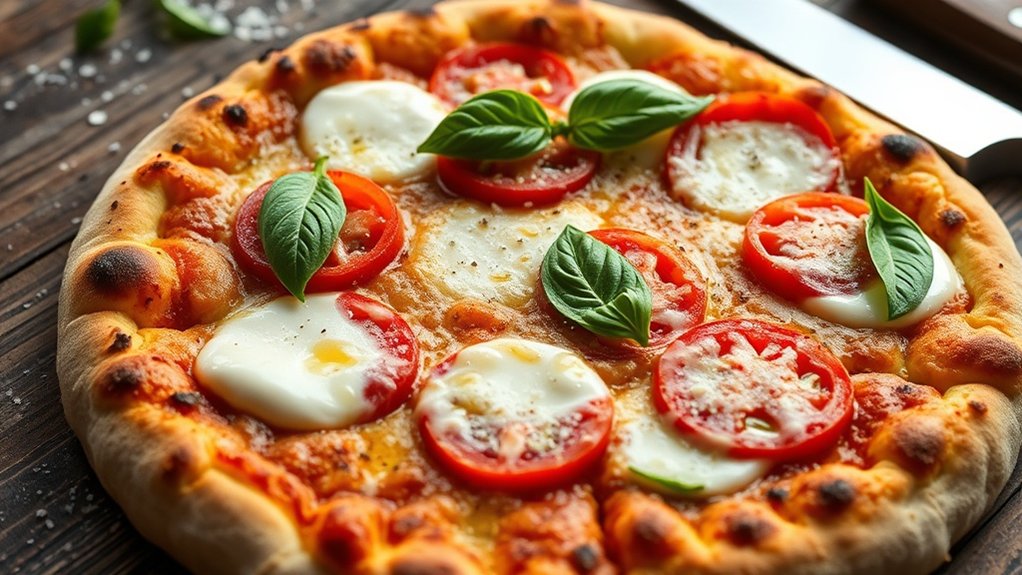
Protein content serves as a critical consideration when selecting vegan cheese alternatives for Caprese pizza, as traditional dairy mozzarella provides approximately 6-7 grams of protein per ounce.
Several plant-based options deliver comparable macronutrient profiles while maintaining functional melting properties.
Top High-Protein Vegan Cheese Options:
- Almond, Soy, or Pea Protein-Based Cheeses – These formulations contain 6-8 grams of protein per serving, with brands like Daiya and Violife offering mozzarella varieties that demonstrate superior melting characteristics.
- Nutritional Yeast – This deactivated yeast provides 8 grams of protein per 2 tablespoons, functioning as both a flavor booster and direct cheese substitute with umami properties.
- Cashew-Based Cheeses – Homemade preparations blended with nutritional yeast deliver 5-7 grams of protein per serving while providing desirable creamy texture.
Boosting Caprese Pizza Protein With Chickpea or Lentil Crusts
Beyond selecting protein-rich cheese alternatives, the foundation of your Caprese pizza presents another opportunity for macronutrient optimization. Chickpea and lentil-based crusts deliver 14-20 grams of protein per cup, substantially exceeding traditional wheat dough’s protein density.
Chickpea flour improves your crust’s nutrient profile through increased dietary fiber, vitamin B6, and folate concentrations. Lentil integration provides additional iron and magnesium—minerals essential for cellular energy production and skeletal muscle function.
Both legume-based options maintain gluten-free properties while preserving desirable textural characteristics and palatability. This crust modification transforms your Caprese pizza into a more balanced macronutrient composition, supporting vegan dietary protocols through plant-based protein amplification.
You’ll achieve superior amino acid intake without compromising the traditional flavor profile expectations of this Mediterranean-inspired dish.
Store-Bought Vegan Caprese Pizza: Protein Content Analysis
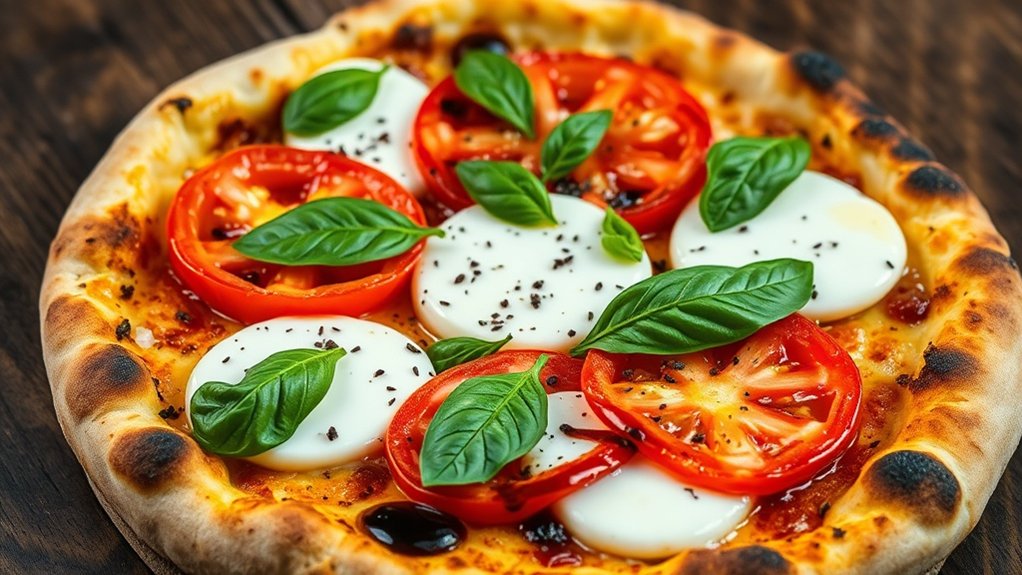
When evaluating commercial vegan Caprese pizza offerings, you’ll encounter considerable protein variability ranging from 10 to 22 grams per serving—a disparity attributable to divergent formulation strategies across manufacturers.
The protein augmentation mechanisms include:
- Nut-based and soy-derived mozzarella analogs that provide superior amino acid profiles compared to traditional dairy cheese.
- Cashew ricotta formulations delivering concentrated plant protein alongside healthy monounsaturated fats.
- Fortification with isolated pea protein or other supplemental plant proteins to increase macronutrient density.
You’ll need to scrutinize nutritional labels meticulously, as protein content fluctuates greatly between brands. Some manufacturers prioritize taste over nutritional optimization, while others strategically incorporate protein-dense ingredients.
This variability necessitates informed consumer selection based on individual dietary protein requirements and metabolic objectives.
Making High-Protein Vegan Caprese Pizza at Home
Elevating homemade vegan Caprese pizza’s protein density requires strategic ingredient selection across three primary components: the crust, cheese alternatives, and supplemental toppings.
You’ll optimize protein intake by substituting traditional wheat flour with chickpea flour, delivering approximately 22 grams of protein per cup.
For cheese replacement, chickpea-based mozzarella provides superior protein compared to nut-based alternatives. You can further improve protein density by incorporating silken tofu into cashew ricotta—adding 10 grams per half-cup serving.
Nutritional yeast contributes additional protein while providing B-vitamins.
Consider integrating legumes like lentils or black beans directly into the base or as toppings.
Pairing your pizza with protein-rich accompaniments such as edamame or chickpea salad creates a complete, high-protein meal profile exceeding standard vegan pizza offerings.
This article was reviewed by Nicole Anderson, RDN.