Last Updated: June 20, 2026
Are Gummy Bears Vegan
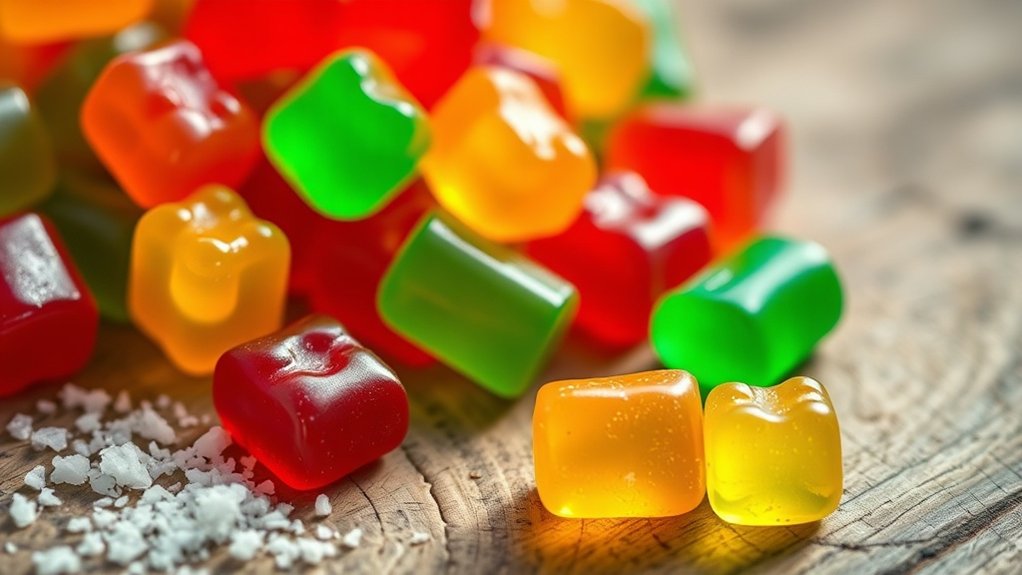
Most gummy bears aren’t vegan because they contain gelatin, a protein derived from boiling animal bones, skin, and connective tissues. You’ll also need to watch for hidden animal ingredients like carmine (crushed insects), beeswax, and confectioner’s glaze. However, vegan alternatives do exist using plant-based gelling agents such as pectin, agar-agar, or carrageenan. Brands like Surf Sweets and Project 7 offer clearly labeled vegan options. Understanding ingredient labels and knowing which brands prioritize plant-based formulations will help you guide the complexities of finding truly vegan gummy candies.
Contents
show
What Are Gummy Bears and Why Aren’t They Usually Vegan?
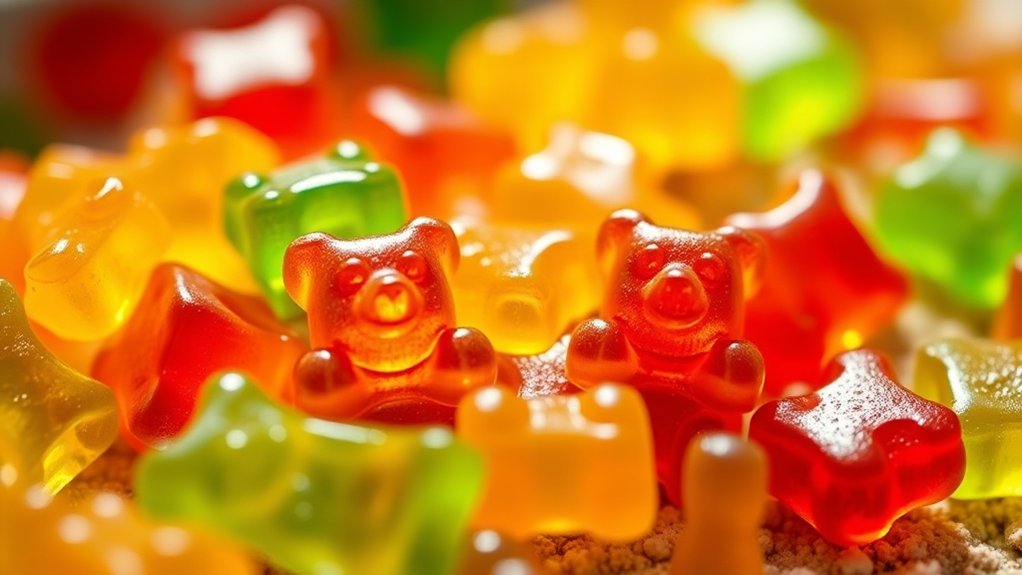
Gummy bears are firm, chewy candies molded into miniature bear shapes and sold in an array of fruit flavors, from cherry and orange to pineapple and lemon.
Despite their gummy bear history dating back to 1920s Germany, these beloved treats aren’t typically vegan-friendly. The primary culprit is gelatin—a protein extracted by boiling animal skins, bones, and connective tissues—which gives gummy bears their characteristic texture.
You’ll also find beeswax coating some varieties to prevent sticking, and confectioner’s glaze containing shellac derived from lac beetles. These animal-derived ingredients appear across most fruit flavor varieties, making conventional gummy bears unsuitable for vegan diets.
However, plant-based alternatives using pectin, carrageenan, or agar-agar as gelling agents are increasingly available for those seeking animal-free options.
The Gelatin Problem: Why Most Gummy Bears Contain Animal Products
At the heart of the vegan incompatibility issue lies gelatin, a substance that manufacturers extract through prolonged boiling of animal collagen—primarily from porcine (pig) and bovine (cattle) sources.
This protein-rich ingredient has dominated gummy history since the 1920s, providing the distinctive chewy texture you recognize in traditional gummy bears.
Gelatin’s prevalence stems from three key advantages:
- Cost-effectiveness: Animal-derived gelatin remains cheaper than plant-based alternatives.
- Texture consistency: It delivers reliable elasticity and mouthfeel.
- Manufacturing efficiency: It sets quickly at room temperature.
However, you’ll find that candy alternatives increasingly use pectin (fruit-derived), agar-agar (seaweed-based), or carrageenan to replicate gelatin’s properties.
These plant-based gelling agents make vegan gummy bears possible, though you must carefully read ingredient labels to identify truly animal-free products.
Hidden Non-Vegan Ingredients Beyond Gelatin

Even if you find gummy bears without gelatin, you’ll need to scrutinize labels for other animal-derived ingredients that manufacturers commonly use.
Beeswax often appears in gummy coatings to prevent sticking and add shine, while confectioner’s glaze (shellac) provides a glossy finish—both derived from insects rather than plants.
Additionally, carmine, a vibrant red dye extracted from crushed cochineal beetles, remains prevalent in many candy products despite vegan alternatives being readily available.
Beeswax in Gummy Coatings
While gelatin often receives the most attention as a non-vegan ingredient in gummy bears, beeswax presents another significant obstacle for those following a strict plant-based diet. You’ll find this honeycomb-derived coating listed as “beeswax” or “cera alba” on ingredient labels, where it creates that characteristic glossy finish on many gummy candies.
When scrutinizing gummy bear ingredients, watch for these beeswax indicators:
- Coating agents listed near the end of ingredient panels
- E901 designation in European product labeling
- Glazing agents without specific source disclosure
Fortunately, manufacturers increasingly offer beeswax alternatives like carnauba wax and candelilla wax—both plant-derived substances that provide similar shine.
These vegan coatings deliver the glossy appearance you’d expect while maintaining strict plant-based standards, though you’ll need to verify labels carefully.
Shellac and Confectioner’s Glaze
Beyond the more obvious animal-derived ingredients, shellac—marketed as “confectioner’s glaze” on many candy labels—poses another critical concern for vegans evaluating gummy bears. This resin, secreted by lac bugs, creates that characteristic glossy finish on candies.
You’ll find shellac sources traced directly to insect secretions, making any product containing it non-vegan by definition.
The confusion intensifies when manufacturers label products “vegetarian” while still incorporating shellac or confectioner’s glaze. You must scrutinize ingredient lists carefully, as these coatings represent hidden animal derivatives that many consumers overlook.
Fortunately, confectioner’s alternatives exist, including plant-based waxes and synthetic glazing agents. Brands committed to vegan formulations typically specify these substitutions explicitly, making certain transparency for ethically-conscious consumers seeking genuinely animal-free gummy options.
Carmine Red Food Coloring
How can a seemingly innocent red gummy bear harbor ingredients derived from thousands of crushed insects? Carmine, also called cochineal extract or E120, creates vibrant red coloring through insect-based pigmentation.
You’ll need to scrutinize ingredient labels carefully, as this animal-derived additive frequently appears in gummy candies.
Key considerations for vegan consumers:
- Label variations: Carmine appears as “cochineal extract,” “E120,” “natural red 4,” or “crimson lake.”
- Ethical implications: The harvesting process raises concerns about animal exploitation in food production.
- Carmine alternatives: Manufacturers increasingly use plant-based options like beetroot extract, paprika, and synthetic red dyes.
The presence of carmine demonstrates why reading ingredient lists remains essential for maintaining vegan dietary standards.
Many brands now offer plant-based alternatives responding to consumer demand for cruelty-free coloring agents.
How to Verify If Your Gummy Bears Are Actually Vegan?
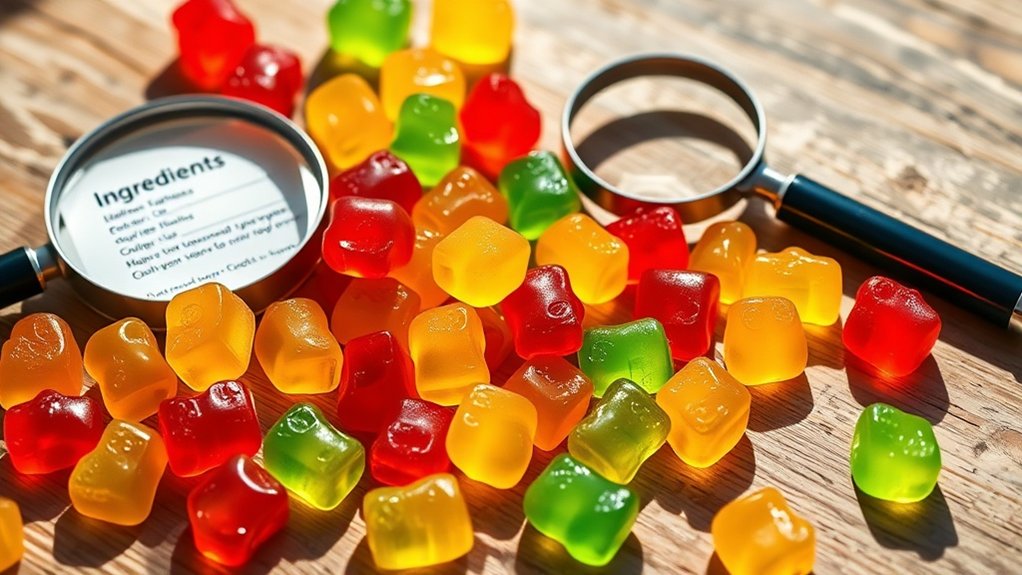
You’ll need to scrutinize labels for hidden animal derivatives including beeswax, confectioner’s glaze (shellac from insects), and carmine.
Look for vegan certifications from organizations like Vegan Action or The Vegan Society, which verify ingredient sourcing and manufacturing processes.
Reputable vegan brands like Surf Sweets, Squish Candies, and Annie’s clearly mark their gelatin-free products.
Cross-reference the manufacturer’s website with trusted vegan databases for confirmation.
Alternatively, you can create homemade gummy bears using plant-based gelling agents—pectin (fruit-derived) or agar-agar (seaweed-based)—making sure complete control over ingredients.
Plant-Based Gelling Agents: Pectin, Agar-Agar, and Carrageenan
When evaluating vegan gummy bears, you’ll encounter three primary plant-based gelling agents that function through distinct molecular mechanisms: pectin forms gels through calcium cross-linking and acidic conditions, agar-agar sets via hydrogen bonding between polysaccharide chains, and carrageenan gels through interactions with cations like potassium.
Research indicates that each agent produces significantly different textural properties—pectin creates a softer, more tender bite, agar-agar yields a firmer, less elastic structure, and carrageenan offers a smooth, slightly springy consistency.
These variations in texture directly influence taste perception, as firmer gels like agar-agar tend to release flavors more slowly compared to pectin-based gummies, which dissolve more readily on the palate.
How They Work
While traditional gummy bears rely on animal-derived gelatin for their signature bounce, plant-based alternatives use three primary gelling agents to achieve similar results: pectin, agar-agar, and carrageenan.
Understanding gummy chemistry helps you appreciate how these vegan options work:
- Pectin forms gels when you combine it with sugar and acid, creating a fruit-forward texture that’s particularly effective in citrus-flavored candies through careful ingredient sourcing from apple or citrus peels.
- Agar-agar sets firmly at room temperature without refrigeration, requiring less processing than gelatin while delivering a slightly firmer bite from its red algae origins.
- Carrageenan provides elasticity and chewiness by forming networks with proteins and water molecules, mimicking gelatin’s mouthfeel through its Irish moss extraction.
These alternatives offer you more versatile temperature handling than traditional gelatin-based formulations.
Texture and Taste Differences
Although plant-based gelling agents successfully replicate gelatin’s structural properties, they produce distinctly different textural and flavor profiles in gummy candies.
When evaluating texture comparison, you’ll notice pectin delivers a firm, chewy consistency similar to traditional gummies while contributing a fruitier taste due to its fruit-derived origins.
Agar-agar creates a slightly firmer bite than gelatin and sets at room temperature, offering a unique mouthfeel.
Carrageenan, extracted from seaweed, provides smooth, elastic texture that’s comparable to gelatin-based products while remaining gluten-free.
Unlike gelatin’s slightly rubbery quality, these plant-based alternatives offer a more natural mouthfeel that improves your candy experience.
The flavor profiles vary considerably depending on which gelling agent manufacturers select, with pectin-based varieties typically showcasing more pronounced fruit notes.
Top Vegan Gummy Bear Brands You Can Buy Today
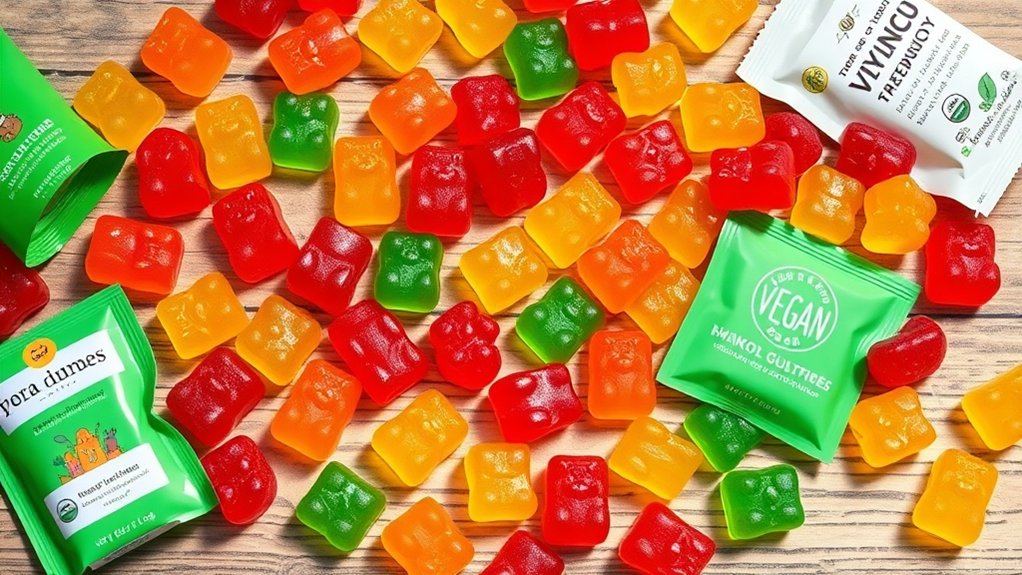
Additional brands worth considering include:
- Surf Sweets – Offers organic, allergen-free gummy bears with natural ingredients and ethical sourcing practices, delivering authentic flavor profiles that satisfy traditional gummy bear expectations.
- Project 7 Gummy Bears – Features reduced sugar content with stevia sweetening, providing a nutritionally-conscious alternative without sacrificing taste.
- Annie’s Organic Bunny Fruit Snacks – Bunny-shaped vegan gummies made with organic ingredients for those seeking playful alternatives.
For bulk purchases, Nuts.com stocks gelatin-free organic gummy bears.
These brands demonstrate that plant-based confections can match conventional gummies in quality while supporting animal-friendly manufacturing practices.
Making Your Own Vegan Gummy Bears at Home
Creating vegan gummy bears at home offers complete control over ingredients while eliminating concerns about hidden animal derivatives.
You’ll need homemade gelling agents like agar-agar, pectin, or carrageenan to replace animal-derived gelatin. The standard ratio combines 1 cup of fruit juice with 2-3 tablespoons of sweetener and 2-3 tablespoons of your chosen gelling agent.
Vegan flavoring options include natural fruit juices or extracts, allowing you to customize taste profiles according to your preferences.
Simply heat your mixture, pour it into silicone gummy bear molds, and refrigerate for approximately 30 minutes until firm.
Once set, your homemade treats can be stored in an airtight container in the refrigerator for up to two weeks, providing a fresher, healthier alternative to commercial varieties.
Are Organic or Natural Gummy Bears More Likely to Be Vegan?
Why do many consumers assume organic gummy bears are automatically vegan? The connection stems from organic products typically avoiding synthetic additives, increasing the likelihood of plant-based gelling agents like pectin replacing gelatin.
However, you’ll need to verify through careful ingredient sourcing examination.
When evaluating organic gummy bears for vegan compliance, consider:
- Vegan certifications – Brands like Surf Sweets and Annie’s clearly label their products, simplifying identification of acceptable options.
- Hidden animal derivatives – Despite natural formulations, check for beeswax or carmine in ingredient lists.
- Gelling agent types – Organic varieties often use pectin instead of animal-derived gelatin.
While organic gummy bears frequently align with vegan preferences through natural colors and fruit juices, the “organic” label alone doesn’t guarantee vegan status.
Always verify ingredients and look for explicit vegan certifications.
The Gray Areas: Bone Char Sugar, Palm Oil, and Cross-Contamination
Even when gummy bears contain plant-based gelatin alternatives, you’ll encounter ethical complexities in their production processes.
Sugar refined with bone char—a material derived from animal bones—complicates vegan classification, though manufacturers rarely disclose this processing method on ingredient labels.
Additionally, you should consider cross-contamination risks in facilities that process both vegan and non-vegan products, as shared equipment may introduce trace amounts of animal-derived ingredients into otherwise plant-based formulations.
Bone Char Sugar Processing
While most vegans scrutinize ingredient labels for obvious animal products like gelatin, the sugar in gummy bears presents a less visible ethical dilemma. Bone char processing uses charred animal bones to filter cane sugar, creating a gray area for strict vegans. Though the final product contains no animal residue, the manufacturing process involves animal byproducts.
Consider these key points about bone char sugar:
- Not all sugar undergoes bone char processing – beet sugar and certified organic cane sugar use alternative filtration methods.
- Many manufacturers now offer bone char-free options in response to consumer demand for ethical sourcing.
- Sugar alternatives like glucose syrup or coconut sugar avoid this concern entirely.
You’ll need to research specific brands or contact manufacturers directly, as bone char usage isn’t required on ingredient labels.
Cross-Contamination in Manufacturing
Beyond ingredient concerns, manufacturing facilities themselves pose vegan compliance challenges through cross-contamination with animal products. When vegan and non-vegan gummies share production equipment, traces of animal-derived ingredients can transfer into supposedly vegan products. This occurs through shared mixing tanks, conveyor belts, and packaging lines that haven’t been adequately cleaned between production runs.
You’ll need to prioritize brands demonstrating manufacturing transparency about their facility practices. Companies committed to vegan production typically implement strict cleaning protocols and dedicated production lines. However, many manufacturers don’t disclose these details, making vegan certification your most reliable indicator of compliance.
Look for third-party certifications that verify both ingredients and manufacturing processes. When brands lack certification or transparency statements, you’re fundamentally trusting undocumented practices, potentially compromising your vegan standards despite ingredient labels appearing acceptable.
Where to Find and Buy Vegan Gummy Candies
Finding vegan gummy candies has become considerably easier as consumer demand drives retail expansion. You’ll uncover numerous gummy brands offering vegan options across multiple shopping channels, each providing distinct advantages for your dietary needs.
Primary Sources for Vegan Gummy Candies:
- Health Food Stores and Specialty Shops – Local retailers typically stock dedicated vegan-friendly brands like Project 7 and Realfruit, allowing you to examine ingredient labels directly.
- Online Retailers – Platforms like Nuts.com and Squish Candies feature clearly marked vegan selections, with mainstream brands such as Surf Sweets and Annie’s offering convenient filtering options for efficient ordering.
- Supermarkets – Major grocery chains increasingly dedicate shelf space to plant-based confections, with seasonal availability around Halloween providing expanded variety.
These diverse retail channels guarantee you’ll find suitable alternatives without compromising your dietary principles.
This article was reviewed by Nicole Anderson, RDN.