Last Updated: May 19, 2026
Is Cornstarch Vegan
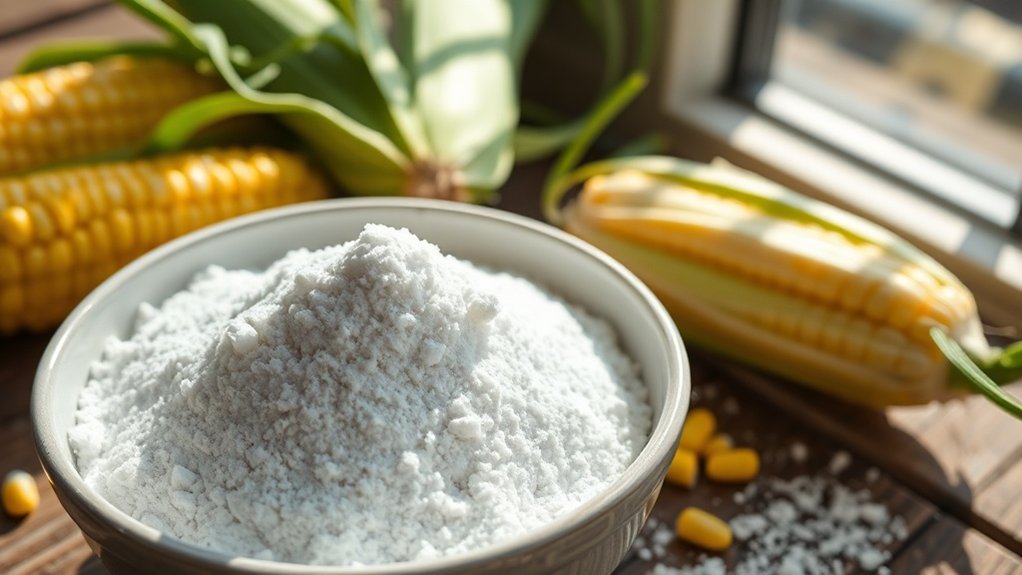
Cornstarch is 100% vegan since it’s derived exclusively from the endosperm of corn kernels through a water-based extraction process that doesn’t involve any animal products. The production involves steeping, grinding, and centrifugation to isolate pure starch from the corn kernel’s interior. While pure cornstarch remains plant-based across all major brands, you’ll want to check labels for potential non-vegan additives in specialty varieties and be aware that about 90% of U.S. corn is genetically modified. Understanding manufacturing practices and certification standards will help you make informed choices.
Contents
show
Is Cornstarch Vegan?
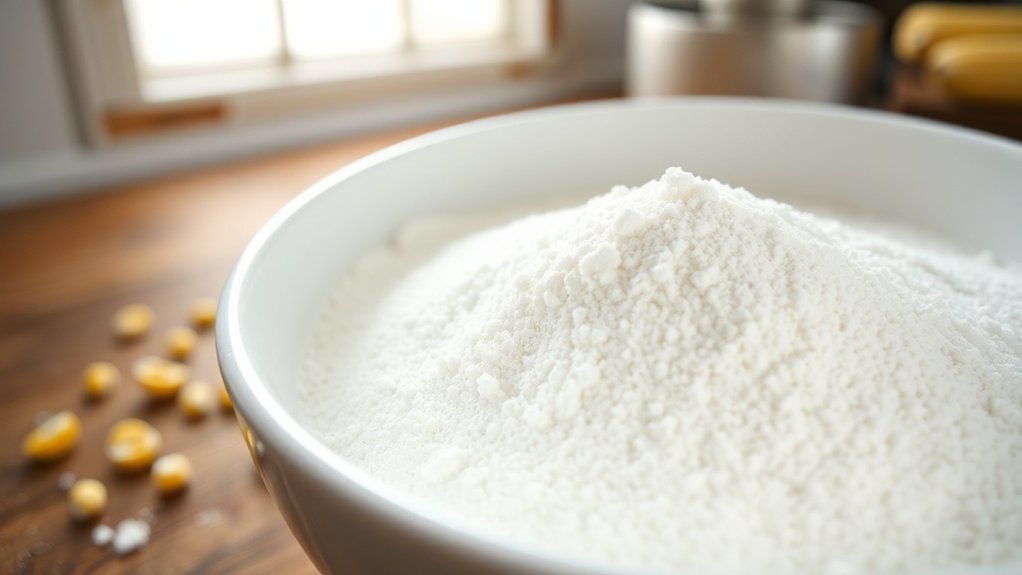
Cornstarch is 100% vegan, as it consists entirely of starch extracted from corn kernels’ endosperm—the white, nutrient-rich center of the grain.
The production process involves no animal-derived ingredients or byproducts, making it suitable for plant-based diets.
When you’re wondering “is corn starch vegan,” you’ll find that major brands like Anthony’s and Bob’s Red Mill clearly label their products as vegan-friendly.
The manufacturing process typically occurs in dedicated facilities, minimizing cross-contamination risks with non-vegan ingredients.
If you’re concerned about genetically modified organisms, organic cornstarch options are available.
Since corn is botanically a plant and cornstarch extraction is purely mechanical and chemical (using water), there’s no animal involvement at any production stage.
You can confidently use cornstarch in your vegan cooking and baking.
How Is Cornstarch Made?
Understanding cornstarch production helps you verify its vegan status.
The process begins with selecting corn kernels and soaking them in water to separate the starchy endosperm from the bran and germ.
Manufacturers then mill and wash the extracted endosperm before drying it into the fine, pure starch powder you’ll find in stores.
Corn Kernel Selection Process
Before cornstarch reaches your pantry, manufacturers must carefully select and process corn kernels through a multi-step extraction method. They choose mature kernels specifically for their endosperm content, which contains the pure starch you’ll eventually use in cooking. The selection process prioritizes kernels that meet food safety standards and are free from impurities that could compromise the final product’s quality.
Once selected, you’ll find these kernels undergo soaking in water to soften their structure. This softening facilitates the separation of the starch-rich endosperm from the kernel’s germ and bran components.
After grinding, manufacturers wash away fiber and protein, isolating the pure starch. The extracted starch is then dried and ground into the fine, white powder that arrives in your kitchen.
Endosperm Extraction Methods
During the wet milling process, you’ll observe that manufacturers steep corn kernels in a dilute sulfurous acid solution at temperatures between 120-130°F for 24-48 hours. This softening stage enables efficient separation of the kernel’s components.
The softened kernels then undergo coarse grinding to release the germ, which you’ll see floats away due to its lower density. Subsequent fine grinding breaks down the remaining kernel, allowing processors to wash away the bran fiber.
What remains is a slurry containing starch granules and gluten proteins. Centrifugation separates these components, isolating the endosperm starch. The extracted starch undergoes multiple washing cycles to remove residual proteins and impurities.
Finally, manufacturers dehydrate the purified starch, creating the fine white powder you recognize as cornstarch—a completely plant-derived product.
Grinding Into Fine Powder
After centrifugation yields purified starch, manufacturers focus on transforming this wet, granular material into the shelf-stable powder you find at grocery stores.
The drying process removes moisture content to approximately 12%, preventing microbial growth and extending shelf life. Once dried, industrial mills grind the starch into the characteristic fine powder you’re familiar with.
The milling process achieves several critical objectives:
- Particle size reduction creates uniform granules measuring 5-20 micrometers in diameter
- Improved dispersibility guarantees the powder dissolves smoothly in liquids without clumping
- Improved functionality optimizes the starch’s thickening properties for cooking applications
This mechanical processing doesn’t involve any animal-derived ingredients or processing aids.
The final cornstarch remains 100% plant-based, maintaining its vegan status throughout production.
Are GMOs in Cornstarch a Problem?
Most U.S. corn is genetically modified, which means conventional cornstarch typically contains GMOs unless specifically labeled otherwise.
If you’re concerned about consuming genetically modified ingredients, you’ll need to actively seek out certified organic or non-GMO verified cornstarch products.
Brands like Anthony’s and Earthborn Elements offer transparent non-GMO options, though you should always verify certifications on labels to avoid potential cross-contamination from shared production facilities.
GMO Corn Prevalence
When shopping for cornstarch, you’ll likely encounter products made from genetically modified corn, as approximately 90% of corn grown in the United States is GMO. This widespread prevalence means conventional cornstarch typically contains GMO derivatives unless explicitly labeled otherwise.
If you’re avoiding GMOs, you’ll need to be vigilant about product selection:
- Check for organic certification – Organic standards prohibit GMO use, making certified organic cornstarch your most reliable option.
- Look for explicit non-GMO claims – Some brands voluntarily verify their non-GMO status through third-party certification programs.
- Be aware of cross-contamination risks – Even non-GMO labeled products may experience trace GMO exposure during manufacturing.
Many conventional cornstarch brands don’t specify their GMO status, so you’ll need to actively seek products with clear non-GMO or organic labeling.
Organic Alternatives Available
If you’re concerned about GMO exposure, organic cornstarch provides a reliable solution to this problem. Certified organic cornstarch must meet USDA standards that prohibit genetic modification, eliminating uncertainty about your product’s origin.
Brands like Anthony’s and Earthborn Elements specifically market non-GMO and organic varieties, making them accessible choices for health-conscious consumers.
When selecting cornstarch, examine labels carefully for organic certification and non-GMO verification. Non-organic products risk cross-contamination during processing, potentially exposing you to GMO material despite clean ingredient lists.
Organic certification guarantees complete supply chain transparency.
Choosing organic cornstarch offers benefits beyond GMO avoidance—you’re supporting agricultural practices that prioritize soil health, biodiversity, and reduced pesticide use.
While organic options cost more, they provide peace of mind for consumers prioritizing GMO-free diets.
Do Cornstarch Products Ever Contain Animal Ingredients?
Pure cornstarch remains vegan across all major brands, as manufacturers derive it exclusively from corn kernel endosperm without incorporating animal-based ingredients into the production process.
You won’t find animal products in standard cornstarch formulations. However, you’ll need to watch for these potential concerns:
- Flavored varieties: Specialty cornstarch blends may contain non-vegan additives like milk derivatives or whey.
- Cross-contamination: Shared production facilities can introduce trace allergens from animal-based products.
- Anti-caking agents: Some brands add processing aids that might’ve animal origins.
You should verify manufacturer claims by reviewing product labels carefully. Brands like Bob’s Red Mill and Anthony’s maintain vegan-friendly formulations, but checking certifications guarantees you’re getting purely plant-based cornstarch.
When purchasing blended products, scrutinize ingredient lists for hidden animal derivatives.
Which Cornstarch Brands Are Reliably Vegan?
When selecting cornstarch, you’ll want to verify vegan labeling directly on packaging or manufacturer websites.
While Pure Cornstarch claims non-GMO status online, the absence of vegan labeling on its packaging may require additional verification before purchase if you’re strictly following plant-based guidelines.
How to Verify Your Cornstarch Is Vegan?
Verifying cornstarch’s vegan status requires examining three key areas: ingredient composition, manufacturing processes, and third-party certifications.
Start by checking the ingredient list on your cornstarch packaging. You’re looking for one ingredient: cornstarch. If you spot any animal-derived additives, choose a different brand.
Next, research the manufacturer’s production practices to verify they don’t use animal products during processing.
Consider these verification steps:
- Select certified vegan brands like Anthony’s, Bob’s Red Mill, or Earthborn Elements that explicitly label their products as vegan.
- Choose organic options to guarantee non-GMO status, since most conventional US corn is genetically modified.
- Look for gluten-free certification if you need to avoid cross-contamination from shared facilities.
These verification methods help you confidently select genuinely vegan cornstarch products.
This article was reviewed by Nicole Anderson, RDN.