Last Updated: June 27, 2026
Are Macarons Vegan
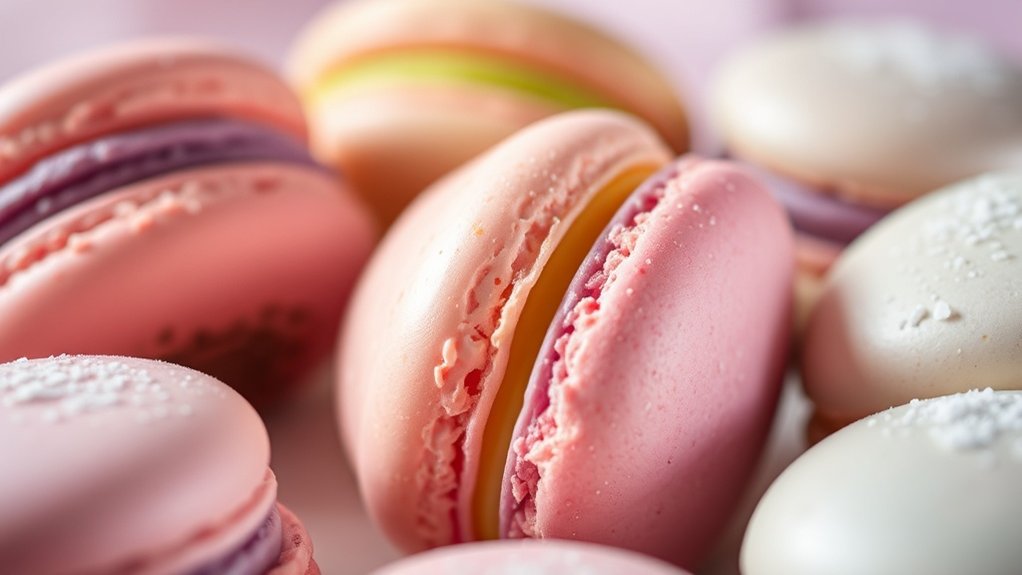
Traditional macarons aren’t vegan—they’re made with egg white meringue and often contain dairy-based fillings like buttercream or ganache. However, you can find or make vegan versions using aquafaba (chickpea liquid) as an egg white substitute and plant-based creams for fillings. These alternatives achieve surprisingly similar textures and flavors when prepared correctly. Vegan macarons are increasingly available at specialty bakeries and online retailers, though making them at home requires attention to technique. Understanding the key substitutions and common pitfalls will help you enjoy these delicate treats while maintaining your dietary choices.
Contents
show
Why Traditional Macarons Aren’t Vegan
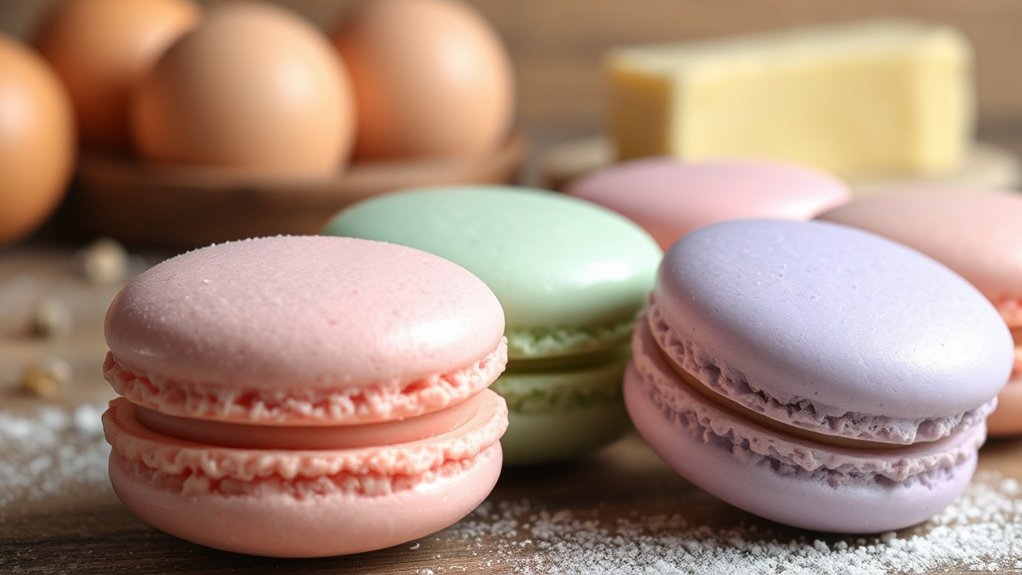
Traditional macarons depend on egg whites as their foundational ingredient, creating the delicate meringue structure that defines these French confections.
You’ll find that macaron history reveals centuries of reliance on animal-derived components, making these treats incompatible with plant-based eating.
Beyond the shells, butter-based fillings create additional obstacles for vegans, often combined with cream or other dairy products that improve richness and texture.
The sugar component presents another consideration—many manufacturers process granulated sugar using bone char, which strict vegans avoid.
As vegan trends continue growing, understanding these traditional ingredients helps you recognize why conventional macarons don’t align with plant-based principles.
You’re fundamentally dealing with multiple animal-derived elements throughout both the cookie shells and their creamy centers.
What Replaces Eggs and Dairy in Vegan Macarons?
You’ll find that vegan macarons rely on three key substitutions to replicate traditional recipes.
Aquafaba—the liquid from canned chickpeas—replaces egg whites and whips into stable peaks when combined with cream of tartar.
For the creamy fillings, vegan butter and plant-based creams deliver the same rich texture you’d expect from dairy-based versions.
Aquafaba as Egg Substitute
When making vegan macarons, aquafaba—the viscous liquid from canned chickpeas—stands as your most reliable egg white replacement. Understanding aquafaba benefits begins with its remarkable ability to mimic egg whites’ aeration properties. You’ll achieve soft peaks when whipped, creating the essential structure your macarons need.
Master aquafaba techniques by first reducing the liquid through simmering, which concentrates its proteins for superior performance. You’ll want to add cream of tartar during whipping to stabilize your foam, just as you’d with traditional egg whites. This combination delivers the stability required for perfect macaron shells.
Beyond technical performance, aquafaba makes your macarons completely free from animal products, accommodating those with egg and dairy sensitivities while maintaining authentic texture and appearance.
Vegan Butter Alternatives
While aquafaba handles the structural requirements of macaron shells, vegan butter alternatives transform your fillings into rich, dairy-free indulgences.
You’ll find that vegan butter, crafted from plant-based oils like coconut, sunflower, or avocado oil, delivers the creamy textures essential for buttercream fillings without any animal products.
These alternatives replicate traditional dairy butter’s consistency remarkably well, allowing you to create smooth ganaches and frostings that complement your macaron shells perfectly.
When selecting vegan butter, you’ll want options with higher fat content to guarantee proper emulsification and mouthfeel.
The neutral flavor profiles of quality plant-based oils won’t overpower your chosen filling flavors, whether you’re making vanilla, chocolate, or fruit-based varieties.
Your vegan macarons will maintain professional quality while remaining completely plant-based.
Plant-Based Cream Options
Beyond butter substitutes, plant-based creams form the foundation of vegan macaron fillings, replacing both eggs and dairy in traditional recipes.
You’ll find coconut cream delivers exceptional richness and stability for plant-based fillings, whipping into smooth ganaches when combined with dairy-free chocolate.
Aquafaba, the liquid from canned chickpeas, replaces egg whites in your macaron shells, providing essential structure and stability.
You can strengthen whipped aquafaba by adding cream of tartar, which mimics traditional egg white performance.
For creamy fillings, dairy-free spreads blend logically with melted vegan chocolate, creating luxurious ganaches.
These dairy-free options maintain the delicate texture macarons require while keeping your recipe entirely plant-based.
Ground almonds naturally contribute to the gluten-free, vegan-friendly shells without compromising flavor or consistency.
What Do Vegan Macarons Actually Taste Like?
You’ll find that vegan flavor profiles match traditional varieties remarkably well. Ground almonds provide the signature nutty base, while potato protein reinforces the shells’ structural integrity.
The result? That characteristic crisp exterior giving way to a chewy, moist center.
Macaron textures remain sophisticated through careful ingredient selection. Reputable brands like Pastreez demonstrate that plant-based versions achieve both visual appeal and authentic taste.
Whether you’re vegan or simply curious, these adaptations prove you won’t sacrifice quality. The flavors stand confidently alongside conventional macarons, making them just as enjoyable for everyone.
Best Places to Buy Vegan Macarons Online and Locally
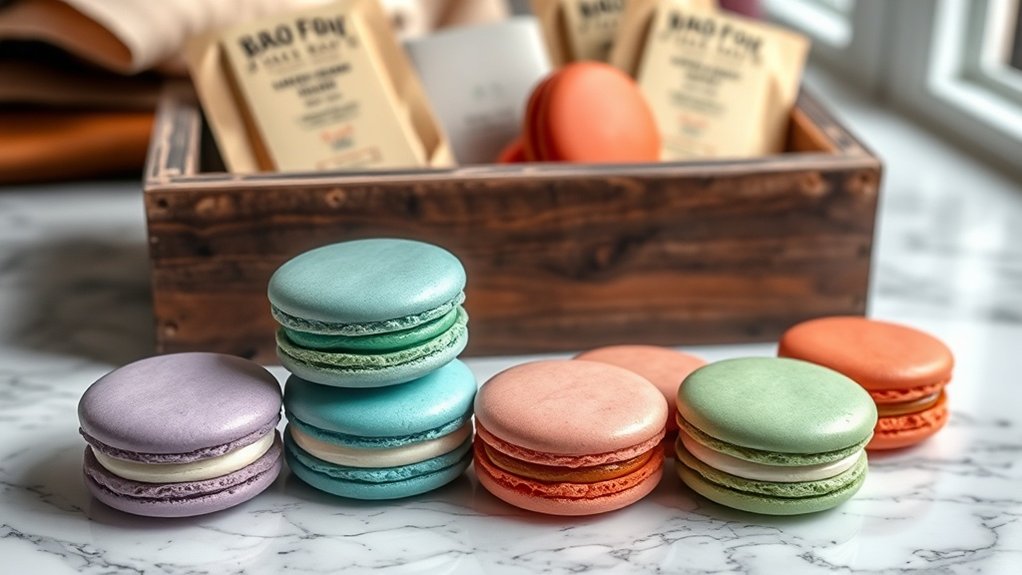
You’ll find vegan macarons through several reliable channels, from specialized online retailers that ship fresh nationwide to local bakeries with plant-based selections.
Top online vendors like Pastreez and Oh La La macarons offer convenient delivery with diverse flavor profiles made from aquafaba and plant-based ingredients.
For in-person shopping, specialty bakeries such as The March Hare Bakery and premium retailers like Laduree at Selfridges provide quality vegan options you can look into before purchasing.
Top Online Vegan Retailers
Where can you find the finest vegan macarons without compromising on taste or texture? Several specialized online retailers deliver exceptional plant-based options directly to your door.
Pastreez stands out with fresh shipping that preserves delicate macaron textures while offering diverse vegan flavors. Their commitment to quality guarantees you’ll receive macarons that maintain their signature crisp shells and chewy centers.
Oh La La Macarons provides another reliable online source, featuring carefully crafted vegan varieties that don’t sacrifice the traditional macaron experience. Their plant-based formulations successfully replicate the almond-forward taste you’re seeking.
The March Hare Bakery specializes exclusively in vegan macarons, offering extensive flavor selections that cater specifically to plant-based dessert enthusiasts.
Their expertise in egg-free and dairy-free ingredients results in consistently satisfying textures and taste profiles that rival conventional macarons.
Local Bakery Vegan Options
Local bakeries increasingly recognize the demand for vegan macarons, and several brick-and-mortar establishments now feature dedicated plant-based selections.
You’ll find bakery specialties at venues like The March Hare Bakery and Oh La La Macarons, where diverse flavor profiles showcase the versatility of egg-free meringue and plant-based fillings.
The English Rose Bakery crafts gourmet vegan options that rival traditional recipes in texture and taste.
When checking out local flavors, consider these notable destinations:
- Laduree at Selfridges – Offers curated vegan macaron varieties in a premium setting
- The March Hare Bakery – Specializes in rotating seasonal vegan flavors
- Oh La La Macarons – Features extensive plant-based selections with creative fillings
Check your area’s bakery listings to reveal hidden gems offering aquafaba-based macarons.
Many establishments now list dietary accommodations online, making it easier to locate quality vegan options near you.
Specialty Shops and Ordering
The accessibility of vegan macarons has expanded dramatically through both digital storefronts and specialty retailers. You’ll find excellent online options at Oh La La macarons and The English Rose Bakery, where you can order plant-based confections directly to your home.
For fresh shipping, Pastreez delivers vegan macarons nationwide, guaranteeing quality arrives at your doorstep.
Local shopping offers similarly compelling choices. Laduree’s Selfridges location provides sophisticated vegan specialty flavors, while The March Hare Bakery focuses exclusively on plant-based varieties.
When ordering, review product pages carefully for detailed ingredient lists—this transparency helps you identify allergy-friendly options and verify vegan credentials.
These ordering tips guarantee you’ll receive exactly what you need, whether selecting classic flavors or checking out innovative plant-based creations.
How to Make Vegan Macarons With Aquafaba
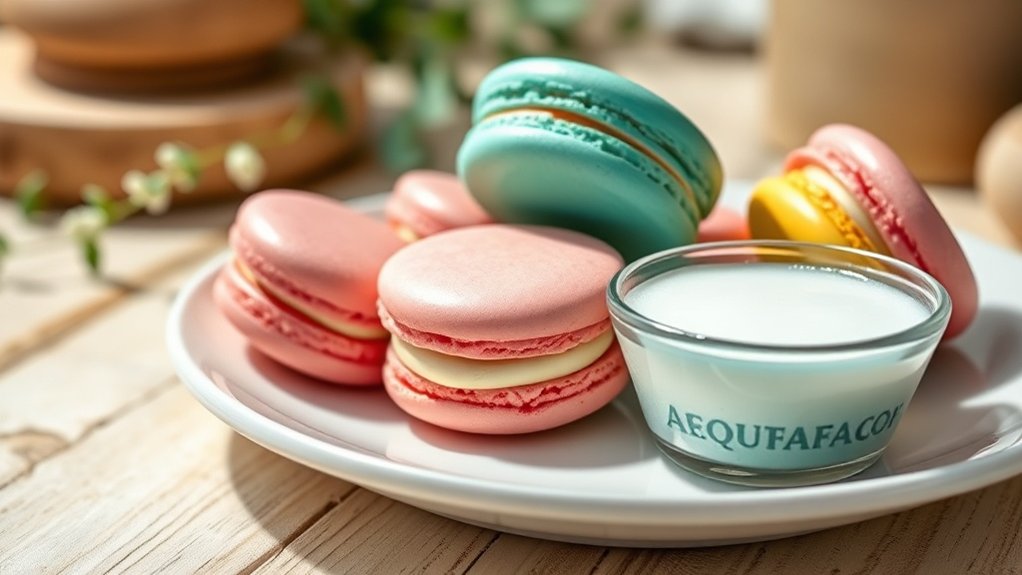
Creating vegan macarons with aquafaba transforms the traditionally egg-dependent French confection into a plant-based treat that rivals its conventional counterpart.
You’ll start by reducing chickpea liquid to half its volume through simmering, then cooling it completely. Whip this concentrated aquafaba with cream of tartar until frothy, creating your egg white replacement.
Your essential technique involves three critical steps:
- Combine almond flour and icing sugar with whipped aquafaba until you achieve a shiny, ribbon-like consistency.
- Pipe uniform circles onto lined trays, then rest for 1.5 hours to develop the essential skin.
- Bake at 230°F for 15 minutes, making certain shells are dry before removing.
Avoid overly wet batter for ideal structure.
Once mastered, you’ll experiment with macaron flavors and decoration techniques confidently.
Why Your Vegan Macarons Didn’t Work (And How to Fix It)
Even with precise technique, vegan macarons can fail for reasons that aren’t immediately obvious. If your batter’s too wet, you’ve likely under-reduced your aquafaba—it should whip to stiff peaks.
Common mistakes include using dirty utensils; even trace amounts of oil or liquid will prevent proper whipping and compromise your macaron’s structure.
Strong oven fans create uneven baking, so consider switching to a light-colored tray for consistent heat distribution.
Temperature control matters: pipe your macarons, then let them sit until completely dry to the touch before baking. This essential step develops those characteristic feet.
If you’re still not seeing feet, extend your drying time further. These baking techniques address the most frequent issues, transforming failed batches into perfect vegan macarons.
This article was reviewed by Nicole Anderson, RDN.