Last Updated: April 15, 2026
Are Fries Vegan
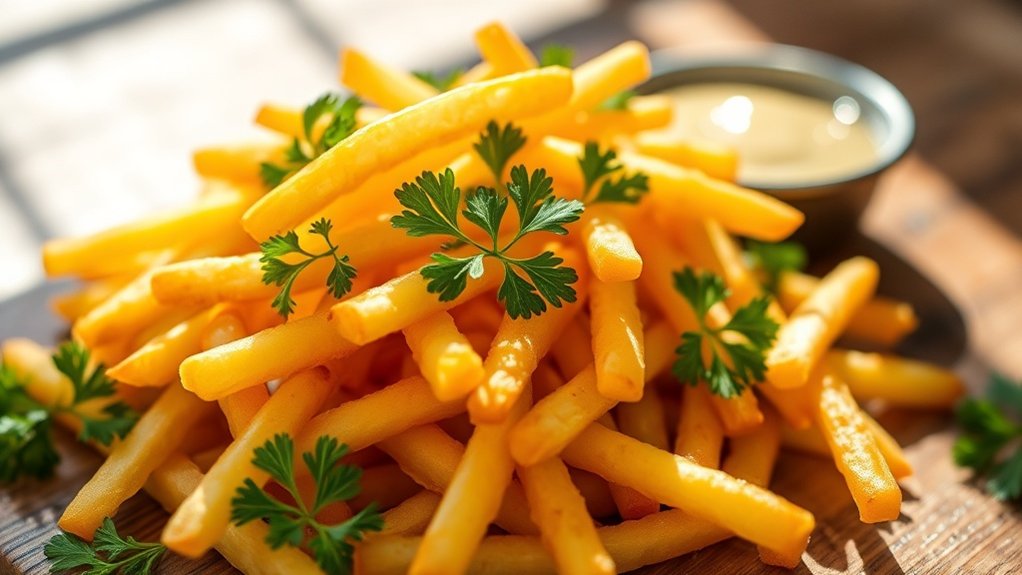
Most fries are vegan since they’re just potatoes and oil, but you’ll need to watch out for hidden animal ingredients. McDonald’s U.S. fries contain natural beef flavoring, while Checkers uses milk powder and Popeyes fries in beef tallow. Burger King, KFC, Wendy’s, Five Guys, and Taco Bell all offer confirmed vegan options with vegetable oil. Cross-contamination from shared fryers remains a consideration for strict vegans. Below, you’ll find an extensive breakdown of which chains meet vegan standards and which dipping sauces complement your order.
Contents
show
Why Most Fries Are Vegan (But Some Aren’t)
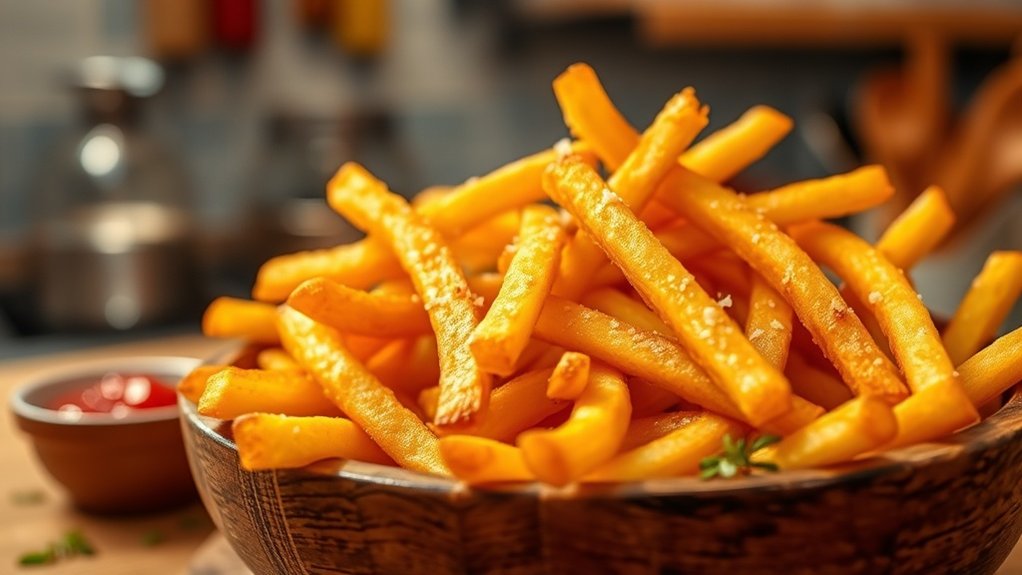
At their core, fries consist of sliced potatoes cooked in oil—both plant-based ingredients that make them inherently vegan. Regardless of potato varieties used, the basic recipe doesn’t require animal products.
However, cooking methods profoundly impact their vegan status. You’ll find complications arise when restaurants add beef flavoring containing milk derivatives, as McDonald’s does. Some establishments like Checkers and Popeyes use animal fats for frying, automatically disqualifying their fries from vegan classification.
Cross-contamination presents another concern—shared fryers mean your fries might contact oil previously used for chicken or fish.
That’s why you can’t assume all fries meet vegan standards. Each restaurant follows different preparation protocols, so you’ll need to verify ingredient lists and cooking practices at every establishment you visit.
Fast-Food Chains That Use Beef Fat or Dairy in Fries
Several major fast-food chains incorporate animal-derived ingredients into their fries, catching many plant-based eaters off guard.
McDonald’s U.S. locations add natural beef flavoring to their fries, making them unsuitable for vegans and vegetarians alike.
Checkers coats their fries in milk powder and fries them in animal lard.
Popeyes uses beef tallow as their frying medium, while Steak ‘n Shake includes non-vegan ingredients in their preparation process.
The lack of consumer transparency surrounding these fast food ingredients presents significant challenges for those following plant-based diets.
Many chains don’t prominently display animal-derived components on menu boards or packaging, forcing you to research allergen information online or request detailed ingredient lists.
This inadequate disclosure makes informed dietary choices unnecessarily difficult when dining out.
15 Major Chains With Confirmed Vegan Fries
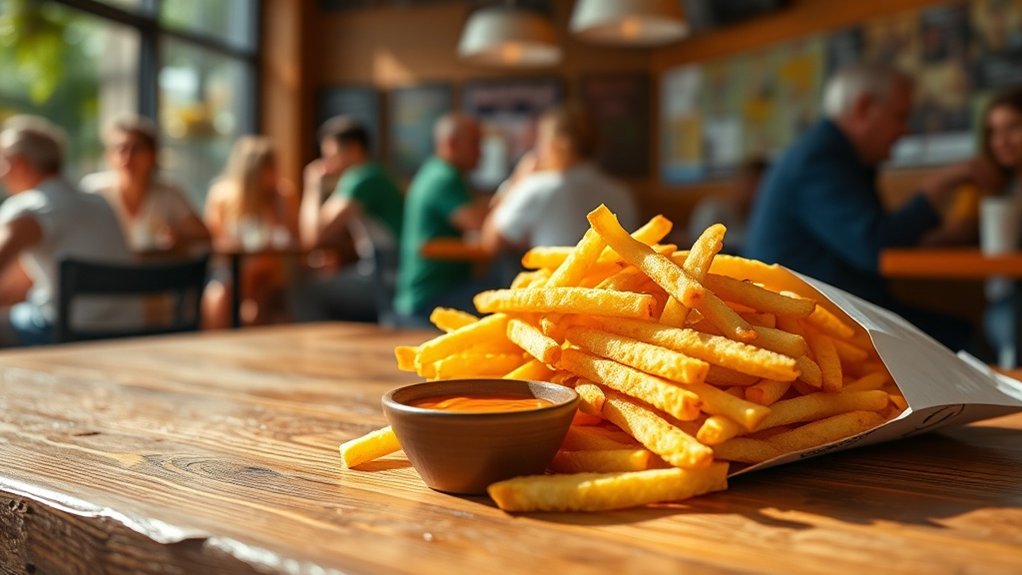
While traversing vegan options at fast-food restaurants can feel intimidating, several major chains have confirmed their fries contain no animal-derived ingredients. Understanding proper fries preparation and seasoning options helps you make informed choices.
These establishments guarantee vegan-friendly fries:
- Burger King uses vegetable oil for frying, with hot, salted fries free from animal products.
- KFC seasons their Secret Recipe Fries without any animal ingredients during preparation.
- Wendy’s offers skin-on potatoes fried exclusively in vegetable oil.
- Five Guys provides both regular and Cajun seasoning options, both completely plant-based.
Taco Bell’s Nacho Fries present a vegan option when you request them without the dairy-based queso.
Always verify current preparation methods at your local restaurant, as cross-contamination with animal products during frying can occur depending on facility practices.
Vegan Dipping Sauces and Cross-Contamination Facts
When ordering vegan fries at fast-food restaurants, you’ll find an impressive array of plant-based dipping sauces to complement your meal. Common vegan sauce options include ketchup, mustard, and various vinaigrettes across major chains.
Arby’s specifically offers Arby’s Sauce, Bronco Berry Sauce, and Marinara Sauce for plant-based eaters.
However, cross contamination concerns merit consideration. Fries are often cooked in oil shared with non-vegan items, though the foods themselves don’t mix. Individual vegans differ in their acceptance of this practice.
If you’re strict about avoiding shared cooking oil, you’ll need to weigh this factor carefully.
Before ordering, verify ingredient lists and inquire about preparation methods at your chosen restaurant. This proactive approach guarantees your dining experience aligns with your dietary standards.
This article was reviewed by Nicole Anderson, RDN.