Last Updated: April 3, 2026
Is Powdered Sugar Vegan
Powdered sugar’s vegan status depends on how it’s processed. While the ingredients—granulated sugar and cornstarch—appear plant-based, conventional cane sugar is often filtered through animal bone char, making it non-vegan. You’ll find truly vegan options in organic powdered sugar (which can’t use bone char under USDA regulations) or beet sugar varieties (never processed with bone char). You can also make your own by blending organic sugar with cornstarch. Understanding lot numbers and brand-specific refining processes will help you make informed choices.
Contents
show
What Is Powdered Sugar and Is It Vegan?
Powdered sugar, or confectioners’ sugar, consists of granulated sugar ground into a fine powder and typically mixed with 3-5% cornstarch as an anti-caking agent.
Is confectioners sugar vegan? The answer isn’t straightforward. While powdered sugar contains no animal products, many conventional brands process cane sugar using bone char—charred animal bones that filter and whiten the sugar. This makes them non-vegan by strict definitions.
However, you have vegan-friendly options. Organic powdered sugar meets vegan standards since USDA regulations prohibit bone char use in organic certification.
Alternatively, beet sugar isn’t processed with bone char, making beet-derived powdered sugar inherently vegan. You can also verify specific brands like Domino or C&H by checking their bone char-free certifications, or simply make your own by blending vegan granulated sugar with cornstarch.
Why Most Powdered Sugar Isn’t Vegan: The Bone Char Problem
Why does conventional powdered sugar fail vegan standards despite containing no visible animal ingredients? The issue lies in processing, not ingredients.
Most white cane sugar undergoes refinement using bone char—a decolorizing filter made from cattle bones. This animal-derived product removes impurities and creates sugar’s pristine white appearance.
Since powdered sugar (confectioners’ sugar) is simply pulverized white sugar with added cornstarch, it inherits this bone char processing concern.
Brown sugar faces the same issue, as it’s typically white sugar combined with molasses.
You can avoid bone char by choosing beet sugar or organic powdered sugar, both processed without animal products.
Brands like Domino and C&H offer verifiable bone char-free options, though you’ll need to check specific lot numbers.
When uncertain, contact manufacturers directly for definitive confirmation.
How to Tell If Your Powdered Sugar Is Vegan?
Understanding the bone char problem naturally leads to a practical question: how do you identify vegan-friendly powdered sugar at the grocery store?
Check ingredient labels first for any bone char disclosure, though manufacturers aren’t required to list it. Your most reliable option is organic powdered sugar, as USDA organic standards prohibit bone char processing.
For conventional brands like Domino, C&H, and Florida Crystals, examine the lot number—products beginning with 1, 4, or 6 are typically bone char-free.
When labels simply state “sugar” without vegan certification, contact manufacturers directly about their refining methods.
Alternatively, you can make homemade powdered sugar by blending vegan granulated sugar with cornstarch, assuring complete control over ingredients and processing methods.
Which Powdered Sugar Brands Are Actually Vegan?
For conventional brands like Domino, C&H, and Florida Crystals, you’ll need to check lot numbers—those starting with 1, 4, or 6 indicate bone char-free processing.
However, this verification method isn’t foolproof, so contacting manufacturers directly guarantees accuracy.
If you’re uncomfortable with uncertainty, making homemade powdered sugar using confirmed vegan granulated sugar and cornstarch provides complete control over ingredients while eliminating processing ambiguities inherent in commercial products.
Why Beet Sugar Is Always Vegan (And Cane Sugar Often Isn’t)
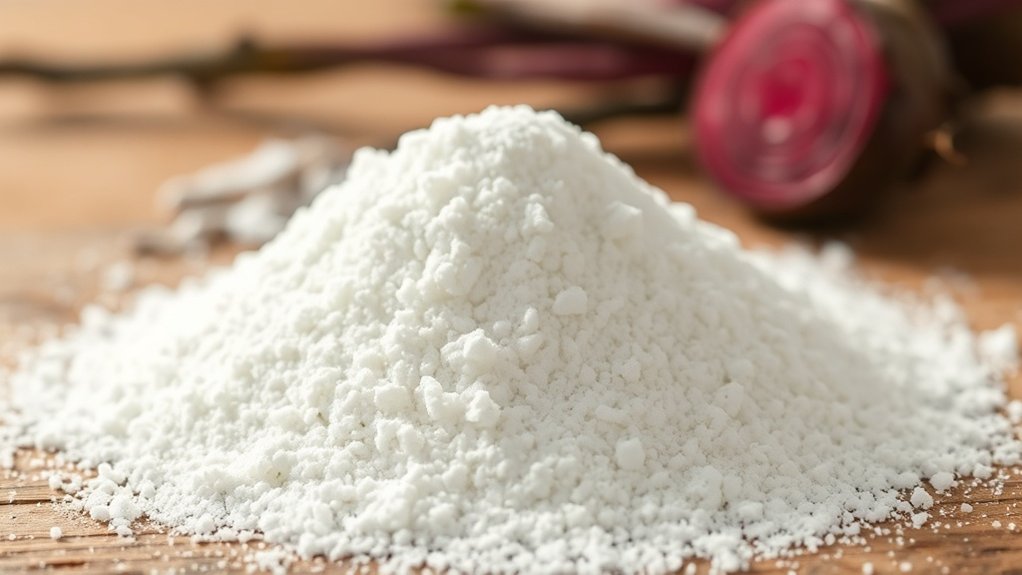
When selecting powdered sugar, the source material determines its vegan status more than any other factor. Beet sugar guarantees vegan compatibility because manufacturers never use bone char in its processing. This plant-derived sweetener comprises 50-60% of North America’s sugar supply and remains mainly non-GMO.
Conversely, cane sugar refining frequently involves bone char—a decolorizing filter made from cattle bones. This animal-derived processing agent creates ethical concerns for strict vegans, even though it doesn’t remain in the final product.
You’ll find organic beet sugar particularly reliable, as organic certification standards explicitly prohibit bone char usage.
While some cane sugar manufacturers avoid bone char, you must verify processing methods directly with producers. Without confirmation, assume conventional cane-based powdered sugar has contacted animal products during refinement.
How to Make Vegan Powdered Sugar at Home
Making your own vegan powdered sugar eliminates uncertainty about bone char processing while giving you complete control over ingredient sourcing.
You’ll need 1 cup of vegan sugar (preferably organic) and 1 tablespoon of cornstarch or tapioca starch. The starch prevents clumping and mimics commercial anti-caking agents.
Use a high-speed blender for ideal texture, processing the mixture in 20-second intervals for approximately three minutes total. This prevents motor overheating while achieving fine powder consistency.
Store your homemade version in an airtight container where it’ll remain fresh for several months.
Note that homemade powdered sugar is denser than commercial varieties—use 120 grams per cup when measuring by weight, or 7/8 cup per cup when measuring by volume in recipes.
Is the Cornstarch in Powdered Sugar Vegan?
You’ll find that cornstarch production is inherently vegan, as manufacturers extract it from corn kernels through a water-based milling process that involves no animal products.
The process includes steeping, grinding, and separating corn components to isolate the pure starch, relying solely on mechanical and chemical methods.
While cornstarch dominates the market, you may occasionally encounter powdered sugars using alternative plant-based starches like tapioca or arrowroot, all of which maintain vegan status through similar extraction processes.
Cornstarch Production Process
Cornstarch undergoes a straightforward, plant-based extraction process that maintains its vegan status from kernel to finished product. The production begins with soaking corn kernels in water to soften them, followed by grinding to separate the various components.
Through centrifugation and washing, manufacturers isolate the pure starch from the protein, fiber, and oil naturally present in corn. This entire mechanical and water-based separation process involves no animal-derived ingredients or processing aids.
You’ll find that most commercial cornstarch comes from non-GMO corn, though you should verify product labels if this matters to you. The resulting white powder remains completely plant-based and suitable for vegan diets.
However, keep in mind that while cornstarch itself is vegan, you’ll still need to check your powdered sugar brand for potential non-vegan additives beyond the cornstarch component.
Plant-Based Starch Sources
The cornstarch in your powdered sugar comes exclusively from plant sources, making it inherently vegan. Derived from corn kernels, this starch functions as an anti-caking agent that prevents clumping while maintaining the sugar’s characteristic fine texture.
Most commercial brands rely on cornstarch, though you’ll occasionally find alternatives like tapioca or arrowroot starch—both similarly plant-based and vegan-compliant.
When verifying your powdered sugar’s vegan status, examine ingredient labels for “cornstarch” or “plant-based starch” designations. These terms confirm you’re using an animal-free product.
While the starch component itself poses no vegan concerns, you should still review complete ingredient lists for potential non-vegan additives that some manufacturers might include.
For absolute certainty, consider making homemade powdered sugar using granulated sugar and your preferred plant-based starch alternative.
Vegan Powdered Sugar Substitutes That Actually Work
You’ll find several reliable vegan powdered sugar alternatives that perform well in recipes, starting with a simple homemade version made by blending granulated sugar with cornstarch or tapioca starch in a high-speed blender.
Natural sweetener options like powdered date sugar and coconut sugar offer nutrient-dense alternatives, though they won’t dissolve as readily in frostings and may alter your recipe’s color and flavor profile.
Most store-bought organic powdered sugars explicitly state their vegan status and use tapioca starch instead of bone char-processed ingredients, making them convenient ready-to-use options.
Homemade Powdered Sugar Recipe
Making your own powdered sugar at home requires just two ingredients: vegan granulated sugar and a starch like cornstarch, tapioca, or arrowroot.
This simple method confirms you’re avoiding bone char-processed sugar while creating a versatile sweetener.
Recipe Steps:
- Combine 490 grams organic vegan sugar with 10 grams of your chosen starch in a high-powered blender.
- Blend on high speed for three minutes, stopping periodically to stir and guarantee even consistency.
- Store in an airtight container where it’ll remain clump-free for several months.
- Adjust the sugar-to-starch ratio based on your preferences, noting homemade versions are denser than commercial products.
This recipe yields approximately 58 tablespoons of powdered sugar.
Using organic sugar assures complete vegan compliance since conventional options may involve animal-derived processing agents.
Natural Sweetener Alternatives
When conventional powdered sugar doesn’t align with your vegan principles or you’re seeking more nutritional value, several plant-based alternatives can deliver comparable results in your recipes.
Powdered date sugar retains the fruit’s natural form, providing fiber and minerals alongside a caramel-like flavor profile. You can create your own powdered sugar by blending vegan-certified granulated sugar with cornstarch at roughly $0.74 per pound—significantly less than store-bought versions costing $3.20-$5.00 per pound.
Coconut sugar offers another option when ground finely. While powdered agave exists, its highly refined nature provides minimal nutritional advantages over organic powdered sugar.
Maple syrup works as a liquid sweetener but requires recipe adjustments due to added moisture. Each substitute performs differently, so experimentation helps identify ideal applications for your baking needs.
Store-Bought Vegan Options
Several mainstream brands now produce reliably vegan powdered sugar, though verification remains essential since processing methods vary by facility and production batch.
You’ll find the most reliable options in the organic section, where USDA standards prohibit bone char processing.
Top Vegan-Friendly Brands:
- Wholesome Sweeteners Organic – Certified organic and consistently bone char-free across all production runs.
- Trader Joe’s Organic – Affordable house brand that meets vegan standards without premium pricing.
- Domino, C&H, Florida Crystals – Conventional options that may be vegan depending on specific lot numbers; contact manufacturers directly.
- Homemade Alternative – Blend vegan granulated sugar with cornstarch (1 cup sugar to 1 tablespoon starch) for complete control.
Always verify manufacturing practices by checking certifications or contacting customer service before purchasing conventional brands.
How to Verify Any Sugar Brand Is Bone Char-Free?
Determining whether your sugar brand uses bone char requires a methodical approach that combines label scrutiny with direct inquiry.
Start by checking for “USDA Certified Organic” labels, as organic standards explicitly prohibit bone char in processing. You can also examine lot numbers on packaging—those beginning with 1, 4, or 6 typically indicate bone char-free production methods.
Contact manufacturers directly for definitive confirmation about their refining processes and sourcing practices. This direct communication provides the most reliable information about bone char usage.
Research vegan-friendly brands like Florida Crystals Organic Cane Sugar or Domino, which typically disclose their refining methods.
Additionally, consult community forums and vegan resources where consumers share verified information about specific sugar brands, helping you make informed purchasing decisions aligned with your dietary requirements.
This article was reviewed by Nicole Anderson, RDN.