Last Updated: May 22, 2026
Is Monster Vegan

Most Monster Energy drinks are technically vegan since they use synthetic taurine rather than animal-derived sources, and PETA recognizes many variants as acceptable for plant-based diets. However, you’ll need to avoid Java Monster lines, which contain whey protein concentrate from milk. The brand lacks official vegan certification, and ambiguous ingredients like “natural flavors” may conceal animal-derived compounds. Color additives remain controversial due to animal testing concerns. Understanding specific formulations and ingredient sourcing will help you make informed choices about which Monster products align with your dietary requirements.
Contents
show
Are Monster Energy Drinks Vegan?
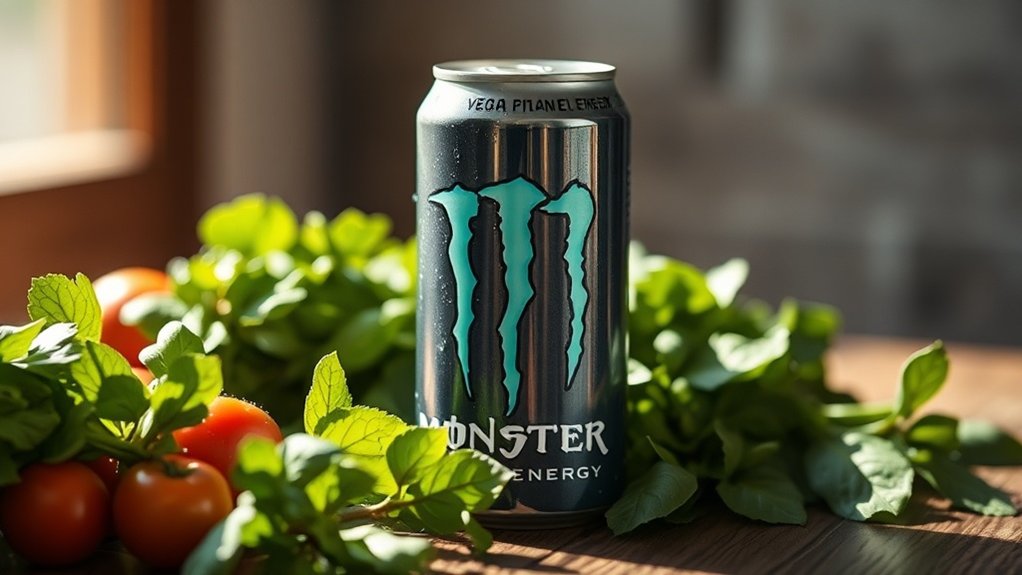
Most Monster Energy drink formulations qualify as vegan-friendly due to their reliance on synthetic and plant-derived ingredients. When you’re asking “is monster energy vegan,” you’ll find that the taurine component is synthetically manufactured rather than animal-sourced, addressing a primary concern.
PETA recognizes Monster as an acceptable choice for vegan consumers, though official vegan certification remains absent.
However, determining “are monster vegan” requires examining specific product lines. The Java Monster series contains dairy components, making it unsuitable for vegan consumption.
When evaluating “are monster energy drinks vegan,” you must scrutinize ingredient labels for whey protein, ambiguous natural flavors, and regional variations that may include carmine—a red pigment derived from insects.
Geographic manufacturing differences can introduce non-vegan ingredients, necessitating careful verification before consumption.
Which Monster Flavors Contain Non-Vegan Ingredients?
When identifying non-vegan Monster flavors, you’ll encounter the Java Monster line as the primary offender, with all variants containing milk-derived whey protein concentrate that disqualifies them from plant-based diets.
Beyond dairy proteins, you’ll need to scrutinize these problematic ingredients when determining “are monsters vegan”:
- Carmine colorant – Derived from crushed cochineal insects, present in select regional formulations.
- Whey protein concentrate – Milk-derived protein isolate found throughout Java Monster varieties.
- Natural flavors – Potentially animal-sourced compounds with ambiguous disclosure requirements.
- Unspecified colorants – Vague “color added” labeling that may conceal non-vegan derivatives.
You must examine ingredient declarations for each specific flavor variant, as formulations vary by region and production facility.
The ambiguity in ingredient sourcing necessitates direct manufacturer contact for definitive vegan status verification.
Is the Taurine in Monster Synthetic or Animal-Derived?
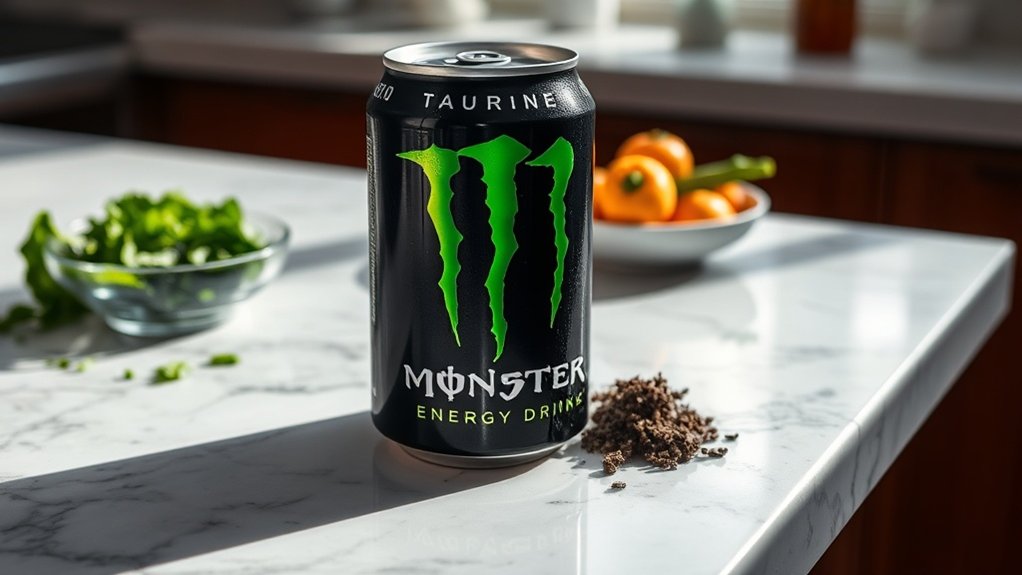
You’ll need to understand taurine’s biochemical origins to evaluate Monster’s vegan status.
Historically, manufacturers extracted taurine from animal tissues, particularly bovine bile, though this amino sulfonic acid naturally occurs in mammalian muscle and organs.
Monster Energy now exclusively uses synthetically produced taurine through chemical synthesis processes, eliminating animal-derived compounds from this ingredient component.
Taurine’s Original Animal Sources
Although taurine‘s name derives from the Latin word “taurus” (bull) due to its 1827 isolation from ox bile, the taurine in Monster Energy drinks contains zero animal-derived components.
Historical taurine extraction involved these animal tissues:
- Bovine bile acids from slaughtered cattle
- Seafood sources including mollusks and crustaceans
- Mammalian cardiac and skeletal muscle tissue
- Animal organ meats containing concentrated amino sulfonic acid
Modern synthetic production has completely replaced these extraction methods.
You’re consuming chemically synthesized taurine that’s molecularly identical to its biological counterpart but manufactured through industrial chemical processes. This shift eliminates sourcing concerns related to animal exploitation while maintaining the compound’s physiological benefits.
The synthetic version meets pharmaceutical-grade purity standards, making certain consistent bioavailability without animal-derived contamination.
Monster’s Synthetic Taurine Production
Monster Energy manufactures its taurine through direct chemical synthesis using ethylene oxide and sodium bisulfite as primary reactants. This laboratory production method eliminates animal-derived components entirely, making sure the taurine in your drink contains zero biological material from bulls, cattle, or other animal tissues.
The synthetic process yields chemically identical 2-aminoethanesulfonic acid (taurine’s scientific designation) without requiring bile extraction or tissue processing. You’ll find this manufacturing approach contrasts sharply with historical taurine sourcing, which involved extracting the compound from ox bile and animal organs.
Monster’s commitment to synthetic taurine production removes ethical concerns regarding animal exploitation while maintaining the compound’s functional properties. The bioavailability and metabolic effects of synthetic taurine match naturally occurring forms precisely, providing identical physiological benefits without compromising vegan dietary principles.
Lab-Made Versus Natural Taurine
Understanding the production methodology clarifies questions about taurine’s compatibility with plant-based diets. Monster Energy uses synthetic taurine manufactured through chemical synthesis rather than animal extraction. This lab-created compound maintains chemical identity with naturally occurring taurine while eliminating animal-derived components from the formulation.
The distinction between synthetic and natural taurine includes:
- Synthetic taurine undergoes controlled chemical processes that replicate the molecular structure without requiring animal tissue.
- Natural taurine extraction involves animal byproducts from meat industry sources, creating ethical concerns for vegans.
- Chemical equivalence guarantees identical physiological effects regardless of production origin.
- PETA’s endorsement validates Monster’s vegan status based on synthetic taurine usage.
You’ll find Monster’s synthetic approach addresses ethical considerations while maintaining nutritional efficacy. The manufacturing process guarantees consistent purity standards without compromising dietary principles.
Are Monster’s Natural Flavors and Colors Vegan?
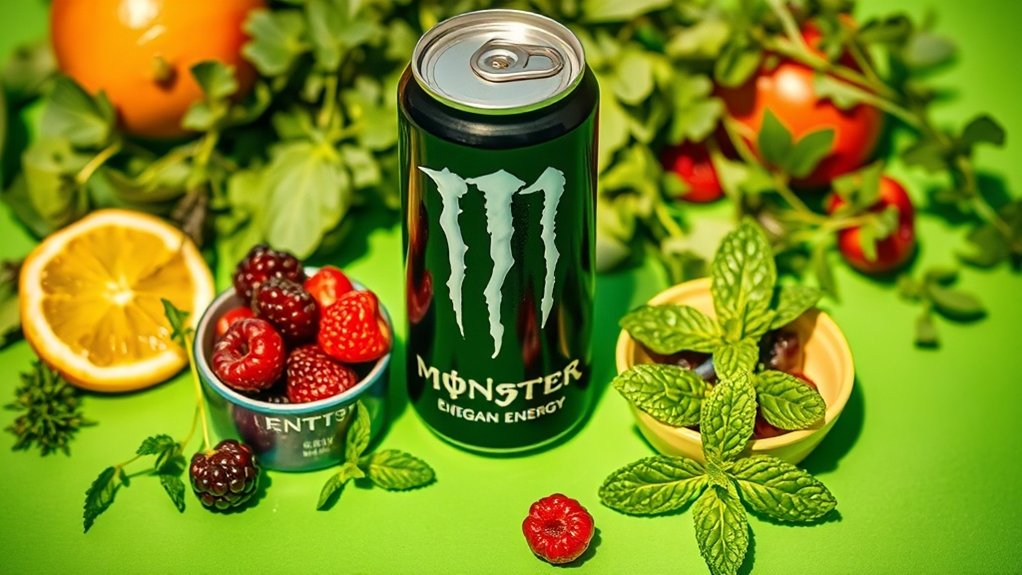
You’ll encounter significant ambiguity when evaluating Monster’s natural flavors and color additives for vegan compliance.
The “natural flavors” designation may encompass both plant-based and animal-derived compounds—including casein, lactose, or insect-derived substances—yet Monster provides no ingredient specificity to verify their source.
Synthetic color additives like Red #40 and Blue #1 are chemically manufactured from petroleum derivatives, rendering them technically vegan despite ongoing debates about animal testing protocols used during initial safety assessments.
Natural Flavors Breakdown
Why does the ingredient list include “natural flavors” when the actual composition remains undisclosed? This ambiguous terminology presents significant challenges for vegan consumers attempting to verify product compatibility with plant-based dietary standards.
The natural flavors component warrants scrutiny because:
- Animal-derived constituents may include castoreum (beaver anal gland secretions), carmine (crushed beetles), or whey-based flavor carriers.
- Manufacturing processes often use animal products as processing aids without mandatory disclosure requirements.
- Cross-contamination during production can introduce non-vegan substances into formulations.
- Proprietary formula protection allows manufacturers to withhold specific ingredient sources from public documentation.
Without transparent ingredient sourcing from Monster Energy, you can’t definitively confirm vegan status.
Direct manufacturer inquiry remains the only reliable method for obtaining accurate compositional data regarding natural flavor derivation and processing methodologies.
Color Additives Explained
Natural flavors represent only one component of Monster’s undisclosed ingredient matrix—color additives constitute another significant area requiring vegan verification.
Synthetic colorants like Red #40 and Blue #1 are petrochemical derivatives, technically qualifying them as vegan substances. However, Monster doesn’t disclose manufacturing specifications or processing agents that might introduce animal-derived components during synthesis.
While carmine—an insect-derived red pigment—rarely appears in Monster formulations, you can’t definitively exclude its presence without batch-specific documentation.
The FDA requires color additive declaration, but manufacturers aren’t obligated to reveal proprietary sourcing protocols or cross-contamination risks from shared production lines.
You’ll need direct manufacturer correspondence to obtain verification regarding specific SKUs, as ingredient transparency remains limited across Monster’s product portfolio.
This opacity complicates adherence to strict vegan protocols.
Are Monster’s B Vitamins Vegan-Friendly?
Monster Energy drinks contain several B vitamins—niacinamide (B3), D-calcium pantothenate (B5), pyridoxine hydrochloride (B6), and cyanocobalamin (B12)—all derived from synthetic or plant-based sources rather than animal products.
These micronutrients are manufactured through industrial fermentation or chemical synthesis, making them compatible with vegan dietary protocols.
The B vitamin profile offers specific advantages:
- Cyanocobalamin (B12) is synthetically produced, eliminating reliance on animal-derived sources.
- Niacinamide undergoes chemical synthesis from plant precursors.
- Pyridoxine hydrochloride originates from non-animal substrates.
- D-calcium pantothenate is manufactured through vegan-compatible processes.
These formulations align with plant-based nutritional requirements.
However, you’ll need to verify individual flavor variants, as manufacturers may modify formulations. Some varieties could contain non-vegan additives beyond the standard B vitamin complex.
Are Monster’s Alcoholic Beverages Vegan?
While Monster’s standard energy drinks maintain transparent ingredient sourcing for their vitamin complexes, their alcoholic product lines—The Beast Released and Nasty Beast Hard Tea—present verification challenges for vegan consumers.
These beverages lack definitive vegan certification, creating ambiguity regarding their compliance with plant-based dietary protocols. Though ingredient declarations don’t explicitly specify shellfish, dairy, or eggs, one undisclosed component potentially originates from animal sources.
The absence of clear vegan labeling creates uncertainty for individuals adhering to strict plant-based nutritional frameworks. You’ll find greater dietary confidence by selecting beverages with verified vegan certification.
Direct manufacturer inquiries regarding specific ingredient derivation may yield additional clarity, though this approach doesn’t guarantee vegan status confirmation.
When selecting alcoholic beverages, prioritize products displaying third-party vegan certification to guarantee complete alignment with your dietary parameters.
How to Check if Your Monster Flavor Is Vegan
How can you definitively establish whether your preferred Monster variant aligns with vegan dietary parameters? You’ll need systematic verification through these evidence-based protocols:
- Scrutinize the ingredient panel for animal-derived compounds like whey protein isolate, particularly in Java Monster formulations—this’ll trigger an immediate disqualification from vegan classification.
- Question ambiguous descriptors such as “natural flavors” or “color added,” which may conceal non-vegan derivatives without explicit disclosure.
- Contact Monster’s consumer relations directly for ingredient sourcing clarification, especially since formulations vary by geographic distribution markets.
- Monitor product reformulations regularly, as manufacturers frequently modify ingredient matrices without prominent consumer notification.
While PETA validates numerous Monster variants as vegan-compliant, you can’t assume universal applicability across the entire product line without individual verification of each flavor’s specific composition.
Why Isn’t Monster Officially Vegan-Certified?
Despite widespread consumer validation from animal welfare organizations, Monster Beverage Corporation hasn’t obtained formal vegan certification for its product line—a decision rooted in strategic business considerations rather than formulation limitations.
The certification process requires substantial financial investment and administrative complexity that doesn’t align with Monster’s brand positioning centered on extreme sports culture rather than dietary lifestyle marketing.
This strategic choice creates ambiguity for plant-based consumers, as uncertified products lack transparent verification of manufacturing processes and ingredient sourcing.
While PETA endorses Monster’s vegan status, you’ll find no official seal guaranteeing absence of animal-derived processing agents or cross-contamination protocols.
The company’s ingredient transparency remains limited, requiring you to independently verify each variant’s formulation against your dietary requirements without standardized certification backing.
What PETA and Vegan Communities Say About Monster
PETA’s endorsement of Monster Energy drinks carries significant weight within vegan communities, as the organization maintains thorough databases of animal-free products based on direct manufacturer correspondence and ingredient verification protocols.
Their confirmation that Monster’s synthetic taurine and most formulations meet vegan standards provides evidence-based reassurance.
However, community discourse reveals nuanced concerns:
- Undisclosed natural flavors create uncertainty about trace animal-derived compounds in processing.
- Java Monster variants containing dairy demonstrate inconsistent formulation across product lines.
- Absence of third-party vegan certification leaves some consumers questioning ingredient transparency.
- Manufacturing cross-contamination risks may expose beverages to animal-based substances.
You’ll find that while PETA’s verification offers substantial credibility, vigilant consumers continue examining ingredient disclosure practices and advocating for thorough certification standards across all Monster product variations.
This article was reviewed by Nicole Anderson, RDN.