Last Updated: June 19, 2026
Is Coffee Vegan

Yes, your plain black coffee is completely vegan—it’s just roasted coffee beans and water with no animal products in processing or preparation. However, you’ll need to watch what you add to it, since dairy milk, cream, and honey aren’t vegan-friendly. Some specialty beans use non-vegan coatings like beeswax or shellac, and certain flavored syrups contain hidden animal-derived ingredients. Even refined sugar might be processed with bone char. We’ll show you exactly how to verify your coffee’s vegan status and choose the best plant-based alternatives.
Contents
show
Why Pure Coffee Beans Are Plant-Based and Vegan

Pure coffee beans originate as seeds cradled within the fruit of Coffea plants, making them inherently plant-based. You’re consuming a product derived entirely from botanical sources when you choose unprocessed coffee beans.
During coffee processing, these seeds are extracted from their cherry casings, dried, and roasted without requiring animal-derived ingredients. The fundamental nature of coffee beans remains vegan throughout standard production methods.
However, you’ll want to confirm that no animal-based substances are introduced during processing stages. Ethical sourcing becomes particularly important here, as organic and fair-trade certifications often guarantee cleaner processing methods that align with vegan principles.
Plain Black Coffee Is Always Vegan: Here’s Why
When you brew plain black coffee, you’re combining two inherently vegan ingredients: roasted coffee beans (seeds from the *Coffea* plant) and water.
The standard processing methods for quality coffee—whether washed, natural, or honey-processed—rely solely on mechanical and fermentation techniques without requiring animal-derived additives.
This straightforward composition means your morning cup of black coffee automatically aligns with vegan dietary principles, as no animal products enter the equation from farm to mug.
Coffee Beans Are Plants
Coffee beans originate as seeds encased within the fruit of coffee plants, specifically from the Coffea genus, which makes them unequivocally plant-based ingredients. Understanding these plant origins helps you confidently identify coffee as vegan-compatible from its source.
The two primary seed varieties you’ll encounter are Coffea arabica and Coffea canephora (robusta), both flowering plants that produce cherry-like fruits. Inside each cherry, you’ll find two seeds—what we call coffee beans.
Since these beans are purely botanical in nature, they contain no animal-derived components whatsoever.
You’re consuming a plant product when you drink coffee, similar to consuming tea leaves or cocoa beans. This fundamental botanical classification means that coffee beans themselves align perfectly with vegan dietary principles, requiring no animal exploitation in their basic form.
Water Contains No Animals
Since water is an inorganic compound consisting solely of hydrogen and oxygen molecules, it contains zero animal-derived components or by-products.
Whether you’re drawing from municipal supplies, wells, or bottled sources, water sourcing doesn’t affect its vegan status—it remains inherently plant-free and animal-free regardless of origin.
Water quality may vary based on mineral content, pH levels, and filtration methods, but these factors don’t introduce animal ingredients into your coffee.
The H₂O molecules that extract compounds from your coffee grounds are chemically identical across all sources.
When you combine water with ground coffee beans during brewing, you’re creating a beverage from two completely plant-based components.
This fundamental chemistry confirms that your black coffee contains nothing but vegan-friendly ingredients, making it a reliably ethical choice for your dietary principles.
No Processing Additives Needed
Unlike many beverages requiring stabilizers, emulsifiers, or preservatives during production, black coffee needs absolutely no processing additives to maintain its drinkability or shelf stability.
You’re simply extracting natural compounds from roasted beans through water—that’s it. This inherent simplicity supports both coffee sustainability and your vegan lifestyle.
The additive-free nature of black coffee means:
- No gelatin-based clarifiers (unlike some wines and juices)
- No casein or whey proteins for texture improvement
- No animal-derived colorings or flavor boosters
- No isinglass or bone char in filtration processes
All brewing techniques—from French press to espresso—maintain this purity.
The roasted beans contain everything needed for flavor, aroma, and body without artificial intervention.
This makes verifying vegan status straightforward: if it’s plain black coffee, it’s vegan.
Common Coffee Additions That Aren’t Vegan
While plain black coffee remains vegan, you’ll need to carefully evaluate what you add to your cup, as many common additions contain animal-derived ingredients.
Dairy milk and cream are obvious non-vegan choices due to their bovine origin, but you should also be aware that honey—though plant-sourced—comes from bee labor and doesn’t meet vegan standards.
Additionally, some specialty coffee beans use non-vegan coatings like beeswax or shellac during processing, which can compromise the vegan status of your beverage before you even brew it.
Dairy Milk and Cream
The most common culprits that transform your vegan coffee into a non-vegan beverage are dairy milk and cream. These animal-derived products involve exploitation in their production, making them incompatible with vegan principles.
Why dairy products aren’t vegan:
- Traditional cow’s milk requires continuous dairy industry involvement.
- Heavy cream and half-and-half are concentrated dairy derivatives.
- Whipped cream topping contains milk fats and proteins.
- Even small amounts compromise your beverage’s vegan status.
You’ll need to choose dairy alternatives and cream substitutes to maintain your coffee’s vegan integrity.
Plant-based options like almond, soy, oat, and coconut milk provide creamy texture without animal exploitation. These alternatives offer comparable taste and nutritional benefits while aligning with vegan ethics.
Always verify your coffee additions before ordering.
Honey as Sweetener
Though widely perceived as natural and wholesome, honey remains a non-vegan sweetener that contradicts plant-based principles. The production process involves extracting resources from bee colonies, which shakes their natural behaviors and can compromise their welfare.
When you order coffee at shops, you’ll need to specifically ask about sweetener options, as honey’s often included without disclosure.
Fortunately, you’ve got excellent honey alternatives that align with vegan values. Maple syrup offers rich, complex sweetness with trace minerals. Agave nectar dissolves quickly in hot beverages and provides neutral sweetness. Date syrup delivers caramel-like depth with beneficial nutrients.
These vegan sweeteners perform similarly to honey in coffee while supporting plant-based ethics. You’ll maintain the sweetness you enjoy without compromising your commitment to avoiding animal-derived products.
Non-Vegan Coffee Coatings
Beyond sweeteners and milk alternatives, coffee beans themselves may contain animal-derived coatings that compromise their vegan status. Some manufacturers apply coating additives to improve bean appearance and preservation, which aren’t always plant-based.
Non-vegan coatings to watch for:
- Beeswax (E 901) – Derived from honeybee hives and commonly used as a glazing agent
- Shellac (E 904) – Produced from lac beetle secretions and frequently applied to coffee beans
- Carnauba wax (E 903) – A vegan-friendly alternative from Brazilian palm trees
- Candelilla wax (E 902) – Another plant-based option suitable for vegan diets
You’ll need to contact manufacturers directly about their processing methods, as labeling doesn’t always disclose coating additives.
Looking for vegan certifications provides the most reliable assurance that your coffee beans remain free from animal-derived substances throughout production.
Sneaky Non-Vegan Ingredients in Flavored Coffee
Why does that seemingly innocent vanilla latte fail the vegan test? Flavored syrups often harbor hidden ingredients that compromise your plant-based choices.
Dairy derivatives like sodium caseinate frequently appear in creamers and flavored mixes, while certain natural flavors may contain animal-sourced components such as gelatin. You’ll find honey in some coffee flavorings, which vegans exclude due to its bee origin.
Even your sweetener poses concerns—refined sugars are commonly processed with bone char, an animal byproduct.
Professional nutritionists emphasize checking ingredient labels meticulously, as manufacturers aren’t required to specify processing methods.
Sauces and specialty drinks typically contain cream or milk, making them unsuitable for vegan diets.
Understanding these concealed animal products empowers you to make informed decisions about your coffee choices.
Ways to Check if Your Coffee Is Vegan
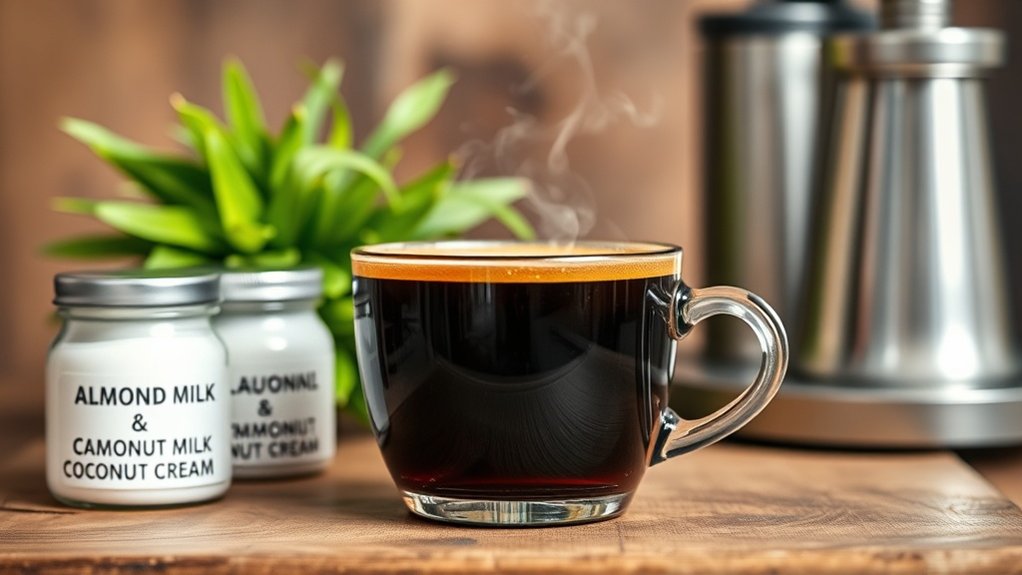
Determining your coffee’s vegan status requires systematic verification of multiple factors throughout the supply chain. You’ll need to investigate beyond the beans themselves to guarantee complete alignment with vegan principles.
Essential verification steps include:
- Contact manufacturers directly to confirm whether beans contain coatings like beeswax or shellac.
- Prioritize organic sourcing and fair trade certifications that indicate ethical production methods and shade-grown practices.
- Scrutinize ingredient labels on flavored blends for hidden animal-derived components such as dairy proteins or honey.
- Request brewing information at cafés to identify potential cross-contamination with non-vegan products.
Look for Rainforest Alliance or Fair Trade labels, which typically align with vegan values through their environmental and ethical standards.
These certifications provide additional assurance about production methods while supporting sustainable coffee farming practices.
Best Vegan Milk and Sweeteners for Coffee
Oat milk, particularly Oatly Barista, excels in coffee applications due to its protein and fat content that supports frothing techniques comparable to dairy.
Almond, soy, coconut, and cashew milk offer distinct flavor profiles to match your preferences.
For sweetening, maple syrup, agave nectar, and date syrup provide natural options without animal derivatives.
Be cautious with refined sugar, as bone char processing can compromise vegan compliance. Beet sugar and coconut sugar eliminate this concern.
Plant-based creamers from brands like Silk and Earth’s Own deliver richness without dairy, combining convenience with ethical consistency in your daily coffee ritual.
Ordering Vegan Coffee at Starbucks and Other Chains
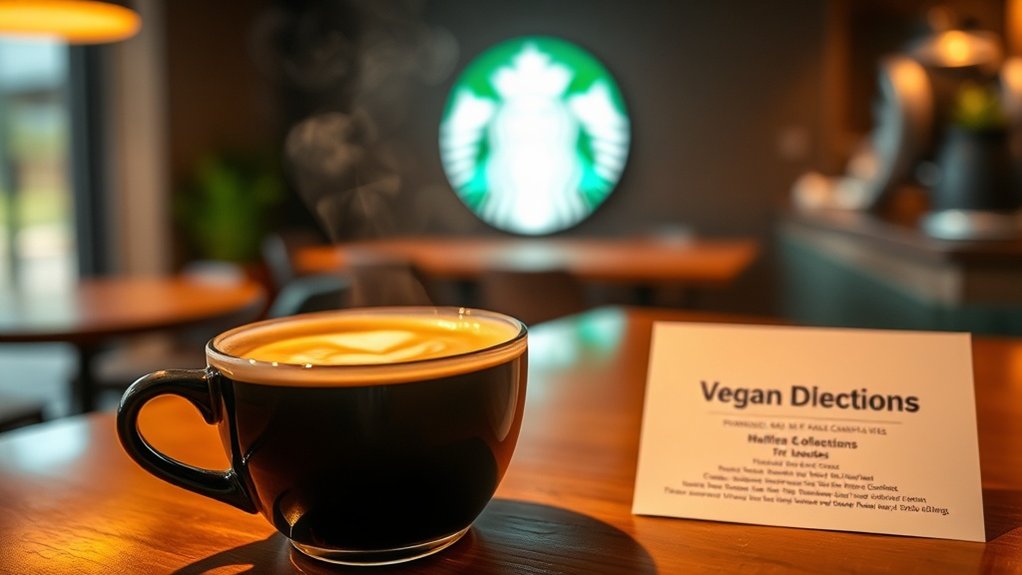
Knowing which plant-based additions work best at home prepares you for maneuvering through commercial coffee shops, where menu complexity increases considerably.
When ordering vegan coffee at chains like Starbucks, you’ll need strategic ordering tips to guarantee your beverage aligns with your values.
Essential ordering tips for vegan coffee:
- Request plant-based milk alternatives including oat, almond, or soy milk to replace dairy options.
- Verify syrup ingredients before adding flavors, as many contain dairy or animal-derived additives.
- Confirm sourcing practices for black coffee to guarantee ethical standards are met.
- Inquire about cross-contamination from shared equipment that may compromise vegan integrity.
Ask baristas directly about ingredient composition when menu descriptions seem unclear.
Most chains now accommodate vegan preferences, but transparency varies by location and staff knowledge.
Coffee Certifications and Ethics That Matter to Vegans
Beyond securing vegan-friendly beverages at the counter, you’ll want to examine the certifications on coffee packaging that reflect broader ethical commitments aligned with plant-based values.
Organic certifications confirm no synthetic pesticides or fertilizers were used, protecting ecosystems and animal habitats. Rainforest Alliance certification guarantees farming practices preserve biodiversity and prevent habitat destruction. Fair Trade make certains farmers receive fair wages and safe working conditions, exemplifying ethical sourcing that extends vegan principles beyond diet alone.
These certification benefits provide transparency about environmental stewardship and worker treatment throughout the supply chain.
Specialty coffee brands prominently display these labels, enabling you to make informed purchasing decisions. By selecting certified coffees, you’re supporting agricultural systems that prioritize ecological health, fair labor practices, and animal welfare—core values that align with thorough vegan ethics beyond simply avoiding animal-derived ingredients.
This article was reviewed by Nicole Anderson, RDN.