Last Updated: July 14, 2026
What Is Vegan Wine
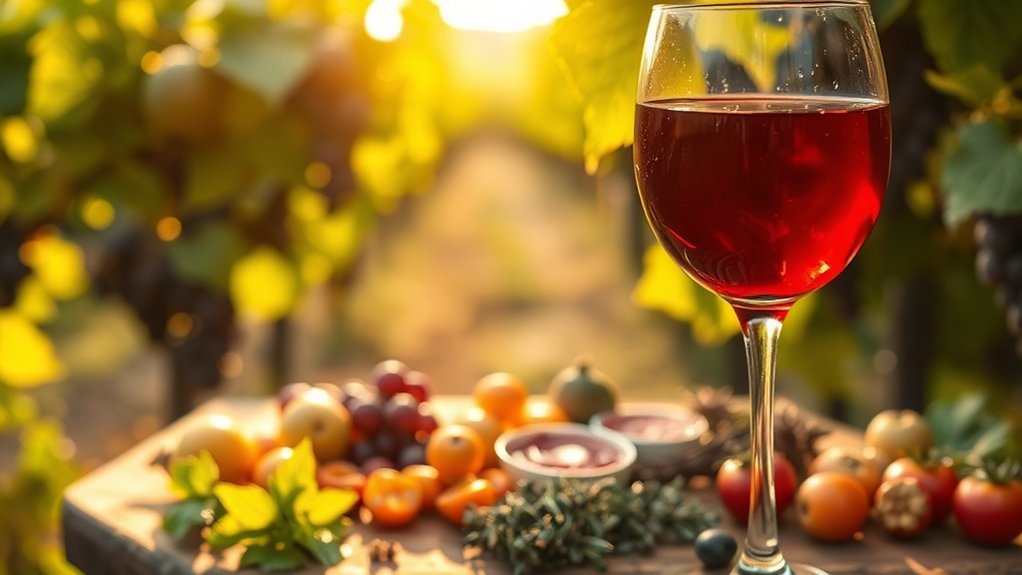
Vegan wine is made without animal-derived fining agents like isinglass, gelatin, egg whites, or casein—proteins traditionally used to clarify wine and remove sediment. While these animal products leave only microscopic traces, they disqualify conventional wines from vegan certification. Vegan winemakers use plant-based alternatives like bentonite clay or pea protein, or they skip fining entirely, allowing natural sedimentation to clarify the wine. You’ll also want to verify that closures and packaging avoid beeswax or milk-based adhesives. Understanding the full production process reveals how deeply animal products permeate conventional winemaking.
Contents
show
What Makes Wine Non-Vegan?
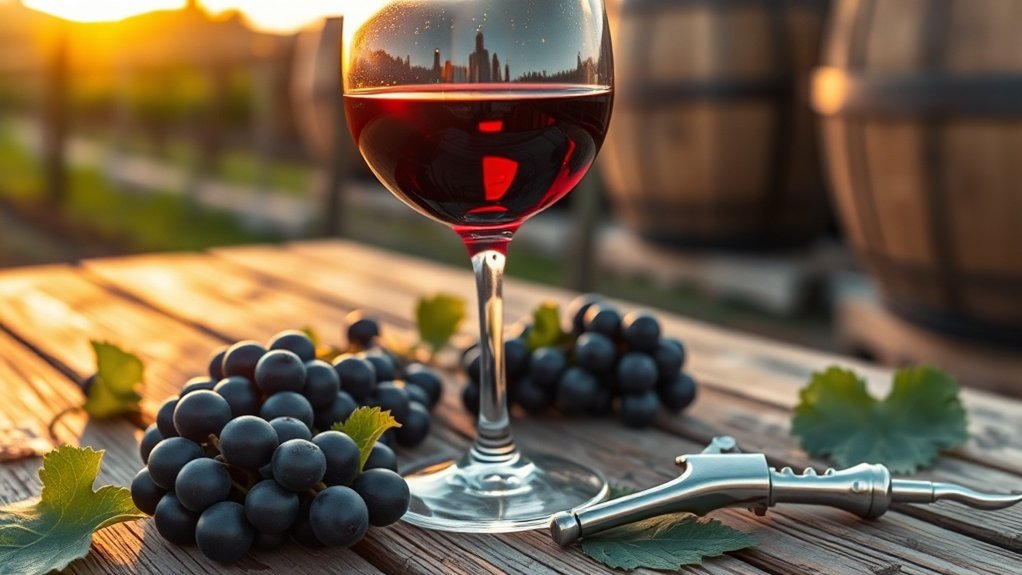
Wine’s vegan status hinges on a centuries-old clarification technique that most consumers don’t know exists. The fining process removes suspended particles to achieve wine clarity, but winemakers often employ animal derived fining agents that compromise vegan standards.
You’ll find egg whites (albumen) binding tannins in red wines, while isinglass—derived from fish bladders—clarifies whites. Gelatin and casein, a milk protein, serve similar purposes across various wine styles.
These proteins attract unwanted particles through ionic bonding, settling them out before bottling. Though residual amounts remain minimal, they’re enough to disqualify wines from vegan certification.
Traditional practices add complexity: beeswax seals and milk-based cork adhesives further complicate matters. Without transparent labeling requirements, you can’t determine a wine’s vegan status from standard labels alone.
Animal Products Hiding in Your Wine
You’ll find animal products in unexpected places throughout wine production, from the cellar to the bottle.
Traditional fining agents—isinglass, egg whites, gelatin, and casein—clarify wine by binding to suspended particles, though they can leave microscopic protein traces in the finished product.
Beyond the liquid itself, animal-derived materials appear in packaging adhesives, bottle sealants, and even vineyard fertilizers, creating hidden non-vegan elements that labels rarely disclose.
Traditional Fining Agents Used
Despite wine’s plant-based origins, the clarification process often introduces animal-derived substances that compromise its vegan status. Traditional fining processes employ various animal-based proteins to achieve clarity improvement by binding with unwanted sediment and tannins.
You’ll commonly encounter three primary non-vegan fining agents:
- Isinglass – extracted from fish bladders, this collagen-rich substance effectively removes haze-causing particles.
- Egg whites – particularly albumin, which bonds with harsh tannins to soften wine’s texture while improving transparency.
- Gelatin and casein – derived from animal bones and milk respectively, these proteins attract suspended solids.
These agents leave microscopic traces in your finished bottle, making the wine technically non-vegan. Most consumers remain unaware of this hidden animal content, though vegan alternatives like bentonite clay now offer comparable results without compromising dietary principles.
Packaging and Sealing Materials
The animal-derived concerns don’t end with fining agents—they extend to the materials securing your bottle. You’ll find beeswax sealing premium wines, yet this lustrous coating originates from honeybee production, making it non-vegan.
Cork materials present another challenge: agglomerated corks often contain milk-based adhesives that bind cork particles together. Traditional packaging glues frequently incorporate animal components you wouldn’t expect in your wine purchase.
What’s particularly troubling is the transparency gap—you might’ve selected certified vegan wine without realizing the closure contradicts your ethical standards.
Fortunately, beeswax alternatives like plant-derived waxes and synthetic seals exist, alongside corks bonded with vegetable-based adhesives. As awareness grows, producers increasingly adopt these vegan-friendly solutions, though you’ll need to verify packaging specifications to guarantee complete animal-product elimination from bottle to seal.
Fertilizers and Vineyard Practices
Before grapes reach the crusher, animal-derived inputs have already permeated the vineyard soil beneath your feet. Traditional viticulture relies heavily on fertilizers that compromise vegan principles, making sustainable practices at the vineyard level just as significant as cellar operations.
Common non-vegan vineyard amendments include:
- Bone meal and blood meal – calcium and nitrogen sources derived from slaughterhouse byproducts
- Fish emulsions – liquid fertilizers processed from fish waste
- Animal manure – cow, horse, or chicken waste used as soil conditioners
Even biodynamic farming, despite its organic certification, frequently incorporates animal-based preparations.
You’ll need to investigate beyond the bottle’s label. Direct engagement with producers reveals their commitment to organic alternatives like plant-based composts, green manures, and mineral amendments that truly align with vegan values.
How Vegan Wine Is Made
You’ll find that vegan winemakers employ three primary approaches to achieve crystal-clear wine without animal products: substituting plant-based or mineral fining agents, allowing natural sedimentation over extended aging periods, or adopting completely plant-focused vineyard practices from soil to bottle.
These methods preserve the wine’s aromatic complexity and textural integrity while maintaining ethical standards. Each technique requires precise timing and environmental control to deliver the same brilliance you’d expect from traditionally fined wines.
Vegan-Friendly Fining Alternatives
When winemakers craft vegan wines, they replace traditional animal-based fining agents with mineral and plant-derived alternatives that achieve identical clarification results.
Understanding bentonite benefits reveals why this volcanic clay remains the industry standard—it attracts positively charged particles through ionic bonding while maintaining environmental integrity.
Plant proteins derived from peas, potatoes, and wheat offer additional clarification options that align with ethical production values.
Common Vegan-Friendly Fining Agents:
- Bentonite clay – Volcanic ash derivative that removes unwanted proteins through electrostatic attraction
- Pea protein isolate – Plant-based alternative effective for white wine clarification
- Activated charcoal – Mineral-based agent that addresses color and odor compounds
Some producers bypass fining entirely, creating naturally cloudy wines that preserve maximum flavor compounds.
This approach eliminates any residual fining agents, making certain complete vegan compliance throughout production.
Natural Settling Methods
While active fining accelerates clarification, natural settling methods allow time and gravity to achieve the same results without introducing any materials into the wine.
During natural fermentation, suspended particles gradually descend to the vessel’s bottom, creating a compact sediment layer. You’ll find winemakers employing cold stabilization, chilling the wine to 25-30°F to encourage tartrate crystals and protein particles to precipitate naturally.
This patient approach to sediment removal requires weeks or months but preserves the wine’s authentic character and terroir expression. Some producers extend this minimal intervention philosophy throughout production, letting the wine self-clarify over extended aging periods.
Bentonite clay offers a vegan-friendly assist when needed, binding positively charged particles before settling. These techniques guarantee your vegan wine achieves professional clarity while maintaining ethical production standards.
Plant-Based Production Practices
Beyond clarification techniques, vegan winemaking extends its ethical framework to every stage of production, from soil preparation through bottling. You’ll find that sustainable practices define the vineyard’s foundation, where ethical sourcing begins with soil management decisions that honor vegan principles.
Winemakers committed to plant-based production implement:
- Cover-crop regimes replacing traditional fertilization methods, enriching soil with nitrogen-fixing legumes and grasses rather than animal manure.
- Minimal intervention protocols that preserve grape integrity while eliminating animal-derived processing aids throughout fermentation.
- Plant-based nutrient systems using compost from vegetable matter, green manures, and mineral supplements to maintain vineyard health.
These methodologies guarantee that your wine reflects complete adherence to vegan ethics, from root to glass, while maintaining the complexity and character you expect from premium vintages.
Unfined Vegan Wines: A Natural Approach
Although traditional winemaking relies heavily on fining agents to achieve crystal-clear wines, unfined vegan wines adopt a fundamentally different philosophy that prioritizes minimal intervention and natural processes.
You’ll find these wines use natural sedimentation, allowing suspended particles to settle gradually without animal-derived clarifying agents. This patient approach preserves polyphenols, tannins, and other compounds that contribute to exceptional flavor complexity—creating wines with pronounced aromatic profiles and textured mouthfeels.
When you encounter unfined vegan wines, expect a characteristic cloudiness or haziness that reflects their authentic, unmanipulated nature.
Producers committed to this methodology typically adopt sustainable viticulture practices, including organic and biodynamic certifications.
You’re selecting wines that align with environmental stewardship while experiencing terroir expression in its most genuine form, unfiltered by conventional clarification techniques.
Does Vegan Wine Taste Different?

The perceived taste differences in vegan wines stem primarily from the fining agents employed rather than any inherent characteristic of veganism itself.
When you’re looking into vegan flavor profiles, you’ll uncover that plant-based fining agents like bentonite clay and plant proteins preserve the wine’s authentic characteristics without masking delicate nuances.
Your wine tasting experiences with vegan options may reveal:
- Increased mouthfeel – Unfined or unfiltered vegan wines often present richer texture and more pronounced body.
- Greater complexity – Natural fining methods maintain the grape’s inherent flavor compounds, producing more layered aromatics.
- Variety-driven character – Quality depends on grape selection and winemaking techniques, not vegan certification.
Today’s vegan wine producers prioritize excellence, yielding highly rated bottles that compete favorably with conventional wines.
The cloudier appearance you might encounter signals minimal intervention rather than compromised quality.
How to Check If Your Wine Is Vegan
Identifying vegan wines requires systematic verification since most bottles don’t display this information prominently on their labels. Start by examining bottles for “Certified Vegan” or “Vegan Friendly” designations that confirm ethical sourcing practices.
Use Barnivore.com‘s extensive database to search specific wines and producers for their vegan status. Many retailers now tag vegan-friendly options, simplifying your wine tasting selections during shopping excursions.
Familiarize yourself with non-vegan fining agents—isinglass, egg whites, and gelatin—commonly used in traditional winemaking processes.
When certification labels aren’t present, contact producers directly or visit their websites for detailed information about their fining methods. This direct engagement provides definitive answers about animal-derived ingredients.
As consumer demand grows, transparency in ethical sourcing continues improving, making vegan wine identification increasingly accessible for conscientious consumers seeking plant-based options.
Vegan Wine Labels and Certifications Explained
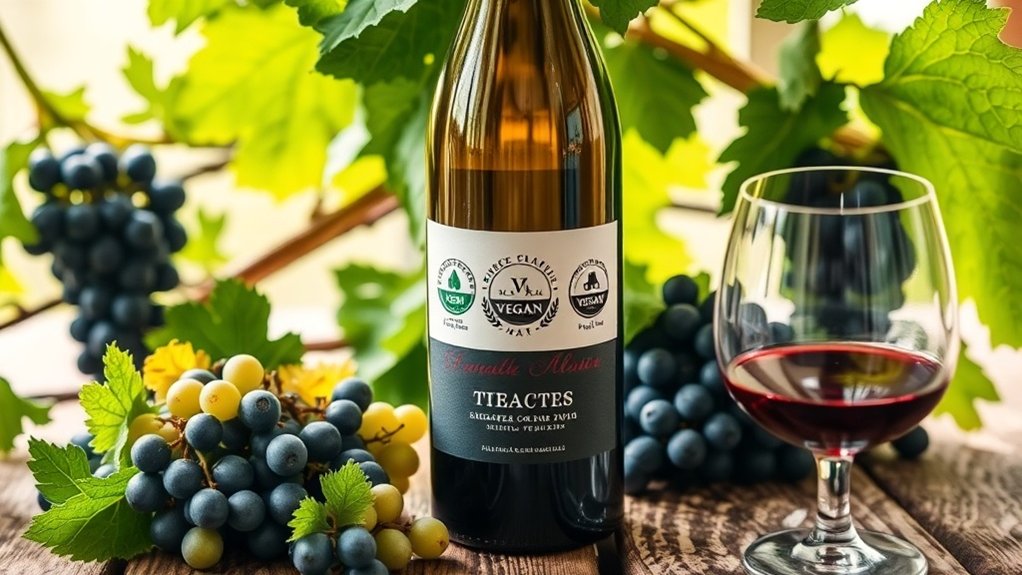
When examining vegan wine bottles, you’ll encounter several distinct certification marks that verify production methods exclude animal-derived fining agents.
These symbols provide vital label clarity, allowing you to make confident purchasing decisions without extensive research.
Key certification standards include:
- The Vegan Society UK – The most recognized international mark, guaranteeing strict adherence to vegan production protocols throughout the winemaking process.
- “Vegan Friendly” designations – Retailer-applied labels indicating wines meet specific ethical criteria, though certification standards may vary between merchants.
- Barnivore.com verification – A thorough database cross-referencing thousands of wines, enabling you to confirm vegan status before purchase.
Major retailers now prominently display these certifications, reflecting consumer demand for ethically produced beverages.
This transparency guarantees you’ll identify suitable options efficiently while supporting producers committed to animal-free practices.
Where to Buy Vegan Wine
Locating vegan wine has become substantially easier as specialized retailers and mainstream distributors recognize growing consumer demand for transparently sourced products.
You’ll find extensive selections at dedicated fine wine stores, where knowledgeable staff provide detailed information about vegan wine trends and popular brands. Local grocery stores increasingly stock certified options—look for “Certified Vegan” or “Vegan Friendly” designations on labels to verify authenticity.
Online platforms like Kind of Wild Wines offer convenient direct ordering with home delivery, expanding your access to diverse varietals.
Additionally, Barnivore.com serves as an invaluable resource, providing searchable databases that help you identify suitable options across thousands of labels.
These purchasing channels reflect the industry’s responsiveness to ethical consumption patterns, making sure you can confidently check out wines aligned with your values.
Is Vegan Wine More Expensive?
Price positioning for vegan wines varies considerably across the market, challenging the assumption that ethical production necessarily commands premium pricing. When conducting price comparison analyses, you’ll uncover several factors influencing cost:
- Premium-tier vegan wines often reflect heightened production expenses from plant-based fining agents like bentonite and pea protein, particularly within organic and biodynamic classifications requiring intensive labor and specialized materials.
- Specialty retailers may charge premiums for curated selections emphasizing ethical sourcing and sustainability certifications, positioning these bottles as luxury commodities.
- Competitive mainstream options demonstrate that affordability exists throughout the category, with numerous producers pricing vegan wines comparably to conventional alternatives.
Current market trends indicate rising demand has prompted some producers to use ethical practices as value propositions, though this doesn’t universally translate to higher costs for consumers.
This article was reviewed by Nicole Anderson, RDN.