Last Updated: July 19, 2026
Is Tempura Vegan
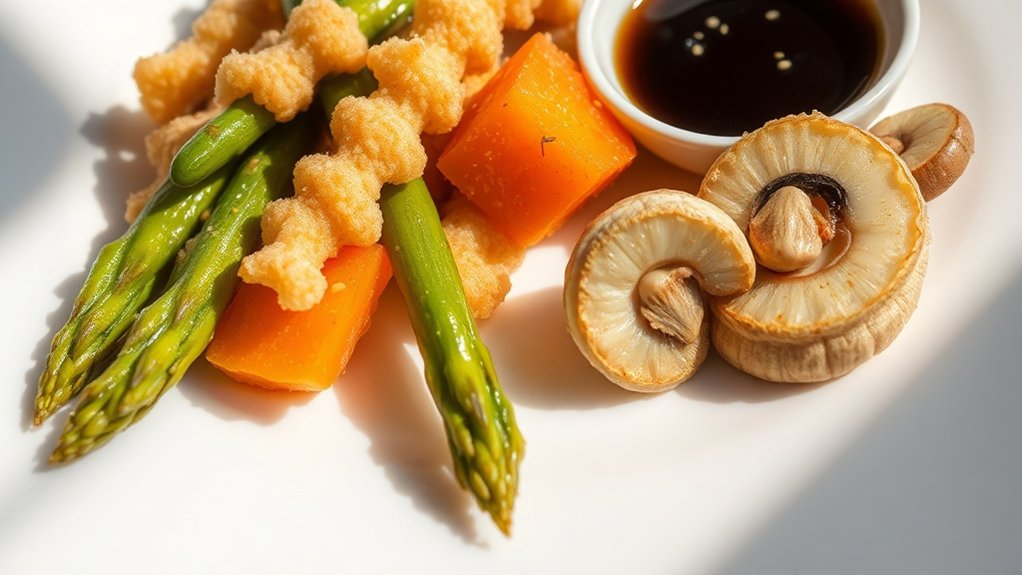
Traditional tempura isn’t vegan because the batter contains eggs as a binding agent, and the accompanying tentsuyu dipping sauce is made with dashi from bonito fish flakes. Even when you order vegetable tempura at restaurants, you’re likely getting egg-based coating and potentially cross-contamination from shared frying oil used for seafood. However, you can easily create plant-based versions at home using sparkling water, cornstarch, and flour combinations that achieve similar crispiness, while kombu-based dashi provides authentic umami flavor without animal products.
Contents
show
Why Traditional Tempura Isn’t Vegan
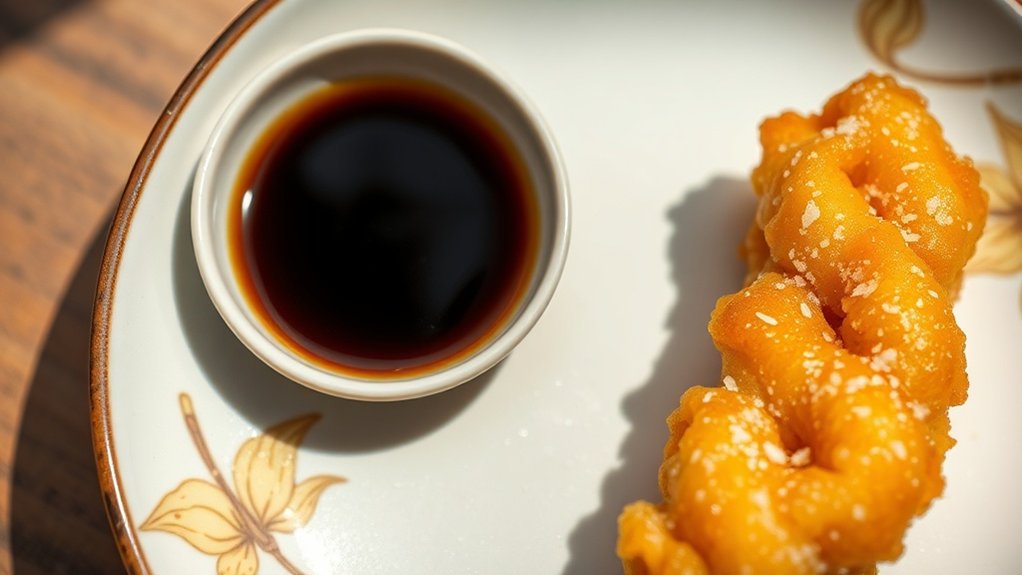
While tempura‘s light, crispy coating might seem plant-based at first glance, traditional Japanese tempura batter contains eggs as a binding agent, immediately disqualifying it from vegan diets.
Throughout tempura history, eggs have provided essential structure and texture to achieve the characteristic delicate crunch.
Beyond the batter, you’ll encounter additional non-vegan components: tentsuyu dipping sauce relies on dashi made from bonito fish flakes, while restaurants commonly serve shrimp, fish, and other seafood alongside vegetables.
The frying process itself poses concerns, as many establishments use the same oil for animal-based and plant-based items, causing cross-contamination.
Even dishes labeled “veggie tempura” may contain hidden animal products in batters or sauces.
Fortunately, ingredient alternatives exist for creating authentic vegan versions at home or identifying suitable restaurant options.
How to Spot Non-Vegan Ingredients at Japanese Restaurants
How can you guide Japanese restaurant menus when traditional dishes contain hidden animal products? You’ll need to identify several key non-vegan ingredients commonly found in tempura preparations.
First, ask about the dashi base—traditional versions use bonito (fish) flakes, though vegetable-based alternatives exist.
Next, inquire about the batter composition, as eggs are standard, but ingredient substitutions like aquafaba or carbonated water can create vegan tempura alternatives.
Check accompanying sauces for fish-derived ingredients, particularly bonito flakes and anchovy-based components.
Don’t assume vegetable tempura is automatically vegan; even zucchini and sweet potato may be coated in egg-containing batters.
Always specify your dietary requirements clearly and ask whether the frying oil is shared with non-vegan items, as cross-contamination can compromise otherwise plant-based dishes.
How to Make Vegan Tempura Batter at Home
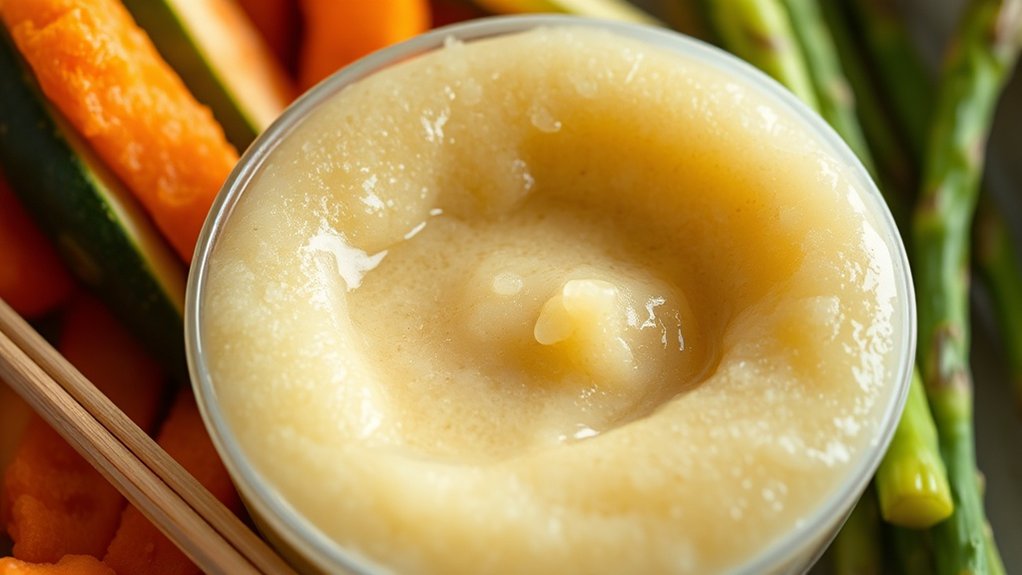
Creating authentic vegan tempura batter requires just three essential flours and one leavening agent to replicate the traditional light, crispy coating without eggs or dairy.
You’ll combine 50g cornstarch, 35g all-purpose flour, and 10g rice flour with 3g baking powder for maximum puffiness. Gradually incorporate 1/2 cup cold sparkling water, mixing gently to achieve proper batter consistency—over-mixing compromises the delicate texture.
For superior frying techniques, chill your batter before use and select dried vegetables with minimal water content to improve adherence.
Heat oil to 170-180°C (340-360°F), which guarantees golden-brown results without greasiness. Fry coated vegetables for 1-2 minutes per side until crisp.
This evidence-based method produces restaurant-quality tempura that’s completely plant-based while maintaining the characteristic airy crunch.
Best Vegetables and Dipping Sauces for Vegan Tempura
Selecting the right vegetables transforms vegan tempura from a simple appetizer into a nutritionally diverse meal that delivers essential vitamins, minerals, and dietary fiber. Sweet potatoes provide beta-carotene, while broccoli offers vitamin C and calcium.
Zucchini, bell peppers, and eggplant add varied textures and antioxidants. You’ll achieve ideal crispiness by thoroughly drying vegetables before battering, as excess moisture compromises texture integrity.
Seasonal vegetables improve freshness and nutritional value while reducing environmental impact. Consider adding panko breadcrumbs to your batter for superior crunch.
For dipping sauce, combine soy sauce with rice vinegar for umami depth, or prepare ponzu sauce for sweet-tanginess. A sesame-based dipping sauce adds healthy fats and richness.
These accompaniments complement tempura’s crispy exterior while providing additional nutrients and flavor complexity.
This article was reviewed by Nicole Anderson, RDN.