Last Updated: February 20, 2026
Are Tic Tacs Vegan
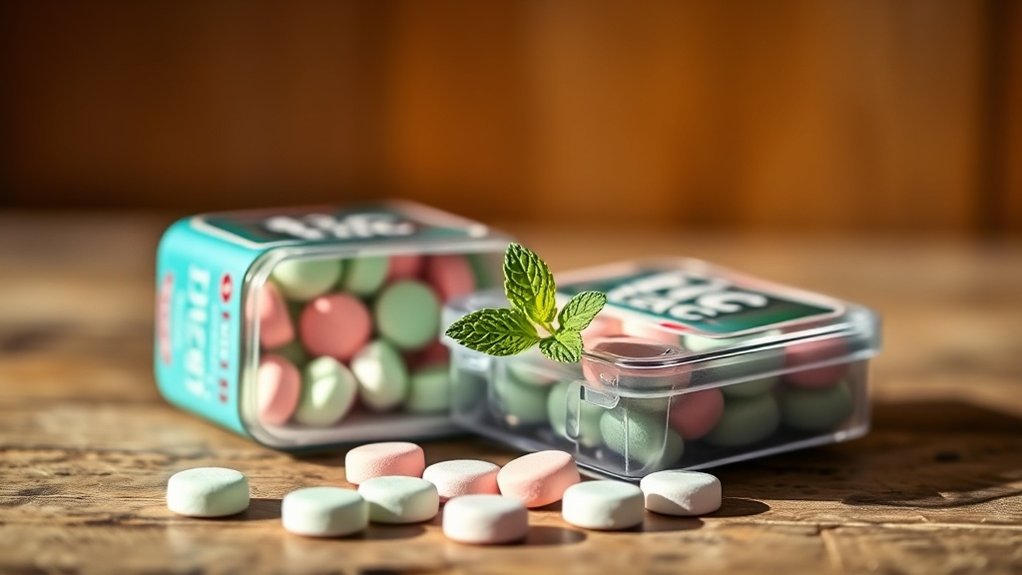
Most Tic Tac flavors are vegan-friendly, including Fresh Mint, Orange, and Apple varieties, as they use carnauba wax rather than animal-derived ingredients. However, you’ll need to avoid Cherry Cola and Be Mine Mix, which contain carminic acid from cochineal insects and shellac from lac beetles respectively. Regional formulations vary greatly due to different regulatory requirements and ingredient sourcing, so checking ingredient labels for E120 (carmine) is essential. The sections below provide detailed information about specific flavors and verification methods.
Contents
show
Which Tic Tac Flavors Are Vegan?
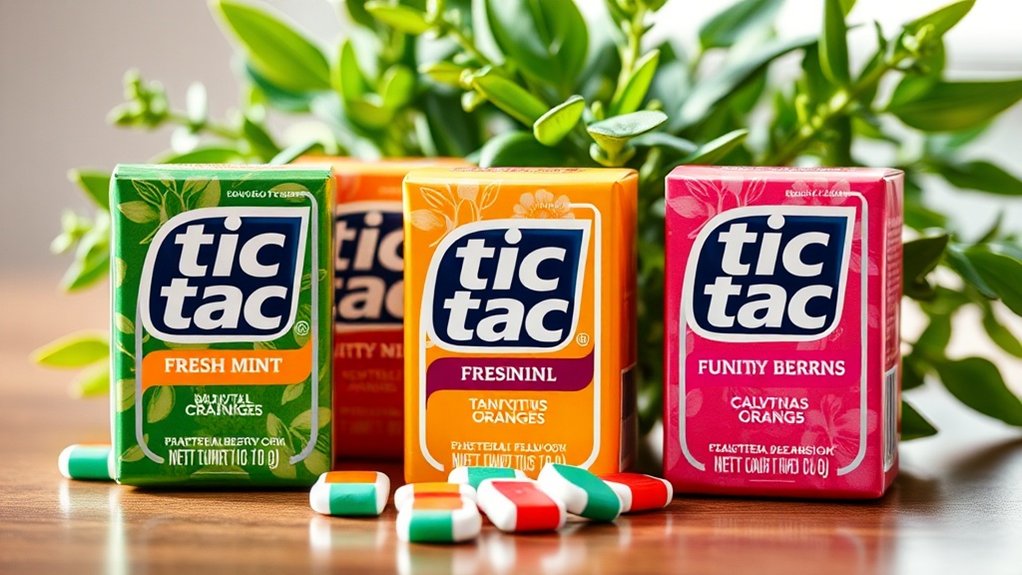
Not all Tic Tac flavors meet vegan standards, as formulations vary greatly across product lines.
When examining Tic Tac varieties, you’ll find Fresh Mint, Apple Burst, Apple Mix, Arctic Rush, Orange, Peppermint, and Pina Colada are vegan-friendly since they use carnauba wax rather than animal-derived alternatives.
Berry and Strawberry Fields flavors are also confirmed vegan, though you should verify labels as regional differences exist.
However, Cherry Cola contains carminic acid—a red dye from insects—making it non-vegan. Other flavors may include shellac or dairy components.
Flavor ingredients require careful scrutiny, particularly in varieties with printed images, as formulations differ by location.
Always check ingredient lists before purchasing to guarantee the specific Tic Tac flavor you’re selecting aligns with vegan standards.
Which Tic Tac Flavors Aren’t Vegan?
While many Tic Tac varieties accommodate vegan diets, several flavors contain animal-derived ingredients that make them unsuitable for plant-based consumers.
You’ll find that Cherry Cola Tic Tacs contain carminic acid, a red pigment derived from cochineal insects. The Be Mine Mix edition includes shellac, a resin secreted by lac beetles, which disqualifies it from vegan status.
Various Despicable Me flavors also contain shellac in their formulations.
Additionally, certain Fruit Adventure sizes may include carminic acid, though this varies by production region.
You should always examine ingredient labels carefully, as formulations differ based on manufacturing location and market.
These animal-derived additives—primarily carmine, carminic acid, and shellac—serve as colorants and glazing agents but render these specific flavors incompatible with vegan dietary principles.
What Animal Ingredients Are in Non-Vegan Tic Tacs?
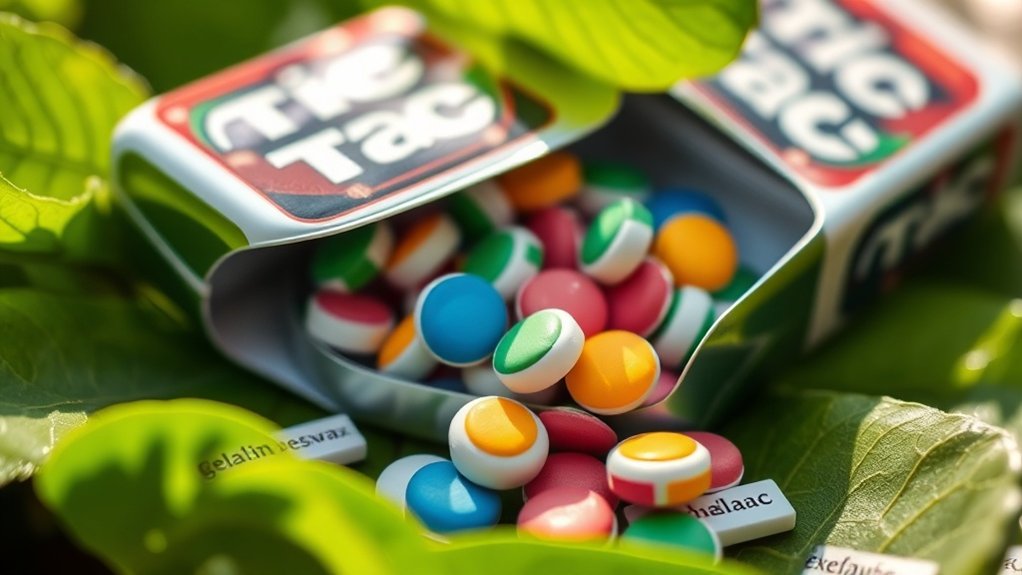
Non-vegan Tic Tacs contain several animal-derived ingredients that you’ll want to identify before purchasing.
The primary concern is carmine (E120), a red pigment extracted from crushed cochineal insects, which appears in flavors like Cherry Cola as carminic acid.
Additionally, shellac—a resinous secretion from female lac beetles—creates the characteristic glossy coating on certain Tic Tac varieties, making them unsuitable for vegan diets.
Insect-Derived Color Additives
Several Tic Tac flavors contain insect-derived color additives that immediately disqualify them from vegan status. Understanding the insect impact on these products helps you make informed choices about which varieties to avoid.
The primary culprits include:
- Carmine – A red dye extracted from crushed cochineal insects, commonly found in red-colored varieties.
- Carminic acid – Another insect-derived coloring agent present in Cherry Cola and Fruit Adventure flavors.
- Shellac – A resin secreted by female lac beetles, used to create the signature glossy coating on certain Tic Tacs.
- Production variations – Formulations differ by location, requiring careful label verification.
- Dye alternatives – Fresh Mint contains plant-based colorings, demonstrating vegan-friendly options exist.
Always examine ingredient lists carefully, as manufacturers may reformulate products without prominent notification.
Shellac Coating Concerns
Beyond colorants, shellac presents the most prevalent animal-derived ingredient in Tic Tacs’ glossy exterior. You’ll find this resin, secreted by female lac beetles, coating specific flavors like Be Mine Mix and certain Despicable Me varieties.
Manufacturers use shellac to create that distinctive shine you see on the candies’ surface. Understanding shellac sources helps you make informed purchasing decisions. This insect-derived coating isn’t suitable for vegan diets, as it requires harvesting from living creatures.
You should check ingredient labels carefully, since production locations affect formulations—UK, Canadian, and Australian Cherry Cola versions may contain additional non-vegan components.
While some Tic Tac flavors remain plant-based, those containing shellac aren’t compatible with vegan principles. You’ll need to seek vegan alternatives or stick with shellac-free varieties to maintain your dietary preferences.
How to Check If Your Tic Tacs Are Vegan?
Effective consumer awareness requires multiple verification strategies:
- Review ingredient labeling for E-numbers and scientific names that indicate animal sources.
- Visit the official Tic Tac website to access current formulation information for specific flavors.
- Contact customer service directly to verify vegan suitability, as formulations vary by region.
- Use ingredient scanning apps that provide instant analysis of product components.
- Research regional variations, since local flavors may contain different ingredients.
For example, Fresh Mint is confirmed vegan, while Cherry Cola contains carminic acid.
Regional formulations differ considerably, making thorough verification essential before purchase.
Why Tic Tac Ingredients Change by Country?
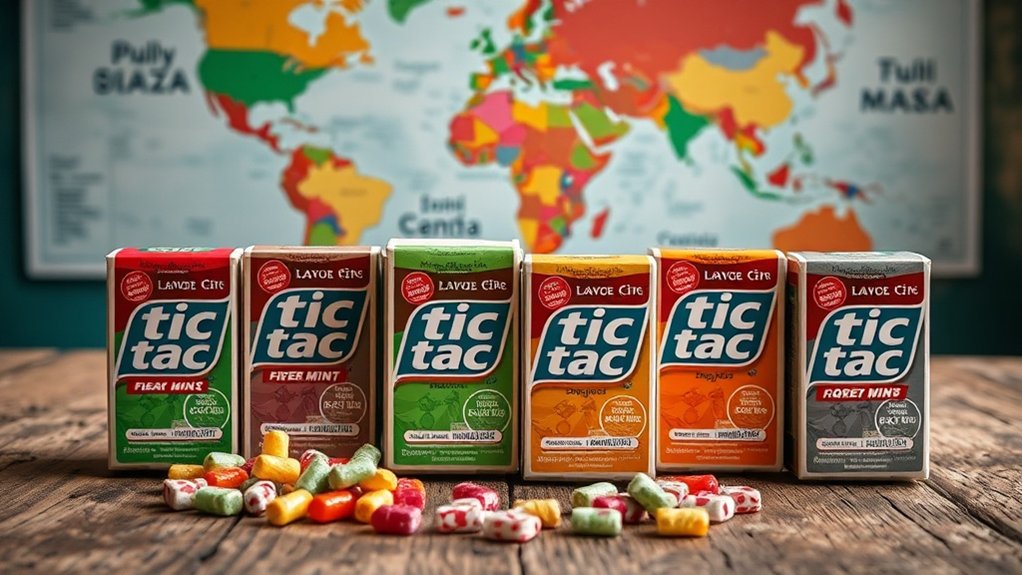
When you purchase Tic Tacs in different countries, you’ll encounter formulation variations driven by three primary factors: regulatory requirements, ingredient availability, and cultural taste preferences.
International regulations mandate specific ingredient restrictions—some countries prohibit certain colorants like carmine or glazing agents like shellac, while others permit them. Your U.S. Tic Tacs, often manufactured in Canada, may differ from European versions due to these compliance standards.
Cultural preferences also influence formulations. Manufacturers adjust sweetness levels, flavoring intensity, and even texture to match regional tastes.
Additionally, raw material sourcing varies geographically, affecting which ingredients producers utilize locally.
Ferrero documents these variations transparently, but you’ll need to verify ingredients on your specific product’s label.
Regional availability means certain flavors remain vegan in one market while containing animal-derived components elsewhere.
Are U.S. Tic Tacs Different From UK Versions?
Yes, U.S. and UK Tic Tacs differ considerably in their formulations, directly impacting their vegan status. Tic Tac production varies by region, creating significant differences in ingredient sourcing and formulation practices.
Key regional variations include:
- U.S. Fresh Mint and Orange flavors are confirmed vegan, while UK versions of the same flavors may contain animal-derived additives.
- UK Cherry Cola and Fruit Adventure contain carminic acid, a non-vegan ingredient absent from most U.S. varieties.
- UK formulations may include shellac or carmine, ingredients typically excluded from U.S. production.
- Official Tic Tac websites provide different vegan flavor lists for each country.
- Ingredient labels must be checked locally, as identical flavor names don’t guarantee matching formulations.
You’ll need to verify your specific region‘s ingredient lists before confirming vegan compatibility.
This article was reviewed by Nicole Anderson, RDN.