Last Updated: June 3, 2026
Is MSG Vegan
Yes, MSG is completely vegan. It’s produced through bacterial fermentation of plant-based carbohydrates like corn, sugar beets, or sugar cane—no animal products are involved in the process. The fermentation creates glutamic acid, which is then neutralized with sodium to form monosodium glutamate. This production method is similar to how tempeh and soy sauce are made. You’ll find MSG in many vegan products, from plant-based burgers to seasoning blends, where it improves umami flavor. Continue below to uncover exactly how the fermentation process works and which vegan foods commonly contain this flavor improver.
Contents
show
Yes, MSG Is Vegan: Here’s Why
MSG is unequivocally vegan because it’s derived entirely from plant-based sources through bacterial fermentation of carbohydrates like sugar beets, sugar cane, or corn.
When you’re questioning “is monosodium glutamate vegan,” the answer lies in its production process and chemical composition. The glutamate in MSG is chemically identical to the naturally occurring glutamate found in tomatoes, mushrooms, and seaweed—all plant-based foods.
This fermentation method produces pure sodium salt of glutamic acid without any animal-derived ingredients or byproducts. The FDA has recognized MSG as safe since 1958, granting it GRAS status.
Beyond its vegan credentials, MSG serves as an effective flavor booster that can make plant-based dishes more savory and appealing, potentially encouraging greater vegetable consumption and supporting healthier eating patterns.
How Vegan MSG Gets Made Through Fermentation
Understanding MSG’s vegan status requires examining the actual production method.
Modern MSG production uses fermentation technology identical to processes that create plant-based foods like soy sauce and tempeh. During fermentation, manufacturers introduce specific bacteria to carbohydrate sources such as sugar beets or molasses. These bacteria convert the carbohydrates into glutamic acid, an amino acid naturally present in numerous foods.
The glutamic acid is then neutralized with sodium, forming monosodium glutamate—the compound you know as MSG.
The final product is chemically identical to glutamate found in tomatoes, mushrooms, and aged cheeses. No animal products enter the production process, making MSG entirely suitable for vegan diets.
This fermentation approach also demonstrates how sustainable, plant-based materials can produce effective flavor-improving ingredients without compromising dietary principles.
Common Vegan Products That Use MSG

While many vegans scrutinize ingredient labels carefully, they’ll find MSG appearing in numerous plant-based products they already enjoy.
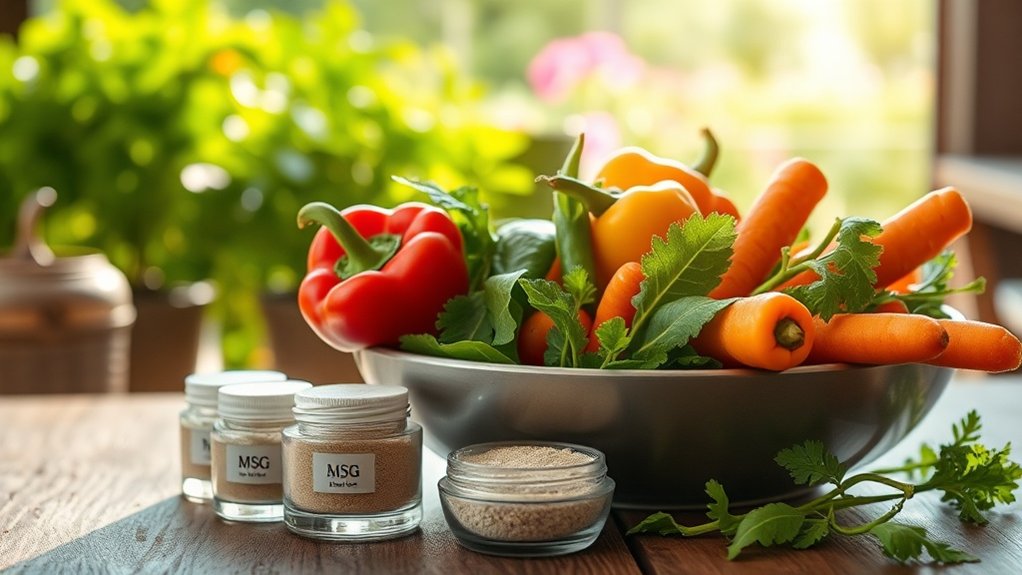
Plant-based burgers and meat alternatives frequently incorporate MSG to intensify savory depth and improve palatability. Instant ramen varieties, vegan sauces, and seasoning blends rely on it to deliver robust umami without animal-derived ingredients.
Snack foods like certain veggie chips and seasoned crackers use MSG for that satisfying savory punch.
You’ll also spot it in packaged soups, bouillon cubes, and Asian-inspired condiments marketed to vegans. These products often combine MSG with nutritional yeast, which naturally contains glutamates, creating a synergistic effect that amplifies cheesy, meaty flavors.
This ingredient pairing helps vegan manufacturers replicate the complex taste profiles traditionally achieved through animal products, making plant-based eating more appealing.
This article was reviewed by Nicole Anderson, RDN.