Last Updated: May 8, 2026
Is Carnauba Wax Vegan
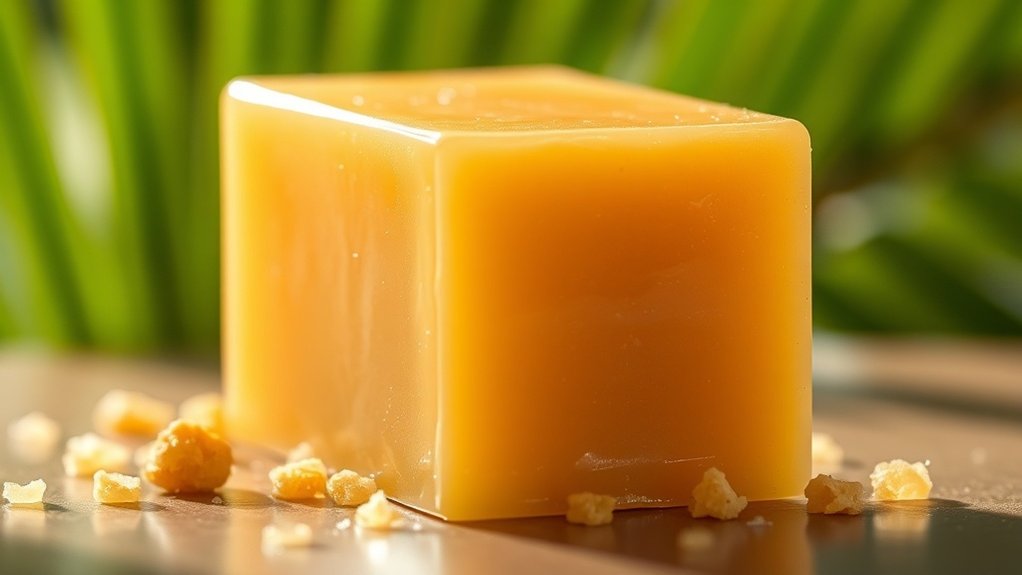
Yes, carnauba wax is vegan—it’s extracted solely from *Copernicia prunifera* palm leaves through mechanical harvesting that doesn’t involve animal substances or insect exploitation. You’ll find it labeled as “Copernicia cerifera wax” or E903 in certified vegan products, from candies to cosmetics. Unlike beeswax or shellac, it contains zero animal-derived components when processed traditionally using heat alone. However, you should verify that specific products haven’t used animal-based clarifying agents during refinement or experienced cross-contamination in shared facilities, which the certification details below will help you identify.
Contents
show
What Is Carnauba Wax and Where Does It Come From?
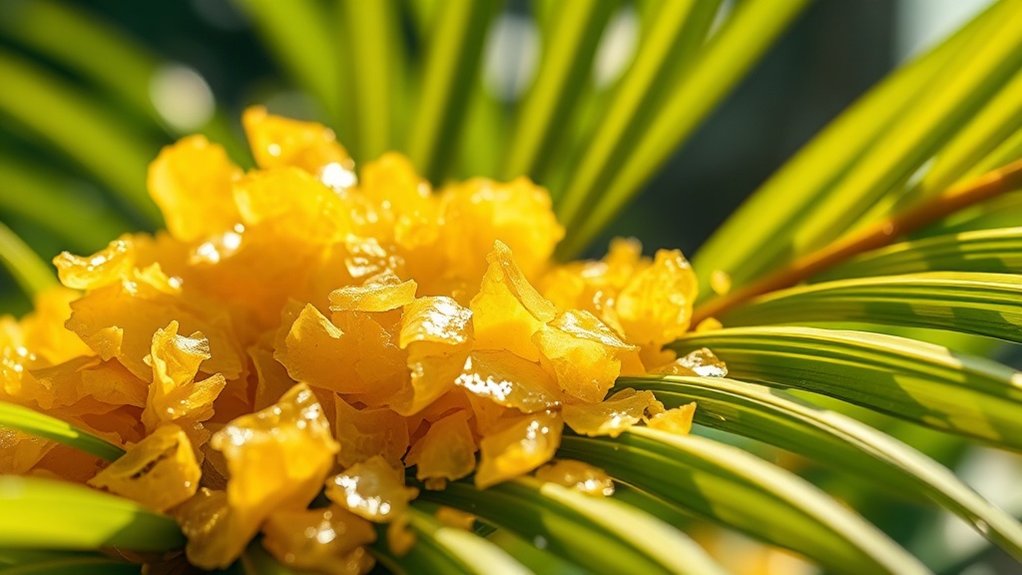
Carnauba wax originates from the leaves of *Copernicia prunifera*, a palm species endemic to northeastern Brazil’s semi-arid regions. You’ll find this natural wax coating protects the palm’s fan-shaped leaves from moisture loss in harsh climates.
Carnauba palm cultivation involves sustainable harvesting methods where workers cut mature leaves, then dry and beat them to release the wax coating naturally. This process doesn’t harm the tree, which Brazilians call the “Tree of Life” due to its numerous applications.
The extracted wax exhibits exceptional properties: a melting point between 80°C and 86°C, remarkable hardness, and a distinctive glossy finish.
Carnauba wax benefits extend across cosmetics, food coatings, and industrial applications, making it highly sought after. Since it’s derived entirely from plant material without animal exploitation, it maintains vegan certification standards.
Is Carnauba Wax Vegan?
Given its plant-based origin, this palm-derived wax meets strict vegan certification requirements across global standards. Extracted from Copernicia prunifera palm leaves, carnauba wax contains zero animal-derived components, making it a definitive vegan ingredient.
Unlike beeswax, which requires animal exploitation, carnauba’s sustainable harvesting process involves collecting leaf wax without damaging trees.
The carnauba benefits extend beyond ethical sourcing. As a hypoallergenic ingredient, it performs equivalently to animal-based waxes in cosmetic formulations while maintaining cruelty-free integrity. This makes it an essential component among vegan alternatives in beauty products, pharmaceuticals, and food coatings.
For consumers following vegan lifestyles, carnauba wax represents a scientifically validated choice that aligns with both environmental responsibility and cruelty-free principles. Its certification status across vegan regulatory bodies confirms its suitability for strict plant-based requirements.
Carnauba Wax vs Beeswax and Shellac for Vegans
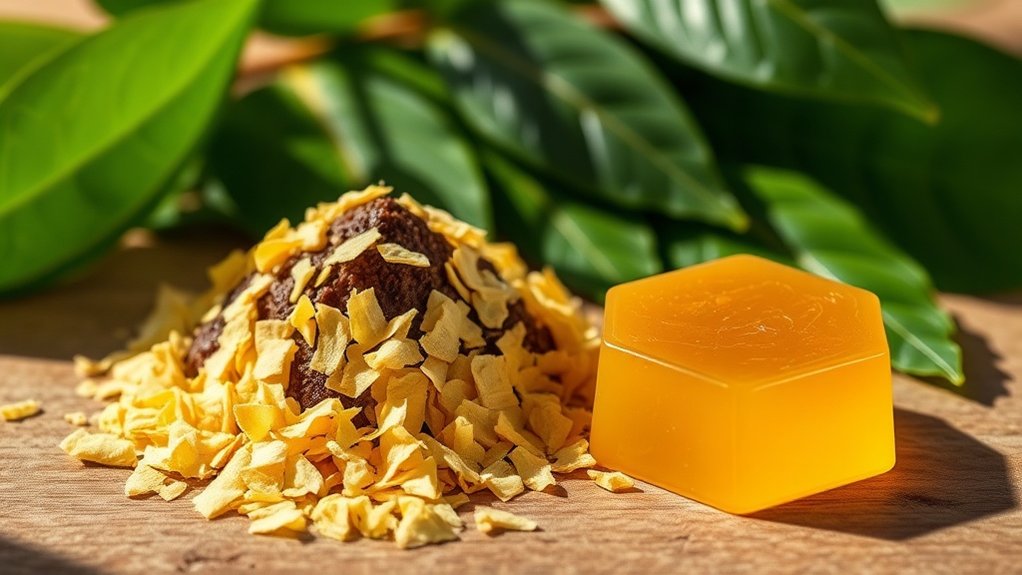
When selecting wax ingredients for vegan products, understanding the fundamental differences between carnauba wax, beeswax, and shellac becomes critical for maintaining ethical certification standards.
Carnauba benefits include complete plant origin from Brazilian palm leaves, whereas beeswax involves honeybee exploitation and shellac requires lac insect secretions. Ethical sourcing distinguishes carnauba as cruelty-free, meeting strict vegan criteria that animal-derived alternatives can’t satisfy.
You’ll find carnauba’s superior melting point (80°C-86°C) and hardness provide technical advantages over beeswax in formulations requiring stability. Its emulsifying and thickening properties match beeswax performance without compromising certification integrity.
This versatile ingredient extends beyond cosmetics into food and industrial applications, demonstrating reliable functionality across sectors.
When you’re formulating certified vegan products, carnauba wax eliminates ethical concerns while delivering comparable or improved technical specifications.
Where You’ll Find Carnauba Wax in Foods and Cosmetics
You’ll encounter carnauba wax (E903) across multiple product categories, from food glazing applications to cosmetic formulations and industrial polish compounds.
In foods, manufacturers apply it as a coating agent on candies, chocolates, and chewing gum to create moisture barriers and glossy finishes.
Cosmetic formulators incorporate this palm-derived wax into lipsticks, lip balms, and skincare products as a vegan-certified hardening agent and emulsifier with a melting point of 82-86°C.
Common Food Applications
As a multifunctional glazing agent and coating compound, carnauba wax appears in numerous food products where manufacturers need a plant-based alternative to animal-derived waxes.
You’ll find it most prominently in candy coatings, where its high melting point (80°C – 86°C) prevents surface melting during handling and transport. Chocolate glazes frequently incorporate carnauba wax to achieve that characteristic glossy finish while providing a protective moisture barrier that extends shelf life.
The food industry designates carnauba wax as E903 in ingredient listings, and it’s approved for use in confectionery, fresh fruits, and coffee beans.
You’ll encounter it in gummy candies, chewing gum, and hard-shell coated chocolates. Its certification as vegan makes it particularly valuable for manufacturers seeking clean-label formulations that meet plant-based dietary requirements.
Cosmetic Product Uses
Beyond the food sector, carnauba wax functions as a critical structural component in cosmetic formulations where its unique physical properties address specific product requirements.
You’ll find it in lipsticks, lip balms, and eye cosmetics, where it serves as a hardening agent and emulsifier. Its high melting point (80°C – 86°C) guarantees product stability during temperature fluctuations while delivering the glossy finish you expect from premium cosmetics.
The cosmetic benefits extend beyond aesthetics—carnauba wax maintains texture integrity and provides durability that synthetic alternatives struggle to match.
For vegan-certified products, it’s the preferred replacement for beeswax, supporting cruelty-free formulations without compromising performance.
When evaluating sustainable sourcing claims, verify third-party certifications confirming ethical harvesting practices from Brazilian palm trees, assuring your cosmetic choices align with environmental standards.
Industrial and Household Items
While carnauba wax dominates cosmetic and confectionery applications, its protective properties extend throughout industrial and household products where durability requirements demand plant-based solutions.
You’ll find this palm-derived ingredient in automotive polishes and furniture waxes, where its exceptional melting point (80°C-86°C) creates long-lasting protective coatings. The wax’s hardening capabilities make it essential in floor polishes, leather treatments, and shoe care formulations.
When evaluating vegan certification, you should verify sustainable sourcing practices, as harvesting methods greatly affect environmental impact. Responsible manufacturers document their supply chains from Brazilian Carnauba palm plantations through processing facilities.
Look for certifications confirming both vegan compliance and ethical harvesting practices that preserve palm trees during leaf collection, making certain the ingredient’s plant-based status aligns with broader sustainability standards.
Reading Labels When Carnauba Wax Is Blended
When carnauba wax appears in blended formulations, you’ll need to scrutinize the complete ingredient list to verify the product’s vegan status. Look for the INCI name “Copernicia cerifera (carnauba) wax” to confirm its presence.
However, label transparency becomes critical when manufacturers combine carnauba wax with non-vegan ingredients like beeswax in cosmetic products.
You should examine ingredient sourcing by checking for certification logos indicating cruelty-free and vegan compliance. These third-party verifications provide assurance beyond basic labeling.
Pay attention to multi-ingredient formulations where the proportion of carnauba wax relative to animal-derived components isn’t specified. A product containing mainly non-vegan ingredients compromises its overall vegan classification, even with carnauba wax present.
Contact manufacturers directly if ingredient sourcing remains unclear, confirming your purchases align with your ethical standards.
Can Carnauba Wax Processing Compromise Vegan Status?
You’ll need to examine how carnauba wax is processed after harvest, as refinement methods can introduce non-vegan additives or solvents that compromise its plant-based status.
Common processing techniques include bleaching with chemicals, filtering through activated carbon, and occasionally blending with synthetic or animal-derived substances to achieve desired hardness or melting points.
To verify vegan compliance, you should look for certifications like Vegan Society approval and review ingredient declarations that explicitly confirm no animal-derived processing aids were used during refinement.
Common Processing Methods Used
Understanding carnauba wax processing reveals why this plant derivative maintains its vegan credentials throughout manufacturing.
The extraction methods employed guarantee no animal-derived substances enter production:
- Mechanical harvesting: Workers cut mature palm fronds during dry season, making certain sustainable collection without chemical intervention or animal testing requirements.
- Natural drying process: Leaves undergo sun-drying for several days, allowing wax crystals to form naturally on surfaces without synthetic additives or animal-based processing agents.
- Physical separation: Dried leaves are beaten mechanically to release wax flakes, which are then filtered and refined using heat alone—no animal-derived clarifying agents or bone char filtration.
These processing techniques maintain carnauba wax’s vegan integrity from palm to finished product.
You’ll find this transparent production chain makes verification straightforward for certification bodies evaluating vegan compliance.
Additive and Solvent Concerns
While mechanical extraction preserves carnauba wax’s plant-based origins, the refining stage introduces potential vegan complications through solvents and additives.
You’ll find that pure carnauba wax requires no chemical processing, but manufacturers sometimes use solvents to improve refinement. Solvent sources matter—petroleum-based options like hexane remain vegan, while animal-derived clarifying agents would compromise certification status.
However, traditional carnauba wax processing avoids these concerns entirely, relying on mechanical beating and sun-drying methods that eliminate solvent necessity.
Additive safety becomes relevant when wax undergoes blending for specific applications. You should verify that products maintain “100% carnauba wax” labeling without undisclosed additives.
Cross-contamination risks exist in facilities processing both plant and animal waxes, making third-party vegan certification your most reliable verification method for confirming completely plant-based status.
This article was reviewed by Nicole Anderson, RDN.