Last Updated: April 1, 2026
Is Mayonnaise Vegan
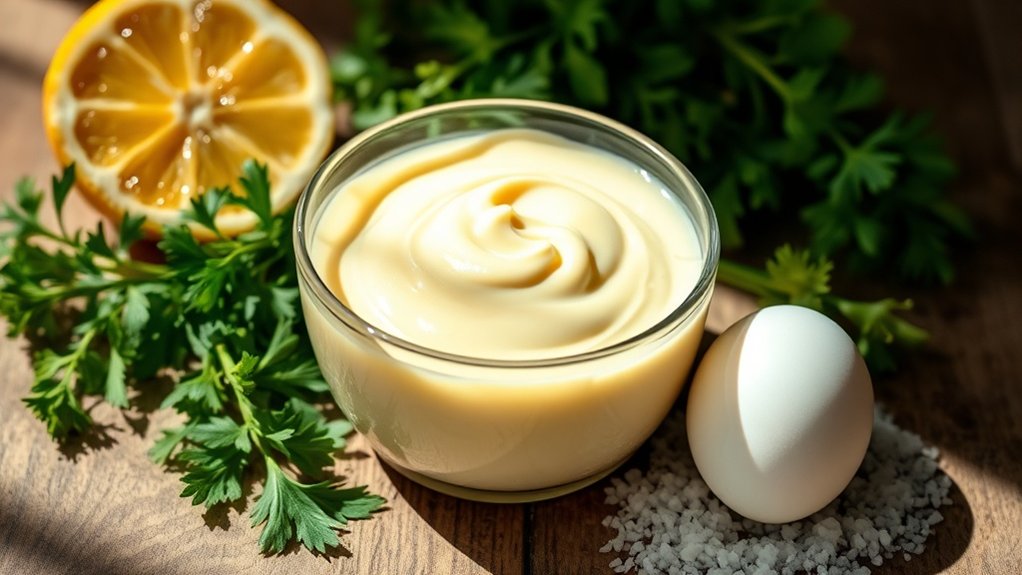
Traditional mayonnaise isn’t vegan because it contains egg yolks as its primary emulsifying agent. However, you’ll find excellent vegan alternatives that use plant-based emulsifiers like aquafaba, soy milk, or silken tofu to create the same creamy texture. To identify vegan mayo, check ingredient labels for eggs and look for “vegan” or “egg-free” certifications—though “cholesterol-free” claims don’t guarantee vegan status. Modern vegan mayonnaise brands perform remarkably well in blind taste tests, and you can investigate how these formulations achieve their traditional counterpart’s richness.
Contents
show
Why Traditional Mayonnaise Contains Eggs (And Why That Matters)
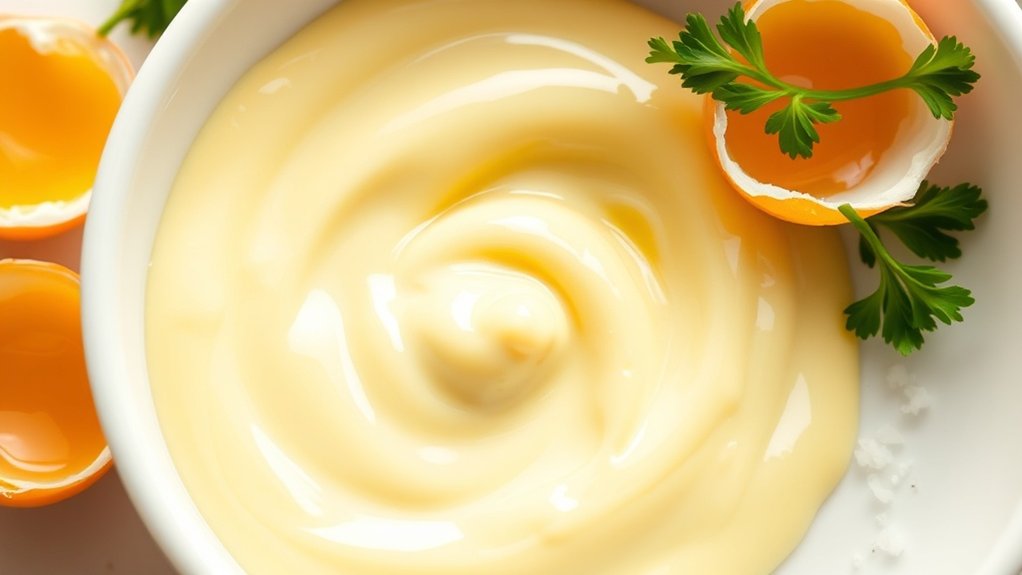
Traditional mayonnaise relies on egg yolks as its primary emulsifying agent, creating the thick, creamy texture that defines this condiment. The emulsification process works through lecithin, a compound naturally present in yolks that allows oil and water to blend smoothly instead of separating. This molecular interaction stabilizes the mixture, preventing the oil droplets from clumping together.
Beyond texture, egg yolk benefits extend to flavor improvement and nutritional density. The yolks contribute a rich, savory taste profile while adding fat-soluble vitamins and minerals to the final product.
This high-fat content from both oil and yolks creates the luxurious mouthfeel you’re familiar with in traditional mayo.
For those following plant-based diets, this egg dependency presents a clear obstacle, necessitating alternative emulsifiers to replicate these structural and sensory properties.
What Makes Vegan Mayo Creamy Without Eggs?
While traditional mayo depends on egg yolks for structure, vegan alternatives achieve comparable creaminess through strategically selected plant-based emulsifiers that mimic lecithin’s molecular behavior. Silken tofu provides an ideal foundation with its custard-like tofu texture, offering a neutral base that blends smoothly with other ingredients.
Different emulsifier types play vital roles in binding oil and water molecules. Aquafaba and soy milk create stable emulsions, while added lecithin improves molecular stability.
You’ll find neutral oils like grapeseed or canola contribute essential richness without overpowering flavors.
Acidic components such as lemon juice or vinegar serve dual purposes: they amplify taste while strengthening the emulsification process, producing thicker consistency.
This strategic combination of plant-based ingredients delivers the creamy mouthfeel you expect from traditional mayonnaise.
How Can You Tell if Mayo Is Vegan?
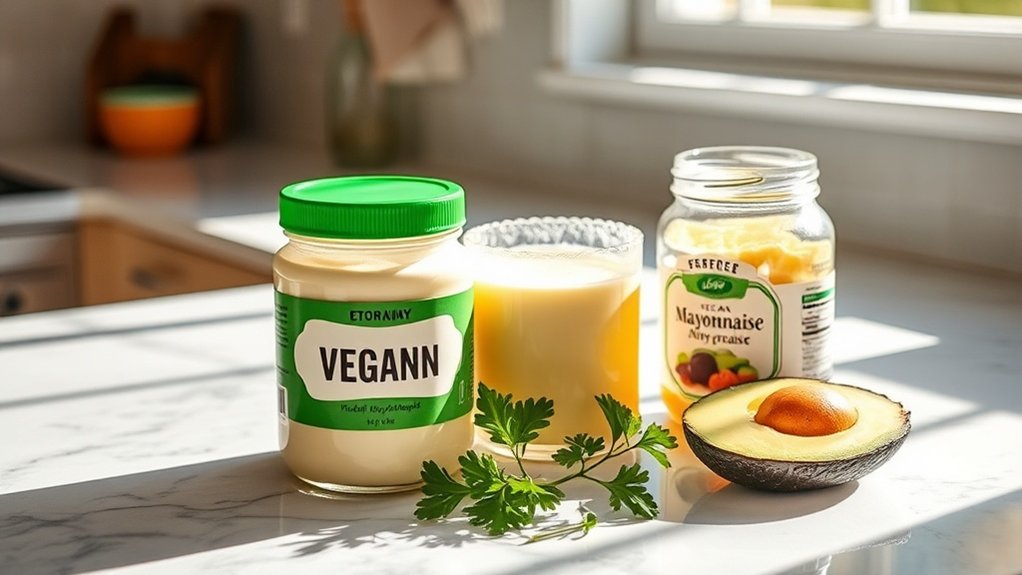
Identifying vegan mayo requires examining three key elements: the ingredient list, certification labels, and manufacturing disclosures.
Start by scanning for egg yolks or whole eggs—their presence disqualifies the product. Vegan mayonnaise brands substitute these with plant-based emulsifiers like soy protein, pea protein, aquafaba, or silken tofu.
However, some manufacturers use modified food starch or other emulsifiers that may derive from animal sources, making ingredient sourcing scrutiny essential.
Look for explicit “vegan” or “egg-free” certifications on packaging, which indicate third-party verification of plant-based ingredients.
Don’t rely solely on “cholesterol-free” claims, as these don’t guarantee vegan status.
Brands like Hampton Creek Just Mayo have demonstrated that plant-based formulations can replicate traditional mayo’s taste and texture while maintaining complete animal product exclusion.
Does Vegan Mayo Taste as Good as Regular Mayo?
The taste gap between vegan and traditional mayonnaise has narrowed markedly, with blind taste tests revealing surprising results. America’s Test Kitchen found that brands like Hampton Creek Just Mayo perform comparably to egg-based versions in taste comparisons.
Modern vegan mayo achieves creamy texture through emulsifiers like aquafaba and silken tofu, effectively mimicking traditional mouthfeel.
You’ll find flavor profiles ranging from tangy to rich, depending on the oils and acids used. This versatility allows similar culinary applications as conventional mayo.
Homemade versions offer customization advantages—you can adjust vinegar and mustard levels to suit your preferences.
Recent formulation advancements have notably improved taste quality, making plant-based options genuinely competitive. Whether store-bought or homemade, today’s vegan mayonnaise provides a viable egg-free alternative without compromising flavor.
This article was reviewed by Nicole Anderson, RDN.