Last Updated: June 11, 2026
Is Lemon a Fruit or Veg
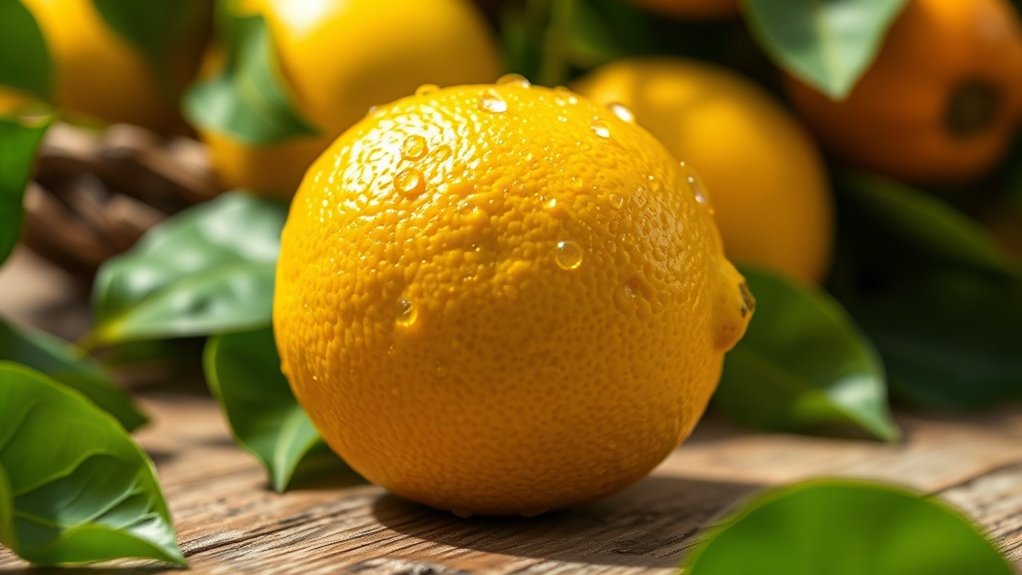
Lemons are definitively fruits—not vegetables—because they develop from the flower’s ovary following pollination and fertilization. You’re actually consuming a specialized berry type called hesperidium, characterized by its leathery rind and segmented, juice-filled interior derived from multiple carpels. This botanical classification stems from lemons’ reproductive structure containing seeds within fleshy tissue from carpel walls. Their hybrid origin traces back to citron and bitter orange crosses in northwest India. Beyond this taxonomic foundation, you’ll uncover how their unique berry structure influences nutritional content, culinary applications, and varietal differences across cultivars.
Contents
show
Why Lemons Are Fruits, Not Vegetables
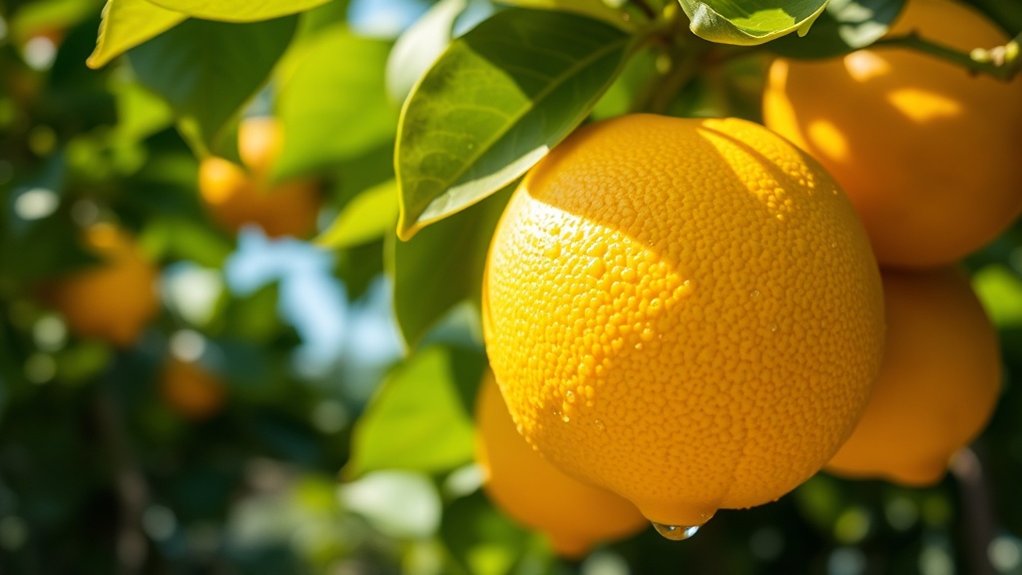
From a botanical standpoint, lemons are definitively fruits because they develop from the flower’s ovary following pollination and fertilization.
You’ll find that citrus classification places lemons in the hesperidium category—a specialized berry with a leathery rind and segmented, juice-filled interior.
Unlike vegetables, which comprise edible plant parts such as leaves, stems, or roots, lemons serve as reproductive structures containing seeds for dispersal.
Their hybrid origin from citron and bitter orange further confirms their fruit status within the Rutaceae family.
While culinary uses often blur botanical distinctions, you can’t dispute the scientific evidence.
The presence of seeds, development from floral ovaries, and taxonomic placement within citrus species establish lemons as fruits beyond question, regardless of their savory applications in cooking.
Is a Lemon Technically a Berry?
Despite common misconceptions about berry classification, lemons satisfy all botanical criteria for true berries—specifically, they’re hesperidium berries characterized by their distinctive leathery exocarp, fleshy mesocarp, and membranous endocarp divided into juice-filled segments.
You’ll find that berry classification hinges on specific structural requirements: development from a single ovary with multiple carpels, fleshy tissue throughout, and seeds embedded within the fruit. Lemons meet these criteria precisely.
Their cross-sectional anatomy reveals the three essential layers, with juice vesicles functioning as the seed-containing endocarp. These citrus characteristics distinguish hesperidium berries from other berry types like blueberries or tomatoes.
Understanding this classification challenges your conventional perception of berries. While culinary terminology reserves “berry” for small, sweet fruits, botanical taxonomy confirms lemons as legitimate berries alongside all citrus fruits.
How Lemons Were Created as Hybrid Citrus
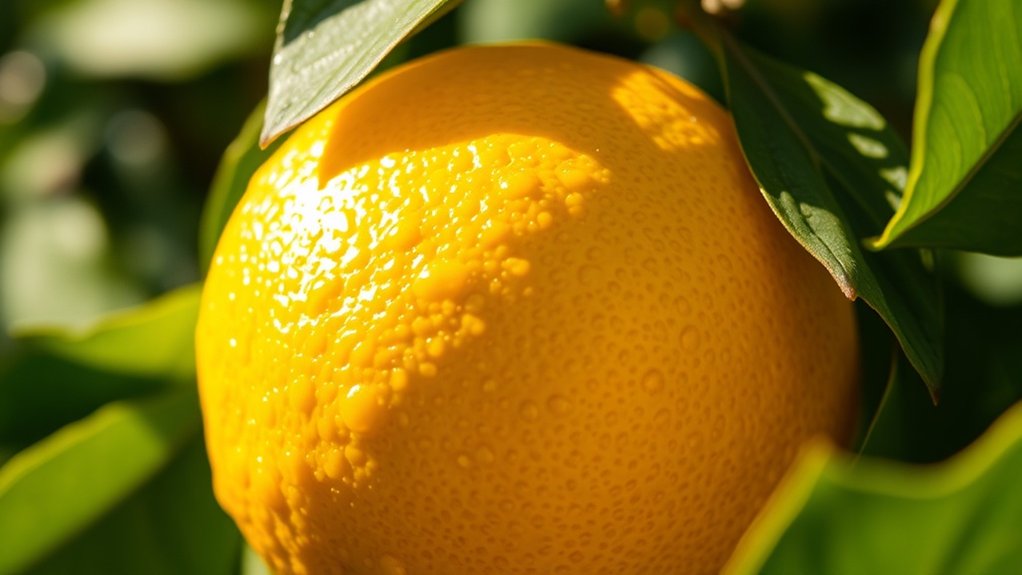
Unlike naturally occurring citrus species, lemons (Citrus limon) emerged through deliberate hybridization between two distinct parent species: the citron (Citrus medica) and the bitter orange (Citrus × aurantium). This lemon genetics breakthrough likely occurred in northwest India, where cultivators first combined these parent species.
The hybrid history traces back to 10th-century Arabic agricultural texts, providing the earliest documented evidence of lemon cultivation.
You’ll find that selective breeding over subsequent centuries produced distinct cultivars—Eureka, Lisbon, and Meyer lemons—each exhibiting unique organoleptic properties and morphological characteristics.
Modern citrus taxonomy reveals that most varieties you encounter result from complex genetic crosses involving mandarins, pomelos, and other Citrus species.
This deliberate manipulation of plant genetics demonstrates humanity’s long-standing agricultural innovation in developing commercially viable fruit varieties.
Are Lemons Natural or Man-Made?
You’ll encounter conflicting classifications when examining *Citrus limon*’s taxonomic history, as lemons represent interspecific hybridization between *Citrus medica* (citron) and *Citrus × aurantium* (bitter orange).
This botanical lineage emerged through natural cross-pollination events rather than artificial genetic manipulation, positioning lemons within the continuum between wild-type and domesticated cultivars.
The species exhibits characteristics of both spontaneous natural hybridization and subsequent human-directed selection pressures that shaped its modern phenotypic expression.
Lemons Are Hybrid Fruits
When examining the origins of *Citrus limon*, you’ll uncover that lemons are hybrid fruits—the genetic offspring of citron (*Citrus medica*) and bitter orange (*Citrus × aurantium*).
This Citrus classification places lemons within a complex taxonomic framework where hybridization occurs naturally through cross-pollination. The hybrid characteristics manifest in lemons’ distinctive acidic profile, combining citron’s thick pericarp with bitter orange’s aromatic compounds.
Botanically, you’ll find lemons classified as hesperidia—a specialized berry type characterized by a leathery rind and segmented pulp containing multiple seeds.
Understanding this genetic lineage clarifies why lemons aren’t truly “wild” fruits but rather promoted hybrids that evolved through selective breeding practices spanning millennia. Their hybrid nature demonstrates how natural species can combine to produce agriculturally valuable varieties.
Origins of Lemon Creation
The lemon’s historical trajectory demonstrates significant cultural significance:
- Initial cultivation occurred in northwest India during ancient agricultural practices.
- Mediterranean introduction transpired circa 2nd century AD through southern Italian regions.
- Genoese horticultural expansion commenced during the 15th century.
- Taxonomic classification established lemons as legitimate drupes containing viable seeds.
You’ll recognize that lemon symbolism evolved alongside its cultivation, representing purification and prosperity across civilizations.
This citrus species maintains botanical authenticity despite hybridization, as reproductive mechanisms function independently without requiring human manipulation for propagation.
How Lemon Fruit Is Used in Cooking and Drinks
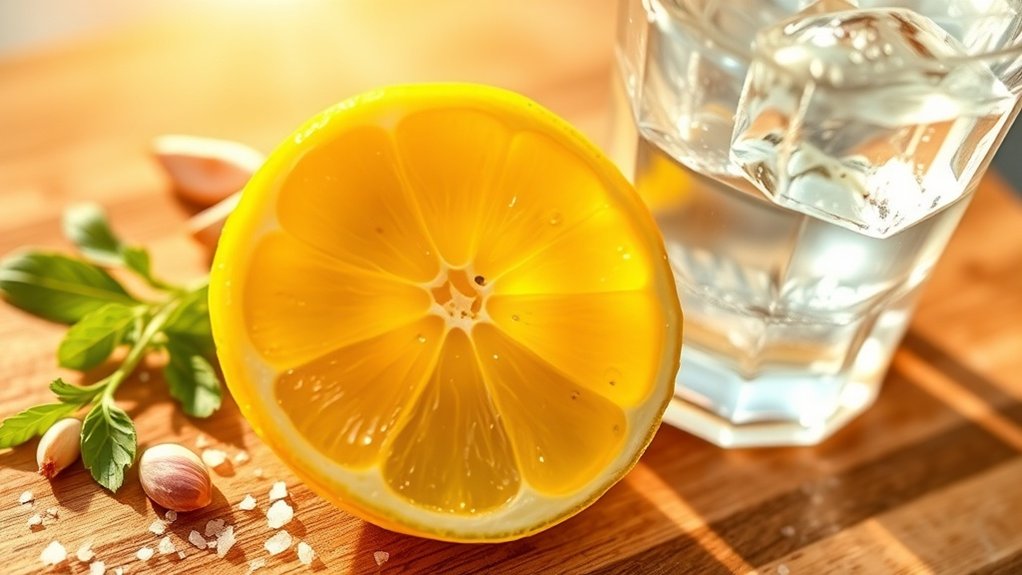
The fruit of *Citrus limon* serves multiple culinary functions due to its high citric acid concentration of 5-6% and volatile oil compounds in the flavedo (outer peel layer).
You’ll use the acidic juice in beverage formulations, from simple lemonade solutions to complex cocktail preparations requiring pH adjustment and flavor improvement.
The aromatic zest, extracted from oil glands in the exocarp, provides concentrated terpene compounds for baked goods, while the juice’s enzymatic inhibition properties prevent oxidative browning in exposed fruit tissues.
Lemon Juice in Beverages
As a culinary acidulant derived from *Citrus limon*, lemon juice functions as a critical pH-modifying agent in beverage formulations. You’ll find this citrus extract essential in revitalizing lemonades, where sucrose balances its inherent tartness. In lemon juice cocktails like Whiskey Sours, it provides necessary acidity for flavor equilibrium.
The compound serves four primary beverage functions:
- Oxidation inhibition – Prevents enzymatic browning in fruit-based preparations
- Flavor improvement – Amplifies sweetness perception in iced teas and carbonated beverages
- Syrup formulation – Creates citrus-infused concentrates for commercial applications
- pH adjustment – Lowers acidity levels for preservation and taste optimization
When you incorporate this botanical extract into smoothies, you’re maintaining chromatic stability while extending shelf-life. Its ascorbic acid content contributes both preservative qualities and organoleptic complexity to beverage systems.
Zest for Baked Goods
When employing zest techniques, you can incorporate this outer pericarp into frostings, glazes, and custard-based desserts like cheesecakes.
The methodology extends beyond sweet applications—marinades, emulsified dressings, and reduction sauces gain complexity through zest addition.
For ideal citrus expression in baking matrices, you should combine both zest and juice, partially substituting liquid components.
This dual-compound approach maximizes limonene and citral concentrations, yielding products with intensified olfactory characteristics and balanced acidity.
Preventing Fruit Oxidation
- Apply lemon juice immediately post-cutting to create acidic barrier on exposed surfaces.
- Maintain fruit tissue pH below 3.0 for ideal polyphenol oxidase deactivation.
- Incorporate into salad preparations and plated presentations for extended color retention.
- Combine with beverage formulations (lemonade, cocktails) to retard oxidative degradation.
The ascorbic acid content further boosts antioxidant capacity, while culinary applications extend beyond fruit preservation—you’ll achieve meat tenderization and flavor improvement through marinade incorporation.
What Vitamins and Nutrients Do Lemons Contain?
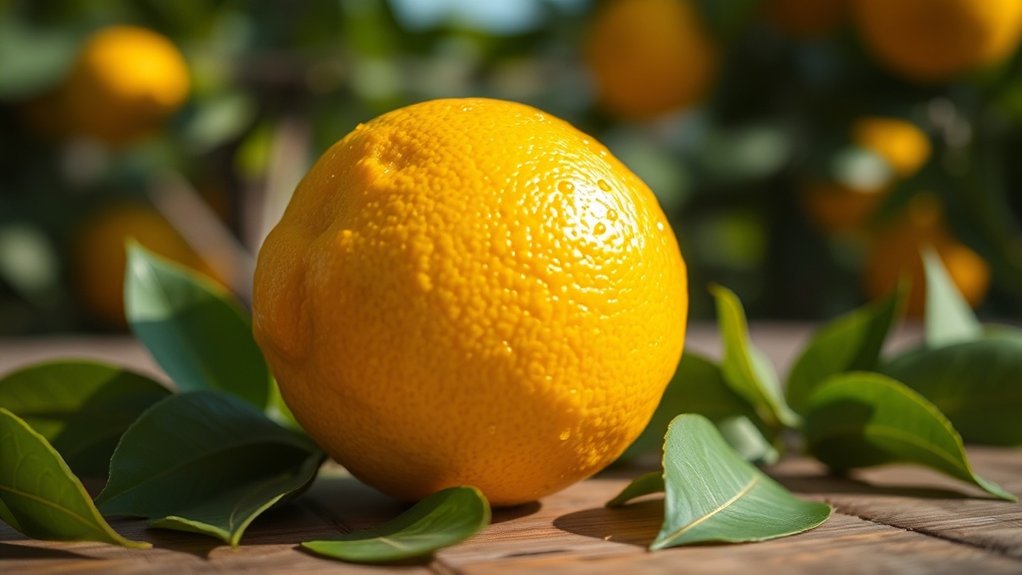
Lemons (*Citrus limon*) function as exceptional sources of ascorbic acid (Vitamin C), delivering approximately 53 mg per 100 grams of edible fruit—equivalent to 59% of the established daily value for adult human consumption.
Beyond Vitamin C, you’ll find essential minerals including potassium (138 mg) and calcium content (26 mg), which provide potassium benefits for cardiovascular function and support skeletal integrity.
The fruit delivers 2.8 grams of dietary fiber per 100 grams, facilitating gastrointestinal motility and satiety regulation.
Lemons contain B-complex vitamins (B1, B2, B3, B5, B6) that provide metabolic support for enzymatic reactions and energy production pathways.
At merely 29 kcal per 100 grams, this low calorie citrus fruit represents a nutrient-dense dietary component suitable for therapeutic nutrition protocols and balanced eating patterns.
Meyer Lemons, Eureka Lemons, and Other Varieties
- Meyer lemons benefits include increased sweetness from mandarin hybridization, reduced acidity, and thin pericarps facilitating whole-fruit utilization in marmalades.
- Eureka lemons uses span commercial juice extraction, culinary acidification, and zest applications due to high citric acid concentration.
- Lisbon cultivars demonstrate superior environmental resilience with thicker epicarps and comparable organoleptic profiles to Eureka.
- Ponderosa specimens exhibit enlarged morphology with robust flavonoid content, primarily serving ornamental purposes.
Bearss (*C. × latifolia*) classification presents seedless characteristics and consistent yield metrics, making it agriculturally significant in California’s citrus industry.
This article was reviewed by Nicole Anderson, RDN.