Last Updated: December 1, 2025
Are Pringles Vegan
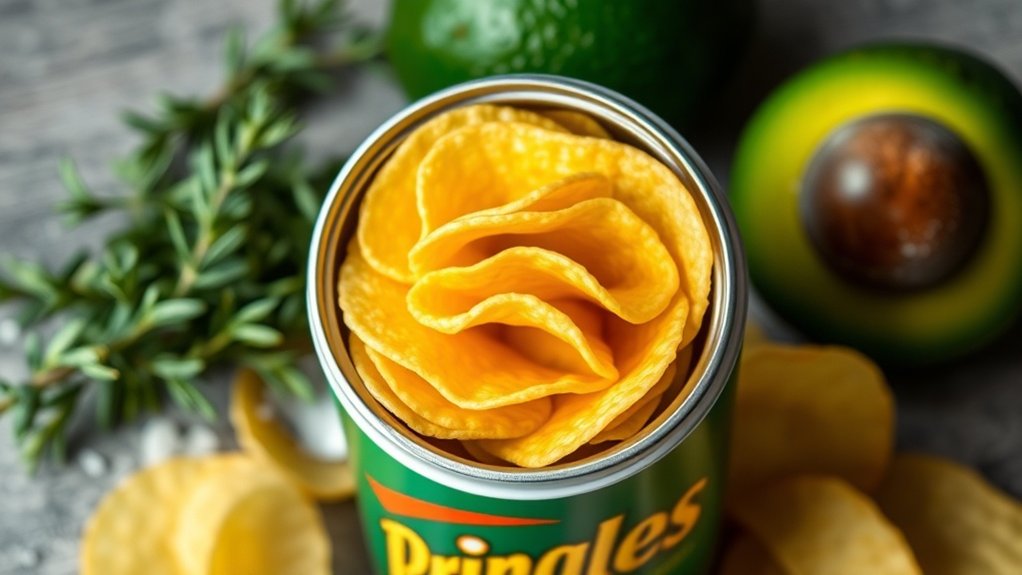
Most Pringles aren’t vegan because they contain dairy derivatives like lactose, whey powder, and milk solids in their seasoning blends. However, you’ll find a few exceptions: Original, Lightly Salted, and Reduced Fat varieties are typically vegan in the US market, while European versions may include additional plant-based options like Paprika. You’ll need to check labels carefully since formulations vary by region and the emulsifier E471 can be animal-derived. The thorough breakdown below reveals exactly which flavors meet vegan standards in your location.
Contents
show
Understanding Pringles Base Ingredients and Manufacturing Process

When examining whether Pringles are vegan, you’ll need to start with their foundation: a processed potato dough. This base consists of dehydrated potatoes, starches, flours, and vegetable oils—all plant-derived ingredients.
The manufacturing process involves shaping this dough into Fredric Baur’s distinctive uniform design from the 1950s, then frying (not baking) each crisp to achieve its signature texture.
However, determining if are original pringles vegan or are pringles original vegan requires looking beyond the base. The waterfall seasoning method distributes flavorings evenly across each chip, and these added seasonings determine vegan status.
While the foundational ingredients remain plant-based across all varieties, specific flavors may contain dairy derivatives, cheese powders, or other animal-sourced components that disqualify them from vegan classification.
Why Most Pringles Flavors Contain Animal-Derived Ingredients
While Pringles’ potato-based foundation appears vegan-friendly, the reality is that most flavors incorporate animal-derived ingredients to achieve their distinctive taste profiles.
You’ll find dairy-derived components like lactose, milk powder, and buttermilk listed on popular varieties including Sour Cream & Onion, Salt & Vinegar, and Prawn Cocktail. These ingredients improve flavor complexity and texture but render the products unsuitable for vegan consumption.
Additionally, you should note that E471, an emulsifier present in certain flavors, can originate from either plant or animal sources, creating ambiguity about vegan status. Manufacturers don’t always specify the source on labels.
Curiously, some flavors like Smokey Bacon contain no animal products despite their names, using plant-based flavorings instead. Always verify ingredient lists, as formulations change periodically and previously vegan options may be reformulated with dairy additions.
Complete Flavor-by-Flavor Vegan Status Breakdown by Region
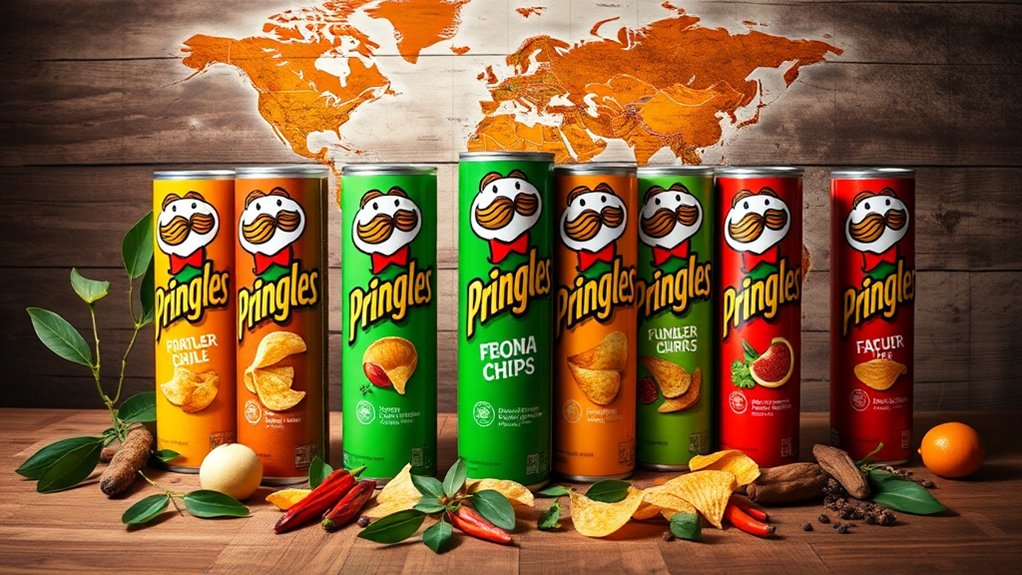
When determining which Pringles you can include in your vegan diet, you’ll find significant regional variations in both flavor availability and ingredient formulations.
The U.S. market offers limited confirmed vegan options, with Original being the primary choice, while European consumers benefit from expanded selections and transparent vegan labeling practices.
Understanding these geographical differences requires examining specific ingredient lists for each region, as identical flavor names don’t guarantee identical formulations across markets.
US Pringles Vegan Guide
Among the dozens of Pringles flavors available in U.S. markets, only a select few meet vegan criteria.
You’ll find Original leads as the confirmed vegan option, containing dehydrated potatoes, vegetable oils, rice flour, and wheat starch without animal-derived ingredients. Reduced Fat and Lightly Salted variants maintain this vegan-friendly profile.
Vegan Status Overview:
1. Confirmed Vegan Flavors: Original, Reduced Fat, and Lightly Salted use plant-based ingredients exclusively.
Surprisingly, Smokey Bacon qualifies as vegan through natural flavorings without animal products.
2. Non-Vegan Options: Sour Cream & Onion and Salt & Vinegar contain dairy ingredients, specifically lactose, disqualifying them from vegan status.
3. Label Verification: You must check ingredient labels regularly, as manufacturers periodically reformulate products, potentially altering vegan compatibility without notice.
EU Pringles Vegan Guide
European Pringles consumers benefit from clearer vegan labeling standards, as manufacturers display dedicated vegan and vegetarian badges directly on packaging throughout EU markets.
You’ll find confirmed vegan options including Paprika, Reduced Fat, and Lightly Salted varieties. However, formulation differences exist between regions—some flavors previously vegan in the U.S. may contain dairy in EU versions.
Common non-vegan EU flavors include Sour Cream & Onion and Salt & Vinegar, which contain lactose and other dairy-derived ingredients.
While the wider EU flavor selection offers more vegan choices, you shouldn’t assume cross-regional consistency in formulations.
Always validate ingredient labels before purchasing, as manufacturers periodically reformulate recipes without notification.
The vegan badges provide convenient initial screening, but ingredient verification guarantees you’re identifying animal-derived additives that might otherwise go unnoticed.
Dairy Derivatives and Hidden Animal Ingredients in Pringles
When examining Pringles ingredients, you’ll encounter several dairy derivatives that immediately disqualify many flavors from vegan status.
Lactose, whey powder, and milk solids appear frequently in seasoning blends, while the emulsifier E471 (mono- and diglycerides) presents additional concerns due to its potential animal-fat origins.
Beyond obvious dairy components, you must also scrutinize natural flavorings and processing aids that manufacturers aren’t always required to specify on labels.
Common Dairy Ingredients Used
While checking Pringles labels for vegan compatibility, you’ll encounter several dairy-derived ingredients that disqualify many flavors from plant-based diets. These milk-based components serve various functions in seasoning formulations and flavor improvement.
Primary dairy ingredients in Pringles include:
- Milk powder and cream powder – Concentrated dairy solids that provide richness and improve savory flavors in varieties like Sour Cream & Onion.
- Whey, lactose, and casein – Milk proteins and sugars used as flavor carriers and texture modifiers, with lactose specifically appearing in Salt & Vinegar as a seasoning component.
- Additional animal-derived additives – Certain formulations historically contained Red 40 food coloring from animal sources.
Even vegetarian-labeled varieties often contain these dairy derivatives, requiring careful ingredient verification for strict vegan adherence.
Unexpected Animal-Derived Components
Beyond the obvious dairy components listed on Pringles packaging, several inconspicuous animal-derived ingredients complicate vegan status verification.
You’ll need to watch for casein and whey, milk proteins frequently embedded within “natural flavoring” designations. These dairy derivatives appear in unexpected varieties, including some that don’t prominently advertise cheese or cream in their names.
The emulsifier E471 presents particular concern, as it’s sourced from either plant or animal fats. Without manufacturer confirmation, you can’t determine its origin from the label alone.
Salt & Vinegar and Sour Cream & Onion flavors commonly contain these hidden animal ingredients despite seeming plant-based at first glance.
Since Pringles formulations vary by region and change periodically, you must scrutinize ingredient lists each time you purchase, even for previously verified flavors.
Regional Formula Differences: US Vs UK Vs International Markets
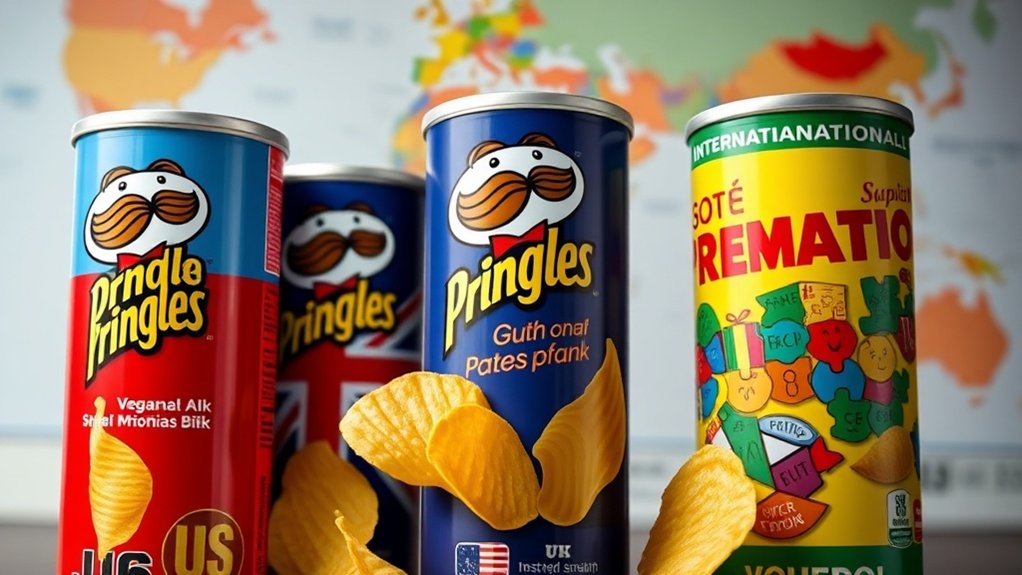
If you’re shopping for vegan Pringles, your location greatly impacts which flavors you can eat. Formulations vary considerably across markets, affecting which products meet vegan dietary requirements.
Key Regional Differences:
1. United States – You’ll find limited vegan options: Original, Reduced Fat, and Lightly Salted.
Interestingly, BBQ flavor contains dairy products here, making it non-vegan.
2. United Kingdom – You’ll access broader vegan choices with clearer labeling.
Paprika and Sweet Chili join the standard vegan flavors, and Kellogg’s explicitly marks vegan products.
3. International Markets – You’ll encounter unique regional formulations and flavor offerings.
The same flavor name doesn’t guarantee identical ingredients across countries.
Always verify packaging in your specific region, as reformulations occur and ingredient sourcing differs internationally.
EU regulations require more transparent vegan labeling than US standards.
Cross-Contamination Risks and “May Contain Milk” Warnings
Understanding regional formulations addresses part of the vegan evaluation, but manufacturing processes introduce another layer of consideration.
You’ll notice “may contain milk” warnings on some Pringles packaging, indicating potential cross-contamination rather than intentional dairy inclusion. These warnings exist because Pringles are produced in facilities handling dairy products, where shared processing equipment creates trace exposure risks.
If you have severe dairy allergies or sensitivities, you should exercise particular caution with all flavored variants, even those appearing vegan-friendly by ingredient list.
The base chip formulation may exclude dairy, yet production practices can introduce milk proteins through equipment contact.
To guarantee your safety and dietary adherence, you’ll want to review packaging labels thoroughly and contact the manufacturer directly about specific flavors and their production protocols.
This verification step becomes essential for informed decision-making.
How to Identify Vegan-Friendly Pringles Through Label Reading
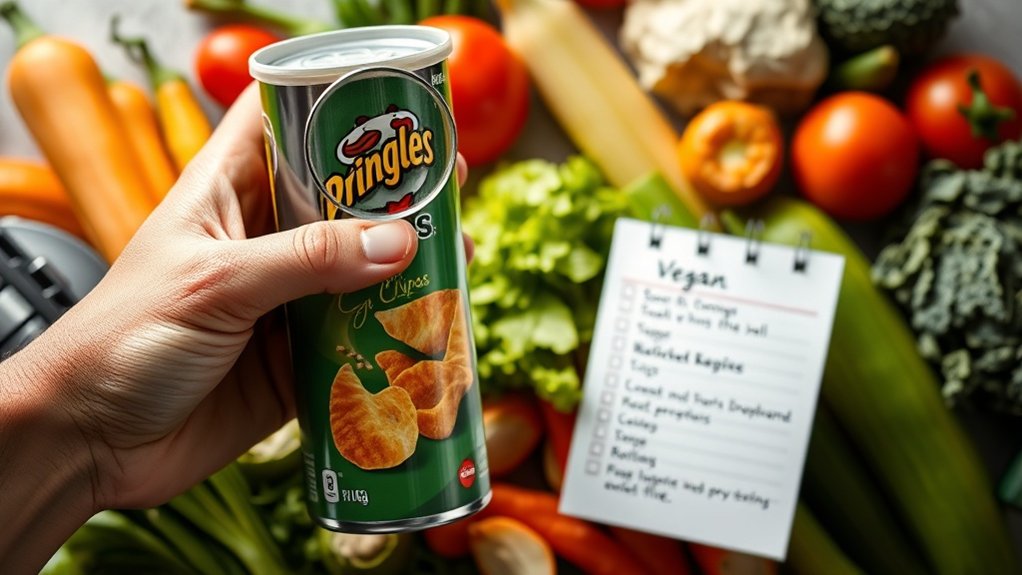
Successful vegan product identification requires mastering three essential label-reading techniques that’ll enable you to distinguish plant-based Pringles from dairy-containing varieties.
Three Essential Label-Reading Techniques:
- Scrutinize the ingredient list for dairy derivatives including milk powder, whey, and lactose—these components immediately disqualify products from vegan status.
- Identify vegan or vegetarian certification symbols on 200G tubes, particularly when purchasing in EU markets where standardized labeling provides clearer dietary information.
- Verify ingredients each purchase since manufacturers periodically reformulate flavors, potentially introducing animal-derived ingredients into previously vegan-friendly varieties.
Confirmed vegan options include Pringles Original, Reduced Fat Original, and Lightly Salted.
However, popular flavors like Sour Cream & Onion and Salt & Vinegar contain dairy ingredients despite the base chip’s plant-based composition.
Vegan Stackable Chip Alternatives to Pringles
Several plant-based stackable chip brands now rival Pringles’ iconic canister format, providing vegans with comparable crunch and convenience.
Great Value Stack delivers a similar texture and flavor profile without animal-derived ingredients, offering budget-conscious shoppers an accessible option.
Lays Original Stax provides a classic potato chip experience that’s entirely plant-based.
The Good Crisp Company uses potato and rice flour to achieve a satisfying crunch while maintaining vegan standards.
Sensible Portions Garden Chips incorporate garden vegetables for added nutritional value alongside taste.
Vegan Robs Potato Chips distinguishes itself through bold flavor profiles and wholesome ingredient sourcing.
Each alternative maintains the stackable format that made Pringles popular, making certain portability and freshness.
You’ll find these options increasingly available in mainstream retailers, reflecting growing consumer demand for plant-based snacking solutions.
This article was reviewed by Nicole Anderson, RDN.