Last Updated: March 6, 2026
What Is Vegan Egg Made Of
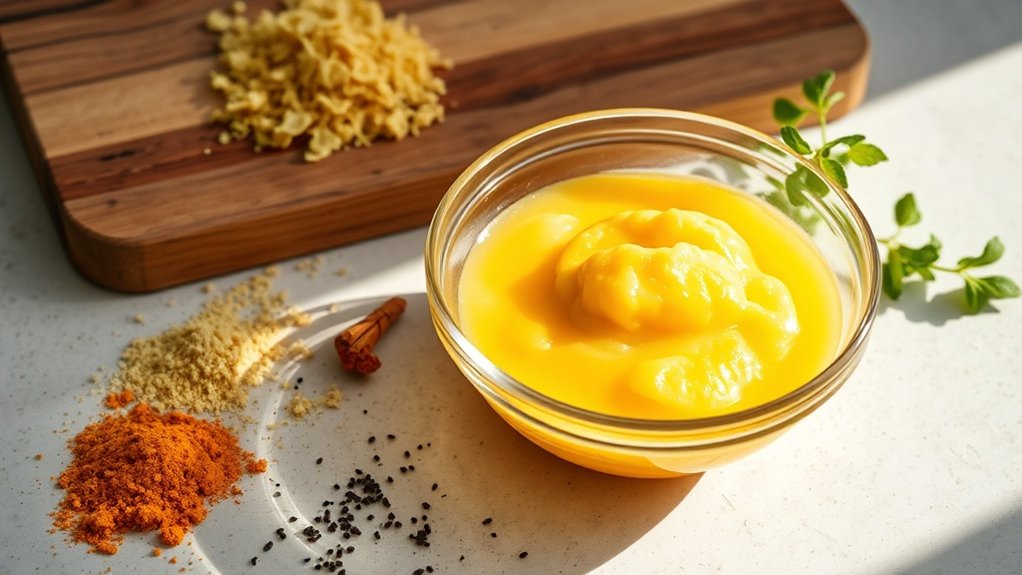
Vegan eggs are made from plant-based proteins like mung bean isolate, soy, chickpeas, or algal flour that replicate the functional properties of chicken eggs. You’ll find them as ready-to-pour liquids (such as Just Egg), shelf-stable powders (like VeganEgg with algal protein), or whole-food substitutes including silken tofu and aquafaba. These formulations typically combine protein sources with binding agents, emulsifiers like sunflower lecithin, and natural colorants such as turmeric to achieve egg-like texture and appearance. The specific composition varies by product type and intended culinary application.
Contents
show
What Vegan Eggs Are Made From: The Basics
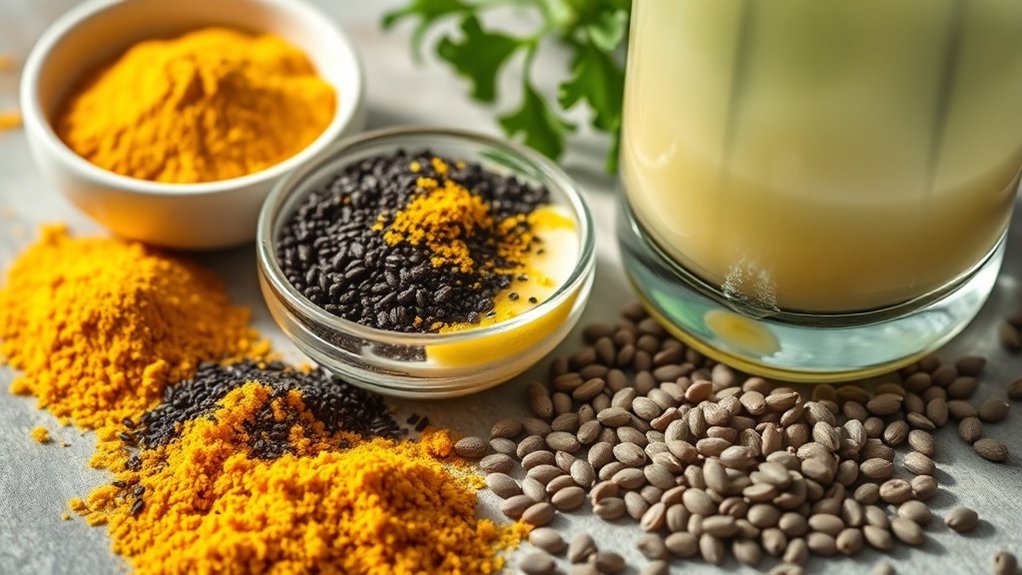
While traditional eggs derive from animal sources, vegan eggs use plant-based components engineered to replicate the functional properties of their conventional counterparts.
What’re vegan eggs made of? The primary ingredient in commercial products like Follow Your Heart’s VeganEgg is algal flour and algal protein, derived from algae. This base ingredient provides approximately 4 grams of fiber per serving while remaining cholesterol-free.
What’s a vegan egg made of beyond algae? Manufacturers incorporate nutritional yeast to improve flavor profiles that mirror traditional eggs.
Alternative vegan egg substitutes include silken tofu for custard-like applications, aquafaba (chickpea brine) for binding properties, and ground flaxseed mixed with water. Each component serves specific functional roles—emulsification, binding, or leavening—depending on your culinary requirements.
Standard preparation involves combining 2 tablespoons of powder with 1/2 cup ice-cold water.
Vegan Egg Products: Liquids, Powders, and Whole-Food Swaps
The vegan egg market segments into three distinct categories: ready-to-pour liquids, shelf-stable powders, and whole-food substitutes, each engineered for specific culinary applications.
Liquid products like Just Egg use mung bean protein isolate to replicate scrambled egg texture. Powdered formulations, exemplified by Follow Your Heart VeganEgg, derive their functional properties from algal flour and algal protein, requiring water reconstitution before use.
Whole-food alternatives operate through distinct mechanisms. You’ll find silken tofu provides moisture and density in baked applications, substituting one egg per quarter-cup. Aquafaba—chickpea cooking liquid—mimics egg white proteins when whipped. Ground flaxseed or chia seeds generate mucilaginous gels when hydrated, creating binding matrices in doughs and batters.
These products exhibit divergent nutritional profiles: vegan options eliminate cholesterol while traditional eggs deliver complete protein and micronutrients.
Mung Bean Protein: The Liquid Vegan Egg Change
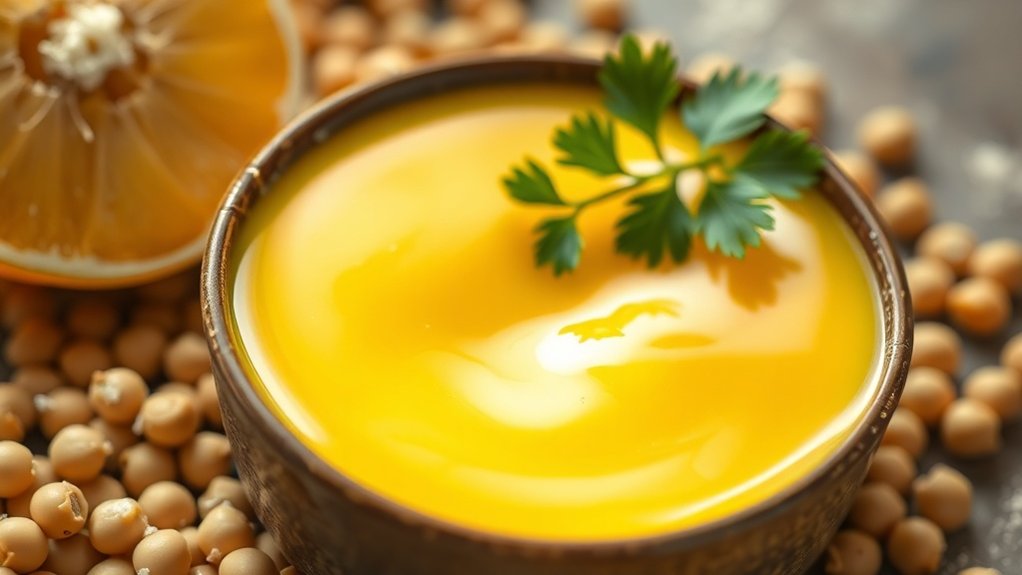
Mung bean protein isolate contains approximately 24-26 grams of protein per 100 grams, with a complete amino acid profile that makes it functionally superior to most plant-based egg alternatives.
You’ll find this legume-derived protein undergoes a proprietary extraction and formulation process—pioneered by companies like Eat Just—that involves isolating the protein from mung beans, then combining it with specific emulsifiers and stabilizers to achieve egg-like viscosity and coagulation properties.
When you cook with mung bean-based liquid eggs, the protein denatures at temperatures similar to chicken eggs (around 70-75°C), creating comparable texture in scrambles, omelets, and baked applications.
Mung Bean Protein Properties
Legumes have transformed plant-based cooking, and mung bean protein stands at the forefront of this change. You’ll find this ingredient delivers exceptional nutritional and functional properties that make it ideal for egg replacement applications.
The protein profile offers distinct advantages:
- Complete amino acid spectrum: With approximately 24 grams of protein per 100 grams, mung bean protein provides all essential amino acids necessary for muscle maintenance and metabolic function.
- Cardiovascular benefits: The zero-cholesterol, low-fat composition supports heart health while facilitating weight management strategies.
- Functional mimicry: The protein’s molecular structure enables binding and textural properties that closely replicate hen eggs in both cooking and baking applications.
You’ll experience a flavor profile comparable to traditional eggs, confirming logical integration into your existing recipes without compromising taste or culinary performance.
Just Egg Manufacturing Process
Understanding mung bean protein‘s functional properties becomes practical when examining how manufacturers transform raw legumes into commercially viable egg replacements. The process begins with mung bean soaking, followed by mechanical grinding to rupture cellular structures.
Manufacturers then separate protein isolate from carbohydrates and fiber through centrifugation and filtration techniques. This concentrated protein fraction serves as Just Egg’s functional base.
The formulation incorporates water as the primary carrier, while sunflower oil provides essential fat content for mouthfeel approximation. Nutritional yeast contributes savory notes and B-vitamins, while turmeric delivers characteristic yellow coloration.
Additional stabilizers and emulsifiers guarantee protein suspension remains homogeneous during storage.
Each serving yields 5 grams protein with zero cholesterol, maintaining lower caloric density than conventional eggs. The formulation’s thermosetting properties enable coagulation patterns similar to scrambled chicken eggs.
Cooking Performance and Applications
When applied to culinary preparations, mung bean protein demonstrates thermosetting behavior comparable to ovalbumin, the primary protein in chicken eggs. You’ll observe coagulation properties that enable protein network formation under heat, producing textures indistinguishable from conventional egg applications.
The protein’s functional capabilities span three primary domains:
- Emulsification systems: High surface-active properties create stable oil-water interfaces for batters, mayonnaise, and hollandaise sauce formulations.
- Aeration mechanics: Protein denaturation upon mechanical agitation generates foam structures suitable for scrambles, meringues, and leavened baked goods.
- Binding matrices: Thermally-induced gelation provides structural integrity in quiches, frittatas, and custard applications.
The neutral flavor profile guarantees you won’t detect organoleptic deviations in finished dishes.
Additionally, the cholesterol-free lipid composition delivers cardiovascular benefits while maintaining equivalent culinary functionality across sweet and savory preparations.
Chickpea Flour Vegan Eggs: Budget-Friendly DIY Scrambles
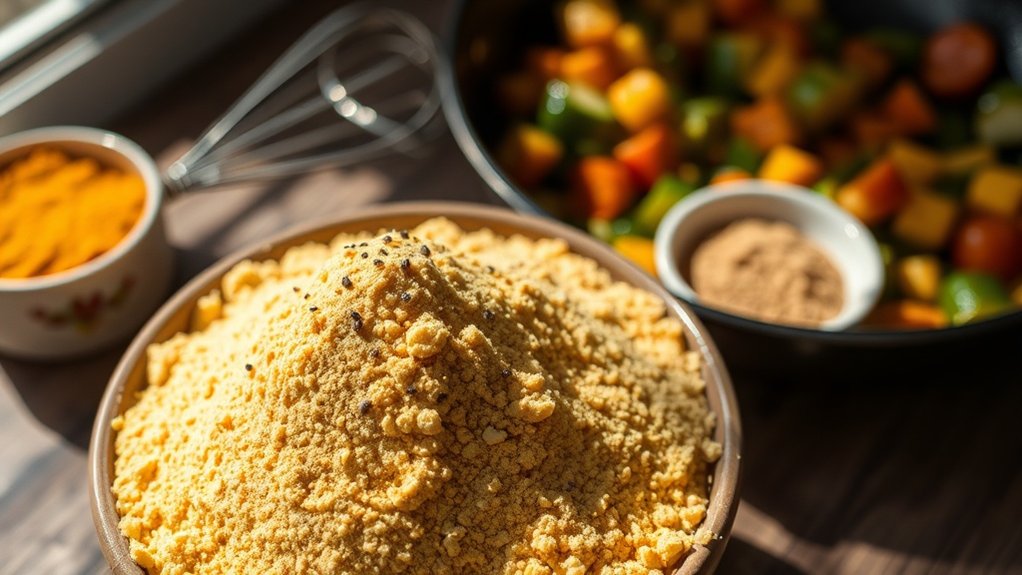
Among plant-based egg alternatives, chickpea flour stands out as the most economical option for home preparation, costing under $3 per bag and yielding multiple servings compared to commercial products that typically retail for $8-12.
You’ll create the scramble by combining chickpea flour and water in a 1:1 ratio, then adding seasonings to form a batter. The mixture cooks in 5-7 minutes over medium heat, allowing customization with vegetables and spices.
Chickpea flour’s high protein and fiber content delivers substantial nutritional value. However, you should expect a dough-like consistency rather than the fluffy texture of traditional eggs.
While the taste won’t perfectly replicate conventional scrambled eggs, the result provides a satisfying, hearty meal with practical versatility.
Tofu Vegan Eggs: The Original Soy-Based Scramble
Tofu scrambles emerged in the 1970s as the pioneering plant-based egg substitute, predating commercial alternatives by nearly four decades. You’ll find this soy-based option delivers approximately 8 grams of protein per serving while maintaining a low caloric profile.
When you crumble firm or silken tofu and sauté it with seasonings, the texture closely replicates scrambled eggs.
Nutritional Profile Per Serving:
- Complete protein source with all essential amino acids
- 8 grams of protein with minimal caloric density
- Improved bioavailability when combined with nutritional yeast
You can customize your scramble with turmeric for color, black salt for sulfuric notes, and vegetables for added nutrients.
This versatile ingredient adapts to breakfast burritos, salads, and pasta dishes, making it indispensable in plant-based cooking applications.
Aquafaba, Flax, and Chia: Baking’s Secret Weapons
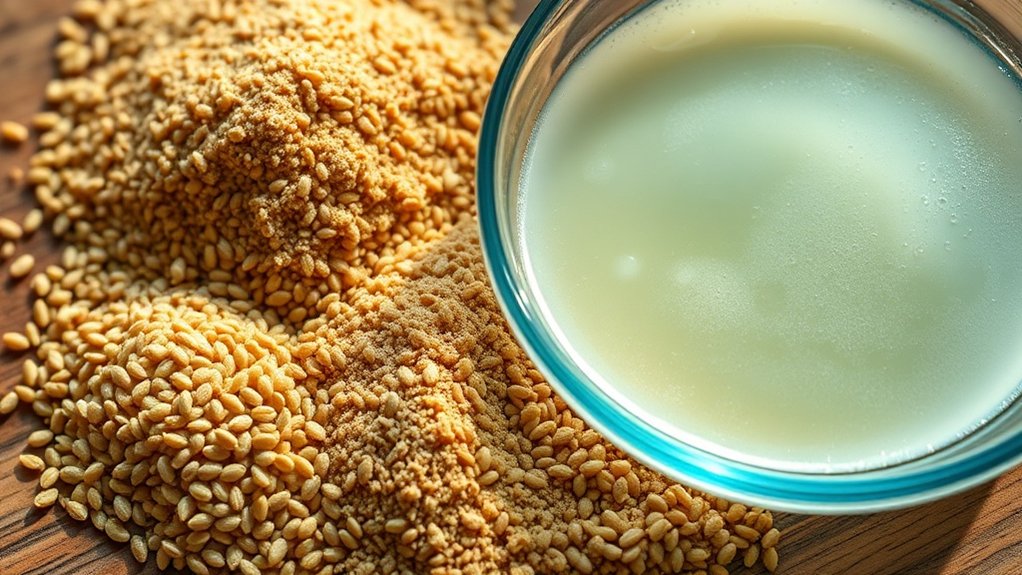
While tofu reigns in savory applications, three distinct binding agents dominate vegan baking through their unique molecular properties.
Aquafaba—the viscous liquid from canned chickpeas—contains proteins and starches that denature when whipped, creating stable foam structures for meringues and mousses. You’ll use 3 tablespoons per egg equivalent.
Flaxseed and chia seeds function differently: when you combine 1 tablespoon ground seed with 3 tablespoons water, their mucilage polysaccharides hydrate into gel matrices that trap moisture and bind ingredients. Both seeds deliver omega-3 fatty acids beyond basic binding functionality.
You can make use of these substitutes across pancakes, muffins, and breads. Aquafaba excels in applications requiring aeration, while flax and chia provide structural cohesion in denser baked goods.
Algal Flour: The Science Behind VeganEgg
Algal flour’s protein matrix contains all nine essential amino acids, delivering approximately 60% protein by dry weight—a concentration that rivals chicken egg whites.
The flour’s molecular structure includes complex polysaccharides that bind water molecules, creating the gel-like texture characteristic of cooked eggs.
However, you should consider that algal proteins contain unique peptide chains that may trigger digestive sensitivities in roughly 5-10% of consumers, particularly those unaccustomed to marine-derived ingredients.
Algal Flour Nutritional Composition
The primary ingredient powering VeganEgg’s formulation delivers exceptional nutritional density through its microalgae-derived composition. You’ll find algal flour provides complete protein containing all nine essential amino acids, establishing it as a thorough plant-based protein source.
The macronutrient profile supports cardiovascular health through minimal fat content while maintaining substantial nutritional value.
Key Nutritional Components:
- Protein Density – Complete amino acid spectrum supports muscle synthesis and cellular repair functions
- Fiber Content – Approximately 4 grams per serving promotes digestive efficiency and gut microbiome health
- Caloric Efficiency – Low-calorie formulation reduces energy intake while maximizing nutrient delivery
When nutritional yeast is incorporated, you’ll receive improved Vitamin B12 supplementation—critical for neurological function in plant-based dietary patterns.
This composition addresses common vegan nutritional gaps through scientifically-validated ingredient selection.
Protein and Amino Acids
When examining algal flour’s protein structure at the molecular level, you’ll uncover a complete amino acid profile that mirrors animal-derived proteins in both composition and bioavailability.
The essential amino acids present demonstrate high digestibility rates, enabling efficient absorption in your gastrointestinal tract. Each serving delivers substantial protein content while maintaining remarkably low caloric density—typically under 50 calories per serving compared to traditional eggs’ 70-80 calories.
You’ll find the protein-to-fat ratio particularly advantageous for cardiovascular health, as algal flour contains minimal saturated lipids. The amino acid distribution supports muscle synthesis and cellular repair functions equivalent to animal sources.
Additionally, the protein matrix integrates approximately 4 grams of dietary fiber per serving, creating a synergistic effect that promotes sustained satiety and improved metabolic efficiency beyond conventional egg proteins.
Digestibility and Health Considerations
Beyond its impressive amino acid profile, algal flour demonstrates superior gastrointestinal compatibility through enzymatic breakdown patterns that surpass conventional legume-based proteins.
You’ll benefit from its higher digestibility rate, which optimizes nutrient bioavailability and minimizes digestive discomfort common with soy or pea proteins.
The compositional advantages include:
- Zero cholesterol content with reduced caloric density compared to chicken eggs, supporting cardiovascular health
- Furtherd fiber concentration promoting gut microbiome diversity and improved intestinal motility
- Fortified B12 availability through nutritional yeast inclusion, addressing critical micronutrient gaps in plant-based diets
Clinical observations indicate algal flour’s polysaccharide structure improves prebiotic activity, potentially strengthening digestive function.
You’re consuming a protein source that delivers complete amino acids while maintaining exceptional digestive tolerance—a combination rarely achieved in single-ingredient plant proteins.
Vegan Eggs vs. Chicken Eggs: Nutrition Facts
How do vegan eggs stack up against their chicken-derived counterparts regarding nutritional composition? You’ll find distinct differences in their nutritional profiles.
A VeganEgg contains 4 grams of fiber and zero cholesterol, while a chicken egg provides 7 grams of protein and 186.5 mg of cholesterol.
Caloric content differs significantly: chicken eggs contain approximately 78 calories, whereas vegan alternatives typically offer fewer calories and reduced fat content, positioning them as heart-healthier options.
However, you’ll need to evaluate micronutrient gaps. Chicken eggs deliver essential Vitamin B12 and Omega-3 fatty acids—nutrients often absent in vegan eggs.
If you’re following a plant-based diet, you’ll require additional supplementation or dietary sources to meet these nutritional needs effectively.
Best Vegan Eggs for Scrambling, Baking, and Binding
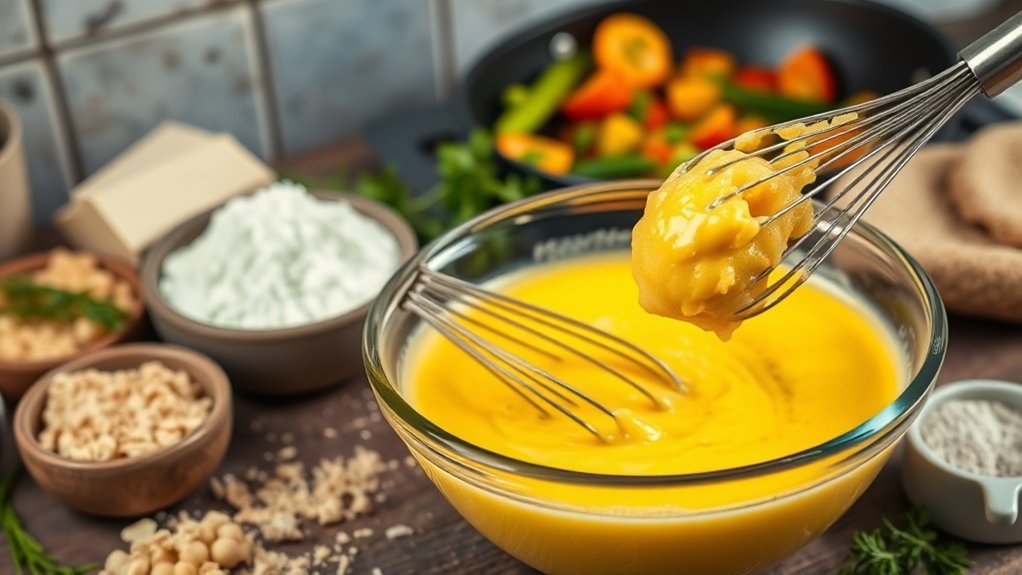
Understanding nutritional differences between vegan and chicken eggs becomes practical when you select products optimized for specific culinary applications.
For Scrambling:
- Just Egg delivers convenience through its pour-and-cook liquid formulation, eliminating preparation steps while maintaining protein integrity during heat application.
- VeganEgg uses algal flour’s binding properties to create cohesive curds, though you’ll need to hydrate the powder before cooking.
- Tofu Scramble offers cost-effectiveness and customizable texture control through variable crumbling techniques.
For Baking: Chickpea flour provides structural support in dense batters, while aquafaba’s protein content enables foam formation for meringues and light cakes.
For Binding: Aquafaba’s viscosity creates adhesion in veggie burgers and meatballs, while VeganEgg‘s algal protein forms cohesive matrices in fritters and patties without soy allergens.
Soy, Gluten, and Allergen-Free Vegan Egg Options
When managing allergen restrictions, you’ll find that algal-based formulations like Follow Your Heart’s VeganEgg eliminate both soy and gluten through their cultivation of *Chlamydomonas reinhardtii* microalgae, which produces complete proteins without cross-contamination risks.
You can achieve scrambles using chickpea flour (besan) mixed with water at ratios of 1:1, incorporating turmeric and black salt for sulfurous notes.
Aquafaba functions as a pure legume-derived egg white analog, containing proteins and starches that create foam structures through mechanical aeration.
When you’re avoiding soy-based tofu scrambles, ground flaxseed meal combined with water (1:3 ratio) generates mucilaginous binding properties.
Commercial manufacturers now formulate products specifically addressing the top eight allergens, using single-source proteins from mung beans, chickpeas, or algae to guarantee clean-label compliance for sensitive individuals.
This article was reviewed by Nicole Anderson, RDN.