Last Updated: February 18, 2026
Is Faux Leather Vegan
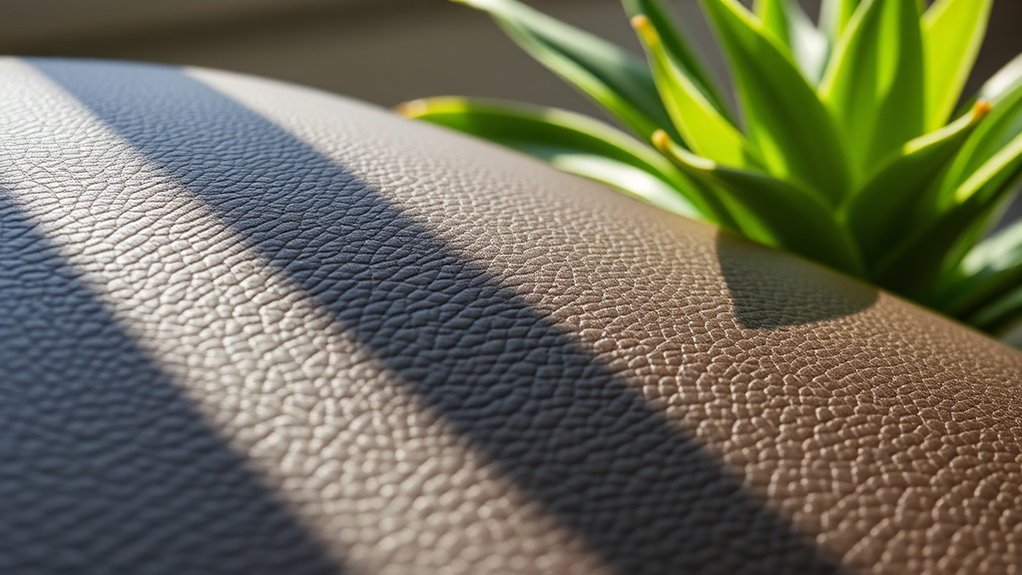
Most faux leather you’ll encounter is vegan since it’s manufactured from synthetic polymers like polyurethane (PU) or polyvinyl chloride (PVC) rather than animal hides. However, you shouldn’t assume all faux leather is automatically vegan—some manufacturers incorporate animal-based binders or adhesives during lamination processes. You’ll need to verify through certifications like PETA-Approved Vegan or OEKO-TEX® Standard 100 to confirm zero animal-derived components. Understanding the specific material compositions and manufacturing standards will help you make informed purchasing decisions.
Contents
show
What Is Faux Leather and Is It Always Vegan?
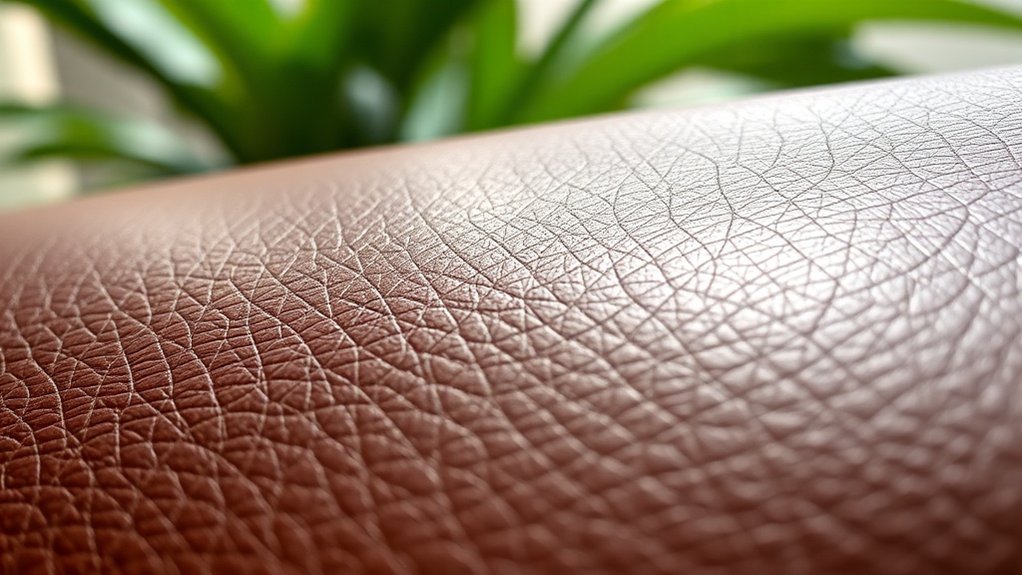
Faux leather consists of synthetic polymers—primarily polyurethane (PU) or polyvinyl chloride (PVC)—bonded to textile substrates through lamination or coating processes.
You’ll find that’s vegan leather real leather remains a common question, though the answer is definitively no—synthetic leather contains zero animal-derived components.
The manufacturing process involves applying petroleum-based plastics to fabric backings, creating materials that meet vegan certification standards by definition.
However, you should verify third-party certifications like PETA-Approved Vegan when purchasing, as some manufacturers may incorporate animal-based adhesives or stabilizers.
While all faux leather qualifies as vegan regarding animal content, environmental certifications vary considerably between PVC production methods and more sustainable PU alternatives.
You’re fundamentally choosing plastic-based materials that replicate leather’s aesthetic properties without animal exploitation.
The 5 Main Types of Vegan Leather Explained
Understanding the broad category of synthetic leather leads directly to examining specific material classifications within the vegan leather market.
Polyurethane (PU) Leather offers versatile color options but won’t develop natural patina characteristics found in animal-derived materials.
Polyvinyl Chloride (PVC) Leather replicates leather textures yet faces declining usage due to dioxin emissions during manufacturing processes.
Apple Leather uses agricultural waste streams from apple processing, creating textured sustainable alternatives with undetermined durability metrics.
MuSkin derives from mushroom cap cultivation, providing suede-like aesthetics with inherent waterproofing properties and toxin-free composition, though commercial production remains limited.
Piñatex (Pineapple Leather) transforms pineapple leaf fibers into textile materials requiring polyurethane protective coatings, with restricted market distribution currently limiting widespread adoption.
Each material type presents distinct manufacturing processes, environmental impacts, and performance characteristics requiring evaluation against specific application requirements and sustainability certifications.
Which Type of Vegan Leather Is Most Durable?
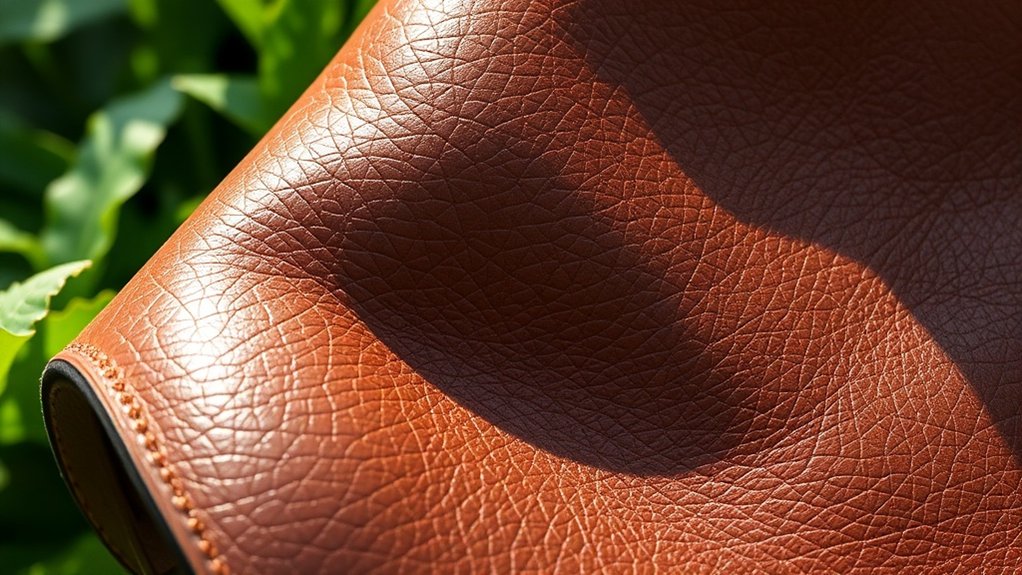
Durability varies considerably across vegan leather types, with polyurethane (PU) formulations consistently outperforming alternatives in standardized abrasion resistance testing and flex endurance measurements.
PU’s molecular structure provides superior flexibility, reducing crack propagation compared to PVC-based materials.
You’ll find emerging bio-based options like Piñatex (pineapple fiber) and apple leather demonstrating promising durability metrics, though they typically require PU top-coating for improved longevity.
Mushroom leather (MuSkin) exhibits inherent waterproofing properties through natural chitin content, though production scalability remains limited.
When evaluating durability claims, you should verify third-party testing certifications like ISO 12945 for abrasion resistance and ISO 5423 for tear strength.
Higher-grade PU formulations with polyester backing substrates generally achieve 50,000+ Martindale cycles, approaching genuine leather’s performance benchmarks.
How to Clean and Care for Vegan Leather Products
While vegan leather‘s non-porous surface structure simplifies maintenance protocols compared to animal-derived alternatives, you’ll need specific cleaning methodologies to preserve material integrity and extend product lifespan.
First, remove surface debris with a dry cloth before applying mild soap diluted in water. Blot stains gently—never scrub—to prevent structural damage to the synthetic polymers.
Since the non-porous composition prevents absorption, traditional leather conditioners won’t work; apply vinyl-specific conditioners instead to maintain suppleness.
High-quality vegan leather tolerates steam treatment for wrinkle removal, though you must monitor heat exposure carefully.
Protect against UV degradation by minimizing direct sunlight exposure, as photochemical reactions cause irreversible fading and material breakdown.
These evidence-based protocols maximize durability.
PU vs PVC Vegan Leather: Which Should You Choose?
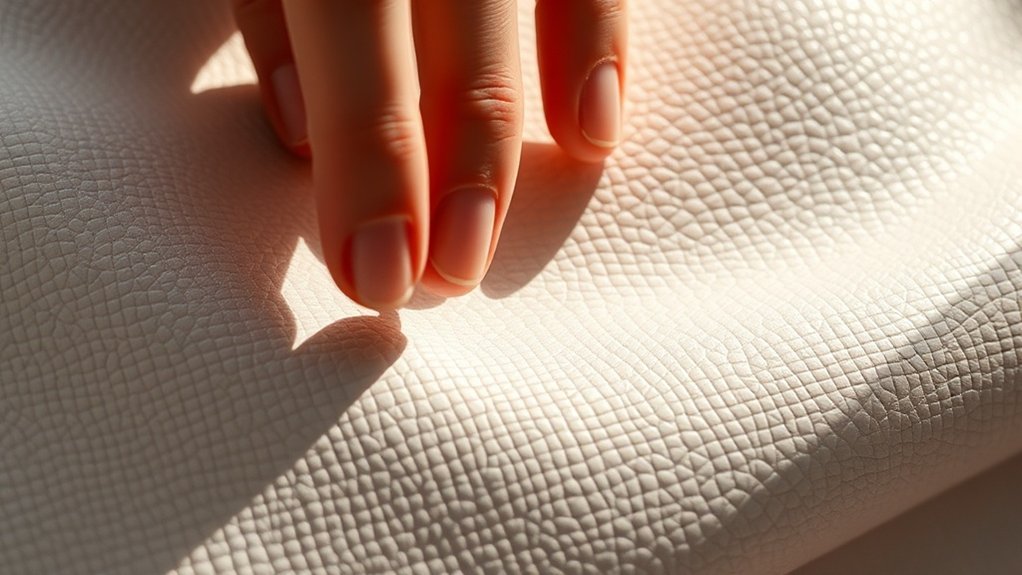
When evaluating polyurethane versus polyvinyl chloride formulations, you’re confronting fundamentally different polymer synthesis pathways with distinct environmental and performance implications.
PU demonstrates superior breathability characteristics and improved durability metrics compared to PVC’s tendency toward structural degradation and cracking.
You’ll find PU’s lifecycle assessment reveals reduced toxic emissions, whereas PVC manufacturing releases hazardous dioxins—a critical environmental health consideration.
PU’s molecular structure enables closer replication of genuine leather‘s tactile properties and aesthetic qualities, making it preferable for fashion applications requiring premium finishes.
While both involve petroleum-derived polymers, PU presents lower chemical risk profiles for consumer safety.
When selecting vegan leather products, prioritize PU-based materials verified through environmental certifications like OEKO-TEX® Standard 100, making sure reduced harmful substance content and more sustainable production protocols.
This article was reviewed by Nicole Anderson, RDN.