Last Updated: March 30, 2026
Are Tortilla Chips Vegan
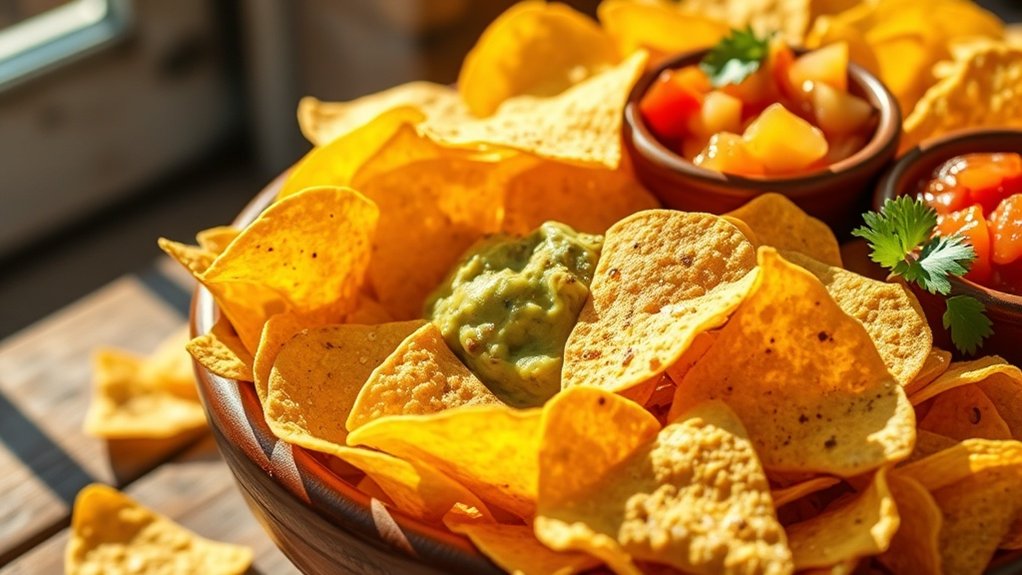
Most tortilla chips are vegan since they’re made from corn, salt, and vegetable oil. However, you’ll need to scrutinize flavored varieties, which often contain dairy derivatives like cheese powder, whey, buttermilk, or casein. Traditional Mexican restaurants may fry chips in lard rather than plant-based oils, compromising their vegan status. Always check ingredient labels for hidden animal products and inquire about cooking methods when dining out. Understanding these distinctions and knowing which brands consistently meet vegan standards will help you make confident choices.
Contents
show
Why Most Tortilla Chips Are Naturally Vegan
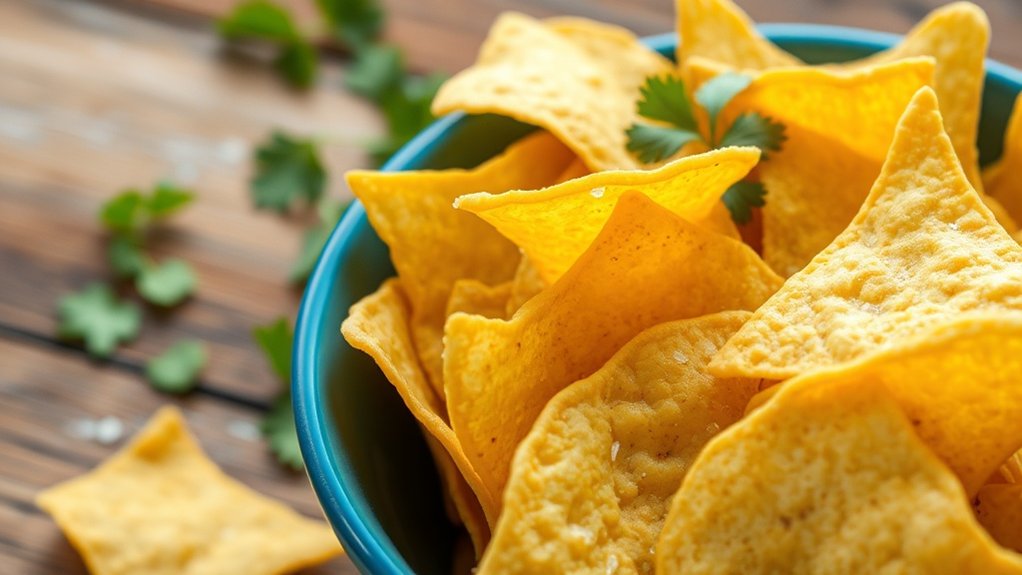
When examining the core ingredients of traditional tortilla chips, the evidence clearly points to their vegan-friendly nature. You’ll find that authentic tortilla chip history reveals a simple recipe: corn, salt, and oil. These three plant-based components form the foundation of most commercial products today.
The manufacturing process typically involves frying corn tortillas in vegetable oils, which maintains their vegan status. You won’t encounter dairy products in standard formulations, eliminating a primary concern for plant-based eaters.
However, you should verify that manufacturers use vegetable oil rather than lard during production.
Modern vegan chip varieties have expanded considerably, with brands like Tostitos and Garden of Eatin’ offering certified options. You can confidently select these products knowing they contain zero animal-derived ingredients throughout their production process.
Cheese Powder, Whey, and Other Animal Ingredients to Watch For
While plain tortilla chips typically contain only corn, oil, and salt, flavored varieties often incorporate dairy derivatives that make them unsuitable for vegans.
You’ll need to scrutinize ingredient lists for cheese powder, whey, buttermilk, casein, and lactose—all animal-based additives commonly found in products resembling popular brands like Doritos.
Beyond obvious dairy ingredients, some manufacturers use animal-derived enzymes in cheese flavorings, making careful label reading essential for maintaining a vegan diet.
Common Dairy-Based Ingredients
Though plain tortilla chips typically contain only corn, oil, and salt, flavored varieties often harbor dairy-based ingredients that make them unsuitable for vegans. Cheese powder frequently appears in popular flavors, containing concentrated milk proteins.
You’ll also find whey, a cheese production byproduct, listed in ingredient panels. Casein, another milk-derived protein, serves as a binding agent in seasonings. Some brands use lard for frying, adding animal fat to otherwise plant-based chips.
Reading labels carefully protects you from these hidden components. Look for certifications indicating vegan status, or seek brands using dairy alternatives and vegan flavorings like nutritional yeast, plant-based seasonings, and natural spices.
These substitutes deliver satisfying taste without animal-derived ingredients, making your snacking choices align with plant-based principles.
Hidden Animal-Derived Additives
Beyond the obvious dairy culprits, tortilla chips conceal numerous animal-derived additives that can catch even vigilant vegans off-guard. Flavored varieties frequently contain cheese powder and whey as flavor boosters, particularly in nacho and cheddar-labeled products.
You’ll need to scrutinize ingredient panels carefully, as manufacturers often incorporate milk-derived ingredients for texture modification and taste improvement.
Ingredient transparency becomes critical when evaluating animal product sources in tortilla chips. Cross-contamination presents additional challenges in facilities processing both vegan and non-vegan items, making dedicated vegan certification essential.
Traditional Mexican restaurants may use lard for frying, so you should always inquire about cooking methods. Look for brands explicitly labeling their products as vegan, making certain they’ve eliminated all animal-derived components from both ingredients and production processes.
Reading Labels Effectively
Mastering label interpretation requires you to identify specific dairy derivatives that manufacturers commonly disguise under technical terminology. You’ll need ingredient awareness to spot cheese powder, whey, casein, and lactose—all milk-derived compounds that disqualify tortilla chips from vegan status.
Beyond obvious dairy ingredients, scrutinize “natural flavors” carefully, as this vague term can conceal animal sources.
Label clarity becomes essential when evaluating flavored varieties, which frequently contain hidden animal additives. You should also investigate cooking methods, since some brands use lard or animal fats during frying rather than vegetable oils.
Your safest approach involves selecting chips explicitly labeled as vegan or products featuring minimal, recognizable ingredients.
When manufacturers provide transparent labeling with plant-based components only, you can confidently incorporate these snacks into your diet.
How to Read Tortilla Chip Labels in 5 Seconds
Why spend minutes scrutinizing every ingredient when you can identify vegan tortilla chips in seconds? First, scan for “vegan” or “dairy-free” certifications on the front label.
Next, check the ingredient list for red flags: cheese, whey, buttermilk, or lard immediately disqualify the product. Look for “vegetable oil” or “expeller-pressed oil” instead of animal fats—a nod to tortilla chip history where traditional recipes used plant-based ingredients, maintaining their cultural significance in Mexican cuisine.
Finally, review allergen statements at the bottom, which highlight milk or animal-derived substances. This systematic approach, backed by nutritional science, guarantees you’ll identify vegan options efficiently.
7 Vegan Tortilla Chip Brands You Can Buy Today
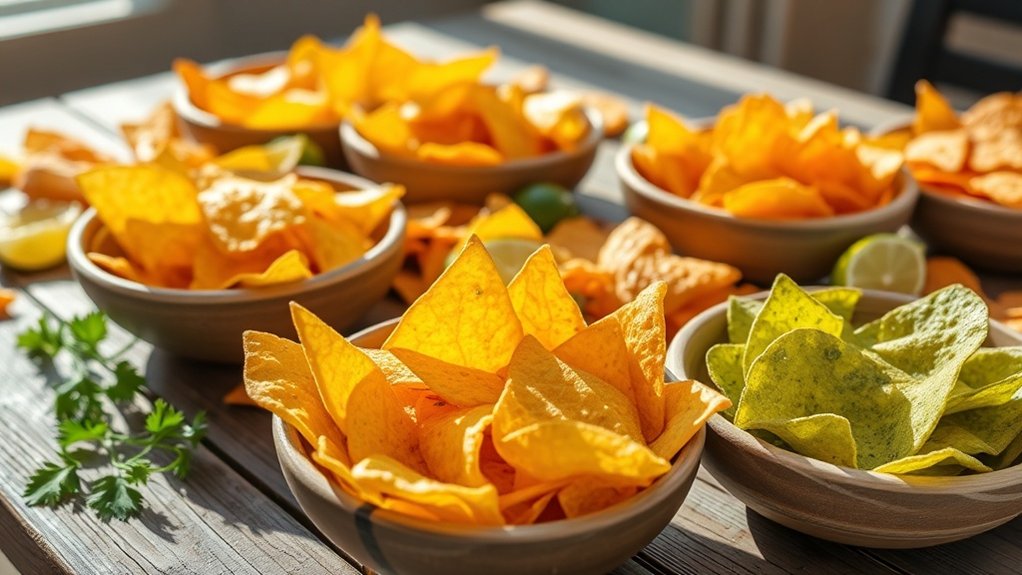
You’ll find several verified vegan tortilla chip brands at most grocery stores, including 365 Everyday Value, Garden of Eatin’, Tostitos Crispy Rounds, and Siete Grain Free options.
Each brand offers distinct nutritional profiles—traditional corn-based chips typically provide 140-150 calories per ounce, while grain-free alternatives like Siete contain cassava or chickpea flour with comparable calorie counts but different micronutrient compositions.
Understanding these nutritional differences helps you select chips that align with your dietary needs beyond basic vegan compliance.
Popular Store-Bought Brands
When shopping for vegan tortilla chips, you’ll find several trusted brands that consistently deliver animal-product-free options. Brand comparisons reveal distinct advantages: Siete uses cassava flour for grain-free, paleo-friendly chips, while Garden of Eatin’ offers organic blue corn varieties with improved nutritional profiles.
Tostitos Crispy Rounds provide straightforward ingredients and widespread accessibility in mainstream stores.
Flavor profiles vary greatly across brands. Takis delivers intense spice options like Fuego and Nitro for those seeking bold taste experiences.
365 Everyday Value combines affordability with clean ingredients, making it practical for budget-conscious consumers.
Garden of Eatin’s blue corn chips offer earthy, slightly sweet notes compared to traditional yellow corn varieties.
Each brand addresses different nutritional priorities—whether you’re managing gluten sensitivity, seeking organic certification, or prioritizing minimal processing.
Grain-Free Chip Options
Grain-free tortilla chips address specific nutritional needs while maintaining vegan status through innovative flour alternatives. Brands like Siete and Vero use cassava flour combined with ingredients such as avocado oil and chia seeds to create chip textures that remain satisfyingly light and crispy without traditional grains.
The grain-free benefits extend beyond dietary accommodation—these chips typically exclude preservatives, dairy, and artificial ingredients, making them suitable for paleo, gluten-free, and vegan lifestyles simultaneously.
Cassava flour’s natural binding properties deliver the structural integrity you’d expect from conventional corn chips.
However, you’ll still need to verify ingredient labels before purchasing. While most grain-free options align with vegan requirements, some manufacturers incorporate non-vegan additives or processing agents that compromise their plant-based status.
Nutritional Information Comparison
Comparing nutritional profiles across vegan tortilla chip brands reveals notable variations in calories, fats, and ingredient quality that’ll impact your dietary goals.
Standard serving sizes typically contain 130-140 calories and 7g of fat, whether you’re choosing Tostitos Crispy Rounds, Takis Fuego, or 365 Everyday Value organic blue corn chips.
However, the nutritional content differs considerably in ingredient sourcing. Siete Grain Free chips use cassava flour and avocado oil, offering cleaner fats compared to conventional options.
Garden of Eatin’s organic varieties provide similar caloric values while prioritizing certified organic corn.
When evaluating these products, you’ll notice the fat and calorie counts remain consistent, but the quality of oils, grains, and processing methods varies notably.
Understanding these distinctions helps you select options aligned with both your vegan lifestyle and nutritional requirements.
Why Restaurant Tortilla Chips Aren’t Always Vegan
Although store-bought tortilla chips typically contain straightforward ingredients, restaurant versions present unique challenges for vegans. You’ll need to inquire about cooking methods since many establishments deep-fry their chips in oil, which can be vegan-friendly.
However, some restaurants use lard or other animal fats for frying, making the chips unsuitable for plant-based diets.
Beyond the frying medium, you should ask about seasonings and flavorings. Some restaurants add dairy-based ingredients like cheese powder or butter to improve flavor.
Cross contamination poses another concern, as chips may share fryers or preparation surfaces with non-vegan items.
To verify you’re consuming truly vegan tortilla chips when dining out, don’t hesitate to ask your server detailed questions about preparation methods and ingredients used in the kitchen.
Grain-Free and Allergen-Friendly Vegan Tortilla Chips
If you’re avoiding corn or other grains due to allergies or dietary preferences, you’ll find an expanding market of grain-free tortilla chips that align with vegan principles.
These grain-free alternatives typically feature cassava flour as their base, combined with nutrient-dense ingredients like chia seeds and avocado oil. Brands such as Siete have pioneered this category, creating products that address allergen considerations while maintaining vegan integrity.
Key benefits of grain-free tortilla chips include:
- Complete allergen avoidance for those with corn, rice, or wheat sensitivities
- Clean ingredient profiles featuring cassava flour, sea salt, and plant-based oils
- Versatile snacking options that pair effectively with various dips and accompaniments
You’ll still need to verify labels carefully, as some manufacturers incorporate non-vegan additives or preservatives that compromise their plant-based status.
How to Make Vegan Tortilla Chips Without Oil
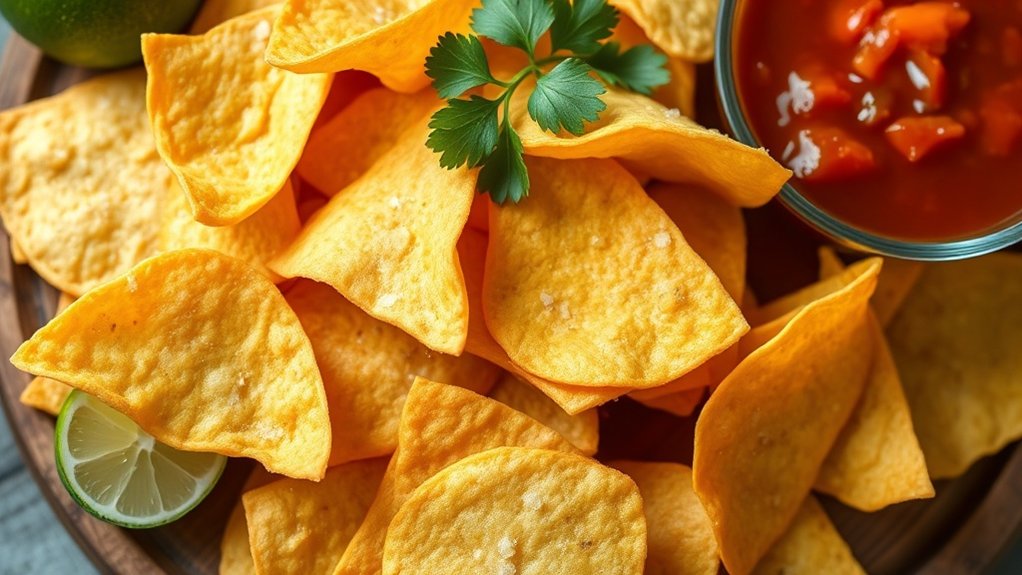
Making oil-free vegan tortilla chips requires just corn tortillas and a simple tahini-water mixture that produces surprisingly crispy results.
Select preservative-free corn tortillas as your base, guaranteeing ideal texture and clean ingredients. Whisk tahini with water until smooth to create a coating that improves both flavor and crispiness.
Cut tortillas into triangles, then brush both sides with the tahini mixture. Bake at 300°F for 15-20 minutes using proper baking techniques that guarantee even crispness without burning. This low-temperature method allows moisture to evaporate gradually, creating the desired crunch.
Customize your chips with salt, lime juice, or chili powder before baking. Store finished chips in an airtight container for up to one week. If they lose crispness, re-bake briefly to restore texture and maximize freshness.
Cross-contamination in shared fryers presents a legitimate concern for strict vegans who maintain zero-tolerance policies toward animal products.
When restaurants use the same oil to cook tortilla chips and animal-based items like chicken or fish, trace amounts of animal fats transfer to supposedly vegan foods. Understanding fryer practices becomes essential for maintaining your dietary standards.
Key cross-contamination concerns include:
- Many establishments don’t disclose shared fryer usage, even when labeling chips as vegan
- Oil used for animal products contains residual fats and proteins that compromise vegan integrity
- Dedicated fryers for plant-based items eliminate these concerns entirely
You’ll need to communicate your requirements clearly with restaurant staff.
Ask specifically about fryer practices and whether they maintain separate equipment for vegan items. This proactive approach guarantees your food aligns with your values.
Best Vegan Dips for Tortilla Chips
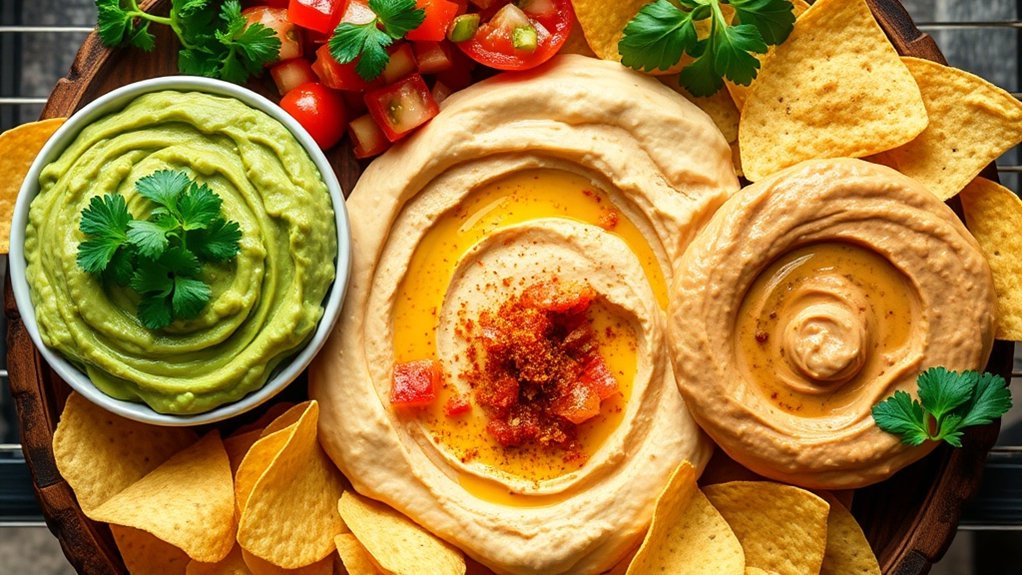
Once you’ve confirmed your tortilla chips meet vegan standards, you’ll want complementary dips that maximize both nutrition and flavor.
Spicy avocado-based guacamole delivers heart-healthy monounsaturated fats alongside lime juice and seasonings for ideal taste and texture.
Creamy hummus provides complete plant-based protein, with varieties like roasted red pepper offering antioxidant benefits.
For calcium-fortified options, vegan spinach artichoke dip uses cashews or tofu to create satisfying creaminess while incorporating leafy greens.
Cowboy caviar combines black beans and corn for fiber-rich nutrition, improved by fresh tomatoes and avocado for vitamin C and healthy fats.
Store-bought salsa offers convenience with tomatoes providing lycopene, though you should verify ingredient labels to confirm no added dairy or animal-derived components compromise vegan integrity.
This article was reviewed by Nicole Anderson, RDN.