Last Updated: July 23, 2026
Why Is Wine Not Vegan
Wine isn’t vegan because producers use animal-derived fining agents during clarification. You’ll commonly find isinglass from fish bladders, gelatin from animal collagen, casein from milk, and albumin from egg whites—all used to bind unwanted particles that cause cloudiness. While these substances are mostly filtered out, trace residues may remain in your glass. Though vegan alternatives like bentonite clay and pea protein exist, many wineries still rely on traditional animal-based methods. The following sections explain how to identify and source truly vegan-friendly wines.
Contents
show
Why Most Wine Isn’t Vegan (Animal Products Used in Fining)
While wine consists primarily of fermented grape juice, most commercial wines undergo a clarification process called fining that introduces animal-derived substances into the production chain. This explains why isn’t wine vegan for many brands.
Fining agents like isinglass (fish bladders), gelatin, casein (milk protein), and albumin (egg whites) bind to unwanted particles—proteins, tannins, and tartrates—that cause cloudiness. Though winemakers remove these agents before bottling, trace amounts may remain in the final product.
Commercial producers prioritize visual clarity because consumers associate clear wine with quality. You’ll find these animal products prevalent across the industry, yet labeling requirements don’t mandate their disclosure.
This lack of transparency leaves you unaware that your wine likely contacted animal-derived materials during production, making seemingly plant-based beverages non-vegan by definition.
Animal Fining Agents vs. Plant-Based Alternatives
Traditional fining agents—isinglass from sturgeon bladders, gelatin from animal collagen, casein from milk proteins, and albumin from egg whites—function through electrostatic attraction, binding to oppositely charged particles suspended in wine.
These animal-derived compounds clarify wine effectively but explain what makes wine not vegan, as trace residues remain post-filtration.
Plant-based alternatives achieve comparable results through identical mechanisms.
Bentonite clay, a negatively charged mineral, attracts positively charged proteins and tannins. Activated charcoal absorbs color compounds and off-flavors through its porous structure. Pea protein mimics gelatin’s functionality without animal sourcing.
These substitutes satisfy the increasing demand for vegan-certified wines while maintaining wine quality standards.
Unfined and unfiltered wines bypass fining agents entirely, allowing natural sedimentation to clarify the product.
Though cloudier in appearance, these wines guarantee vegan compatibility through processing methodology alone.
How to Check If Wine Is Vegan Before You Buy
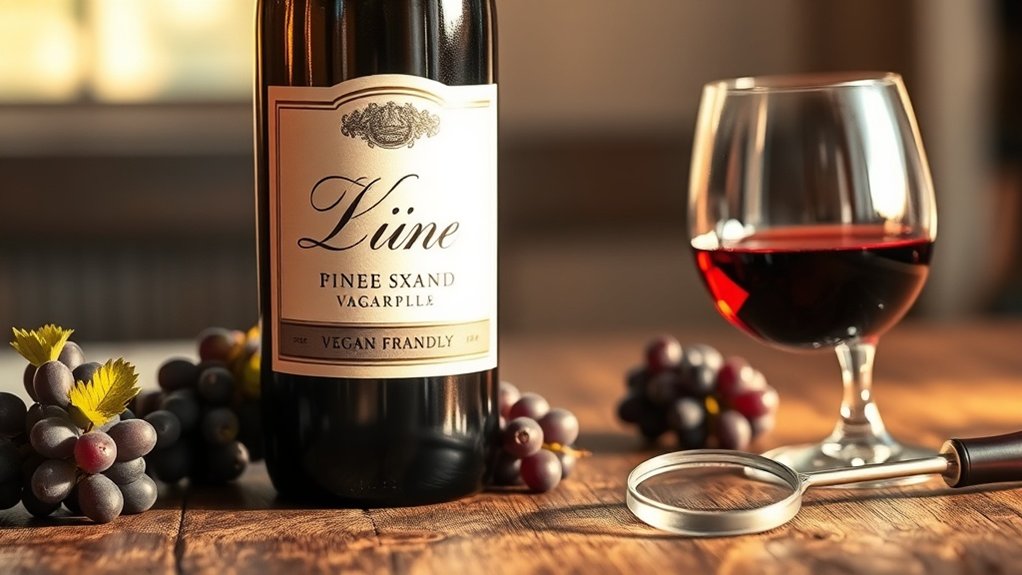
Determining wine’s vegan status requires investigative steps beyond label inspection, since regulatory frameworks in most jurisdictions don’t mandate fining agent disclosure.
You’ll find extensive databases like Barnivore.com particularly valuable for identifying vegan-certified brands across multiple producers.
Direct winery contact remains your most reliable verification method—inquire specifically about fining protocols and whether they employ animal-derived clarifying agents.
Retail environments increasingly feature vegan-designation labels, refining your selection process. Look for “unfined” or “unfiltered” descriptors, which typically indicate plant-based processing methods.
Understanding why some wines aren’t vegan centers on traditional fining practices using egg whites, isinglass, gelatin, or casein.
Since these agents rarely appear on ingredient lists, you’ll need to research each producer’s methodology through dedicated vegan alcohol resources or manufacturer transparency statements.
Where to Find Vegan Wine (Brands, Stores, Online Tools)
Because vegan wine availability has expanded considerably over the past decade, you’ll now find multiple procurement channels that simplify your search for animal-free options. Local organic and health food stores consistently stock vegan wines, while major retailers can order specific brands upon request.
Online verification tools prove particularly valuable—Barnivore.com maintains a database exceeding 54,000 vegan-friendly beverages, allowing you to research before purchasing. BevVeg! certification provides another reliable verification method for identifying compliant products.
Understanding why is some wine not vegan helps you appreciate producers like Frey Winery, Coopers Hawk Vineyards, and Fitzpatrick Winery, which explicitly avoid animal-derived fining agents. These wineries employ alternative clarification methods, making certain their entire production process remains animal-free.
This article was reviewed by Nicole Anderson, RDN.