Last Updated: August 1, 2026
Is Lady Gaga Vegan

Lady Gaga isn’t vegan in 2026, though she’s shown openness to plant-based options. She follows an omnivorous diet after moving away from vegetarianism, largely influenced by her Italian heritage and family traditions centered around traditional meat-based dishes. While she owns Haus Labs, a vegan and cruelty-free beauty brand, and has praised vegan alternatives like plant-based wings on *Hot Ones*, her personal dietary choices don’t align with strict veganism. Her approach reflects a balance between cultural influences and ethical awareness, and there’s more to understand about her evolving relationship with food.
Contents
show
Is Lady Gaga Vegan? The Direct Answer for 2026

No, Lady Gaga isn’t vegan in 2026. While you might find conflicting information online, she follows an omnivorous diet that includes animal products. Her Italian heritage influences her food choices, and she’s shifted away from the vegetarian diet she maintained during her early career.
However, is Lady Gaga a vegan supporter? She’s expressed appreciation for plant-based options, especially praising plant-based chicken wings during her *Hot Ones* appearance.
You’ll find this reflected in her business ventures—her beauty brand, Haus Labs, is entirely vegan and cruelty-free, demonstrating her commitment to ethical product development.
Her dietary stance remains nuanced: she’s not plant-based herself but promotes cruelty-free alternatives in her commercial endeavors.
This mixed approach has generated divided reactions among fans regarding her overall ethical consistency with animal rights.
What She Actually Eats: Evidence From Recent Interviews and Appearances
You’ll find concrete clues about Gaga’s diet through her public appearances and interviews, particularly her enthusiastic endorsement of plant-based chicken wings on *Hot Ones*.
Her early-career vegetarian phase contrasts with her current omnivorous approach, shaped greatly by her Italian family’s traditional meat-inclusive cuisine.
These documented food choices reveal a pattern of ethical awareness balanced with cultural influences rather than strict dietary restrictions.
Hot Ones Plant-Based Choice
Lady Gaga’s appearance on the popular YouTube series *Hot Ones* provided concrete evidence of her dietary preferences when she chose plant-based chicken wings over traditional meat options.
You’ll notice she praised these vegan alternatives as “good,” demonstrating her willingness to adopt meat-free foods publicly. This decision aligns with broader celebrity trends toward sustainable eating, as figures like John Oliver and Lizzo have made similar choices.
While promoting her album *Mayhem*, Gaga discussed ethical consumption and sustainability concerns.
However, you shouldn’t interpret this single choice as proof of veganism. Her dietary history shows a fluctuation between vegetarianism and omnivorous eating, influenced by her Italian heritage.
The plant-based wing selection represents openness to cruelty-free options rather than commitment to a strictly vegan lifestyle.
Past Vegetarian Era Statements
However, you should understand that Gaga’s dietary evolution reflects the tension between ethical ideals and cultural identity.
Her Italian heritage features prominently in family gatherings centered around traditional meat-based dishes, creating what she’s described as a complex relationship with food choices.
This background provides context for why she eventually shifted away from strict vegetarianism toward a more flexible omnivorous approach that accommodates both personal values and familial traditions.
Italian Family Food Influences
Italian Sunday dinners at the Germanotta household shaped Gaga’s palate long before fame entered the picture. Her Italian heritage introduced her to traditional meat-based dishes that became deeply woven into family gatherings and emotional connections.
You’ll find that Gaga’s dietary journey reflects this cultural foundation—she’s openly discussed how difficult maintaining vegetarianism became when confronted with family traditions centered around food.
These sentimental ties to ancestral recipes ultimately influenced her shift from vegetarianism to an omnivorous diet. While she’s experimented with plant-based options and praised them publicly, her eating habits remain rooted in cultural authenticity rather than strict dietary labels.
You’re seeing someone who balances personal wellness with heritage, acknowledging that food represents more than nutrition—it’s identity, memory, and family connection intertwined.
Why Her Vegan Beauty Line (Haus Labs) Doesn’t Mean She’s Vegan
You might assume Lady Gaga’s vegan beauty line means she follows a plant-based lifestyle, but owning Haus Labs doesn’t require her to be vegan herself.
The brand’s cruelty-free and vegan formulations represent a strategic business decision to capture the growing ethical cosmetics market, which values products free from animal-derived ingredients and testing.
This distinction between marketing vegan products and maintaining a vegan diet is essential—one focuses on consumer demand and ingredient sourcing, while the other involves personal food choices and nutritional commitments.
Vegan Products vs. Lifestyle
While Lady Gaga’s beauty brand Haus Labs proudly carries a vegan label, this doesn’t extend to her personal dietary choices—a distinction that’s often misunderstood by consumers.
You’ll find that vegan product formulations simply mean they’re free from animal-derived ingredients—they don’t reflect the creator’s lifestyle.
Gaga’s shift from vegetarianism to an omnivorous diet demonstrates how personal nutrition needs can differ from business decisions. Her choice to market vegan cosmetics responds to consumer demand rather than personal ethics.
This separation matters because you shouldn’t assume a brand’s values automatically mirror its founder’s practices.
The beauty industry increasingly adopts vegan formulations for market positioning, not necessarily philosophical alignment.
Understanding this distinction helps you make informed choices about both the products you buy and the dietary patterns you follow.
Marketing Strategy Over Ethics
Lady Gaga’s decision to launch Haus Labs as a vegan brand represents a calculated business move rather than a reflection of personal dietary philosophy.
You’ll notice she hasn’t adopted a fully vegan diet herself, revealing a disconnect between her commercial offerings and personal choices.
This strategy capitalizes on the booming market for cruelty-free cosmetics, where “not tested on animals” serves as a powerful selling point.
The beauty industry increasingly uses plant-based formulations to attract ethically-conscious consumers, and Haus Labs follows this profitable trend.
While there’s nothing inherently wrong with this approach, it demonstrates how brands prioritize consumer appeal over founder alignment.
You’re witnessing a common phenomenon: companies responding to market demand rather than personal conviction, which explains why vegan product lines don’t necessarily indicate vegan lifestyles.
The 2010 Meat Dress: What It Meant for Animal Rights
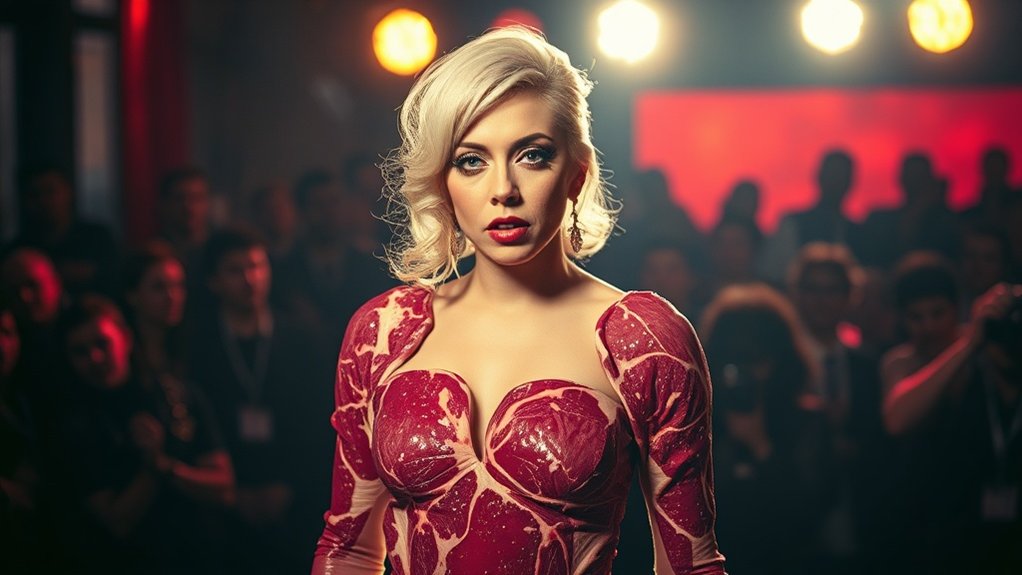
At the 2010 MTV Video Music Awards, Gaga’s raw flank steak dress ignited one of fashion’s most controversial animal rights debates.
While she intended it as a statement against “don’t ask, don’t tell,” PETA and other organizations condemned it as promoting disregard for animal suffering.
You’ll find the ethical implications centered on whether artistic expression justified using animal products purely for fashion.
Despite Gaga’s clarification that she didn’t intend an anti-animal rights message, the damage sparked productive dialogue.
PETA reported increased website traffic for vegetarian and vegan resources following the incident.
The controversy ultimately heightened public awareness about fashion’s relationship with animal welfare, demonstrating how provocative statements—regardless of original intent—can inadvertently advance the causes they appear to contradict.
How She Responded to PETA and Animal Rights Backlash
Following intense criticism from animal welfare organizations, Gaga defended her creative choice by reframing the meat dress as a catalyst for political discourse rather than a dismissal of animal rights concerns. She explicitly clarified her stance wasn’t anti-animal rights, emphasizing the dress protested the “don’t ask, don’t tell” policy instead.
You’ll find she acknowledged PETA’s concerns about influencing her young fanbase while maintaining her commitment to authentic self-expression.
The backlash sparked meaningful dialogue about fashion’s ethical implications. When Ellen DeGeneres presented her with a veggie bikini, it highlighted the growing conversation around plant-based alternatives in fashion.
PETA encouraged Gaga to analyze more sustainable, cruelty-free fashion statements moving forward. Despite criticism, she stood firm that provoking thought about important issues justified her controversial artistic choice.
Her Hot Ones Plant-Based Wings: Why She Chose Vegan Options

This choice reflects broader entertainment industry trends toward sustainable eating.
While Gaga hasn’t committed to veganism, her willingness to consume and promote meat-free alternatives shows awareness of cruelty-free practices.
The plant-based wings‘ continued presence on the show indicates growing acceptance of these options among mainstream audiences, suggesting you don’t need strict dietary labels to incorporate more sustainable protein sources.
From Vegetarian to Omnivore: How Her Diet Changed Over the Years
This cultural connection ultimately influenced her changeover to an omnivorous diet, incorporating animal proteins back into her nutrition.
In interviews, she’s acknowledged this shift wasn’t easy, reflecting the tension between dietary ethics and familial bonds.
While she’s praised plant-based options—notably enjoying vegan chicken wings on *Hot Ones*—her current diet includes meat.
This evolution highlights how personal, cultural, and nutritional factors shape dietary decisions, even for prominent animal advocates.
What Gaga Has Actually Said About Veganism and Animal Welfare
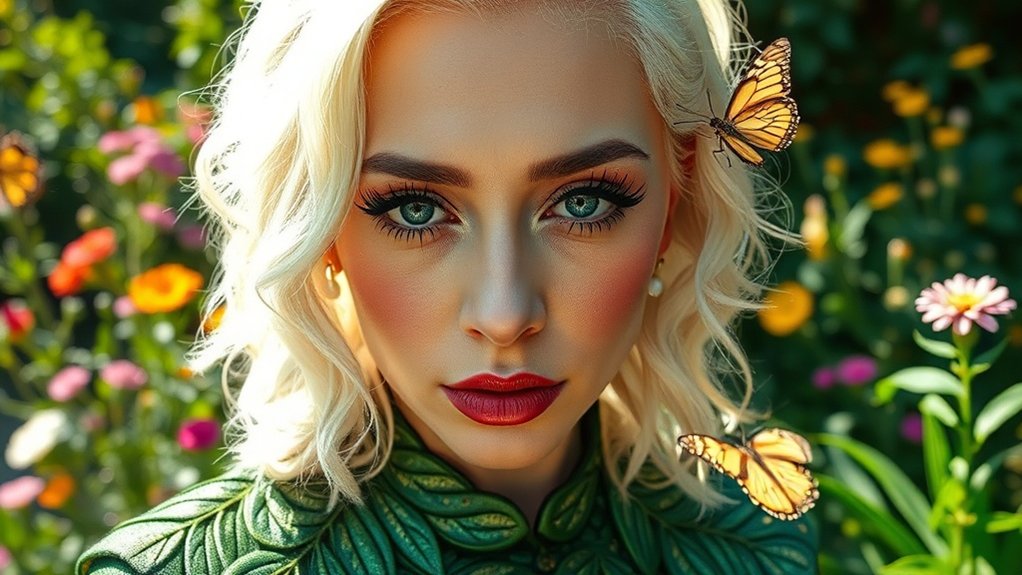
You’ll notice Gaga’s commitment to ethical practices through her beauty brand, Haus Labs, which markets exclusively vegan products.
She’s advocated for transparency in fashion and ethical sourcing, demonstrating awareness of animal welfare concerns.
While she hasn’t adopted veganism personally, citing her Italian cultural background’s influence on her omnivorous diet, she actively promotes cruelty-free options.
Why Many Celebrities Support Vegan Products Without Going Fully Vegan
Lady Gaga’s approach reflects a broader pattern in celebrity culture where public figures champion vegan products without eliminating animal products from their personal lives.
You’ll notice celebrities like John Oliver and Lizzo choosing plant-based options during public appearances while maintaining flexibility in their private diets. This strategy aligns with consumer demand for cruelty-free products while avoiding the commitment of full veganism.
The beauty industry particularly benefits from this trend, as vegan labeling boosts marketability among ethically conscious consumers.
Celebrities use their platforms to raise awareness about animal welfare and environmental sustainability without personal dietary restrictions. This approach allows them to maintain positive public images and support the growing plant-based movement.
You’re witnessing a cultural shift where ethical consumption matters more than strict lifestyle adherence, making veganism accessible through incremental choices.
This article was reviewed by Nicole Anderson, RDN.