Last Updated: March 26, 2026
Are Spring Rolls Vegan
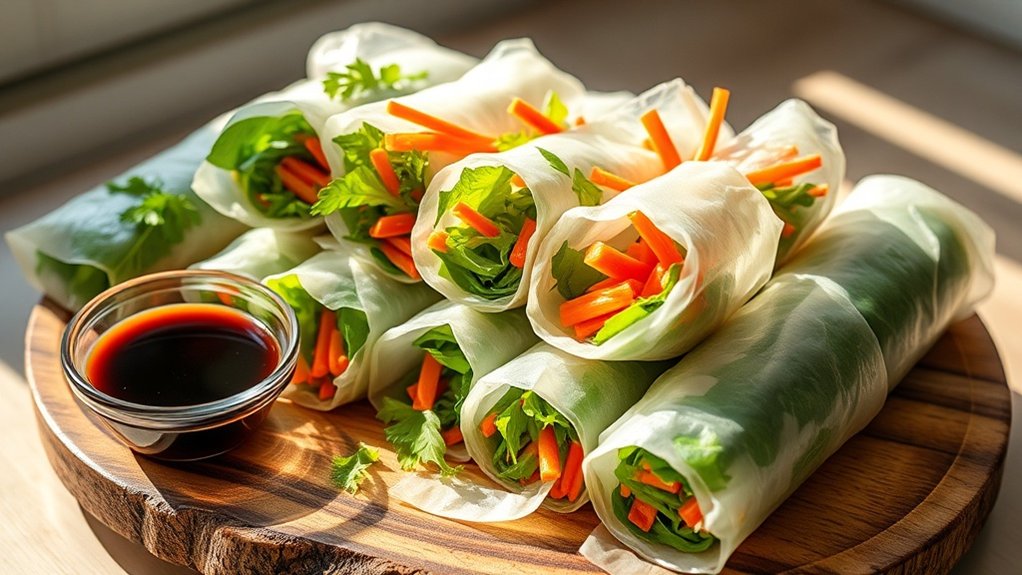
Spring rolls aren’t automatically vegan—it depends on the type you’re ordering. Fresh Vietnamese-style rolls wrapped in rice paper are typically vegan-friendly, containing vegetables, herbs, and rice noodles. However, fried Chinese spring rolls often include egg in their wrappers and may contain shrimp, pork, or chicken. You’ll also need to watch for hidden animal products like fish sauce, oyster sauce, and non-vegan dipping sauces. Understanding these distinctions and knowing which questions to ask will help you confidently direct menus and ingredient labels.
Contents
show
Are Spring Rolls Vegan? The Simple Answer
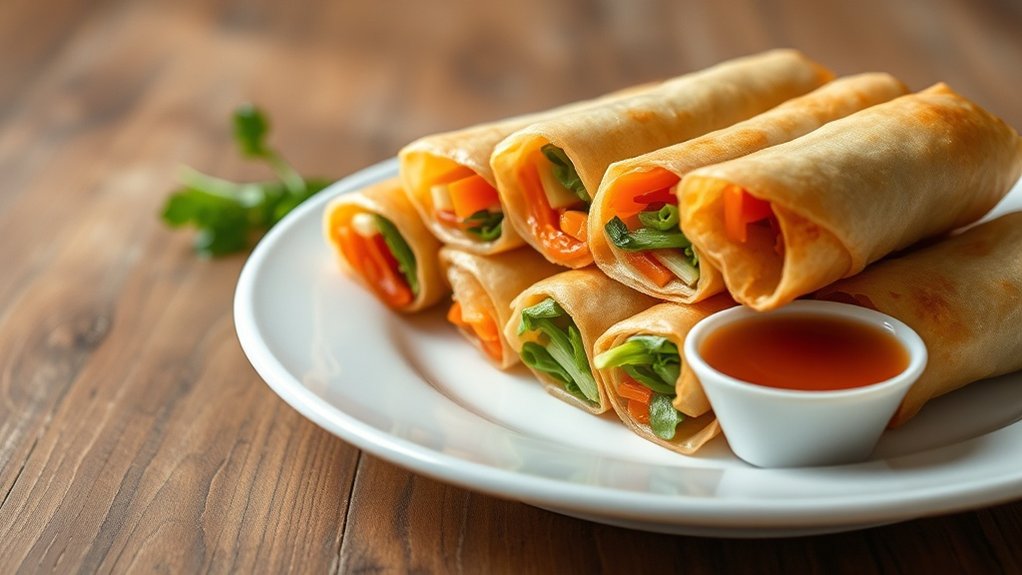
The answer depends entirely on how they’re prepared. Fresh spring rolls wrapped in rice paper and filled with vegetables, herbs, and tofu are typically vegan-friendly.
However, spring roll history reveals that cultural variations greatly impact their ingredients. Traditional Vietnamese fresh rolls often contain shrimp or pork, while Chinese fried spring rolls may include egg in the wrapper itself.
You’ll need to watch for non-vegan components like fish sauce, oyster sauce, chicken, and seafood fillings.
Even seemingly plant-based versions might contain animal-derived ingredients in their dipping sauces. Research shows that fresh spring rolls are more likely to be vegan than their fried counterparts, which frequently incorporate eggs for binding and texture.
When ordering spring rolls, always verify the specific ingredients and preparation methods to confirm they meet vegan standards.
Why Fresh Spring Rolls Are Usually Vegan (and Fried Ones Often Aren’t)
Fresh spring rolls maintain their vegan status primarily because of their construction method and traditional ingredient profile. You’ll find they’re wrapped in rice paper—a simple combination of rice flour and water—and filled with fresh ingredients like cabbage, carrots, tofu, and herbs.
These components naturally provide vegan benefits without animal-derived additives.
Fried spring rolls present different challenges. Their pastry wrappers frequently contain eggs, and fillings often include meat or seafood.
Even seemingly plant-based versions may harbor non-vegan ingredients in their preparation.
When selecting dipping sauces, you’ll need vigilance. While peanut sauce typically aligns with vegan standards, traditional accompaniments sometimes contain fish sauce.
Research published in nutrition journals confirms that fresh preparations better preserve nutrient integrity while maintaining plant-based compliance when you verify all components beforehand.
Non-Vegan Ingredients Hiding in Spring Rolls
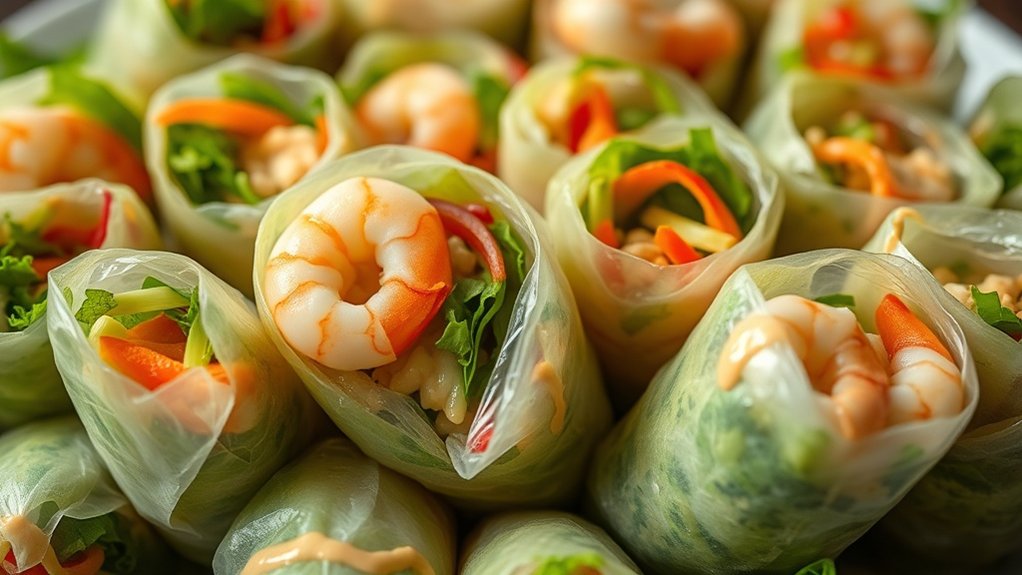
While you’re scanning menus for plant-based options, several animal-derived ingredients commonly infiltrate spring rolls without obvious indication. Hidden proteins like shrimp, pork, chicken, and fish represent the most recognizable non-vegan components, but sauces pose similarly significant concerns.
Fish sauce and oyster sauce frequently appear in both fillings and dipping accompaniments, compromising otherwise plant-based preparations. Fried spring roll wrappers often contain eggs in their pastry formulation, requiring ingredient substitutions for vegan compliance.
Beyond obvious animal products, gelatin and dairy derivatives can lurk within commercial sauces and seasonings. You’ll need to scrutinize ingredient labels meticulously and actively inquire about specific components when dining out, as recipes vary considerably between establishments.
This vigilance guarantees your spring roll selections align with vegan dietary principles while avoiding inadvertent consumption of animal-derived ingredients.
What to Ask at Restaurants to Make certain Vegan Spring Rolls
When dining out, you’ll need to ask specific questions about both the wrapper composition and sauce ingredients to confirm your spring rolls are vegan.
According to research published in the *Journal of Culinary Science & Technology*, fried spring roll wrappers may contain eggs, while fresh rice paper varieties are typically plant-based (Chen et al., 2019).
You should also inquire whether the dipping sauces contain fish sauce, oyster sauce, or other animal-derived flavor boosters commonly used in Asian cuisine preparation.
Questions About Wrapper Ingredients
Determining whether spring roll wrappers contain animal products requires direct inquiry, as ingredient variations exist across different culinary traditions and individual restaurant preparations.
You’ll need to ask specifically about egg content in the dough, particularly with fried spring roll varieties where eggs serve as binding agents.
Traditional rice paper wrappers typically contain only rice flour, water, and salt, making them naturally vegan. However, wrapper types vary considerably between restaurants, and some establishments may use modified recipes incorporating animal-derived ingredients.
When ordering, request explicit confirmation about the wrapper composition rather than assuming all rice paper is vegan.
Ask whether the restaurant offers designated vegan spring roll options, as this clarification eliminates guesswork and guarantees your dietary requirements are met without compromising ingredient integrity.
Inquiring About Sauce Components
Beyond verifying wrapper composition, sauce components present another significant area where animal-derived ingredients commonly appear in spring roll preparations.
You’ll need to specifically ask about fish sauce and oyster sauce, which restaurants frequently use to improve flavor profiles in dipping accompaniments. These umami-rich condiments contain animal-derived elements that immediately disqualify dishes from vegan classification.
When making sauce selection inquiries, confirm whether the restaurant incorporates honey or dairy products as sweetening or binding agents. Many establishments use these ingredients without explicit menu disclosure.
Additionally, request information about less obvious animal-derived additives that might appear in their sauce formulations.
Don’t hesitate to ask if the restaurant offers dedicated vegan sauces or can modify existing options by substituting plant-based alternatives. This straightforward communication guarantees your meal aligns with vegan dietary requirements.
Spotting Hidden Animal Products on Packaged Spring Roll Labels
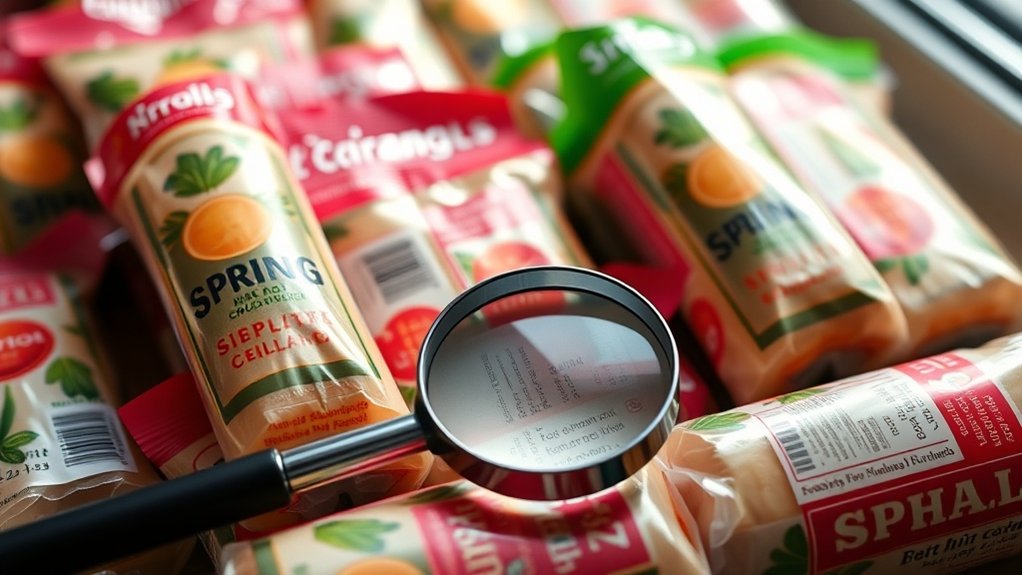
When examining packaged spring rolls, you’ll need to scrutinize ingredient lists for common animal-derived components such as shrimp, pork, chicken, fish sauce, and egg, which manufacturers often include in wrappers or fillings without prominent labeling.
Research indicates that certain additives like gelatin (derived from animal collagen) and casein (a milk protein) frequently appear in processed foods, making it essential to recognize these terms on nutrition labels.
Additionally, accompanying dipping sauces may contain oyster sauce or fish sauce, so selecting products with explicit “vegan” certification can help you avoid inadvertently consuming animal products.
Decoding Ingredient Lists
Although spring rolls appear straightforward, their ingredient lists often conceal animal-derived components that contradict vegan dietary principles. You’ll need to scrutinize labels carefully, as different spring roll varieties employ ingredient substitutions that may include animal products.
Examine wrappers first—some contain eggs or egg whites, while vegan versions use rice paper or wheat flour exclusively. Fish sauce, oyster sauce, and shrimp paste frequently appear in seasoning blends, disguised within “natural flavoring” or “spices.” Gelatin serves as a binding agent in certain formulations.
Sauces merit equal attention; many contain fish-derived ingredients or dairy products. Terms like “modified food starch” and “emulsifiers” can indicate animal origins.
Prioritize products bearing explicit “vegan” or “certified vegan” labels, which guarantee compliance with plant-based standards and eliminate guesswork regarding hidden animal ingredients.
Animal-Derived Additives Alert
Packaged spring rolls harbor animal-derived additives that manufacturers list under technical names you won’t immediately recognize. Developing ingredient awareness protects your dietary choices and guarantees you’re truly consuming plant-based products.
Critical animal additives to identify:
- Gelatin – derived from animal collagen, sometimes used as a binding agent in wrappers or fillings.
- Casein – a milk protein occasionally added to improve texture in processed spring roll products.
- L-cysteine – an amino acid often sourced from feathers or hair, used as a dough conditioner.
- Whey powder – a dairy byproduct that manufacturers incorporate into seasoning blends.
You’ll find these ingredients buried within complex formulations alongside preservatives and flavor boosters.
Cross-reference unfamiliar terms using vegan ingredient databases, and contact manufacturers directly when labels remain unclear about sourcing.
How to Make Vegan Spring Rolls at Home
Making vegan spring rolls at home requires just three essential components: fresh vegetables, rice paper wrappers, and a flavorful dipping sauce.
You’ll want to investigate filling varieties that include carrots, cucumbers, cilantro, and rice noodles for ideal nutritional diversity and texture contrast.
Master rolling techniques by first soaking rice paper wrappers in warm water until they’re soft and pliable.
Place your chosen fillings in the wrapper’s center, fold the sides inward, then roll tightly from bottom to top. This method guarantees structural integrity and prevents ingredient spillage.
For your dipping sauce, combine tahini, maple syrup, tamari, and lime juice to create a protein-rich accompaniment.
Store assembled rolls under a damp towel to maintain moisture and preserve their delicate texture before serving.
Best Vegan Dipping Sauces for Spring Rolls
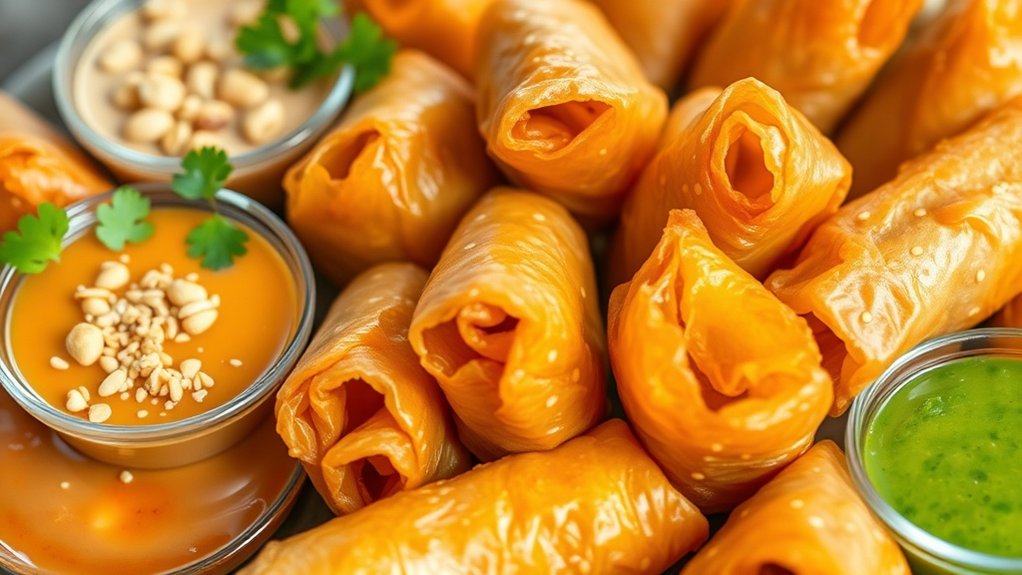
Consider these dipping variations for ideal nutritional diversity:
- Tahini sauce provides a nut-free alternative with sesame-derived calcium and healthy fats.
- Sweet sour sauce delivers simple carbohydrates through plant-based vinegar and sugar combinations.
- Chili garlic sauce contains capsaicin compounds that may boost metabolism.
- Soy sauce offers the lowest-calorie option at approximately 10 calories per tablespoon.
Each dipping variation contributes distinct micronutrients and flavor profiles, allowing you to customize based on dietary requirements and taste preferences.
Where to Buy Pre-Made Vegan Spring Rolls
Finding pre-made vegan spring rolls has become increasingly accessible as plant-based demand reshapes retail availability. You’ll uncover grocery options at Asian markets, where they’re labeled as “vegetable spring rolls” or “fresh rolls.”
Health food stores and mainstream supermarkets stock frozen varieties with clear vegan labeling in their freezer sections. Established brands like Thai Kitchen and Nasoya offer widely-distributed vegan spring rolls you can find at most grocery chains.
For dining out, Vietnamese and Thai restaurants typically feature vegan spring rolls on their menus, though you should verify ingredients with staff to confirm preparation methods.
Online shopping provides additional convenience, with Amazon and specialty vegan retailers delivering various pre-made options directly to your home, expanding accessibility beyond local grocery options.
This article was reviewed by Nicole Anderson, RDN.