Last Updated: March 11, 2026
Is Crayola Vegan

Most Crayola products aren’t vegan because they contain stearic acid derived from beef tallow, which serves as a hardening agent in their crayons. You’ll also find potential animal-derived ingredients like insect-based pigments in some products. Crayola’s limited ingredient transparency makes it difficult to verify all components, though they don’t conduct animal testing on finished products. If you’re seeking vegan art supplies, you’ll need to reflect on verified alternatives like Azafran or Wee Can Too, which use exclusively plant-based formulations that we’ll investigate further below.
Contents
show
Are Crayola Crayons and Markers Vegan?
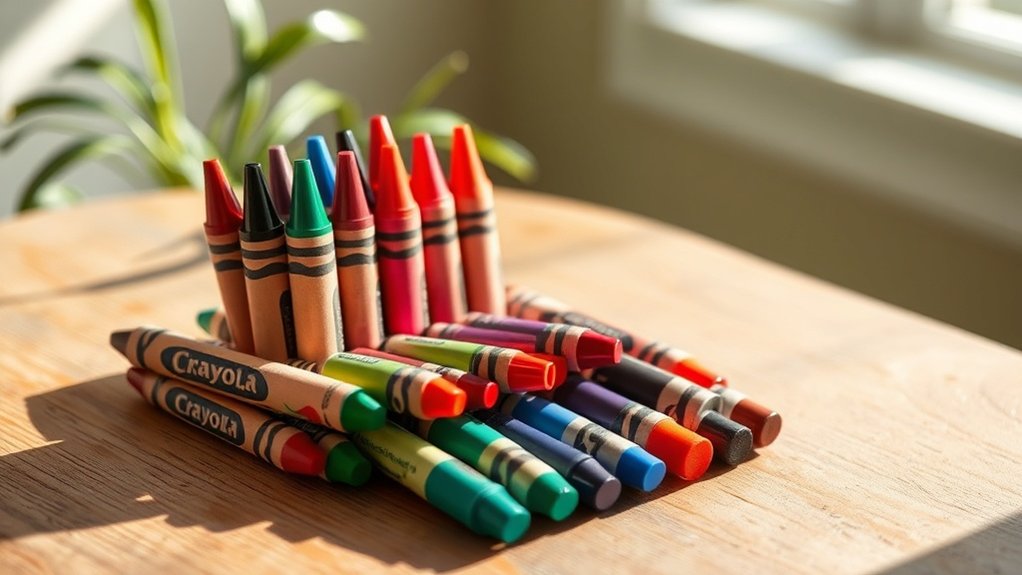
Crayola crayons and markers aren’t vegan products. If you’re wondering “are crayola crayons vegan,” the answer is no—they contain animal-derived ingredients, primarily stearic acid sourced from beef tallow. This component serves as a binding agent in crayon formulation.
Additionally, Crayola crayons may incorporate insect-derived pigments for coloration. The markers present similar concerns, though Crayola doesn’t publicly disclose their complete ingredient lists, creating transparency issues for vegan consumers.
While Crayola doesn’t conduct animal testing on finished products, the presence of animal byproducts disqualifies them from vegan classification. The company’s limited ingredient transparency makes independent verification difficult.
If you require genuinely vegan art supplies, you’ll need alternatives like Azafran or Chartpak, which use exclusively plant-based ingredients and provide clear sourcing documentation for their formulations.
What Animal Ingredients Are in Crayola Products?
When examining ingredient compliance from a regulatory perspective, stearic acid represents the primary animal-derived component in Crayola crayons. This compound, typically sourced from beef tallow, directly addresses whether crayons are vegan—they’re not.
Beyond crayons, Crayola markers present additional risk factors: potential inclusion of milk casein, gelatin, and beeswax in undisclosed formulations.
You’ll find that certain pigments may originate from insect sources, further complicating vegan classification. The characteristic scent you recognize stems from animal-derived stearic acid present in both markers and crayons.
Crayola’s limited ingredient transparency prevents definitive verification of all animal byproducts. Without complete disclosure, you can’t perform thorough risk assessment, leaving uncertainty about the full scope of animal-derived materials in these products.
The Best Vegan Crayon and Marker Brands
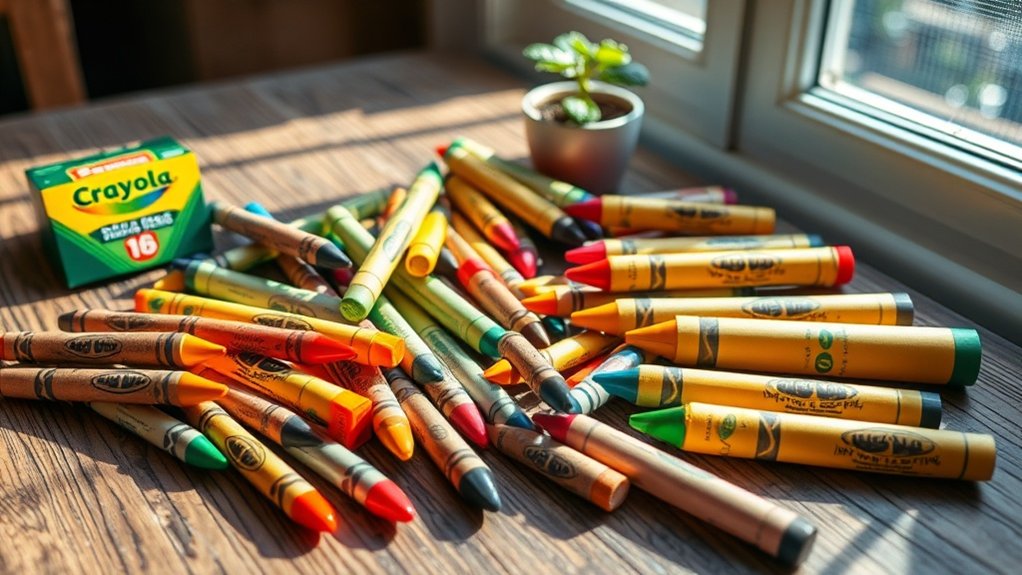
When evaluating if Crayola markers vegan yields negative results, consider these documented alternatives:
- Chartpak Spectra ADMarkers – Alcohol-based formulation with confirmed vegan status.
- Arteza Art Supplies – Extensive product line excluding beeswax and honey derivatives.
- Faber-Castell – Largely vegan portfolio (verify individual sets for beeswax exclusions).
- Wee Can Too Crayons – Plant-based ingredients meeting pediatric safety standards.
Each brand maintains ingredient transparency and third-party verification.
Cross-reference product specifications before purchase, as formulations may vary across manufacturing batches and regional distributions.
This article was reviewed by Nicole Anderson, RDN.