Last Updated: December 2, 2025
What Is Veg Tan Leather

Veg tan leather is genuine animal hide that’s been tanned using plant-based tannins extracted from oak bark, chestnut, and other natural sources—it’s not a vegan alternative. You’ll find this traditional method takes 30-60 days, compared to chrome tanning’s 24-hour process. The leather develops a rich patina over time, absorbs oils and moisture, and requires regular maintenance. It’s prized for tooling, belts, and saddle-making because of its firm texture and durability. Understanding the complete tanning process and comparing it to modern alternatives will help you choose the right material for your project.
Contents
show
Understanding Veg Tan Leather: Not Vegan, Just Naturally Tanned
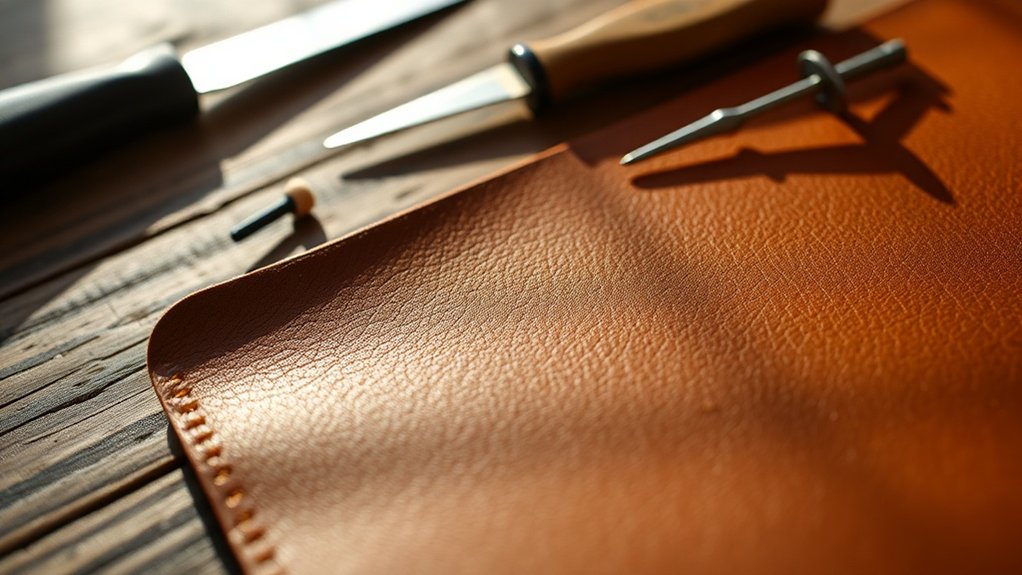
While the name might suggest otherwise, vegetable-tanned leather isn’t a vegan alternative—it’s genuine animal hide processed using plant-based tannins extracted from tree bark, leaves, and roots.
This vegetable tanning process represents roughly 10% of global leather production, distinguishing itself as an environmentally friendly method that eliminates the harsh chemicals used in chrome tanning.
The natural tannins penetrate the hide over weeks, sometimes extending to two months, creating exceptionally durable material. You’ll find this leather in high-quality goods like wallets, belts, and saddles.
What makes vegetable-tanned leather distinctive is its ability to develop a rich patina over time, darkening and revealing natural imperfections that improve its character.
Each piece becomes individually yours through use and proper care.
The Vegetable Tanning Process: How Plant Extracts Transform Animal Hides
The vegetable tanning process transforms raw animal hides into durable leather through a series of precise chemical and biological steps.
You’ll find that the process starts with salt-curing and liming to prepare the hide, then moves into extended immersion in natural tannin solutions extracted from tree bark, leaves, and roots.
These plant-based tannins chemically bind to the hide’s protein structure over 30 to 60 days, preserving the material while developing its characteristic rich coloration and improved strength.
Steps in Vegetable Tanning
Creating vegetable-tanned leather requires a multi-stage process that spans weeks and demands careful attention to traditional techniques.
Here’s how animal hides are turned into premium leather goods through vegetable tanning:
- Curing: You’ll cure raw hides in salt to halt bacterial growth and preserve the material.
- Liming: The hides soak in milk of lime, stripping away hair and fat residues.
- Tanning Phase: You’ll immerse prepared hides in drums containing natural tannins extracted from tree bark, leaves, and roots for 30-60 days.
- Finishing: After drying, you’ll apply treatments to improve durability and appearance.
The complete process reflects its artisanal nature, requiring up to two months.
These vegetable tannins penetrate deep into the hide structure, creating leather with distinctive character and longevity.
Natural Tannin Sources Used
At the heart of vegetable tanning sits a carefully selected palette of plant materials, each contributing distinct properties to the finished leather.
You’ll find oak and chestnut tree bark among the most prized natural sources, delivering robust tannins that penetrate animal hides over 30 to 60 days. These vegetable-derived compounds restructure hide proteins at the molecular level, creating leather that’ll absorb moisture naturally while maintaining structural integrity.
Unlike chrome tanning’s chemical approach, this environmentally friendly method relies solely on plant extracts from bark, leaves, and roots. The tannins you’re working with don’t just preserve—they transform raw hides into material that develops character over decades.
Each source imparts unique color depth and aging properties that synthetic processes simply can’t replicate.
Veg Tan Vs Chrome Tan: Comparing Natural and Chemical Tanning Methods
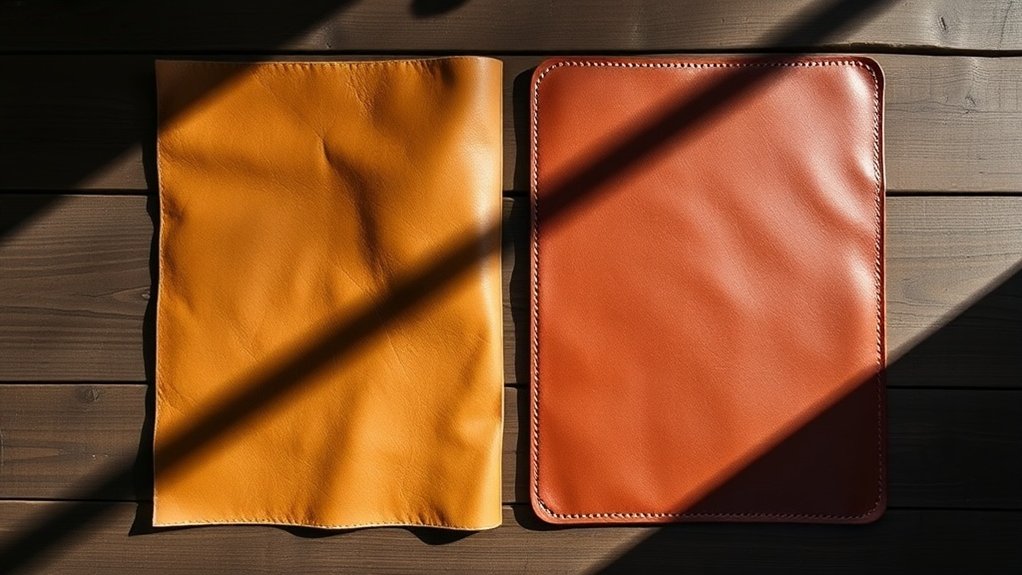
When you’re choosing between veg tan and chrome tan leather, you’ll notice fundamental differences in how each method processes hides and what properties result.
Chrome tanning transforms raw hides in just one day using chromium sulfate, while vegetable tanning requires two months as plant-based tannins slowly penetrate the material.
These contrasting approaches create leathers with distinct characteristics in durability, water resistance, and how they age over time.
Key Process Differences
Vegetable tanning and chrome tanning represent fundamentally different approaches to transforming raw hide into durable leather.
When you compare these methods, the process distinctions become immediately apparent. Vegetable Tanned Leather requires skilled artisans to carefully work natural tannins extracted from organic materials through hides over extended periods—sometimes taking months to achieve proper penetration.
Chrome tanned leather, conversely, accelerates tanning dramatically through chromium salt applications, completing in roughly 24 hours.
The key process differences include:
- Timeline: Vegetable tanning demands weeks to months versus chrome’s single-day completion
- Materials: Natural bark extracts versus synthetic chromium salts
- Craftsmanship: Hands-on monitoring by skilled artisans versus automated industrial processing
- Environmental impact: Biodegradable plant-based compounds versus chemical waste management requirements
You’ll notice chrome dominates 75% of production due to speed, while vegetable methods maintain their 10% market share through superior quality and sustainability.
Performance and Durability
The fundamental strength characteristics separating these two tanning methods become evident once you start working with finished leather. Veg tan delivers superior performance and durability through its dense fiber structure, resisting wear while developing a distinctive patina over time.
Chrome leather offers immediate flexibility but won’t match veg tan’s longevity under sustained use.
These types of leather differ markedly in moisture behavior. Veg tan will readily absorb moisture, accepting conditioning treatments that improve its aging properties, though this makes it vulnerable to water damage.
Chrome leather resists staining and moisture penetration better initially.
The environmental impact considerations matter too. Leather often treated with chromium salts creates disposal challenges, while veg tan processes use natural tannins.
Your choice depends on whether you prioritize immediate functionality or long-term character development.
Key Characteristics and Properties of Vegetable-Tanned Leather
Distinguished by plant-based tannins extracted from tree bark and other botanical sources, vegetable-tanned leather stands apart in the modern leather industry through its authentic character and time-honored production methods.
You’ll recognize this leather by its earthy scent and light tan appearance that transforms into a beautiful patina over time.
Key properties include:
- Structural integrity: Firm texture that softens with use while maintaining exceptional durability
- Porous nature: Will absorb moisture and oils, requiring regular maintenance with natural conditioners
- Living material: Darkens and develops unique character marks through exposure to environmental elements
- Eco-conscious profile: Uses natural tannins from tree species rather than synthetic coatings, making it environmentally friendly
These characteristics demand proper care but reward you with a distinctive, evolving leather product.
Common Uses and Applications for Veg Tan Leather Products

From workshop benches to saddle shops, veg-tan leather‘s structural properties make it the craftsperson’s first choice for applications that require rigidity and longevity.
You’ll find veg-tanned leather used to make durable items like belts, wallets, and saddles—products that withstand daily stress while developing a unique patina that tells their story.
Its pliability excels in crafting custom leather goods, holding intricate tooling and detailed impressions that define artisan work.
The material’s thickness proves essential for shoe soles and protective armor, where structural integrity can’t be compromised.
You’ll encounter it in bookbinding and journal-making, where archival properties preserve contents for generations.
Interior designers specify it for high-quality furniture and architectural elements, valuing both its natural aesthetic and proven durability in demanding environments.
Environmental Impact: The Reality Behind Vegetable-Tanned Leather
While vegetable tanning earns its reputation as the cleaner alternative to chrome processing, you’ll need to understand its true environmental footprint extends beyond simple plant-based chemistry. This natural tanning method avoids harmful chemicals like chromium, yet demands substantial water resources throughout leather production.
When you take a deep-dive into vegetable tanning’s environmental impact, consider these realities:
- Water consumption requires tanneries near rivers, potentially stressing local ecosystems.
- Processing takes up to two months versus chrome’s rapid turnaround.
- Only 10% of global production used this method despite 5,000 years of practice.
- Natural tannins eliminate toxic by-products that contaminate water sources.
The trade-off involves slower production and higher costs, balanced against notably reduced ecological harm compared to chrome-dominated leather production methods.
True Vegan Leather Alternatives: Plant-Based Materials That Contain No Animal Products
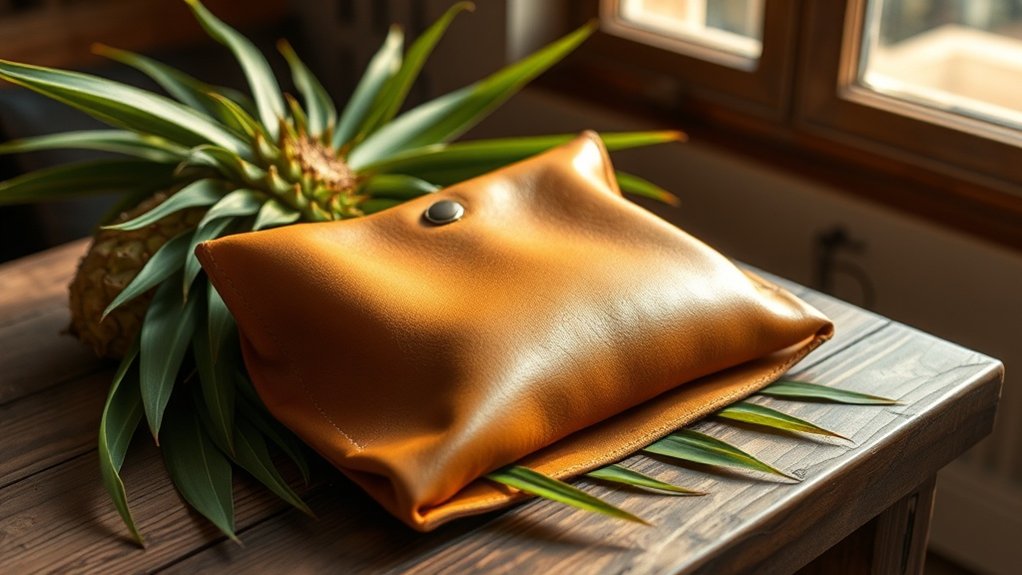
True vegan leather alternatives eliminate animal products entirely from your material choices, replacing traditional hides with innovations like Piñatex from pineapple leaf fibers, apple leather from juice production waste, and mycelium grown from mushroom root structures.
These plant-based materials offer genuine sustainable options without compromising durability or aesthetics.
Piñatex delivers breathable, resilient performance in fashion applications, while apple leather transforms agricultural waste into soft, workable material for bags and footwear.
Mycelium leather provides a biodegradable option that replicates traditional leather’s texture through controlled fungal growth.
Cork and recycled plastic composites expand your vegan leather alternatives further, each addressing specific craft requirements.
You’ll find these materials prioritize eco-friendliness through reduced waste streams and renewable sourcing, though working properties differ greatly from vegetable-tanned leather regarding tooling, molding, and finishing techniques.
This article was reviewed by Nicole Anderson, RDN.