Last Updated: December 16, 2025
Is Sorbet Vegan
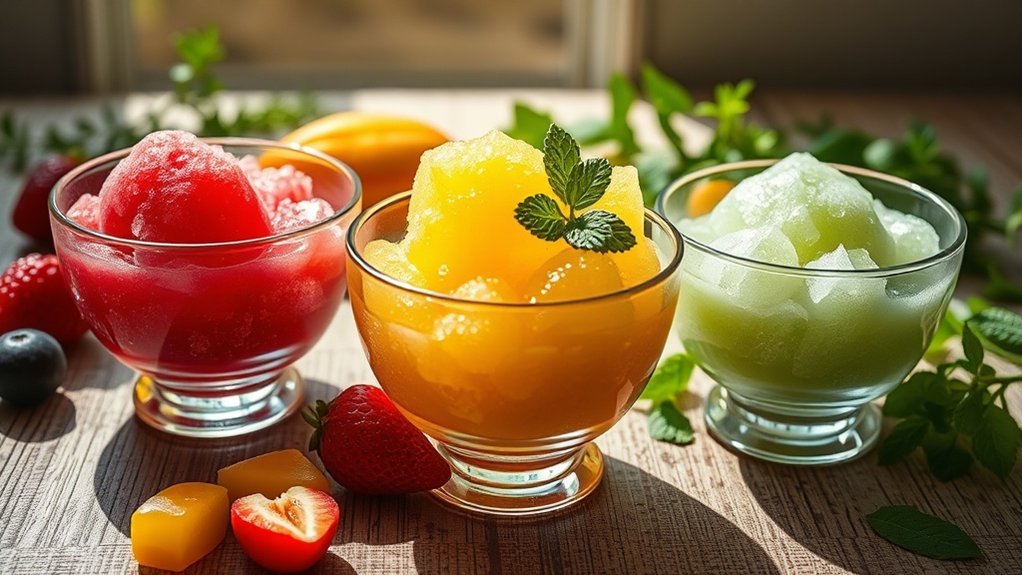
Sorbet’s traditionally vegan, as it’s formulated from fruit puree, sugar, and water with no dairy or animal products. However, you’ll need to verify labels carefully—commercial versions often contain non-vegan additives like honey, gelatin, egg whites, or dairy derivatives such as milkfat and buttermilk. Unlike sherbet (which contains 1-2% milkfat), authentic sorbet should have 0% dairy content. Watch for E471 (mono- and diglycerides) that may derive from animal fats. Understanding ingredient composition and manufacturing processes guarantees your frozen dessert aligns with plant-based dietary requirements.
Contents
show
What Is Sorbet?
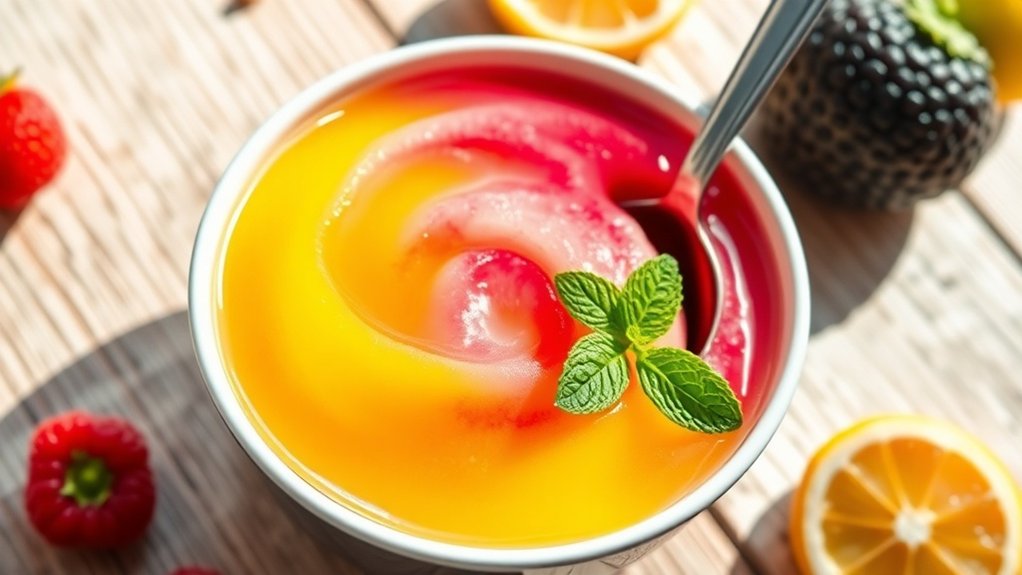
Sorbet constitutes a frozen dessert composed of three foundational ingredients: fruit puree or juice, sugar, and water. This composition creates a naturally vegan product, as sorbet is made without any animal-derived components.
While ice cream contains dairy and eggs, sorbet is typically made exclusively from plant-based ingredients, rendering it dairy free by definition.
The absence of milkfat produces sorbet’s characteristic smooth yet icy texture, distinctly different from cream-based frozen desserts. You’ll find that sorbet delivers concentrated fruit flavors due to its simple formulation.
The basic recipe can be modified with complementary ingredients such as herbs, spices, or liqueurs to improve flavor complexity. This compositional simplicity makes sorbet accessible for vegans and individuals with lactose intolerance, provided manufacturers haven’t added non-vegan stabilizers or additives.
Traditional Sorbet Ingredients and How It’s Made
Traditional sorbet contains three fundamental components: fruit puree or juice (providing flavor and natural sugars), granulated sugar (adjusting sweetness and freezing point depression), and water (achieving proper consistency).
The preparation involves combining these ingredients in specific ratios, typically 1:1:2 (sugar:water:fruit), then churning the mixture while freezing to incorporate air and prevent large ice crystal formation.
You’ll find that this straightforward formulation—free from dairy proteins, emulsifiers, or stabilizers—distinguishes authentic sorbet from ice cream and sherbet varieties.
Core Sorbet Ingredients
At its foundation, sorbet consists of three essential components: fruit puree or juice, sugar, and water. These sorbet ingredients work synergistically to create the frozen dessert’s characteristic texture and flavor profile.
Compositional breakdown of core elements:
- Fruit puree: Fresh, ripe fruit processed into smooth consistency provides primary flavor compounds and natural acidity, typically comprising 40-60% of the mixture.
- Sugar: Functions as both sweetener and freezing-point depressant, preventing ice crystallization while balancing fruit’s tartness (granulated sugar, agave, or maple syrup at 15-25% concentration).
- Water: Dilutes mixture to achieve peak freezing properties and scoopability, with quantities adjusted based on fruit’s inherent moisture content.
- Optional additives: Herbs, spices, or liqueurs amplify complexity without compromising the base formula.
This straightforward composition guarantees you’ll understand exactly what constitutes authentic sorbet.
Simple Preparation Process
Understanding these foundational components leads directly to examining how they transform into the finished product.
The preparation process demonstrates sorbet’s inherent vegan composition through its straightforward methodology. You’ll blend ripe fruit with granulated sugar and water until achieving a homogeneous mixture, assuring complete dissolution of crystalline structures.
This puree undergoes controlled chilling before churning, which incorporates air molecules and prevents large ice crystal formation. The mechanical agitation during freezing creates sorbet’s characteristic smooth texture while maintaining its plant-based integrity.
No emulsifiers, dairy stabilizers, or animal-derived ingredients are required for proper crystallization. The simplicity of this preparation process confirms sorbet’s naturally vegan status, as the transformation from raw fruit to frozen dessert relies exclusively on physical temperature manipulation and mechanical processing rather than complex chemical additives.
Sorbet vs. Sherbet vs. Ice Cream: Understanding the Key Differences
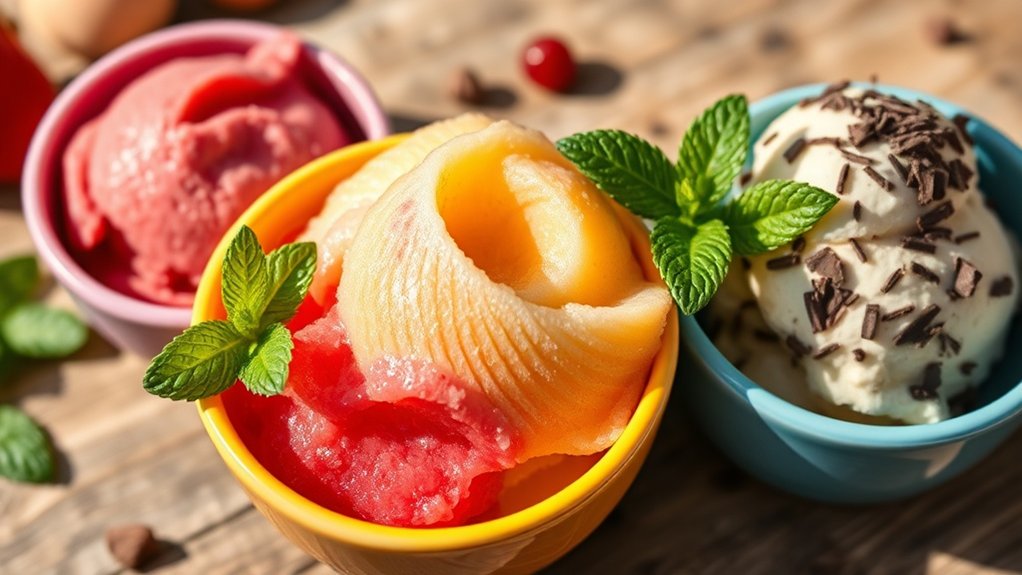
When evaluating frozen desserts for vegan compliance, you must understand their compositional differences: sorbet contains zero dairy products, sherbet incorporates 1-2% milkfat by legal definition, and ice cream requires a minimum of 10% milkfat content.
These dairy percentages directly determine each dessert’s texture profile, with sorbet producing an icy, crystalline structure, sherbet yielding a moderately smooth consistency, and ice cream delivering maximum creaminess through fat emulsification.
Your ability to identify vegan-friendly options depends on recognizing these ingredient-based distinctions, as only dairy-free formulations meet strict plant-based dietary requirements.
Dairy Content Comparison
Although these three frozen desserts may appear similar at first glance, their compositional profiles reveal stark differences in dairy content that directly impact their vegan status.
Dairy Content Breakdown:
- Sorbet – Contains 0% milkfat, composed entirely of fruit puree, juice, water, and sweeteners, making it inherently vegan-friendly.
- Sherbet – Contains 1-2% milkfat by regulatory definition, incorporating small amounts of milk or cream that disqualify it from vegan classification.
- Ice cream – Contains minimum 10% milkfat (often 14-25%), with substantial dairy components including milk, cream, and milk solids.
- Fat content implications – Sorbet is typically the lowest-fat option, while ice cream’s high dairy content creates its characteristic richness.
These compositional distinctions determine each dessert’s suitability for vegan diets and lactose-intolerant consumers.
Texture and Fat Differences
The compositional variations in dairy content create corresponding textural plunges among these frozen desserts.
Sorbet’s dairy-free formulation produces a smooth yet icy texture that’s significantly lighter than its counterparts.
When you’re examining sherbet, you’ll find its 1-2% milkfat content delivers a creamy texture that bridges the gap between sorbet’s lightness and ice cream’s density.
Ice cream’s heightened fat content from its dairy base creates the richest, densest mouthfeel of the three.
Beyond texture, these compositional differences affect flavor intensity.
You’ll notice sorbet’s absence of dairy and eggs allows for pronounced fruit flavors, while sherbet’s creaminess tends to mute these taste profiles.
The churning processes reflect these distinctions—sorbet requires only simple freezing without milk, whereas ice cream demands a complex cream-sugar emulsion.
Vegan-Friendly Frozen Desserts
While examining frozen desserts through a vegan lens, sorbet emerges as the only inherently plant-based option among the three primary categories.
Sorbet is naturally composed of fruit puree, juice, and sugar—containing zero dairy or animal-derived components. This compositional distinction makes it a reliable vegan-friendly frozen dessert choice.
Key compositional differences include:
- Sorbet: 0% milkfat, purely fruit-based ingredients
- Sherbet: 1-2% milkfat content, disqualifying it from vegan classification
- Ice cream: High dairy fat content (typically 10%+), inherently non-vegan
- Dairy-free alternatives: Specially formulated ice cream substitutes using plant-based fats
Understanding these compositional variances enables you to direct frozen desserts confidently.
When selecting vegan options, verify ingredient labels, as sorbet’s fruit-forward formulation naturally aligns with plant-based dietary requirements without requiring specialized manufacturing processes.
Is Sorbet Always Vegan? What You Need to Verify
Many consumers assume sorbet’s fruit-based composition guarantees its vegan status, yet ingredient analysis reveals potential non-vegan additives that warrant scrutiny.
You’ll need to check the ingredients list for honey, dairy derivatives, and milk-based stabilizers that manufacturers sometimes incorporate into commercial formulations. Chocolate and lemon varieties particularly warrant attention, as they frequently contain cream or butter.
Cross-contamination during production poses additional concerns for strict adherents to a vegan diet.
You can verify vegan compliance through systematic label examination or by selecting certified vegan brands.
Alternatively, homemade sorbet recipes offer complete compositional control, using only ripe fruit, sugar, and water. This approach eliminates uncertainty regarding animal-derived components while making sure alignment with vegan dietary principles.
Manufacturing transparency remains essential for informed consumption decisions.
Non-Vegan Ingredients and Additives to Watch For
Although fruit purées constitute sorbet’s primary matrix, several animal-derived compounds infiltrate commercial formulations as functional additives.
You’ll need to scrutinize ingredient panels for these non-vegan ingredients that compromise plant-based status:
- Honey: Bee-derived sweetener frequently incorporated into artisanal formulations
- Gelatin and egg whites: Protein-based stabilizers increasing textural properties and preventing crystallization
- Dairy ingredients: Milkfat or buttermilk additions, particularly prevalent in chocolate and lemon varieties
- E471 (mono- and diglycerides): Emulsifiers potentially sourced from animal fats
Cross-contamination during manufacturing presents additional concerns.
You should verify vegan certifications on packaging or contact manufacturers directly regarding production practices.
E-numbers warrant particular attention, as animal-derived additives often appear under these numerical designations within ingredient lists.
Vegan-Friendly Sorbet Brands: A Complete Guide
The commercial sorbet landscape now encompasses numerous certified vegan offerings across mainstream and specialty brands.
You’ll find vegan sorbet at major retailers like Tesco, Sainsbury’s, Asda, and Waitrose, featuring fruit juice-based formulations in mango, raspberry, and lemon varieties.
Ciao Bella Vegan Sorbettos provide fat-free, certified options with extensive flavor selections.
Talenti’s dairy-free sorbetto line delivers five distinct varieties through widespread grocery distribution channels.
Halo Top Creamery produces low-calorie, certified vegan fruit sorbets across three flavors, targeting health-conscious demographics.
Little Moons offers vegan-friendly alternatives for consumers seeking premium options.
Sorbabes, a women-owned enterprise, manufactures sorbet bars with dairy-free shells in multiple unique flavor profiles.
These sorbet brands demonstrate that plant-based frozen desserts maintain compositional integrity while eliminating animal-derived ingredients, making certain accessibility for vegan consumers.
How to Read Sorbet Labels and Identify Vegan Options
Successfully identifying vegan sorbet requires systematic analysis of ingredient declarations, additive classifications, and manufacturing disclosures present on product packaging.
You’ll need to verify the absence of dairy components through methodical label examination:
- Scan ingredient lists for milk derivatives, cream, buttermilk, whey, casein, and lactose that disqualify vegan status
- Identify animal-derived additives including honey, gelatin, carmine (E120), and shellac (E904) that compromise plant-based integrity
- Review allergen statements indicating shared equipment with dairy processing facilities, which may affect strict vegan adherence
- Locate vegan certifications from recognized organizations providing third-party verification of compliance with vegan standards
Brands like Talenti and Ciao Bella designate specific sorbet products as vegan through explicit labeling.
Cross-reference ingredients against thorough databases to determine the origin of ambiguous e-numbers and processing agents.
Making Homemade Vegan Sorbet: Recipes and Techniques
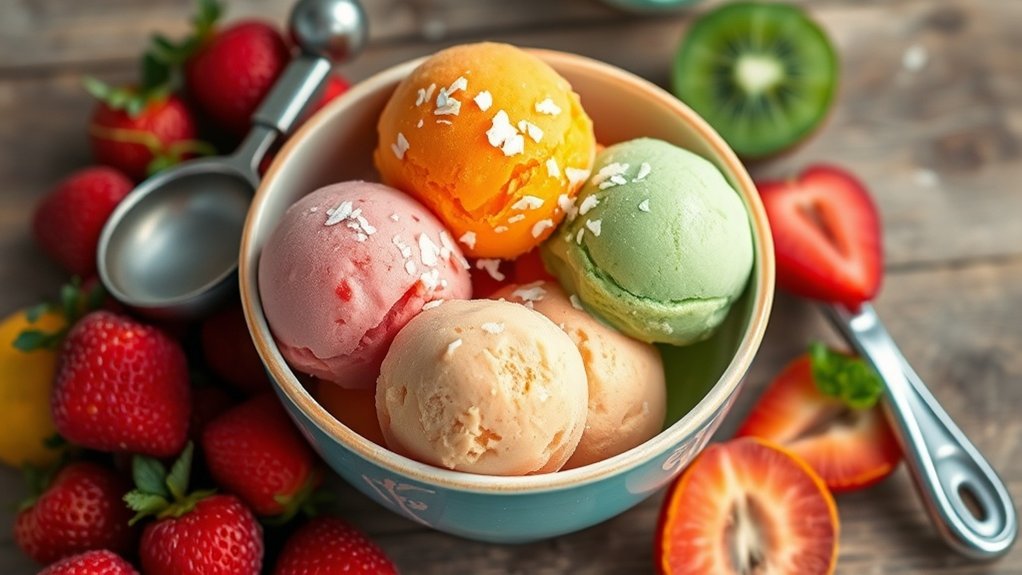
Beyond verifying commercial products through label analysis, preparing sorbet in controlled home environments eliminates ingredient ambiguity while enabling precise compositional customization.
To make sorbet, you’ll blend ripe frozen fruit with liquid sweeteners—agave nectar or maple syrup—adjusting concentrations to achieve desired sweetness levels. High-performance blenders or food processors generate ideal texture in this frozen dessert, while dedicated sorbet makers improve consistency during cryogenic processing.
Compositional experimentation with fruit juice or purée combinations—mango-passion fruit or strawberry-basil—creates distinctive flavor matrices. Incorporate functional additives like vanilla extract, mint, or supplemental fruit juice before blending for increased depth.
Your vegan sorbet can be consumed immediately for soft-serve consistency or subjected to additional freezing for firmer structural integrity. Re-blending frozen preparations before serving restores smooth texture through mechanical shakeion of ice crystals.
Serving Suggestions and Flavor Combinations for Vegan Sorbet
When optimizing sensory experiences with vegan sorbet, strategic pairing methodologies improve both gustatory perception and visual presentation dynamics. This frozen treat derives its composition from fruit or fruit juice, enabling diverse serving applications that further its inherent characteristics.
Evidence-Based Serving Methodologies:
- Complementary fruit pairing – Combine berries or citrus slices with corresponding sorbet bases to amplify flavor profiles through synergistic compound interaction.
- Tropical fusion technique – Blend mango and coconut sorbet varieties to create layered taste experiences optimized for warm-weather consumption.
- Natural vessel presentation – Use hollowed pineapple or watermelon containers for temperature maintenance and aesthetic elevation.
- Palate cleanser application – Make use of between courses during multi-course dining to neutralize taste receptors through acidic fruit compounds.
Elevation strategies include agave syrup drizzling or fruit compote integration for controlled sweetness modification without compromising vegan sorbet composition integrity.
This article was reviewed by Nicole Anderson, RDN.