Last Updated: April 8, 2026
Is Rhubarb a Fruit or a Veg
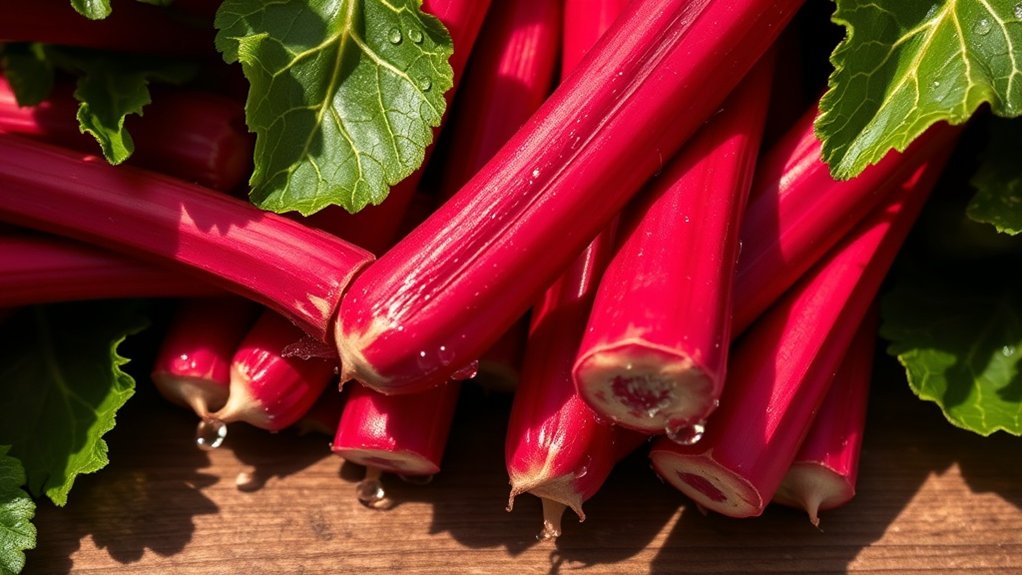
Rhubarb’s technically a vegetable because you’re eating the petiole—the plant’s leaf stalk—rather than a fruit structure that develops from a flower’s ovary. Botanically speaking, *Rheum rhabarbarum* falls squarely in the vegetable category since its edible portion derives from stem tissue, not reproductive organs containing seeds. However, a 1947 U.S. customs ruling legally classified it as a fruit for tariff purposes, creating lasting confusion in commercial markets. This botanical-versus-legal distinction shapes everything from trade regulations to how you’ll find it categorized in stores, and there’s more to this classification story than meets the eye.
Contents
show
What Is Rhubarb? Fruit or Vegetable?
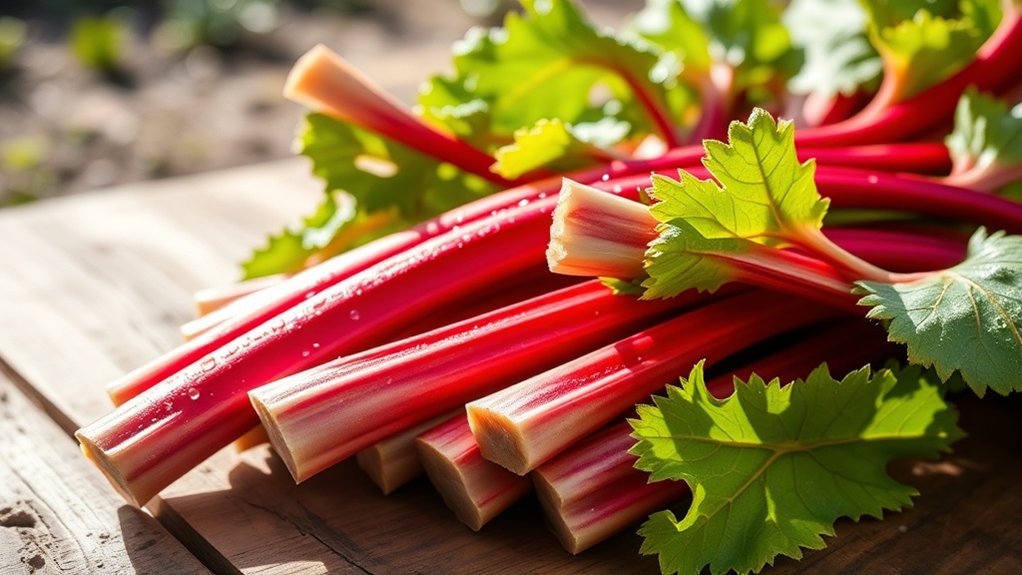
Rhubarb (*Rheum rhabarbarum*) belongs to the Polygonaceae family and is botanically classified as a vegetable, though culinary uses frequently position it alongside fruits.
You’ll find its edible pink stalks possess tart, sour characteristics requiring sugar supplementation for palatability. The leaves contain toxic oxalic acid concentrations and aren’t consumable.
Rhubarb history took a significant turn in 1947 when U.S. customs classified it as a fruit for tariff purposes, creating ongoing taxonomic debate.
You’ll notice its primary culinary uses center on dessert applications, particularly strawberry-rhubarb pie and spring confections.
Despite this fruit-like treatment in cooking contexts, botanical consensus maintains its vegetable classification. The distinction stems from scientific classification systems, where vegetables derive from plant stems, leaves, or roots, while fruits develop from flowering ovaries containing seeds.
Why Is Rhubarb Technically a Vegetable, Not a Fruit?
While culinary applications often blur categorical boundaries, botanical classification systems establish clear distinctions between fruits and vegetables based on plant morphology.
You’ll find rhubarb classified as a vegetable because you’re consuming its petioles—the edible stalks—rather than the plant’s reproductive structures. Botanically, fruits develop from flowers and contain seeds, whereas vegetables encompass roots, stems, leaves, and other non-reproductive plant parts.
Rhubarb belongs to the Polygonaceae family, with stalks resembling celery’s consistency. The high oxalic acid content renders its leaves toxic, confirming you’re eating stem tissue.
Despite cooking methods and culinary uses positioning rhubarb in desserts alongside fruits, its botanical identity remains vegetable. This technical classification persists regardless of its tart flavor profile or vibrant red coloration that mimics sour fruits in sweetened preparations.
Which Parts of Rhubarb Are Safe to Eat?
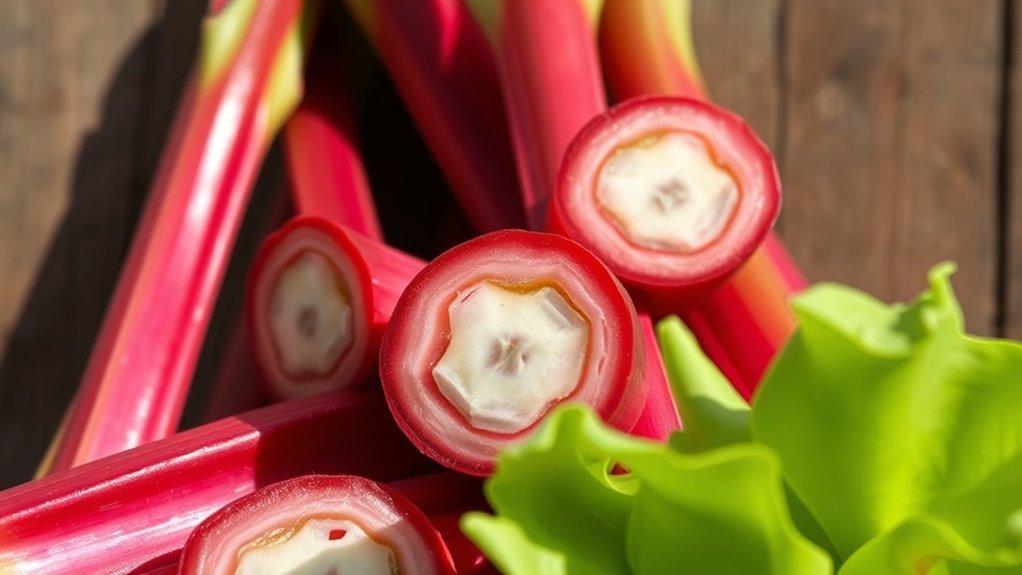
Conversely, you must never consume the foliar tissue. Toxic leaves harbor increased oxalic acid levels and anthrone glycosides—compounds that trigger acute symptoms including nausea, vomiting, and respiratory distress upon ingestion.
Commercial distributors remove this hazardous tissue before retail distribution, protecting consumers from accidental exposure.
You should also verify proper storage protocols for frozen specimens. Inadequate preservation methods allow toxin migration from leaves into stalks, compromising otherwise safe tissue.
This cross-contamination renders previously consumable petioles unsafe for ingestion.
What Does Rhubarb Taste Like and When Is It in Season?
Rhubarb (*Rheum rhabarbarum*) exhibits a distinctly acidic flavor profile due to high concentrations of oxalic and malic acids, yielding a tartness comparable to citrus when raw.
Upon thermal processing with sucrose, the stalks develop a balanced acidity reminiscent of *Malus* species (green apples).
The plant’s harvest period extends from late March through early June, with red-pigmented cultivars demonstrating superior sugar content and flavor intensity compared to chlorophyll-dominant green varieties.
Rhubarb’s Distinctive Flavor Profile
The organoleptic properties of rhubarb (Rheum rhabarbarum) classify it among the most acidic vegetables in culinary applications, with pH levels typically ranging from 3.1 to 3.2 due to high concentrations of oxalic and malic acids. This acidity creates a pronounced sour sensation comparable to citrus fruits, establishing the tart versus sweet spectrum that defines its culinary versatility.
Red-pigmented stalks exhibit more intense flavor compounds than their green counterparts, demonstrating phenotypic variation in taste intensity.
When you subject rhubarb to thermal processing with sucrose, Maillard reactions and acid neutralization transform its sharp acidity into a balanced tartness reminiscent of Malus (apple) species.
The compound’s flavor chemistry explains its traditional pairing with Fragaria (strawberry), where complementary volatile organic compounds create synergistic taste improvement in prepared dishes.
Peak Season and Availability
Spring cultivation cycles position Rheum rhabarbarum as a cool-season perennial with ideal harvesting windows occurring during a compressed 10-to-12-week period extending from late March through early June in temperate climates.
You’ll find prime specimens at farmer’s markets during this ephemeral availability window, where stalks exhibit peak anthocyanin pigmentation and maximum oxalic acid concentrations.
Rhubarb harvesting protocols demand careful selection of firm, crisp petioles measuring 10-15 inches in length. This temporal limitation necessitates strategic preservation methodologies—cryogenic storage techniques maintain cellular integrity for extended utilization, while thermal processing through jam production concentrates natural acids and sugars.
You can use this fleeting ingredient across diverse seasonal recipes, from traditional fruit-based confections to contemporary savory applications, maximizing nutritional benefits during its brief commercial availability period.
Why You Always Need Sugar When Cooking Rhubarb
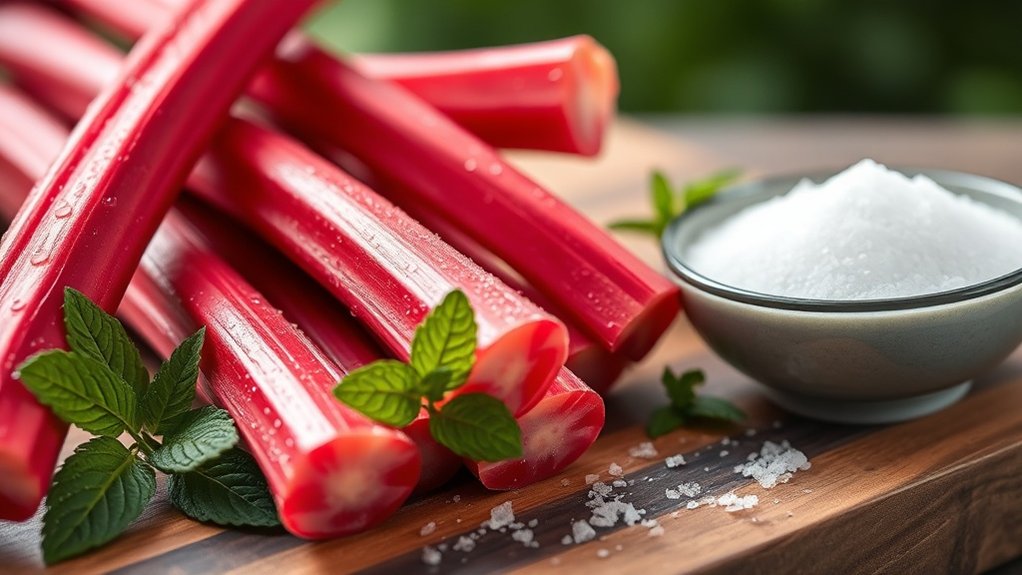
Although botanically classified as a vegetable (Rheum rhabarbarum), rhubarb’s culinary applications necessitate sugar supplementation due to its exceptionally high concentration of oxalic and malic acids.
These organic compounds produce an intensely sour pH level that’ll overpower your palate without proper sugar balance. The addition of sucrose serves multiple functional purposes: it neutralizes the inherent acidity, facilitates flavor improvement by transforming the taste profile toward green apple characteristics, and amplifies the stalks’ natural anthocyanin pigmentation.
Beyond taste modification, sugar’s role extends to structural applications—it’s essential for achieving proper gel formation in preserves and compotes through pectin interaction.
This carbohydrate integration also enables successful pairing with complementary fruits like strawberries, creating harmonious flavor combinations that you’ll find palatable in both sweet and savory preparations.
Rhubarb Recipe Ideas: Sweet and Savory Dishes
In savory rhubarb sauces, you’ll exploit its acidity to complement lipid-rich proteins.
You can formulate chutneys or tagine components that improve meat dishes through acidic counterbalancing.
Braising techniques—particularly with duck—demonstrate how rhubarb’s organic acids cut through fat content, creating harmonious flavor equilibrium in protein-centric preparations.
Is Rhubarb Actually Nutritious? The Health Facts
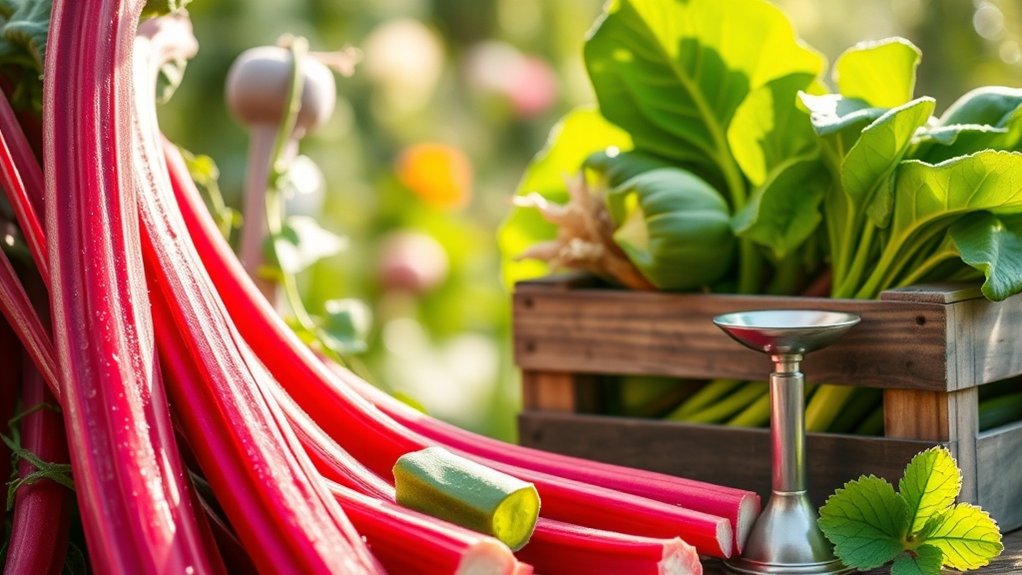
How does rhubarb’s nutritional profile substantiate its functional value in dietary applications?
You’ll find rhubarb delivers significant health benefits through its low-caloric density of 21 kcal per 100g, positioning it advantageously in weight management protocols.
Its dietary fiber content (1.8g/100g) facilitates gastrointestinal motility and metabolic regulation. The stalks provide 24% daily value of vitamin K, essential for coagulation cascades and bone mineralization processes.
Nutritional comparisons reveal moderate potassium levels (10% DV/100g), supporting cardiovascular homeostasis through electrolyte balance.
However, you must exercise caution: the leaves contain toxic concentrations of oxalic acid and require complete exclusion from consumption.
This dichotomy between edible stalks and hazardous foliage exemplifies rhubarb’s classification as a functionally beneficial yet botanically complex dietary component requiring informed preparation methods.
When and Where to Buy Fresh Rhubarb
Understanding rhubarb’s nutritional composition allows informed procurement decisions that maximize both freshness and bioactive compound retention.
You’ll find prime specimens at farmer’s markets and grocery stores from late March through early June, coinciding with the cultivar’s phenological peak season. Major production zones—Oregon, Washington, and Wisconsin—supply commercial markets during this temporal window.
Select stalks exhibiting firm texture, glossy red pigmentation, and crisp structural integrity; reject specimens displaying wilting or surface blemishes, as these indicate cellular degradation. Local sourcing from regional farms guarantees peak freshness, maximizing phytonutrient concentrations and organoleptic properties.
While year-round availability exists through controlled cultivation and cold storage, late spring procurement yields superior quality metrics regarding flavor compounds and nutritional density.
The 1947 Ruling That Made Rhubarb Legally a Fruit
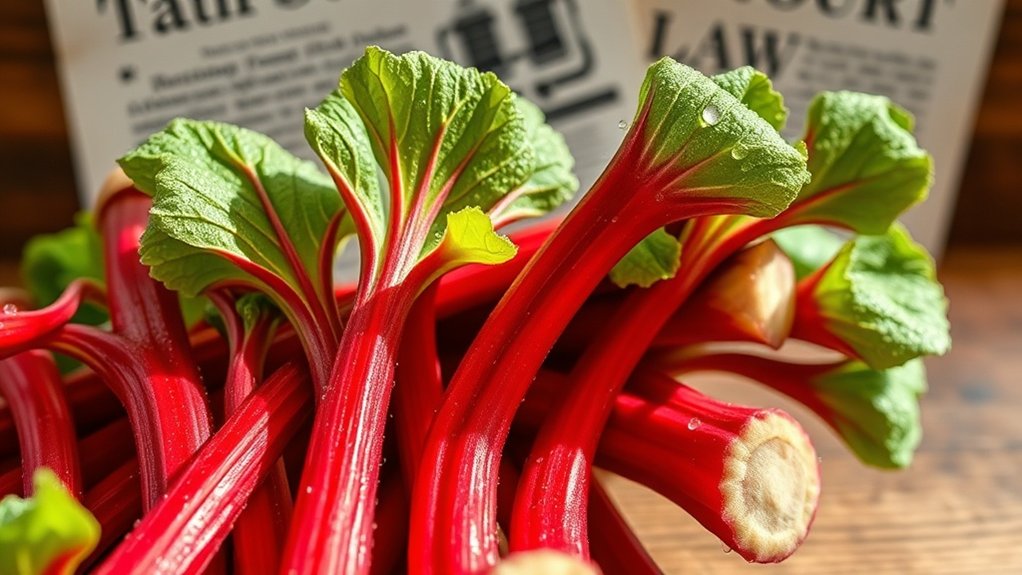
A pivotal juridical determination in 1947 fundamentally altered rhubarb’s taxonomic status within United States commercial law. A New York customs judge classified rhubarb as a fruit for tariff purposes, despite its botanical classification as a vegetable.
This decision carried significant legal implications for trade regulations and market positioning. The ruling stemmed from rhubarb’s predominant culinary application in desserts, particularly strawberry-rhubarb pie, which established its fruit-like commercial identity.
You’ll find this classification directly impacts pricing structures and retail categorization in grocery stores. The culinary debates between botanical science and gastronomic practice remain unresolved, yet the legal framework favors culinary usage.
The vernacular designation “pie plant” reinforces this fruit perception within popular culture, demonstrating how culinary traditions can supersede scientific taxonomy in commercial contexts.
This article was reviewed by Nicole Anderson, RDN.