Last Updated: December 8, 2025
Is Eel Sauce Vegan
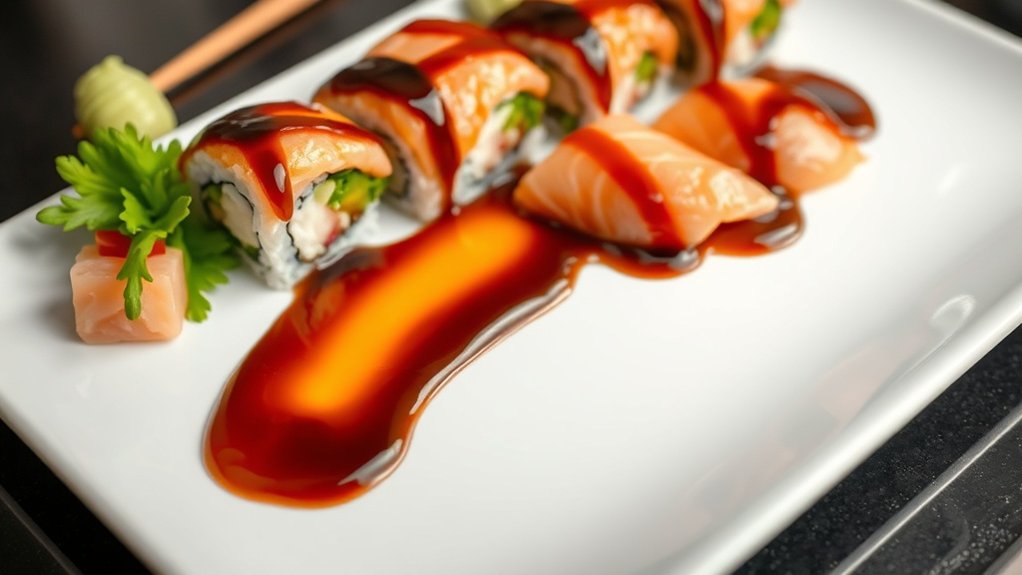
Eel sauce is typically vegan since it’s made from plant-based ingredients like soy sauce, sugar, and mirin—despite its name, it contains no actual eel. However, you’ll need to scrutinize commercial versions carefully, as some brands add non-vegan ingredients like crab extract, fish flavoring, or bonito flakes. Making your own at home guarantees complete transparency, requiring just soy sauce, sugar, and mirin simmered together. If you’re purchasing pre-made versions, checking ingredient labels and choosing certified vegan brands will help you direct potential animal-derived additives.
Contents
show
What Is Eel Sauce and Why Is It Called That?
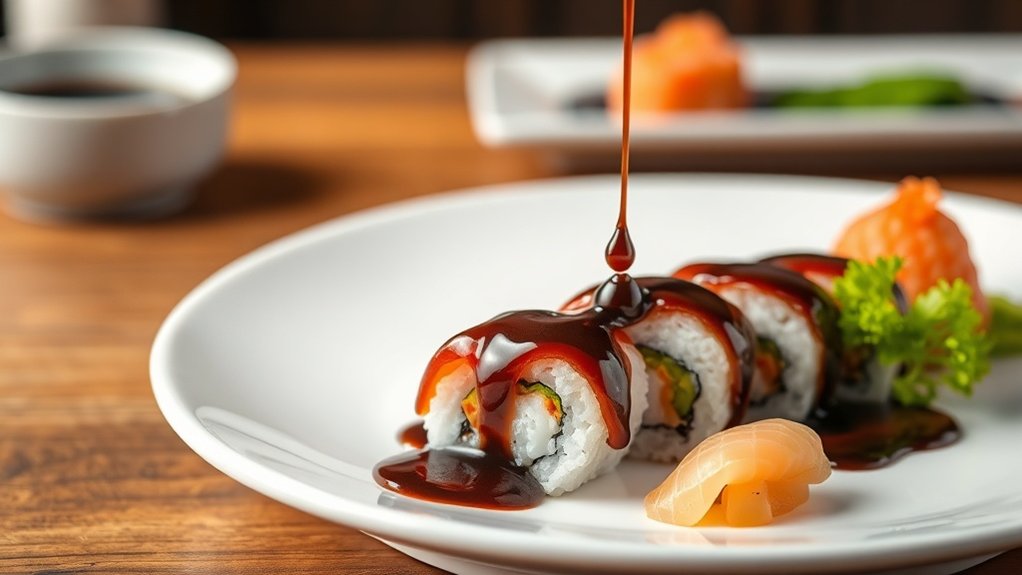
Despite its name, eel sauce contains no eel whatsoever.
You’ll find this savory sauce, also called unagi sauce, is made from three simple plant-based ingredients: soy sauce, sugar, and mirin. It’s a staple condiment in Japanese cuisine that gets its misleading name from its traditional use—glazing grilled eel in sushi preparations.
The sauce delivers a balanced flavor profile combining sweetness, saltiness, and umami notes.
Unlike oyster sauce, which contains actual seafood, eel sauce remains vegetarian-friendly in its basic formulation. You can use it to improve sushi rolls and various Asian dishes without compromising plant-based dietary choices.
However, you should verify ingredient labels on commercial brands, as some manufacturers add non-vegan additives that could affect the sauce’s suitability for strict vegan diets.
Traditional Eel Sauce Ingredients Breakdown
At its core, traditional eel sauce consists of three fundamental ingredients that work together to create its signature glaze.
You’ll find soy sauce as the savory base, which comes from fermented soybeans. Sugar provides the characteristic sweetness and caramelization. Mirin, a sweet rice wine, adds depth and balances the flavor profile.
These eel sauce ingredients originate entirely from plant sources. Soy sauce derives from soybeans, salt, and wheat. Sugar comes from sugarcane or sugar beets. Mirin results from fermented rice with no animal-derived components.
This composition makes traditional eel sauce inherently vegan. However, you should verify commercial products carefully. Some manufacturers add non-vegan additives like bonito flakes or fish-based flavorings.
Always check ingredient labels to confirm your eel sauce contains only plant-based components.
Is Eel Sauce Actually Vegan? Analyzing Common Recipes

When examining common eel sauce recipes, you’ll uncover that most versions maintain their plant-based integrity. The base ingredients—soy sauce, sugar, and mirin—are commonly used in Japanese cooking and naturally vegan. This eel sauce is usually vegetarian-friendly, delivering that signature sweet and savory profile without animal products.
However, commercial varieties require scrutiny. Some brands incorporate crab extract or bonito flakes, compromising their vegan status. That’s why checking labels remains essential when determining if eel sauce vegetarian options meet your dietary needs.
Homemade eel sauce offers the most reliable vegan eel alternative. You’ll control every ingredient, making certain no hidden animal derivatives. This approach guarantees your sauce aligns with plant-based principles while maintaining authentic umami depth and versatility across various dishes beyond traditional sushi applications.
Potential Non-Vegan Ingredients to Watch For
Several animal-derived ingredients lurk in commercial eel sauces that’ll compromise their vegan status. You’ll need to scrutinize ingredient labels carefully, as crab extract and fish flavoring frequently appear in branded versions.
Bonito flakes, made from dried fish, sometimes sneak into artisanal recipes, instantly making eel sauce vegetarian-unfriendly.
Beyond obvious seafood additions, watch for MSG and flavor boosters that may contain animal-derived sources. These potential non-vegan ingredients aren’t always clearly marked, requiring careful investigation of each product’s formulation.
While many pre-packaged commercial eel sauces maintain vegan-friendly compositions, significant variations exist between brands.
Your safest approach involves either thoroughly verifying specific manufacturer ingredients or preparing homemade versions with confirmed plant-based ingredients. This vigilance guarantees you’re consuming truly vegan condiments without hidden animal derivatives.
How to Make Homemade Vegan Eel Sauce

Making your own vegan eel sauce requires just three core ingredients: soy sauce (or tamari for gluten-free), granulated sugar, and mirin.
The preparation involves a straightforward reduction process where you’ll simmer equal parts soy sauce and sugar with a splash of mirin until the mixture thickens by half.
Once prepared, you can store this sauce in a sealed refrigerator container for up to one month, making it a convenient pantry staple for plant-based cooking.
Essential Ingredients You’ll Need
Creating an authentic vegan eel sauce requires just three foundational ingredients: soy sauce (or gluten-free tamari), granulated sugar, and mirin—a sweet Japanese rice wine.
You’ll need equal parts soy sauce and granulated sugar to achieve the signature sweet-savory balance. The mirin adds depth and natural sweetness that makes this eel sauce vegetarian-friendly without compromising flavor.
When selecting your ingredients, verify that all labels are free from non-vegan additives like crab extract or fish flavoring, which sometimes appear in commercial versions.
If you’re aiming for a thicker consistency, keep cornstarch on hand—a small pinch during cooking will help you reach your desired texture.
These simple vegan ingredients transform into a rich, glossy sauce that rivals traditional versions.
Simple Step-by-Step Instructions
With your ingredients assembled, you can now transform them into a glossy, restaurant-quality sauce in under 15 minutes.
These simple step-by-step instructions guarantee your eel sauce is vegan and delicious:
- Combine equal parts soy sauce and granulated sugar in a saucepan, adding a splash of mirin for depth.
- Simmer over medium heat while stirring frequently, allowing the mixture to reduce by half until it thickens to a velvety consistency.
- Incorporate a pinch of cornstarch if needed for extra body, then remove from heat and cool.
For gluten-free requirements, substitute tamari for traditional soy sauce.
Once cooled, transfer your sauce to a sealed container and refrigerate for up to one month.
This versatile condiment improves sushi bowls, roasted vegetables, and grain dishes with authentic umami flavor.
Storage and Shelf Life
Proper storage extends your homemade vegan eel sauce’s usability for up to one month when refrigerated correctly.
You’ll need to let the sauce cool completely before transferring it to a sealed container—this preserves quality and prevents condensation that could compromise your sauce’s integrity.
For extended storage, freeze your vegan eel sauce in an airtight container for up to three months. When you’re ready to use frozen sauce, refrigerate it overnight to thaw, then gently reheat to restore its original consistency.
Always inspect your sauce before use. Signs of spoilage include off odors or unusual texture changes.
This vigilance guarantees you’re using sauce that maintains both safety and flavor standards. Proper storage practices protect your homemade creation’s taste and nutritional value.
Best Vegan Eel Sauce Brands and Label Reading Tips
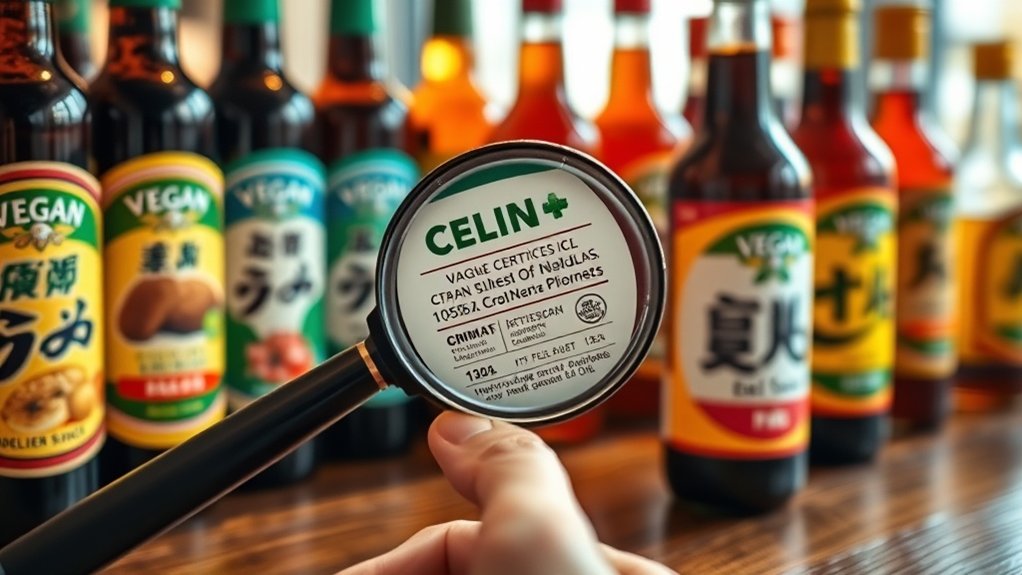
When shopping for vegan eel sauce, you’ll find reliable options from Kikkoman Unagi Sushi Sauce, Natural Earth Sweet Sushi Sauce, and Otafuku Sushi Eel Sauce—all formulated without animal products or artificial additives.
However, careful label reading remains essential since some brands add non-vegan ingredients like crab extract, fish flavoring, or bonito flakes.
You can identify truly vegan products by scanning ingredient lists for these hidden animal derivatives and seeking out certified vegan or clearly labeled plant-based options.
Top Vegan-Certified Brands
Finding truly vegan eel sauce requires careful label scrutiny, as traditional recipes often contain fish-derived ingredients despite the sauce’s sweet, caramelized appearance suggesting otherwise.
You’ll need to verify that brands specifically state “vegan” or “100% plant-based” on their packaging.
Several certified options meet strict dietary standards:
- Kikkoman Unagi Sushi Sauce – Free from animal products and fish-derived additives
- Natural Earth Sweet Sushi Sauce – Certified plant-based formulation without bonito flakes
- Otafuku Sushi Eel Sauce – Vegan-certified with transparent ingredient labels
When evaluating sushi sauces, watch for hidden non-vegan ingredients like crab extract or fish flavoring.
While most contain vegan-friendly bases of soy sauce, sugar, and mirin, individual recipes vary considerably between manufacturers.
Reading Ingredient Labels
Ingredient labels reveal critical information that determines whether your eel sauce aligns with vegan standards. When reading ingredient labels, you’ll need to identify hidden animal products like crab extract, fish flavoring, and bonito flakes—all common in commercial varieties.
Look beyond marketing claims and scrutinize every listed component. Certifications such as “100% vegan” or “kosher” provide additional assurance, though you should still verify ingredients independently.
If you detect non-vegan additives in store-bought options, homemade eel sauce offers complete transparency. You’ll need only soy sauce, sugar, and mirin—three plant-based ingredients that create authentic flavor without animal derivatives.
This approach eliminates guesswork and guarantees your vegan eel sauce meets strict dietary requirements while maintaining the traditional sweet-savory profile essential to sushi preparations.
Avoiding Hidden Animal Products
Hidden animal products lurk in eel sauce formulations despite plant-based marketing claims. You’ll need to scrutinize ingredients carefully, as manufacturers sometimes add non-vegan components that aren’t immediately obvious.
While eel sauce traditionally contains no actual eel, commercial versions may include fish-derived additives.
Watch for these animal-derived ingredients when evaluating eel sauce:
- Bonito flakes or dashi – fish-based flavor boosters common in Japanese condiments
- Crab extract or seafood flavoring – shellfish derivatives that compromise vegan status
- Fish sauce or anchovy paste – umami amplifiers that contain animal proteins
You can avoid these concerns by choosing certified vegan brands like Kikkoman Unagi Sushi Sauce or preparing homemade versions.
A simple plant-based recipe combines soy sauce, sugar, and mirin—delivering authentic flavor without animal-derived components while maintaining complete ingredient transparency.
This article was reviewed by Nicole Anderson, RDN.