Last Updated: December 19, 2025
Is Almond Milk Vegan
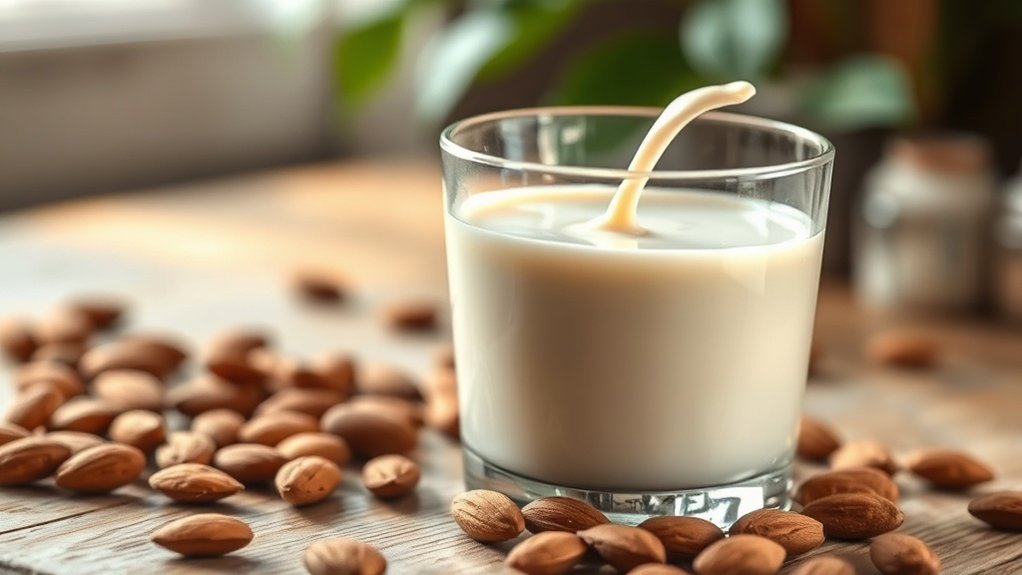
Almond milk is vegan since it’s made exclusively from almonds and water without animal-derived ingredients. However, you’ll want to check labels carefully—some brands add non-vegan vitamin D3 or honey-based sweeteners. There’s ongoing debate within the vegan community about commercial bee pollination used in almond farming, which some view as animal exploitation. Most vegans consider almond milk acceptable, especially when choosing certified vegan brands that use sustainable farming practices. Understanding the nuances of production methods and environmental considerations can help you make informed choices aligned with your values.
Contents
show
What Makes Almond Milk a Plant-Based Beverage
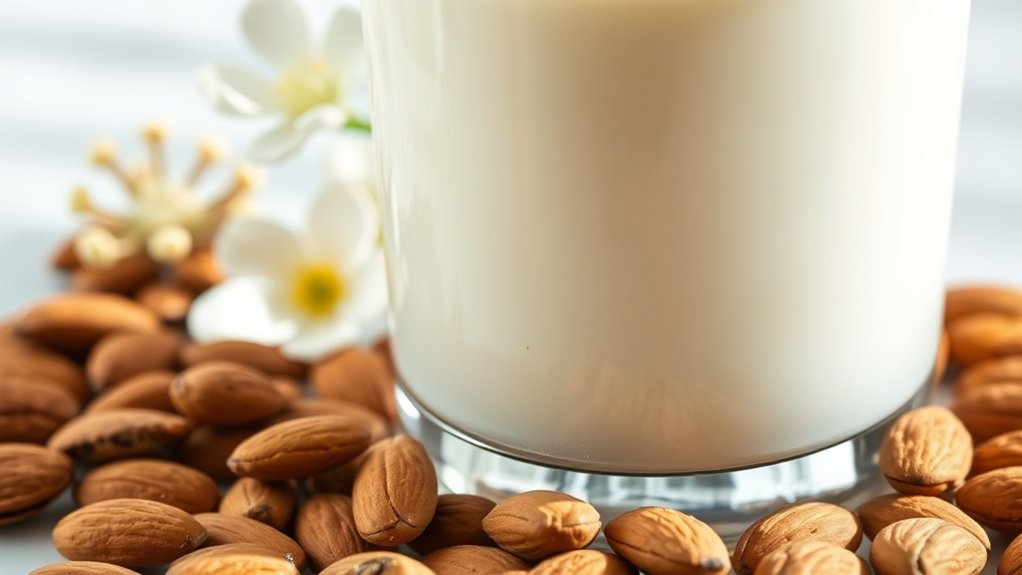
Almond milk qualifies as a plant-based beverage because it’s produced exclusively from almonds and water—two ingredients that contain no animal-derived components.
The manufacturing process involves soaking almonds, blending them with water, and straining the mixture to create a smooth liquid. This fundamental composition guarantees almond milk remains free from dairy, eggs, and other animal products.
Most commercial varieties maintain their plant-based integrity through additives like lecithin and vitamin D2, which manufacturers typically source from plants rather than animals.
However, you’ll want to examine labels carefully, as some brands occasionally include honey or other animal-derived ingredients.
The straightforward ingredient list—primarily almonds and water—makes this beverage a reliable choice for those following plant-based dietary patterns, though production practices may raise separate ethical considerations.
The Production Process: From Almond to Milk
Creating almond milk involves a straightforward mechanical process that transforms whole almonds into a consumable beverage.
You’ll find that production begins with soaking raw almonds in water to soften them before blending with fresh water into a creamy mixture. The liquid is then strained to separate it from almond pulp.
Most commercial almond milk undergoes pasteurization to eliminate harmful bacteria, making certain product safety. Homogenization follows, breaking down fat molecules to maintain consistent texture and prevent separation.
Many manufacturers fortify their products with calcium and vitamin D2 to improve nutritional value.
This entirely mechanical process uses no animal-derived ingredients or by-products, which directly answers whether almond milk vegan status holds true—it’s fundamentally plant-based throughout production.
Nutritional Profile Compared to Dairy and Other Plant Milks
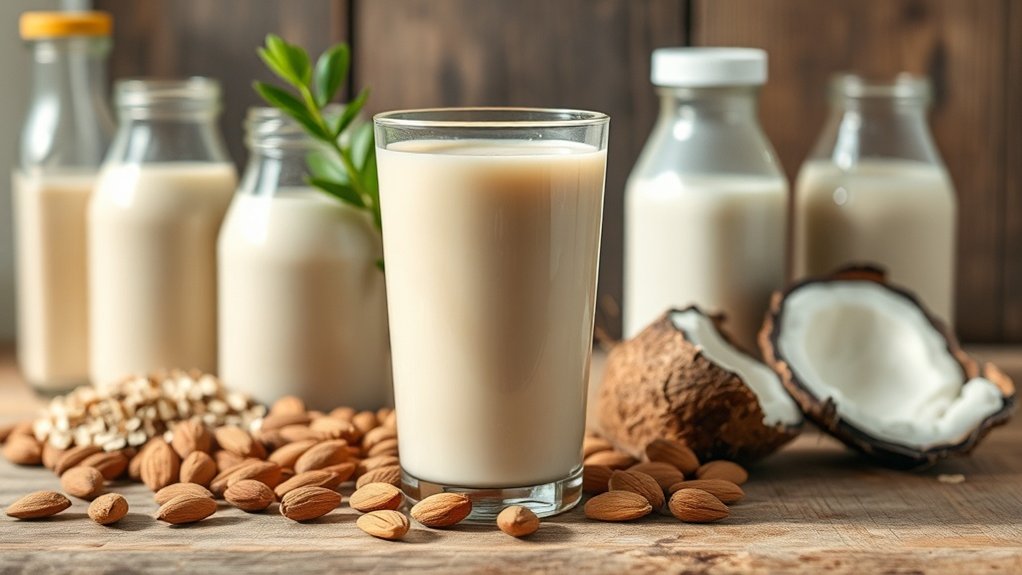
When you’re comparing almond milk to dairy and other plant-based alternatives, you’ll find significant nutritional trade-offs that directly impact your dietary goals.
Almond milk contains roughly 30 calories per cup compared to 150 in whole dairy milk, but it provides only 1 gram of protein versus 8 grams in cow’s milk or 3-8 grams in soy milk.
While manufacturers typically fortify almond milk with calcium and vitamins to match dairy’s nutrient profile, you should scrutinize labels carefully since sugar content varies dramatically between unsweetened versions and varieties that rival soda’s sugar levels.
Protein and Calorie Content
While almond milk offers notable benefits as a plant-based beverage, its protein content falls considerably short of traditional dairy milk. You’ll find approximately 1 gram of protein per cup in almond milks, compared to 8 grams in cow’s milk and 7 grams in soy milk. This significant difference stems from high water content and processing methods that reduce nutritional density.
Consider these calorie comparisons:
- Unsweetened almond milk: 30 calories per cup
- Sweetened almond milk: 60 calories per cup
- Whole cow’s milk: 150 calories per cup
The low protein content makes almond milk less suitable for meeting daily protein requirements.
While many brands fortify almond milk with calcium and vitamin D to match dairy’s nutrient profile, you should note that absorption rates of these added nutrients can vary considerably.
Vitamin and Mineral Fortification
Commercial almond milk manufacturers fortify their products with calcium carbonate and vitamin D2 to replicate dairy milk’s naturally occurring nutrient profile, typically adding 450mg of calcium per cup—matching or exceeding cow’s milk’s 300mg.
However, you’ll find significant variability in how effectively your body absorbs these fortified nutrients compared to whole food sources. Research indicates that bioavailability of synthetic calcium and vitamin D may differ from their naturally-occurring counterparts in dairy or whole almonds.
You should note that processing removes fiber and healthy fats present in whole almonds, while sweetened varieties contain added sugars that increase caloric density without improving nutritional value.
When selecting almond milk, examine nutrition labels carefully, as fortification levels and absorption rates vary considerably between brands, affecting your actual nutrient intake.
Sugar Levels Across Varieties
Sugar content variations in almond milk present dramatic nutritional differences you can’t ignore when making purchasing decisions.
While almond milk contains no animal products, making it suitable for vegan diets, sugar levels vary considerably across varieties:
- Unsweetened almond milk contains approximately 30 calories and 0 grams of sugar per serving.
- Sweetened versions can reach 60 calories with up to 13 grams of sugar—comparable to soft drinks.
- Whole dairy milk contains 150 calories and 12 grams of naturally-occurring sugar per cup.
- Oat milk typically has around 7 grams of sugar per serving.
You’ll find unsweetened almond milk offers superior sugar control compared to sweetened plant-based alternatives.
When selecting fortified varieties with calcium and vitamin D, always examine nutrition labels for added sugars that can compromise otherwise healthful nutritional profiles.
Understanding Fortification and Vegan-Friendly Additives
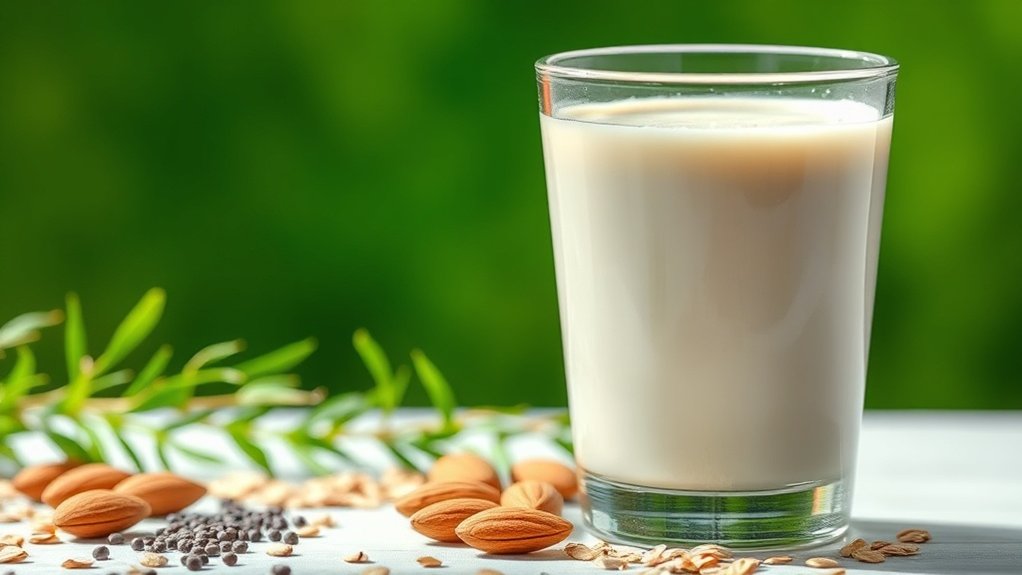
When choosing fortified almond milk, you’ll need to scrutinize the vitamin D source, as manufacturers use either plant-based D2 (ergocalciferol) or D3 (cholecalciferol).
While D2 is always vegan, D3 traditionally comes from animal sources, though vegan versions now exist. Fortification practices vary considerably between brands, directly impacting nutritional value—you’ll find substantial differences in vitamin and mineral content.
Regarding vegan-friendly additives, carrageenan serves as a common stabilizer derived from seaweed. Though plant-based, some individuals express concerns about potential digestive irritation.
You should also examine sugar and flavoring ingredients, as these may contain non-vegan components. Look for products with vegan certification to confirm compliance.
Additionally, consider manufacturers’ cross-contamination protocols if they share facilities with non-vegan products, as strict cleaning procedures matter for maintaining product integrity.
The Bee Pollination Debate in Vegan Communities
You might assume almond milk is straightforwardly vegan, but the reality involves a complex agricultural system where approximately 85% of U.S. beehives are transported to California each February for almond pollination.
This industrial-scale practice subjects honey bees to significant stress, weakened immunity, and pathogen exposure—raising legitimate questions about animal exploitation within plant-based food production.
The debate centers on whether using bees’ pollination labor contradicts veganism’s core principle of minimizing harm to animals, particularly when combined with monocropping practices and pesticide use that further compromise bee health.
Bees and Almond Production
Although almond milk contains no animal products, its production raises significant ethical questions within vegan communities due to the industry’s reliance on commercial beekeeping.
California’s almond orchards depend on honey bees for pollination, with approximately 85% of U.S. beehives transported there annually.
This industrial-scale pollination system creates several concerns for those following vegan principles:
- Weakened immunity: Transporting bees and almond pollination stress compromises their immune systems
- Pathogen exposure: Commercial operations increase disease transmission among colonies
- Pesticide harm: Conventional almond farming practices expose bees to toxic chemicals
- Animal exploitation: Using bees for agricultural labor conflicts with vegan ethics
The intersection of bees and almond production demonstrates how plant-based foods can still involve animal use, prompting vegans to reflect on whether supporting this industry aligns with their values.
Ethical Concerns for Vegans
The bee pollination controversy has split the vegan community into distinct camps, each interpreting veganism’s core principles differently.
You’ll find some vegans argue that almond milk’s reliance on commercial beekeeping contradicts veganism’s foundation of minimizing animal exploitation. The transportation of 85% of U.S. beehives to California annually weakens bee immune systems and exposes them to pathogens, raising significant ethical concerns about their treatment as agricultural commodities.
However, other vegans maintain that practical limitations require accepting some level of insect involvement in agriculture. They contend that complete avoidance of bee-pollinated foods isn’t feasible while maintaining adequate nutrition.
The pesticide exposure affecting both honey bees and native pollinators adds another layer to this debate, prompting calls for reevaluating how veganism addresses industrial farming’s indirect impacts on insects.
Redefining Veganism’s Boundaries
When bee pollination’s role in almond production entered mainstream vegan discourse, it forced communities to confront whether their dietary framework could practically extend to every agricultural process involving insects.
You’re witnessing a fundamental debate about veganism’s scope and practical boundaries.
The ethical complications include:
- Transportation stress: 85% of U.S. beehives travel to California annually, weakening bee immune systems
- Pathogen exposure: Commercial pollination increases disease transmission among colonies
- Population decline: Industrial almond farming contributes to broader pollinator losses
- Exploitation definition: Whether managed pollination constitutes animal use
This discussion isn’t about abandoning plant-based alternatives.
Rather, you’ll find vegans advocating for regenerative agriculture that protects pollinators while producing ethical, sustainable foods.
The almond pollination debate ultimately challenges you to reflect on where feasible veganism intersects with modern agricultural realities.
Environmental Impact and Sustainability Considerations
Beyond answering whether almond milk fits a vegan diet, you’ll need to contemplate its environmental footprint—a concern that challenges even committed plant-based eaters. Almond production demands approximately one gallon of water per nut, straining California’s drought-prone resources.
The environmental impact extends to honey bees, as 85% of U.S. beehives travel to California for pollination, stressing these vital pollinators. Mono-crop practices intensify pesticide use, further harming bee populations and ecosystems.
Sustainable farming practices offer solutions: reduced water consumption, pesticide elimination, and natural habitat restoration support local pollinators while improving ecological balance.
When choosing almond milk, you’re making decisions that extend beyond animal welfare to encompass water conservation and biodiversity protection. Seeking products from producers committed to sustainable farming aligns your consumption with broader environmental values.
Choosing the Right Almond Milk: Brands, Certifications, and What to Avoid
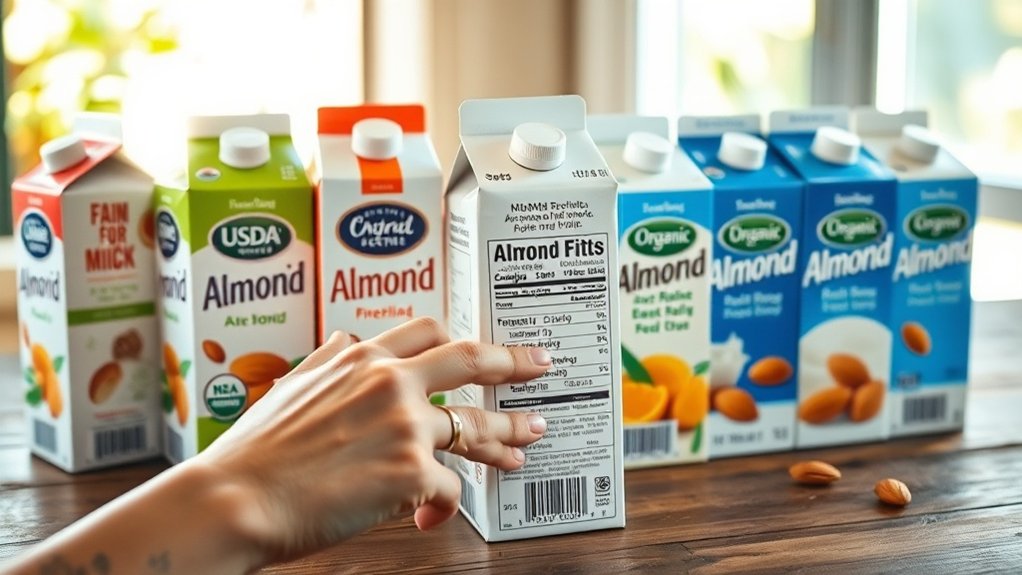
How can you guarantee your almond milk choice truly aligns with vegan principles? Start by scrutinizing ingredient lists for animal-derived additives. Look for certified vegan labels from reputable organizations—these provide verified assurance of ethical production standards.
Key considerations when selecting almond milk:
- Vitamin fortification source: Choose vitamin D2 over D3, as D3 typically derives from animal sources unless specifically labeled plant-based.
- Sweetener verification: Avoid products containing honey or other non-vegan sweeteners.
- Additive origins: Confirm all stabilizers and emulsifiers are plant-based rather than animal-derived.
- Sustainability practices: Select brands emphasizing environmentally responsible sourcing that reflects broader vegan values.
Reading labels thoroughly remains your most reliable strategy. Certified vegan products eliminate guesswork, offering peace of mind that your almond milk purchase supports both animal welfare and environmental stewardship.
This article was reviewed by Nicole Anderson, RDN.