Last Updated: December 18, 2025
How to Mix and Match Vegan Ingredients
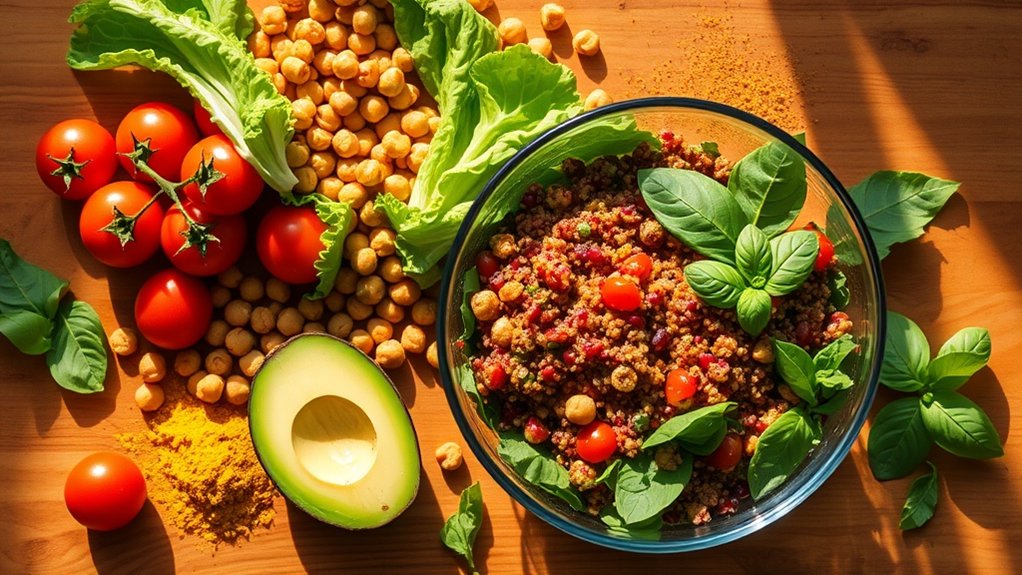
Mix and match vegan ingredients by combining four key components: a grain base like quinoa or brown rice, protein-rich legumes such as chickpeas or lentils, colorful vegetables for nutrients, and flavorful sauces like tahini or balsamic vinaigrette. You’ll create complete proteins by pairing whole grains with legumes, while balancing the five flavor profiles—sweet, salty, sour, bitter, and umami. Add textural contrasts by combining creamy elements like avocado with crunchy roasted chickpeas. This framework reveals endless meal possibilities that nourish both body and palate.
Contents
show
Understanding Flavor Profiles and Complementary Pairings for Vegan Cooking
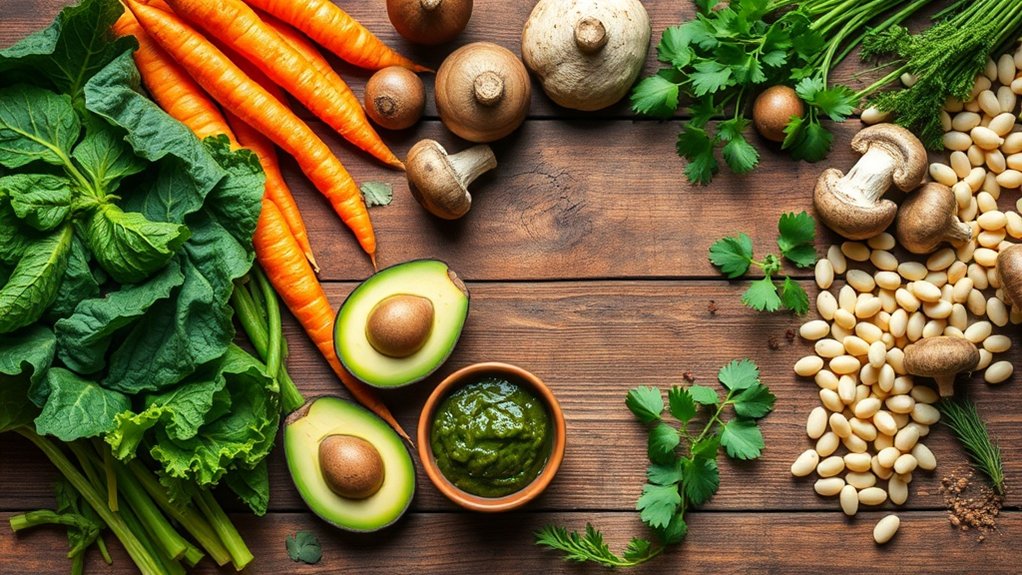
When you’re building a vegan dish from the ground up, understanding how flavors interact transforms cooking from guesswork into artistry. Master the five flavor profiles—sweet, salty, sour, bitter, and umami—to create balance.
Try pairing sweet potatoes with savory black beans for depth, or brighten creamy avocado with lemon’s acidity in fresh salads.
Complementary pairings improve your cooking further. Herbs and spices add complexity: basil intensifies tomatoes’ natural sweetness and acidity.
Don’t overlook textural contrasts—crunchy roasted chickpeas paired with creamy tahini deliver satisfying mouthfeel in bowls.
Embrace seasonal produce to maximize flavor impact. Fresh ingredients offer superior taste and inspire creative combinations.
Summer zucchini shines alongside basil and lemon, proving that availability often guides your most delicious experiments.
Building Complete Proteins and Achieving Nutritional Balance in Plant-Based Meals
While complete proteins occur naturally in animal products, you’ll build them effortlessly by combining legumes with grains throughout your day. This simple pairing creates plant-based protein with all essential amino acids your body needs.
Achieve nutritional balance through these meal prep ideas:
- Combine whole grains with legumes (brown rice with black beans, quinoa with lentils) to create complete protein sources delivering 25-30 grams daily.
- Fill your plate with a variety of colors using colorful vegetables to maximize vitamins, minerals, and antioxidants.
- Add healthy fats like avocados, nuts, or seeds to improve absorption of fat-soluble vitamins and increase satisfaction.
Layer in high-fiber foods throughout each meal to support digestion and maintain stable energy levels while enjoying diverse, nourishing plant-based eating.
Mastering Texture Combinations and Cooking Techniques for Dynamic Dishes
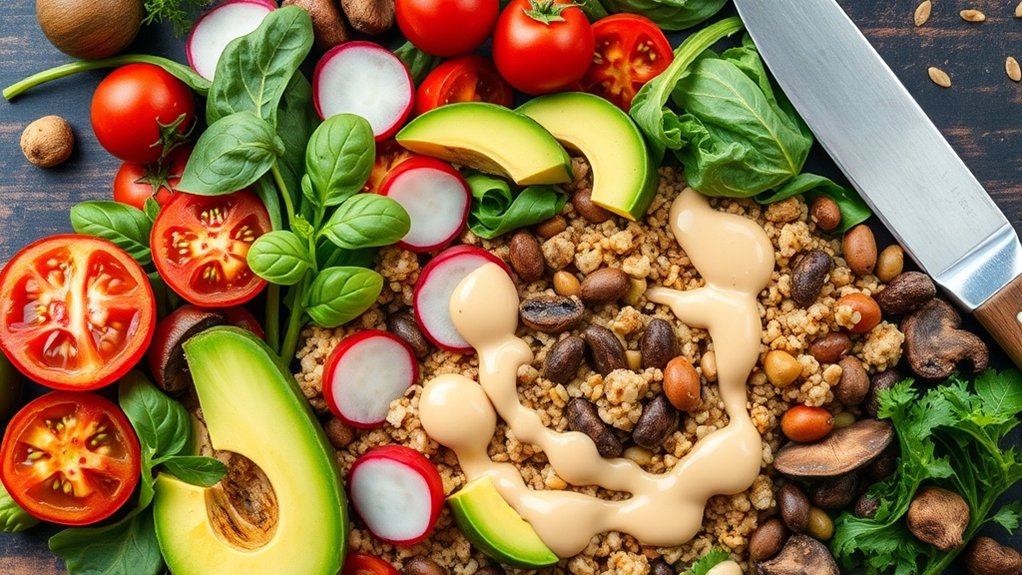
The secret to enchanting vegan meals lies in mastering how different textures interact on your plate. Combine creamy avocado with crunchy nuts, or pair crispy roasted vegetables with tender grains for a satisfying experience.
Experiment with cooking techniques like roasting, steaming, and sautéing to reveal deeper flavor profiles in your ingredients. When doing meal prep, think about layering—start with a base of grains or greens, then build upward with proteins, fresh ingredients, and warm cooked elements.
This approach creates dynamic dishes that balance temperature and texture beautifully. Mix raw leafy greens with roasted sweet potatoes, incorporating sweet, savory, spicy, and tangy notes through citrus fruits, herbs, and spices.
These thoughtful combinations transform simple ingredients into complex, satisfying meals.
Essential Pantry Staples and Ingredient Substitution Framework
Building a well-stocked vegan pantry transforms your cooking from restrictive to creative, empowering you to craft nourishing meals without constant grocery runs. Your essential pantry staples should include whole grains like quinoa and brown rice, legumes such as lentils and chickpeas, fresh vegetables, and healthy fats from avocados and nuts.
Ingredient substitution becomes intuitive when you understand these core principles:
- Protein swaps: Replace animal proteins with legumes in any recipe.
- Grain flexibility: Mix and match whole grains based on preference or dietary needs.
- Creamy textures: Use almond milk, cashew cream, or tahini interchangeably in sauces.
Herbs and spices like garlic, cumin, and basil reveal endless meal possibilities.
Combine roasted vegetables with your chosen grain base and protein source to create satisfying, varied meals throughout the week.
Mix and Match Meal Assembly Blueprint With Sample Weekly Plan
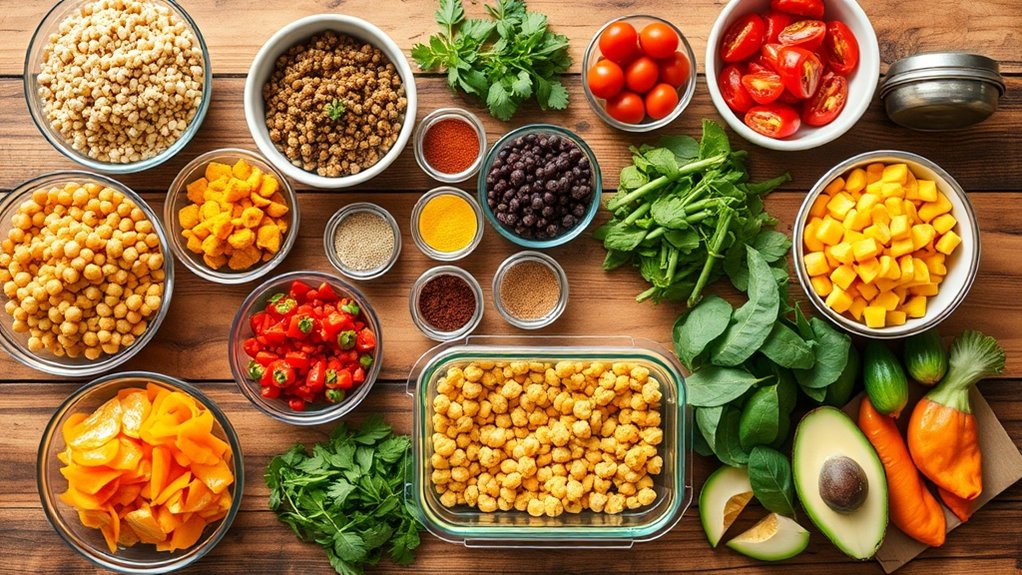
Four simple components—base, protein, vegetables, and sauce—discover endless meal possibilities that’ll keep your vegan cooking exciting and effortless.
Start your mix and match approach by selecting grains like quinoa or brown rice, then add a protein source such as chickpeas or tempeh. Layer in colorful vegetables like bell peppers and roasted zucchini to boost nutritional value and visual appeal.
Complete your easy vegan meal with a flavorful sauce—tahini or balsamic vinaigrette work beautifully.
Your weekly plan might combine quinoa-tofu-peppers-tahini on Monday, then brown rice-black beans-carrots-balsamic on Wednesday. This meal prep strategy maximizes ingredient usage while preventing boredom.
This article was reviewed by Nicole Anderson, RDN.