Last Updated: February 21, 2026
Does Vegan Butter Brown
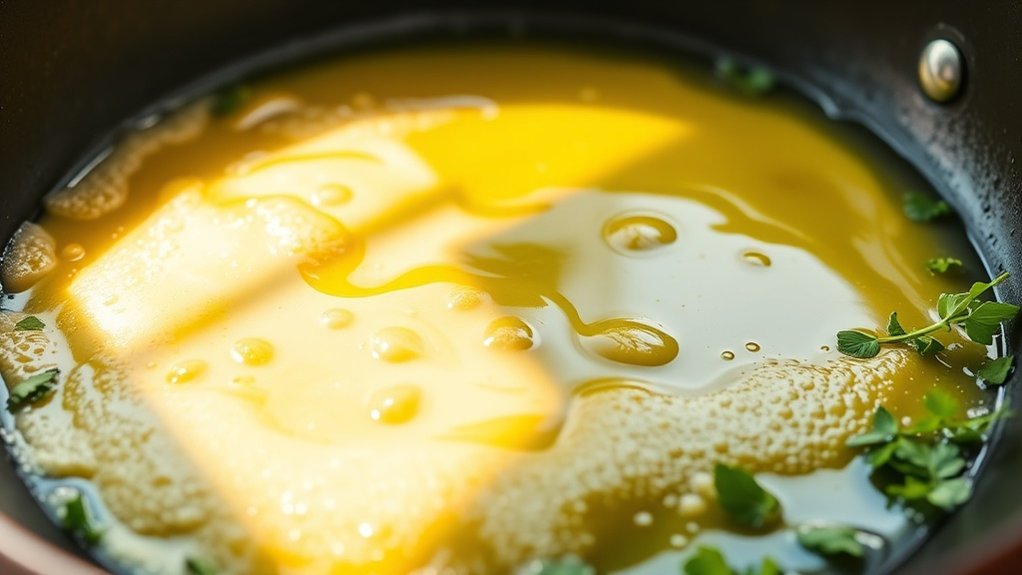
Most vegan butters won’t brown like dairy butter because they lack the 2-4% milk protein (casein and whey) needed for Maillard reactions. These amino acids must react with reducing sugars at temperatures above 285°F to create characteristic browning and nutty flavors. However, specialized brands like Miyoko’s European Style Cultured Vegan Butter incorporate supplemental plant proteins that can achieve similar results. You’ll need to avoid margarine with excessive emulsifiers, which create barriers to proper heat transfer and inhibit the molecular reactions required for authentic browning.
Contents
show
Does Vegan Butter Brown Like Dairy Butter?
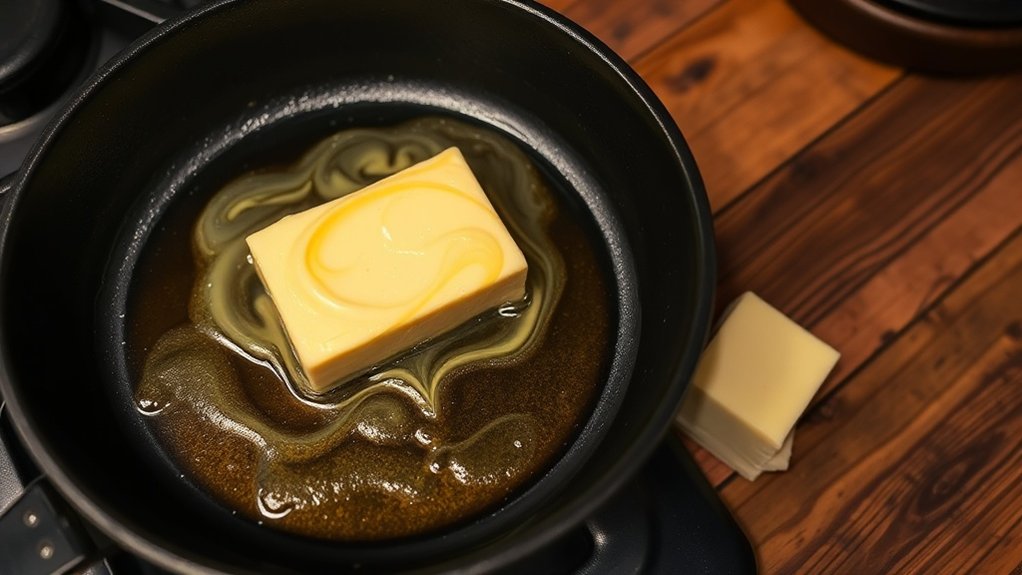
Vegan butter struggles to replicate the browning capabilities of dairy butter due to fundamental compositional differences at the molecular level.
When you ask “can you brown vegan butter,” the answer hinges on milk solids and proteins. Dairy butter contains these essential components that undergo the Maillard reaction—a chemical process between amino acids and reducing sugars that produces the signature nutty flavor and amber color.
Most plant-based alternatives lack these molecules, limiting browning potential. However, “can you make brown butter with vegan butter” if you choose specific formulations? Yes. Brands like Miyoko’s European Style Cultured Vegan Butter are engineered to brown effectively.
If you’re wondering “can you make browned butter with vegan butter,” you’ll achieve better results by incorporating nut butters, which supply necessary proteins and sugars for improved Maillard reactions.
Why Vegan Butter Browns Differently: The Science
You’ll notice vegan butter browns differently because it lacks casein and whey proteins—the milk solids that participate in the Maillard reaction when heated above 280°F (138°C).
This reaction between amino acids and reducing sugars produces hundreds of flavor compounds and that signature brown color you’re seeking.
Plant-based fats rely instead on whatever proteins and sugars are present in their formulation, typically in much lower concentrations than dairy butter’s 2-3% protein content.
The Maillard Reaction Explained
Why does dairy butter develop those coveted nutty, caramelized notes while vegan alternatives often fall short? The answer lies in the Maillard reaction—a molecular transformation between amino acids (from milk proteins) and reducing sugars at heightened temperatures.
When you heat dairy butter, these compounds interact at approximately 285°F, creating hundreds of flavor molecules and characteristic browning.
Vegan butter typically lacks these essential reactants, making traditional browning nearly impossible. However, if you’re wondering “can I make brown butter with vegan butter,” the solution involves formulations containing plant proteins and sugars.
Some brands incorporate nut butters or specific ingredients that provide necessary reactants. The molecular requirements remain unchanged: proteins plus sugars plus heat equals Maillard browning.
Without this chemical foundation, vegan butter simply caramelizes its fats rather than undergoing true Maillard transformation.
Milk Solids vs. Plant Proteins
At the molecular level, dairy butter’s browning superiority stems from its 2-4% milk protein content—primarily casein and whey proteins that contain 18-20 different amino acids ready to react with lactose and other reducing sugars.
This abundance creates ideal conditions for Maillard reactions at 280-330°F.
Most vegan butters contain only 0-1% plant proteins from their oil bases, dramatically limiting browning potential.
You’ll notice they remain pale yellow when heated because they lack sufficient amino acid-sugar pairs for complete Maillard cascades.
However, specialized brands like Miyoko’s incorporate supplemental plant proteins—often from legumes or nuts—to reach 1.5-2% protein content.
These formulations intentionally introduce amino acids that can participate in browning reactions, though they still produce lighter colors and different flavor compounds than dairy butter’s complex profile.
Which Vegan Butters Brown and Which Don’t
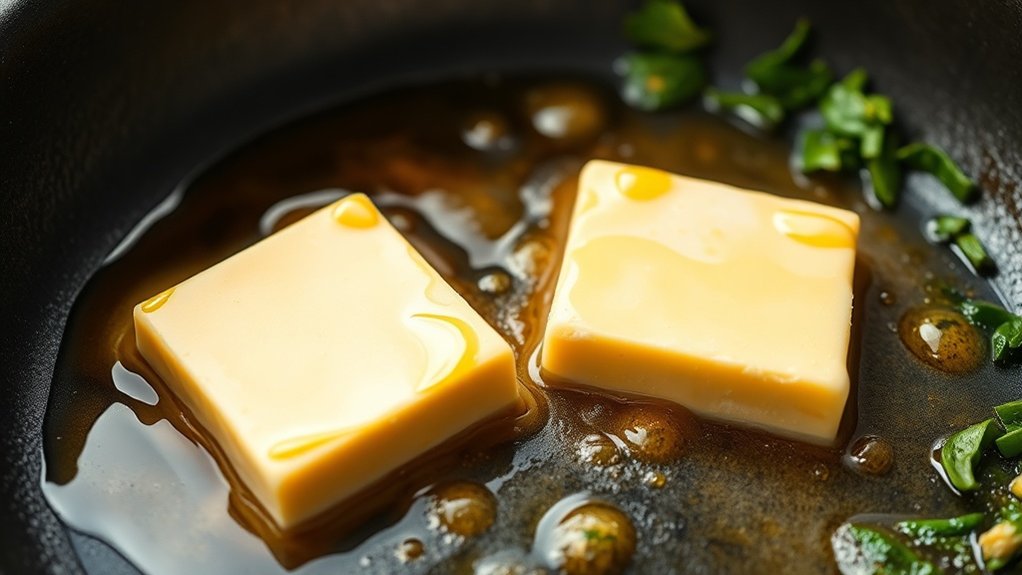
While most vegan butters will melt and sizzle in a pan, their capacity to achieve true browning varies dramatically based on formulation.
You’ll find that Miyoko’s European Style Cultured Vegan Butter and Flora Plant-Based excel at browning due to their specific compositional design. Earth Balance browns successfully, though you’ll notice a milder flavor profile than dairy butter.
The key differentiator? Avoid margarines containing stabilizers or additives—they inhibit the Maillard reaction necessary for browning. Instead, select high-quality plant-based butters formulated without excessive emulsifiers.
For improved browning and flavor complexity, you can incorporate nut butters like cashew or almond into your vegan butter. These additions provide proteins and compounds that approximate the nutty, caramelized notes you’d expect from properly browned dairy butter.
Two Methods for Browning Vegan Butter
You can brown vegan butter through two distinct molecular pathways that compensate for its lack of milk proteins and sugars.
The Quick Nut Butter Method adds protein-rich compounds directly to your melted vegan butter, enabling rapid Maillard reactions within minutes.
Alternatively, the Toasted Pecan Infusion Technique pre-develops melanoidin compounds through dry-heat toasting before transferring these browned aromatics into your vegan butter base.
Quick Nut Butter Method
Since vegan butter lacks the milk proteins and lactose required for authentic Maillard browning, incorporating natural nut butter provides the essential amino acids and reducing sugars needed to trigger this complex chemical reaction.
Implementation Protocol:
- Ratio: Combine ½ cup vegan butter with 1 teaspoon natural nut butter (cashew or almond work effectively).
- Heat Application: Use a shallow pan over medium heat to maximize surface area exposure.
- Agitation: Whisk constantly throughout the process to distribute heat evenly and prevent scorching.
- Visual Indicators: Monitor the color transformation from pale yellow to deep golden amber—this signals successful Maillard reaction completion.
The nut butter contributes both functional browning agents and aromatic compounds, creating depth that authentically replicates conventional brown butter’s characteristic nutty profile.
Toasted Pecan Infusion Technique
Toasting pecans initiates lipid oxidation and decarboxylation reactions that generate over 300 volatile aromatic compounds—primarily pyrazines, furans, and aldehydes—which mirror the flavor molecules produced during conventional butter browning.
Method One: You’ll grind cooled toasted pecans into coarse meal, then combine with melted vegan butter.
Heat gently to facilitate molecular diffusion of lipophilic aromatics into the fat matrix.
Method Two: You’ll infuse whole toasted pecans directly in melted vegan butter over low heat, stirring to promote convective heat transfer and compound extraction.
Monitor color development and aromatic intensity continuously—thermal degradation occurs rapidly beyond ideal temperatures.
Strain the infused mixture through fine mesh to eliminate particulates, yielding clarified vegan brown butter with authentic nutty characteristics suitable for culinary applications.
Choosing Your Preferred Approach
While traditional dairy butter browns through milk protein degradation and lactose caramelization, you’ll need alternative mechanisms to achieve comparable results with plant-based fats. Your approach depends on available ingredients and desired flavor intensity.
Two Primary Browning Methods:
- Nut Butter Improvement – Incorporate one teaspoon of cashew or almond butter per stick of vegan butter to introduce amino acids and reducing sugars necessary for Maillard reaction initiation.
- Premium Formulated Butters – Select products like Miyoko’s European Style Cultured Vegan Butter, engineered with protein-containing ingredients that facilitate browning without supplementation.
- Heat Management Protocol – Maintain medium heat with constant agitation, monitoring for deep golden amber coloration and characteristic nutty aromatics.
- Ingredient Quality Control – Avoid margarine products containing emulsifiers and stabilizers that inhibit browning reactions.
Best Vegan Butter Brands for Browning (Tested)
Your selection should prioritize products with higher protein concentrations for maximum browning capability and flavor complexity.
Why Your Vegan Butter Won’t Brown: Troubleshooting
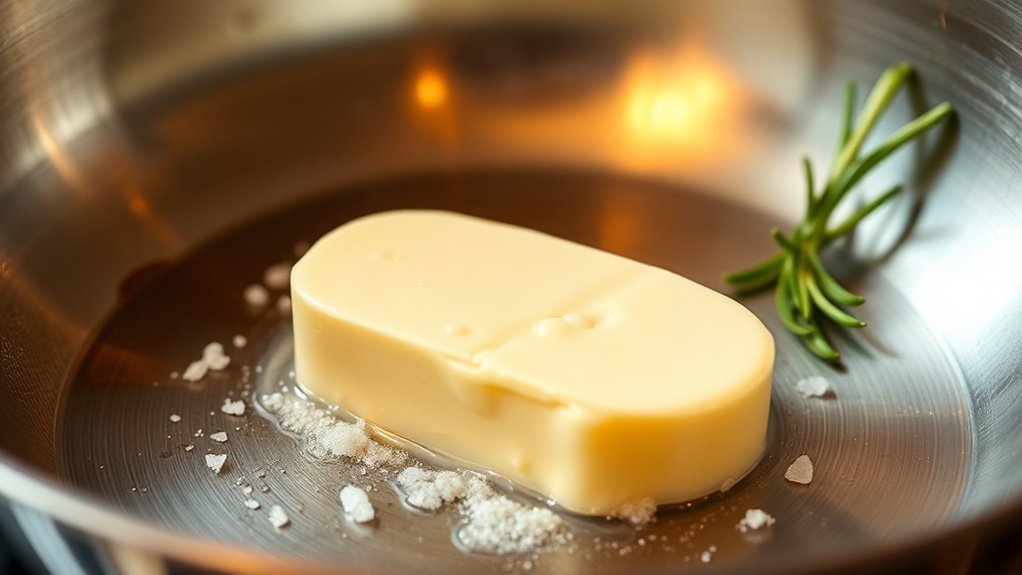
Even premium vegan butter brands can fail to brown properly if you’re making common technical errors.
Critical Troubleshooting Steps:
1. Insufficient Protein Content – Your vegan butter lacks the amino acids necessary for Maillard reactions.
Add 1-2 teaspoons of cashew or almond butter to introduce proteins and reducing sugars that facilitate browning at 285-330°F.
2. Excess Emulsifiers – Stabilizers in processed vegan butters create barriers that prevent proper heat transfer.
Choose minimally processed options like Miyoko’s or Flora Plant-Based with fewer additives.
3. Temperature Inconsistency – You’re either underheating (below 250°F) or overheating (above 350°F).
Maintain medium heat and watch for nutty aromatics indicating successful browning.
4. Inadequate Fat Separation – The water content hasn’t evaporated sufficiently.
Allow foaming to subside before expecting color development.
Cooking and Baking With Vegan Brown Butter
Once you’ve successfully achieved vegan brown butter through proper Maillard reactions, strategic application determines whether you’ll elevate or compromise your recipes.
You’ll maximize flavor enhancement in cookies and cakes where melted fat integration is standard—the nutty compounds distribute uniformly throughout batters.
However, you can’t substitute vegan brown butter in applications requiring solid, cold fat structures. Pastries, pie crusts, and laminated doughs depend on discrete fat particles creating steam pockets and flaky layers—melted brown butter eliminates this mechanical leavening capacity.
Store your vegan brown butter in heatproof containers; refrigeration maintains quality for two weeks, while freezing extends viability to three months.
The concentrated flavor compounds remain stable under proper storage conditions, allowing you to prepare batches in advance for consistent results across multiple baking sessions.
This article was reviewed by Nicole Anderson, RDN.