Last Updated: December 28, 2025
Can I Use Veg Oil Instead of Butter
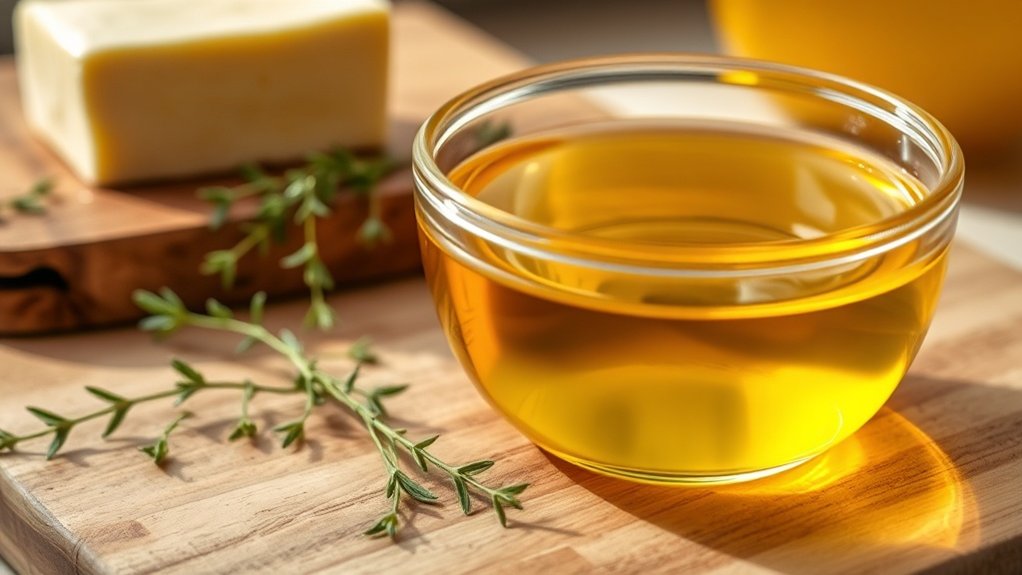
You can substitute vegetable oil for butter in most baking recipes by using ¾ cup of oil for every 1 cup of butter. Since oil is 100% fat while butter contains 20% water, this swap will create denser, moister baked goods with a chewier texture. However, you’ll lose butter’s rich flavor and shouldn’t use oil in recipes requiring the creaming method, like flaky pastries or light, airy cakes. Understanding the proper ratios, moisture adjustments, and ideal recipe types will help you achieve successful results with this common substitution.
Contents
show
Understanding the Butter to Vegetable Oil Conversion Ratio
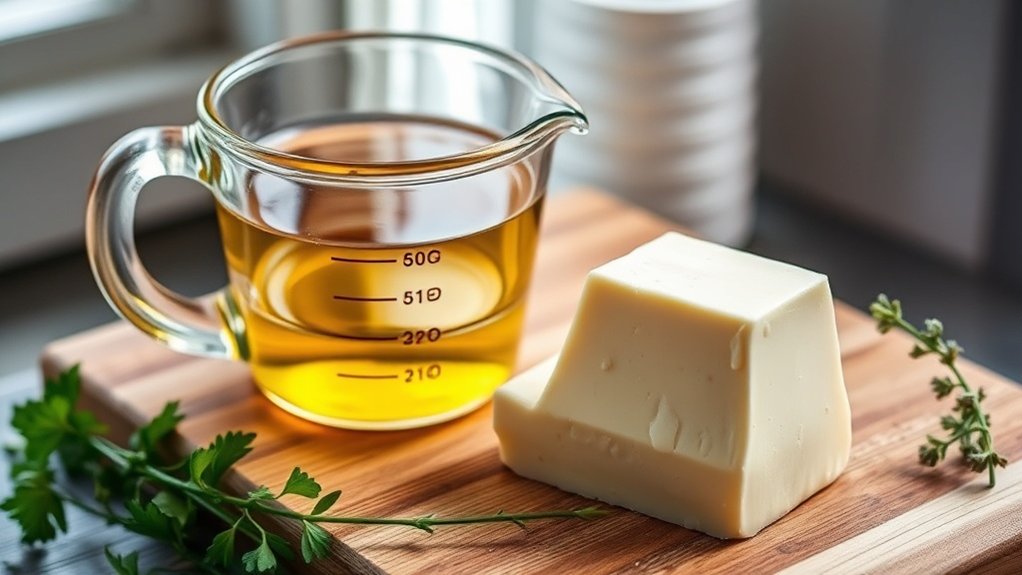
When substituting butter with vegetable oil in recipes, you’ll need to use approximately three-quarters of the amount originally specified—for instance, ¾ cup of oil replaces 1 cup of butter.
This conversion ratio exists because vegetable oil contains 100% fat, while butter consists of only 80% fat and 20% water.
However, when baking recipes call for melted butter, you can use a 1:1 substitute ratio instead.
The moisture content difference between these ingredients affects your final results, so you’ll need to monitor your batter’s consistency.
This substitution works best when you understand how oil’s pure fat composition impacts texture and structure.
Keep in mind that vegetable oil won’t provide butter’s distinctive flavor, fundamentally changing your baked goods’ taste profile.
Texture and Flavor Differences: What to Expect When Swapping
When you swap butter for vegetable oil, you’ll notice two primary changes: oil’s 100% fat content creates denser baked goods compared to butter’s 80% fat and 20% water composition, and you’ll lose butter’s rich, creamy flavor that defines many recipes.
The moisture difference directly impacts your results—oil produces softer, moister textures but compromises the structure and fluffiness achieved through butter’s creaming process.
Cookies demonstrate this shift most clearly: oil yields chewier, crispier results while butter delivers that tender, melt-in-your-mouth quality you’re accustomed to.
Oil Creates Denser Texture
Since butter creates air pockets during the creaming process, baked goods made with vegetable oil typically turn out denser and heavier.
You’ll notice this difference most prominently in cookies, where substituting oil produces a chewier, sometimes greasier consistency rather than the light, fluffy texture butter provides.
The science behind this denser texture lies in moisture content differences.
Butter contains approximately 20% water, while oil is 100% fat. This variation greatly impacts your final product’s structure and mouthfeel.
If you’re concerned about losing that desirable lightness, consider using a combination approach.
A 50-50 ratio of oil and butter can help you maintain some structural integrity while benefiting from oil’s moisture-increasing properties.
This balanced substitution offers a practical middle ground for improved texture without completely sacrificing the characteristics butter brings to baked goods.
Butter Delivers Superior Flavor
Beyond texture concerns, butter’s impact on taste sets it apart from vegetable oil in ways that can’t be overlooked. Butter delivers superior flavor through its complex compounds that create rich, creamy notes in baking goods—something vegetable oil simply can’t replicate.
This difference becomes especially noticeable in recipes where taste is paramount, like cookies, cakes, and pastries. The flavor profile distinction stems from butter’s unique composition: it contains approximately 20% water alongside milk solids that caramelize during baking, adding depth.
Meanwhile, vegetable oil’s neutral taste won’t improve your baked goods’ flavor. Additionally, butter’s water content affects moisture levels and texture differently than oil’s 100% fat composition. Taste tests consistently show that butter-based recipes outperform oil alternatives when flavor quality matters most.
Moisture Content Affects Results
Understanding the moisture composition of fats reveals why oil-to-butter swaps dramatically alter your baking outcomes.
Butter contains 80% fat and 20% water content, while vegetable oil is 100% fat. When you substitute oil for butter without adjusting moisture levels, your baked goods often become denser and greasier.
Liquid fats don’t incorporate air during creaming like butter does, resulting in compromised texture. The absence of water in oil shakes the moisture balance your recipe requires, leading to heavy, compact results instead of light, fluffy baked goods.
Here’s a practical baking tip: add approximately 20% water to your oil measurement to compensate for butter’s water content.
This adjustment helps restore proper moisture levels and improves final texture, though you’ll still notice differences in structure and mouthfeel.
Best Recipes for Substituting Vegetable Oil for Butter
While butter provides rich flavor and structure, vegetable oil offers distinct advantages in specific baking applications.
You’ll achieve ideal results when you use vegetable oils instead of butter in recipes where moisture retention matters most. When you substitute butter for oil, these baking applications work particularly well:
- Cakes and muffins: Apply a 1:1 ratio for improved moisture
- Brownies: Create fudgier texture with melted butter replacement
- Quick breads: Reduce oil by 15% from original butter amount
- Cookies: Use ¾ the amount to prevent greasiness
- Any recipe calling for melted butter: Maintain tenderness effectively
Since vegetable oils lack butter’s flavor complexity, you’ll want to compensate by adding vanilla extract or complementary spices to your recipe.
This approach guarantees your baked goods maintain both the desired texture and taste profile.
When NOT to Replace Butter With Vegetable Oil

You shouldn’t substitute vegetable oil for butter in recipes using the creaming method, where butter’s solid structure incorporates air to create light, fluffy textures in cakes and cookies.
Oil’s liquid state can’t trap air bubbles the same way, resulting in dense, flat baked goods that lack proper rise and crumb structure.
Pastries and pie crusts also require butter’s solid fat to create distinct layers and flakiness—a texture that vegetable oil simply can’t replicate.
Creaming Method Recipes
Certain baking recipes demand butter’s unique physical properties, making vegetable oil an unsuitable substitute. The creaming method specifically requires creaming the butter with sugar to incorporate air, creating the foundation for proper texture in cakes and cookies.
When substituting butter with vegetable oil in these recipes, you’ll compromise both structure and flavor profile since oil remains liquid and can’t trap air bubbles.
Creaming method recipes require butter’s solid state for ideal results:
- Air incorporation becomes impossible with liquid oil
- Dense, greasy textures replace light, fluffy outcomes
- Structural integrity weakens without solid fat
- Rich, savory butter taste disappears
- Recipe chemistry fundamentally changes
Instead of substituting butter in creaming-based recipes, choose formulations specifically designed for oil to achieve your desired results.
Pastries and Pie Crusts
Pastries and pie crusts represent another category where vegetable oil fails as a butter substitute. The flaky texture you’re aiming for depends on butter’s unique composition—approximately 20% water content that creates steam during baking, forming distinct layers.
Vegetable oil, being 100% fat, can’t replicate this process, resulting in dense, greasy pastries instead of tender, flaky ones.
When comparing butter and oil in pastry recipes, you’ll notice butter provides essential moisture and structure that vegetable oil simply lacks. The creaming method with butter incorporates air into your dough, creating lightness that liquid oils can’t achieve.
Additionally, butter delivers a rich flavor that improves your pastries’ overall taste profile—something vegetable oil won’t provide, especially when butter’s flavor is meant to shine.
Choosing the Right Type of Oil for Your Recipe
Selecting the appropriate oil determines both the flavor profile and structural integrity of your finished dish. When substituting butter, you’ll need to take into account multiple factors beyond simple measurement. While vegetable oils work at a 1:1 ratio with melted butter, their distinct characteristics greatly impact your results.
Take note of these oil-specific attributes:
- Flavor: Olive oil improves savory dishes, while neutral canola suits delicate baking
- Fat content: Oils contain 100% fat versus butter’s 80%, affecting moisture retention
- Smoke point: Refined oils withstand higher temperatures than extra virgin varieties
- Texture: Coconut oil mimics butter’s solid structure better than liquid oils
- Complementary tastes: Match oil intensity to your recipe’s overall profile
Understanding these variables guarantees successful substitutions across different cooking applications.
Health Considerations: Comparing Butter and Vegetable Oil
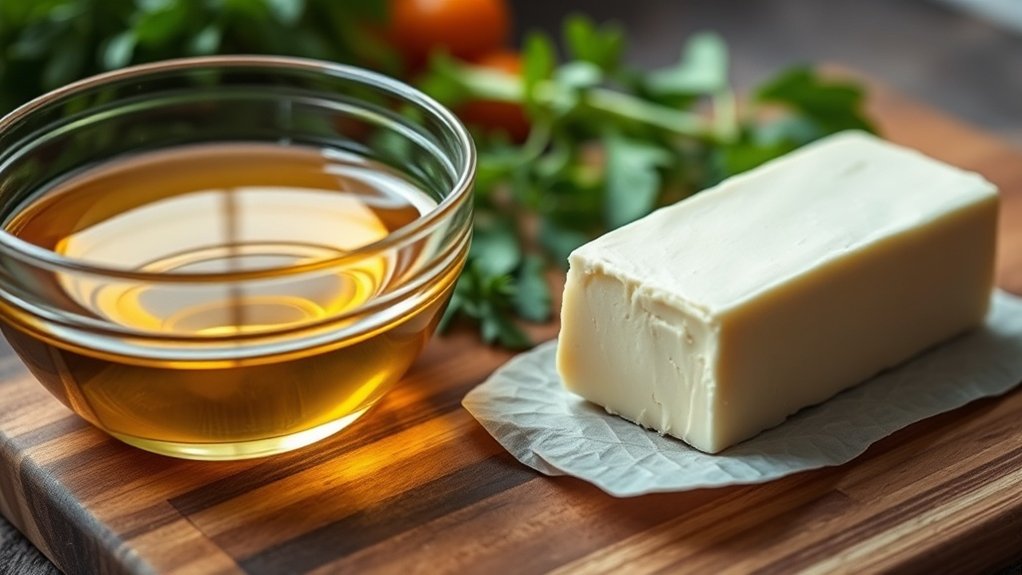
When considering the switch from butter to vegetable oil, the cardiovascular implications stand at the forefront of health discussions. Butter’s saturated fats can raise cholesterol levels, while vegetable oils contain unsaturated fats that research identifies as healthier options for heart disease prevention.
You’ll notice significant differences beyond health metrics. Butter’s rich flavor profile improves recipes when creamed with butter and sugar, while vegetable oil’s neutrality won’t contribute the same taste complexity.
The texture differences matter too—oil’s 100% fat content versus butter’s 80% fat and 20% water composition affects moisture retention. You might experience denser baked goods when using oil, as butter’s water content creates lighter textures through steam formation during baking.
These factors require careful consideration when substituting.
Step-by-Step Guide to Successfully Substituting Oil for Butter
Understanding the proper ratios transforms your baking success when switching from butter to vegetable oil. When replacing butter with oil, you’ll need to adjust the amount of oil to three-quarters of the butter measurement, accounting for butter’s 20% water content versus vegetable oils’ 100% fat composition.
Follow these essential steps:
- Measure accurately: Use ¾ cup oil for every 1 cup butter
- Adjust liquid content: Reduce other liquids slightly to compensate
- Monitor baking times: Check earlier, as oil-based goods cook faster
- Boost flavor profile: Add vanilla or almond extract
- Consider blending: Use 50% butter with oil for structure-dependent recipes
These adjustments guarantee proper texture and moisture while maintaining your recipe’s integrity despite the modified fat source.
This article was reviewed by Nicole Anderson, RDN.