Last Updated: December 23, 2025
Are Tootsie Rolls Vegan

No, Tootsie Rolls aren’t vegan. While they’re chocolate-flavored rather than true chocolate, they contain two dairy-derived ingredients: condensed skim milk and whey. Condensed skim milk is concentrated dairy with 60% of the water removed, and whey is a cheese manufacturing by-product containing milk proteins and lactose. Both ingredients directly involve animal exploitation in dairy production. The same applies to most Tootsie products, including Fruit Chews and Tootsie Pops, though some varieties like Tootsie Dots present more nuanced considerations regarding their vegan compatibility.
Contents
show
What Are Tootsie Rolls and Why Are They Often Confused as Vegan?
Since their debut in 1907, Tootsie Rolls have remained one of America’s most recognizable chocolate-flavored taffy candies, yet their vegan status continues to perplex consumers.
You might assume these chewy treats are plant-based because they lack cocoa butter and aren’t technically classified as true chocolate. However, Tootsie Rolls are definitively non-vegan due to their dairy-derived ingredients.
The candy’s formula includes condensed skim milk and whey, both animal products that disqualify it from vegan diets. This confusion stems from their chocolate flavor masking these hidden dairy components.
Many consumers don’t scrutinize ingredient lists carefully, leading to widespread misconceptions about their suitability for plant-based eating. Understanding that chocolate-flavored doesn’t mean dairy-free helps clarify why Tootsie Rolls remain unsuitable for those following vegan lifestyles.
Complete Tootsie Roll Ingredient Breakdown and Analysis
Understanding the precise composition of Tootsie Rolls requires examining each ingredient and its source. The primary components include sugar, corn syrup, palm oil, condensed skim milk, cocoa, whey, and soy lecithin.
The condensed skim milk and whey definitively disqualify these chocolate candy treats as vegan ingredients, as both derive directly from dairy production. While sugar, corn syrup, and palm oil appear plant-based, the natural flavors present additional concerns since they can originate from either animal or plant sources.
The cocoa and soy lecithin are typically vegan-friendly. However, certain Tootsie products contain food colorings like Red 40 and Yellow 5, which undergo animal testing—a consideration for strict vegans.
This thorough ingredient analysis confirms that Tootsie Rolls contain multiple animal-derived components, making them unsuitable for plant-based diets.
Non-Vegan Ingredients in Tootsie Rolls: Condensed Skim Milk and Whey Explained

Tootsie Rolls contain two primary dairy-derived ingredients that make them non-vegan: condensed skim milk and whey.
Condensed skim milk is produced by removing approximately 60% of water from skim milk, concentrating its lactose and milk proteins into a thick, shelf-stable product.
Whey, a liquid by-product of cheese manufacturing, contains milk proteins and lactose that remain after milk coagulates and separates during the cheese-making process.
Condensed Skim Milk Concerns
When examining Tootsie Rolls’ ingredient list, condensed skim milk stands out as the primary dairy component that disqualifies these candies from vegan classification.
This dairy product is manufactured by removing most of the fat from regular milk, then reducing its water content through evaporation. While the fat removal creates a lower-calorie ingredient, it remains fundamentally animal-derived and thus incompatible with vegan dietary principles.
The condensed skim milk in Tootsie Rolls serves multiple functional purposes: it contributes to the candy’s distinctive chewy texture, adds subtle sweetness, and provides a creamy mouthfeel.
However, for anyone following a strict vegan lifestyle, these dairy-derived benefits present an insurmountable concern. Since Tootsie Roll Industries hasn’t reformulated their classic recipe with plant-based alternatives, you’ll need to seek dairy-free candy options elsewhere.
Whey Production Process
Beyond condensed skim milk, Tootsie Rolls contain another dairy-derived ingredient that confirms their non-vegan status: whey.
You’ll find whey listed among the ingredients, and understanding its production reveals why it’s problematic for vegan diets.
Whey forms as a liquid by-product during cheese manufacturing. When dairy producers curdle milk using rennet or acid under heat, the mixture separates into solid curds and liquid whey.
This liquid contains lactose and proteins extracted from animal milk, making it inherently non-vegan.
The cheese industry generates substantial whey quantities, which manufacturers then incorporate into various food products, including your Tootsie Rolls.
Since whey requires dairy processing and animal exploitation, its presence automatically disqualifies Tootsie products from vegan classification.
You’re consuming concentrated milk components when you eat these candies.
Understanding the Difference Between Chocolate and Chocolate-Flavored Candy
When evaluating whether Tootsie Rolls fit into a vegan diet, you must first understand that they aren’t technically real chocolate.
True chocolate requires cocoa butter alongside cocoa solids, while Tootsie Rolls contain only cocoa powder, classifying them as chocolate-flavored taffy rather than authentic chocolate.
This distinction matters because chocolate-flavored candies rely heavily on sugar, corn syrup, and dairy derivatives like condensed milk to achieve their taste profile, making their ingredient composition fundamentally different from pure chocolate products.
Cocoa Butter vs. Powder
The distinction between cocoa butter and cocoa powder fundamentally separates true chocolate from chocolate-flavored products like Tootsie Rolls.
Cocoa butter, the natural fat extracted from cacao beans, provides chocolate’s characteristic velvety texture and rich flavor profile. In contrast, cocoa powder results from removing this fat during processing, delivering concentrated chocolate taste without the creamy mouthfeel.
Tootsie Rolls contain cocoa powder but lack cocoa butter, placing them in the chocolate-flavored category rather than true chocolate. This absence explains their distinctive taffy-like texture instead of the smooth consistency you’d expect from genuine chocolate.
Manufacturers compensate by adding sweeteners and artificial flavors to replicate chocolate’s taste. For vegans evaluating ingredient lists, understanding this cocoa butter versus cocoa powder distinction proves essential when determining whether products meet dietary requirements.
Real Chocolate Classification
According to FDA regulations, real chocolate must contain specific percentages of cocoa solids and cocoa butter—standards that Tootsie Rolls don’t meet. This real chocolate classification distinction matters because Tootsie Rolls use cocoa powder without cocoa butter, the fat component extracted from whole cacao beans.
Instead, they’re classified as chocolate-flavored taffy, combining chocolate and caramel flavor profiles.
You’ll notice the texture difference immediately. Real chocolate melts smoothly due to cocoa butter’s unique properties, while Tootsie Rolls have a chewy, taffy-like consistency.
The ingredient list reveals another key difference: chocolate-flavored candies often contain artificial and natural flavors plus various sweeteners, creating a distinct taste experience.
When you’re checking vegan status, understanding this classification helps you identify which ingredients to scrutinize beyond just the chocolate component.
Tootsie Product Line Vegan Status: Fruit Chews, Pops, Dots, and Dum Dums
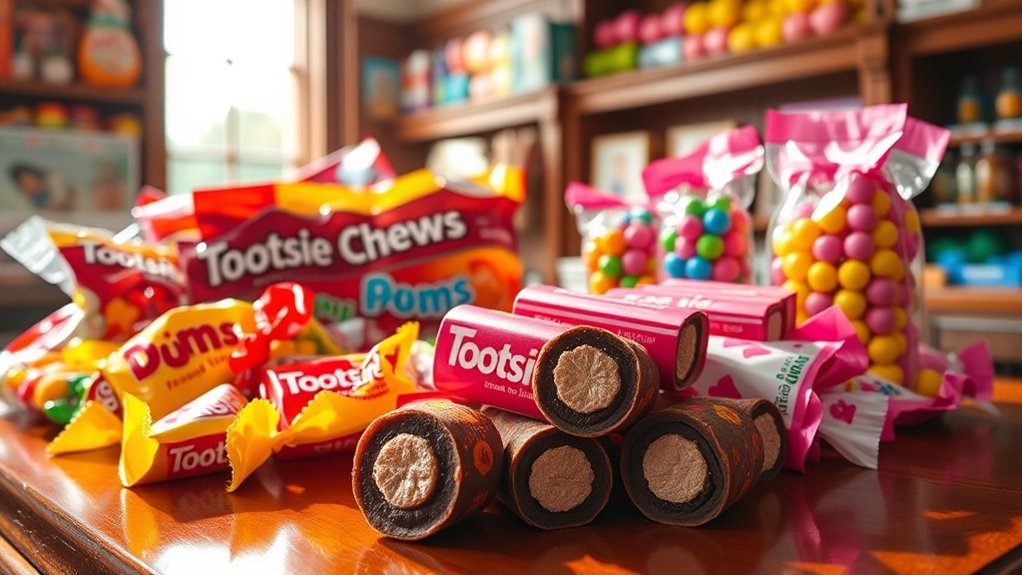
Beyond the classic Tootsie Roll, several related products in the Tootsie lineup warrant examination for their vegan compatibility.
Tootsie Fruit Chews contain whey and condensed skim milk, disqualifying them as vegan-friendly options. Likewise, Tootsie Pops feature a chocolate center with dairy ingredients, making them unsuitable for plant-based diets.
However, Tootsie Dots present a different scenario. These fruit-flavored gumdrops lack animal-derived ingredients, but they contain artificial colors frequently tested on animals—a concern for strict vegans.
Dum Dums lollipops follow a likewise pattern, with most flavors free from animal products yet potentially containing animal-tested colorings.
The evidence demonstrates that most Tootsie Rolls and related products aren’t vegan due to their dairy ingredients.
While Dots and Dum Dums technically avoid animal components, their artificial colorings raise ethical questions about true vegan status.
Controversial and Questionable Ingredients: Natural Flavors, Food Dyes, and Palm Oil
While dairy ingredients clearly disqualify traditional Tootsie Rolls from vegan status, several other components warrant scrutiny for those evaluating the product line’s ethical implications.
Natural flavors present ambiguity since they can derive from animal or plant sources, requiring individual verification.
Food dyes like Red 40 and Yellow 5, prevalent in Tootsie products, undergo animal testing during safety assessments, prompting many vegans to avoid them despite being chemically synthetic.
Palm oil raises environmental concerns—its production contributes to deforestation and habitat destruction, affecting wildlife populations.
These ingredients don’t contain animal derivatives directly, yet they conflict with broader vegan principles encompassing animal welfare and environmental sustainability.
Without transparent labeling, you’ll need to research each component individually and determine which ethical boundaries align with your personal vegan philosophy when considering Tootsie products.
Cross-Contamination Concerns and Manufacturing Processes

Even if reformulated Tootsie products hypothetically eliminated problematic ingredients, manufacturing realities introduce another layer of concern for strict vegans.
Tootsie Rolls are produced in facilities that process milk and other dairy products, creating significant cross-contamination risks. Shared equipment used for both vegan and non-vegan products can transfer trace amounts of animal-derived substances.
Currently, Tootsie Rolls contain whey and condensed skim milk, definitively making them non-vegan.
However, even beyond these explicit non-vegan ingredients, Tootsie Roll Industries doesn’t label products for vegan status or provide detailed information about their manufacturing processes. This lack of transparency makes it impossible to assess cross-contamination risks accurately.
If you maintain a strict vegan diet, you should contact the manufacturer directly to inquire about production line protocols and potential allergen transfer before consuming any Tootsie Roll products.
How to Identify Hidden Dairy Derivatives on Candy Labels
Reading candy labels requires vigilance because dairy derivatives often appear under technical names that don’t immediately signal their animal origin.
You’ll need to watch for “condensed skim milk” and “whey” on ingredient labels—these are common dairy derivatives that disqualify products from being vegan. Likewise, “casein” and “lactose” explicitly indicate milk presence.
Be cautious with “natural flavors,” as these can sometimes derive from dairy sources. Vague terms like “cream” or “milk solids” may hide dairy content, requiring manufacturer clarification.
While dyes such as “Red 40” and “Yellow 5” don’t directly indicate dairy, some strict vegans avoid them due to animal testing concerns.
When uncertain about any ingredient, contact manufacturers directly for confirmation before consuming.
Vegan Alternatives to Tootsie Rolls and Other Chewy Chocolate Candies

After verifying ingredient labels and determining whether your favorite chocolate candies align with vegan standards, you’ll likely want to investigate plant-based alternatives that deliver similar satisfaction.
Vegan Tootsie Rolls can be created at home using raw cacao powder, nut butters, and natural sweeteners like maple syrup or date syrup, replicating the original’s chewy texture and chocolatey taste. You can experiment with coconut flour, sunflower seed butter, and agave syrup in no-bake recipes for satisfying results.
Store-bought vegan alternatives exist, though you must scrutinize labels for hidden animal-derived ingredients like whey or casein.
Homemade vegan chocolate taffy recipes typically incorporate wholesome ingredients such as dates, seed butters, and cocoa powder, offering healthier options without compromising the characteristic chewiness you’re seeking in chocolate candies.
This article was reviewed by Nicole Anderson, RDN.