Last Updated: March 10, 2026
Are Gorillas Vegan
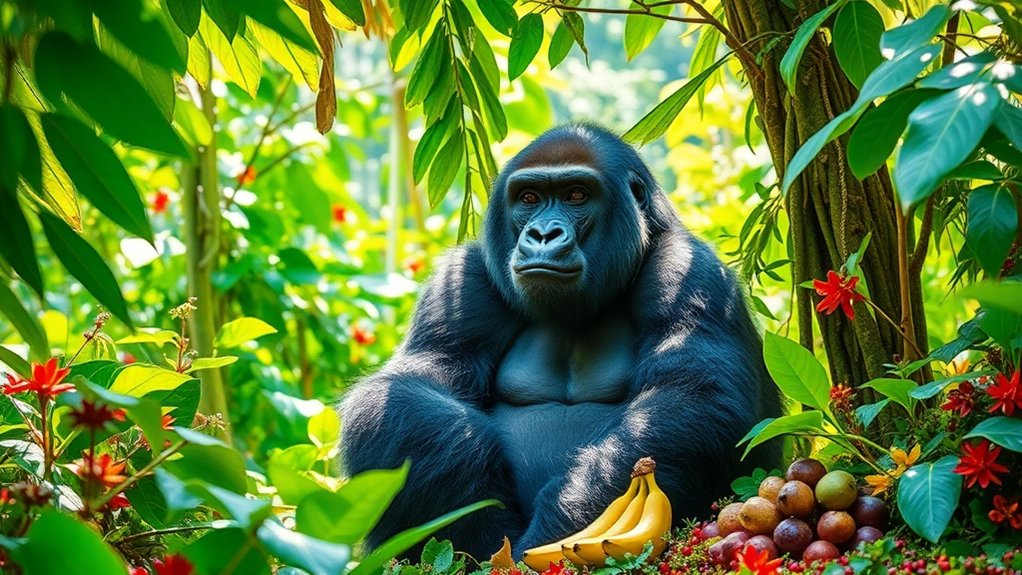
Gorillas aren’t vegan because they regularly consume animal protein through insects like termites, larvae, and ants. While their diet consists primarily of leaves, stems, and fruits, recent DNA analysis of gorilla feces has revealed traces of mammalian tissue, suggesting occasional scavenging or predation behavior. This makes them facultative omnivores rather than strict herbivores. Their opportunistic feeding patterns demonstrate dietary flexibility that disqualifies them from vegan classification. You’ll uncover how these consumption patterns vary across gorilla subspecies and what their feeding behavior reveals about primate nutrition.
Contents
show
What Do Gorillas Eat in the Wild?
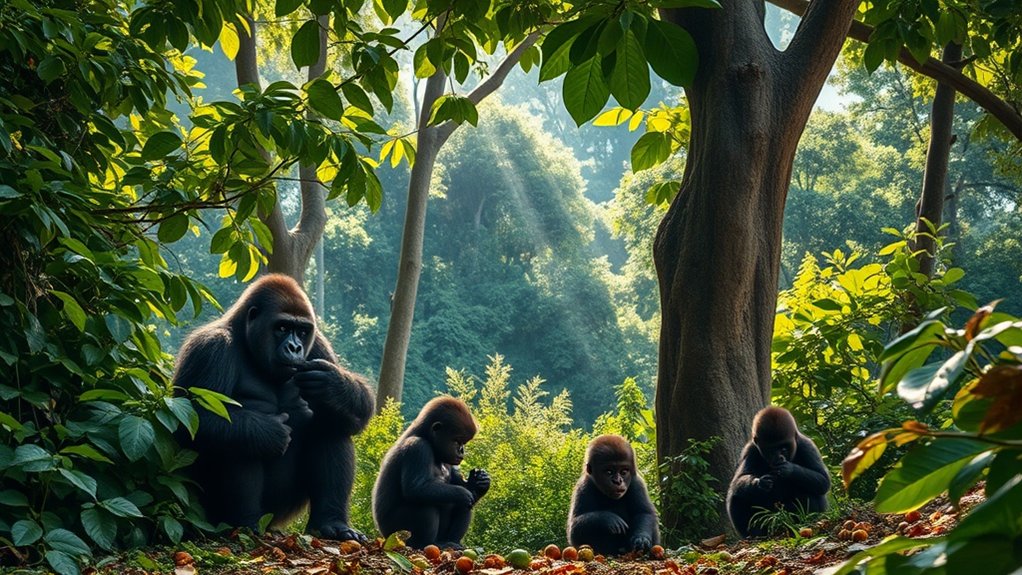
Observational studies of wild gorilla populations reveal a primarily herbivorous dietary pattern, though the classification isn’t absolute.
Gorilla feeding behaviors demonstrate a preference for leaves, stems, fruits, and flowers, with western lowland gorillas particularly favoring large-seeded fruits that smaller primates can’t consume.
You’ll find their seasonal diet varies markedly based on resource availability. Western gorillas shift to fibrous plants and tree bark during dry periods, while mountain gorillas maintain consistent consumption of tough vegetation year-round.
Beyond plant matter, gorillas supplement their intake with insect larvae from termite nests. Researchers have documented rare instances of small animal consumption, including monkeys and duikers, though this behavior remains exceptional.
Their dietary choices directly influence forest ecosystems through seed dispersal, promoting genetic diversity across plant populations.
Do Gorillas Ever Eat Insects or Meat?
How frequently do gorillas deviate from their herbivorous baseline to consume animal matter? You’ll find that insect consumption occurs regularly, particularly when gorillas extract larvae from termite nests. This behavior supplements their plant-based diet with additional protein sources.
Recent DNA analysis has revealed unexpected findings: mammal DNA from monkeys and duikers appeared in gorilla feces, suggesting potential meat behavior previously undocumented in wild populations. However, you should consider alternative explanations. The mammal DNA might result from contamination or scavenging rather than active predation.
When gorillas consume ants, they may accidentally ingest small mammal remains. Captive observations confirm occasional meat consumption, though this differs from typical wild behavior.
These findings challenge the strict herbivore classification, indicating gorillas exhibit more dietary flexibility than traditionally recognized.
Can Gorillas Be Considered Vegan?
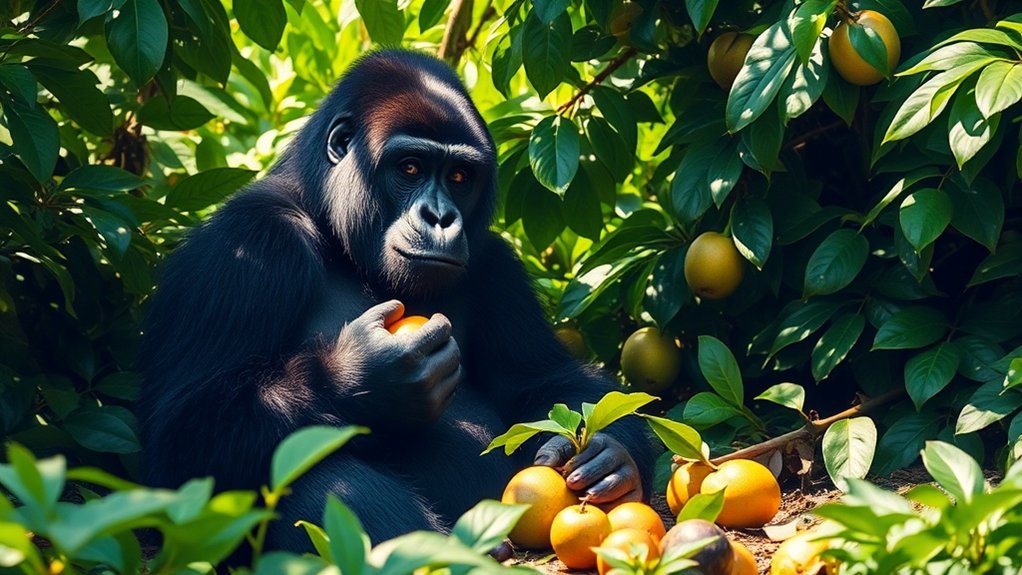
The documented consumption of insects and trace mammal DNA in gorilla feces disqualifies these primates from vegan classification by strict dietary definitions.
You’ll find that gorilla diet patterns reveal facultative omnivory rather than pure herbivory. When analyzing dietary classification, researchers observe that wild gorillas regularly consume larvae and ants, incorporating animal protein into their nutritional intake.
Recent fecal analysis detecting small mammal DNA further complicates strict categorization. Captive populations demonstrate this flexibility more explicitly, occasionally accepting meat when available.
Their digestive systems, while specialized for processing fibrous vegetation, don’t preclude animal matter digestion. The genetic similarities you share with gorillas don’t translate to identical dietary requirements.
Understanding gorilla diet composition requires acknowledging their opportunistic feeding behavior rather than imposing human dietary frameworks onto their natural consumption patterns.
This article was reviewed by Nicole Anderson, RDN.