Last Updated: May 14, 2026
Is Chex Mix Vegan
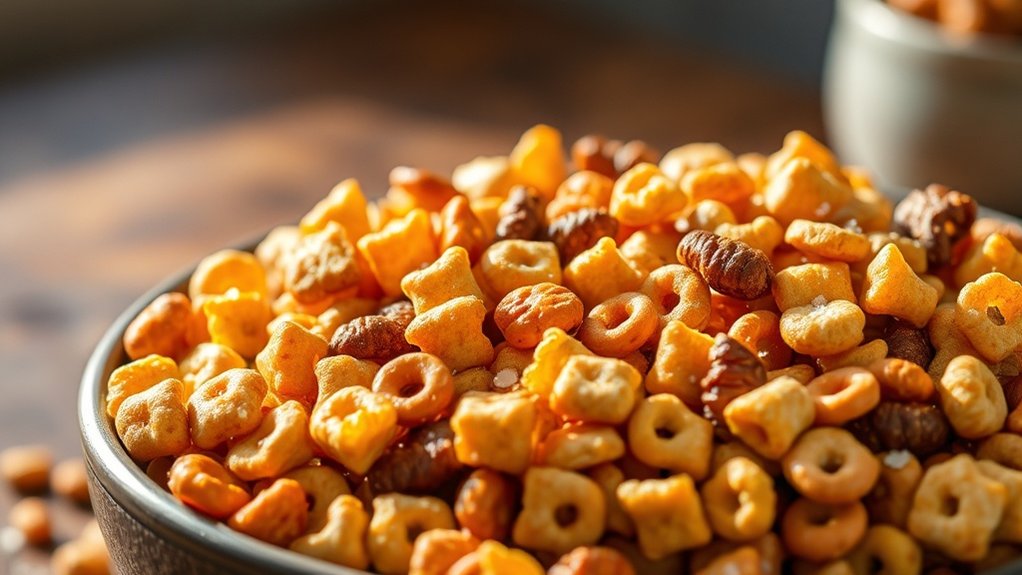
Most store-bought Chex Mix isn’t vegan because it contains animal-derived vitamin D3 from lanolin (sheep’s wool), Worcestershire sauce with anchovies, and dairy ingredients like butter or cheese powder. While the base Chex cereals appear plant-based, these added ingredients disqualify most commercial varieties from vegan diets. You’ll need to carefully examine ingredient labels, as formulations vary by flavor and can change without notice. Canadian versions and homemade alternatives using vegan substitutes offer plant-based options for those seeking this popular snack.
Contents
show
Is Store-Bought Chex Mix Actually Vegan?

Why does store-bought Chex Mix fall short of vegan standards? Most store-bought varieties contain vitamin D3, which manufacturers derive from lanolin (sheep’s wool) or fish sources.
You’ll also find Worcestershire sauce containing anchovies in the seasoning blend. Specific flavors like Cheddar include dairy-based cheese powder, automatically disqualifying them from vegan diets.
While base Chex cereals (Rice Chex, Corn Chex) are typically vegan-friendly, the seasoning packets and additives in commercial mixes introduce animal-derived ingredients.
The original Chex Party Mix contains Wheat Chex with potentially non-vegan fortification.
To guarantee compliance with your dietary requirements, you must scrutinize ingredient labels carefully.
Better yet, consider preparing homemade vegan alternatives using plant-based Chex cereals, nutritional yeast, and vegan Worcestershire sauce for complete ingredient control.
Why Most Chex Mix Contains Animal Ingredients
The animal ingredients in most Chex Mix trace back to three primary culprits: butter, Worcestershire sauce, and fortified vitamins.
You’ll find butter—a dairy product—coating the cereal pieces in traditional recipes, providing that signature golden, toasted flavor. Worcestershire sauce, a standard seasoning component, typically contains anchovies as a base ingredient.
Perhaps most surprising, certain Chex cereals include vitamin D3 derived from lanolin, an animal byproduct extracted from sheep’s wool.
Store-bought varieties compound these issues with proprietary seasoning blends that often incorporate additional animal-derived ingredients.
When you’re creating a vegan-friendly version, you’ll need to address each component individually. Plant-based butter substitutes, vegan Worcestershire sauce, and carefully selected cereals become essential seasoning alternatives.
Understanding these specific animal byproducts helps you make informed substitutions without sacrificing the classic Chex Mix experience.
Which Ingredients Make Chex Mix Non-Vegan?
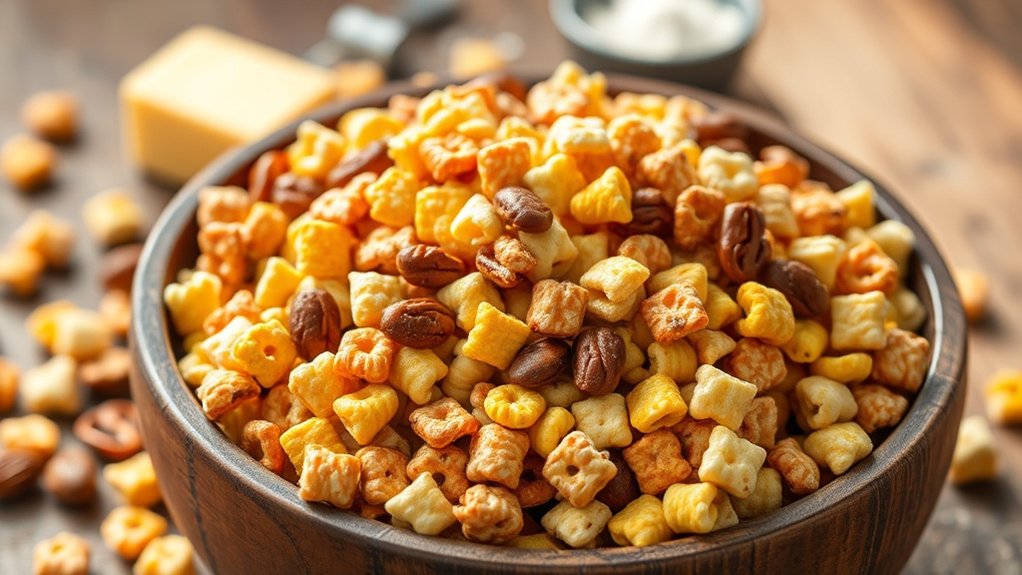
When examining Chex Mix’s ingredient list, you’ll uncover several components that immediately disqualify it from vegan status. The primary culprits include:
- Vitamin D3 (cholecalciferol): Derived from lanolin extracted from sheep’s wool
- Worcestershire sauce: Contains anchovies as a traditional ingredient
- Dairy derivatives: Cheese powder, butter, and whey proteins in many varieties
- Natural flavoring agents: Often animal-derived sources that aren’t explicitly labeled
- Milk-based seasonings: Present in most commercial flavor profiles
These ingredients fundamentally alter the flavor profile you’re accustomed to tasting.
While base Chex cereals like Rice and Corn Chex are plant-based, the seasoning blend creates the non-vegan issue.
Understanding these specific components helps you identify suitable vegan alternatives when shopping or creating homemade versions using plant-based butter and soy sauce substitutions.
How to Check if Any Chex Mix Variety Is Vegan
You’ll need to carefully examine the ingredient label on each Chex Mix package, as formulations vary by product line and geographic region.
Focus specifically on additives like vitamin D3 (typically animal-derived from lanolin), Worcestershire sauce (often contains anchovies), and dairy derivatives such as whey or casein.
Cross-reference any unfamiliar ingredients with verified vegan databases, since manufacturers may change formulations without prominently advertising the modifications.
Read the Ingredient Label
Label transparency and ingredient sourcing require careful attention. You’ll need to identify:
- Vitamin D3 (cholecalciferol): Lanolin-derived in U.S. Chex cereals
- Cheese powder or butter: Common in flavored varieties
- Worcestershire sauce: Contains anchovies in traditional formulations
- Honey: Animal-derived sweetener in certain flavors
- Natural flavoring: May include animal-based compounds
Start by examining the allergen statement, which highlights dairy content.
Then check vitamin fortification sources—Canadian Chex typically uses vegan vitamin D2 instead of D3.
Plain Rice and Corn Chex offer the safest vegan foundation, but always verify current formulations since manufacturers occasionally reformulate products without prominent packaging changes.
Identify Non-Vegan Additives
While most consumers focus on obvious animal products like cheese and butter, several hidden non-vegan additives lurk in Chex Mix formulations that require nutritional expertise to identify.
You’ll need to scrutinize labels for Worcestershire sauce—one of the primary non-vegan sauces containing anchovies.
Vitamin D3 represents another concern, as manufacturers typically derive it from sheep’s wool lanolin rather than plant sources.
Check for whey, casein, and milk powder among dairy additives, which frequently appear in seasoning blends.
Natural flavoring can mask animal-derived compounds, making verification essential.
Monosodium glutamate (MSG) often proves vegan, but confirm its processing methods don’t involve animal products.
Sugar processing sometimes uses bone char, though this varies by manufacturer.
Contact companies directly when ingredient sourcing remains unclear on packaging.
Make Your Own Vegan Chex Mix at Home
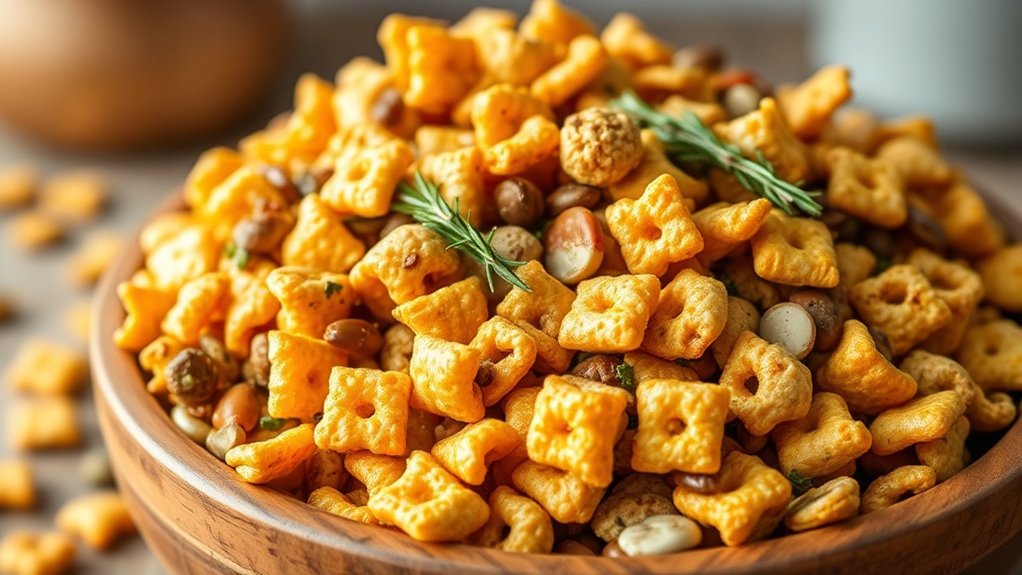
Making your own vegan Chex Mix at home gives you complete control over ingredients while making sure the snack meets your dietary needs.
You’ll need to swap traditional butter for vegan buttery spread and verify that your cereals are both gluten-free and dairy-free.
The process involves mixing your base ingredients, coating them with seasoned vegan butter, and baking at a low temperature to achieve that signature crunchy texture.
Essential Vegan Ingredient Swaps
Because traditional Chex Mix relies heavily on animal-derived ingredients, you’ll need to make several strategic substitutions to create a plant-based version that doesn’t compromise on flavor or texture.
Critical vegan substitutions include:
- Replace dairy butter with vegan buttery spread, olive oil, or coconut oil
- Swap traditional Worcestershire sauce for vegan versions free from anchovies
- Use nutritional yeast or vegan cheese powder as flavor improvements
- Select gluten-free Rice Chex or Corn Chex if avoiding gluten
- Substitute nuts with pumpkin seeds for nut-free alternatives
These modifications maintain the savory, seasoned profile you expect from Chex Mix while adhering to plant-based nutritional principles.
Nutritional yeast particularly excels as a dairy replacement, providing B vitamins and umami depth.
Oil-based preparations reduce saturated fat compared to butter-heavy versions while delivering essential fatty acids.
Simple Baking Instructions
With your ingredient swaps identified, you’re ready to transform them into a batch of homemade vegan Chex Mix. Preheat your oven to 250°F (130°C), a temperature that guarantees gradual dehydration without burning.
Combine your gluten-free cereals, pretzels, and pumpkin seeds in a large bowl. Melt vegan buttery spread and whisk in garlic powder, onion powder, and cayenne to create tasty flavor combinations that rival traditional versions.
These simple baking tips guarantee success: coat ingredients thoroughly, spread evenly on a baking sheet, and stir every 15 minutes during the 45-minute baking time. This prevents uneven browning and maintains crispness.
Cool completely before storing in an airtight container, where it’ll remain fresh for one week. This method preserves both texture and nutritional integrity.
Are Individual Chex Cereals Vegan-Friendly?
Understanding which Chex cereals fit into a vegan diet requires examining their ingredient lists carefully. Most Chex cereal varieties appear plant-based at first glance, but the U.S. versions contain vitamin D3 derived from lanolin—an animal source that disqualifies them from vegan certification.
Here’s what you need to know:
- Rice Chex and Corn Chex: Gluten-free but contain animal-derived D3 in U.S. formulations.
- Wheat Chex: Contains non-vegan ingredients beyond the D3 concern.
- Canadian versions: Lack vitamin D3, making them genuinely vegan-friendly.
- Label verification: Always check current ingredients, as formulations change.
- Certified alternatives: Look for explicitly vegan-labeled crispy rice or corn cereals.
If you’re committed to plant-based eating, Canadian Chex or certified vegan alternatives provide nutritionally comparable options without animal-derived additives.
This article was reviewed by Nicole Anderson, RDN.