Last Updated: April 9, 2026
Is Olive a Fruit or Veg
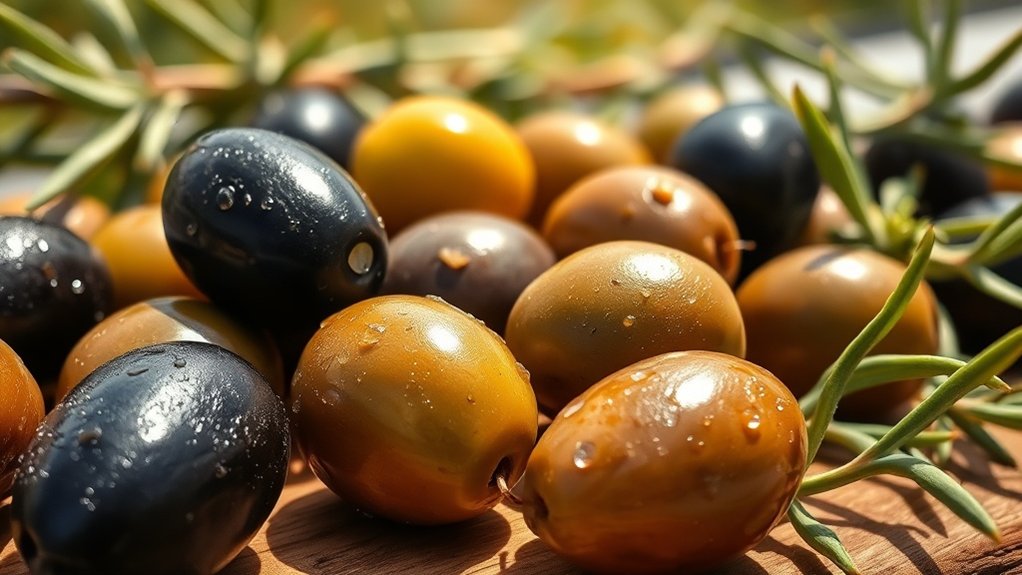
Olives are botanically classified as fruits—specifically drupes—because they develop from the fertilized ovary of *Olea europaea* flowers and possess the characteristic three-layered pericarp structure (exocarp, mesocarp, endocarp) surrounding a single seed. You’ll find they’re morphologically identical to cherries and peaches in their developmental biology. However, their savory flavor profile, high tannin content, and low sugar concentration cause widespread culinary misclassification as vegetables. The confusion stems from cultural conditioning that associates fruits with sweetness rather than botanical taxonomy. Understanding this distinction reveals fascinating insights about plant reproductive structures and culinary traditions.
Contents
show
Why Olives Are Botanically Classified as Fruits
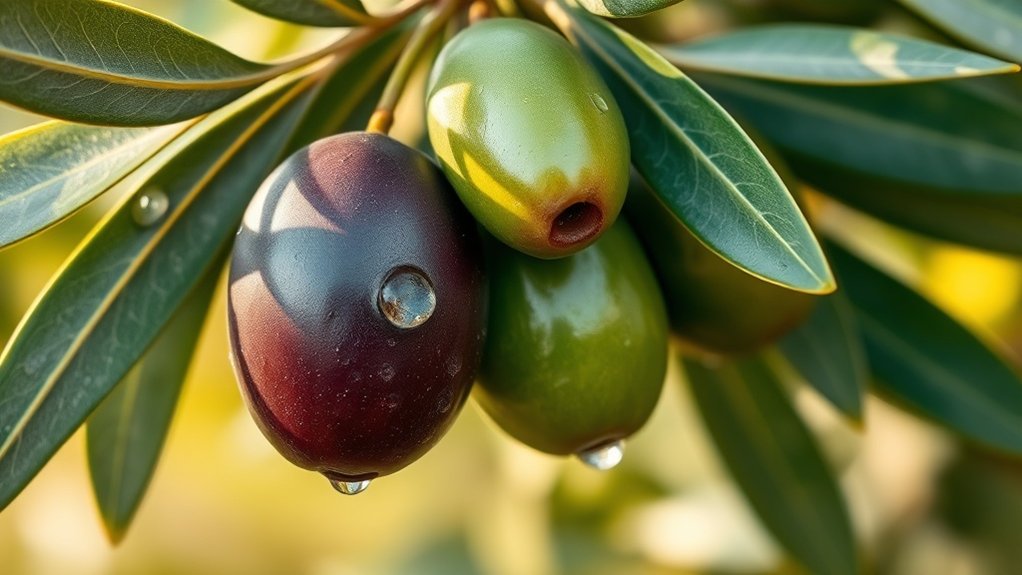
Although culinary traditions frequently categorize olives alongside vegetables, botanical taxonomy definitively classifies them as fruits based on their morphological structure and developmental origin.
You’ll find that olives are drupes—fruits characterized by three distinct layers: an outer exocarp, a fleshy mesocarp, and a hard endocarp encasing the seed. This classification stems from their development from the olive tree‘s (*Olea europaea*) mature ovary post-fertilization, which represents the fundamental criterion for botanical fruit designation.
The drupe characteristics you observe in olives—including the stone pit and surrounding pulp—mirror those found in peaches, cherries, and plums.
Unlike vegetables, which derive from various plant structures like roots, stems, or leaves, olives originate exclusively from the reproductive organs of flowers, confirming their fruit classification.
Why Many People Mistake Olives for Vegetables
Despite their botanical classification as drupes, olives undergo widespread misidentification as vegetables due to their mainly savory organoleptic properties and culinary applications.
You’ll find several factors contributing to this taxonomic confusion:
- Low sugar content — Unlike typical fruits with high fructose levels, olives contain minimal sugars, straying from expected fruit characteristics.
- Tannin composition — Their pronounced bitterness from polyphenolic compounds necessitates curing processes, aligning them with vegetable preparation methods.
- Culinary uses in savory contexts — You encounter olives mainly in salads, tapenades, and antipasti rather than desserts.
Cultural perceptions greatly reinforce this misclassification.
Mediterranean culinary traditions position olives alongside vegetables in flavor profiles and dish compositions.
You’re conditioned to associate fruits with sweetness, causing cognitive dissonance when confronting olives’ umami-rich, bitter profile that contradicts conventional fruit expectations.
Why Olives Function Like Vegetables in Cooking Despite Being Fruits
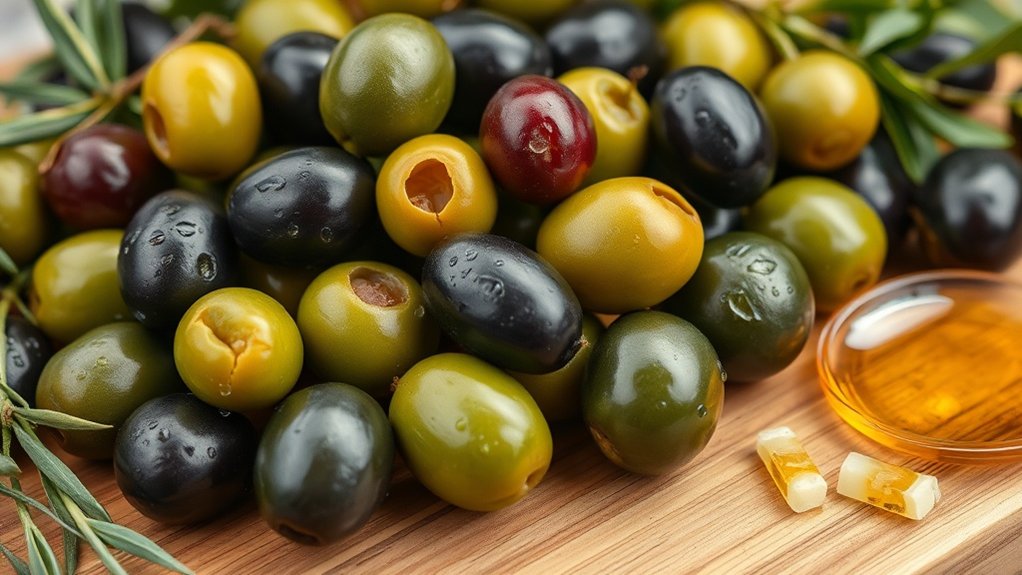
While olives maintain their botanical identity as drupes, their functional properties in culinary applications mirror vegetable characteristics through distinct biochemical mechanisms.
You’ll find that olives require specialized cooking techniques identical to vegetable preparation protocols. Their high tannin concentration necessitates brining or curing processes that remove astringent compounds—procedures typically applied to vegetables rather than fruits.
The flavor profiles you encounter in processed olives align exclusively with savory culinary categories. Their lipid-rich composition enables integration into heart-healthy dietary frameworks alongside vegetables.
When you incorporate olives into dishes, they function as flavor amplifiers and textural components in savory preparations like tapenade, salads, and antipasti platters.
This savory functionality, combined with their non-sweet taste parameters, positions olives within vegetable-like culinary classifications despite their taxonomic fruit designation.
This article was reviewed by Nicole Anderson, RDN.