Last Updated: December 6, 2025
Is Pepper a Veg
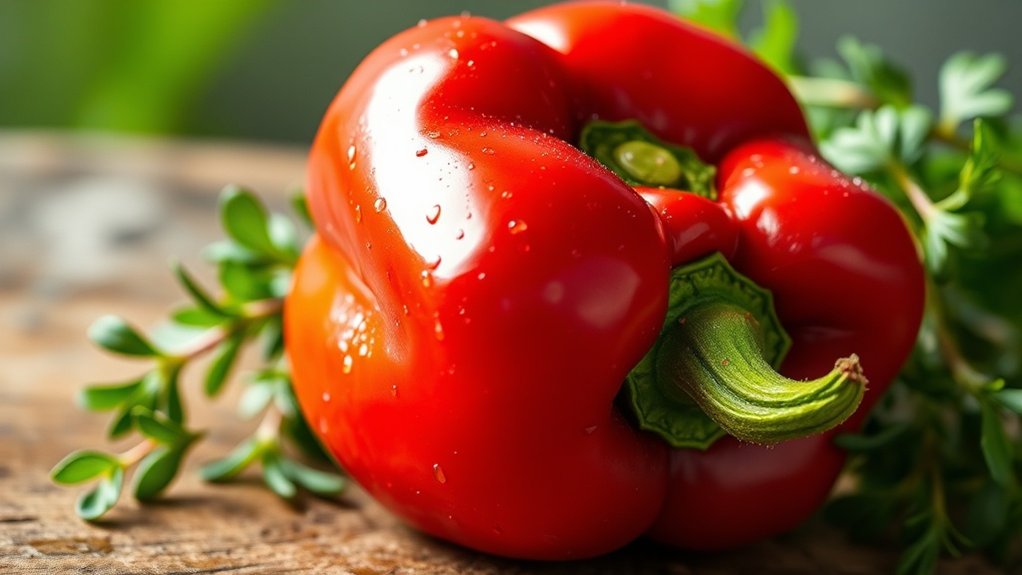
Peppers aren’t vegetables—they’re botanically classified as fruits, specifically berries, because they develop from a flower’s ovary and contain seeds. Whether you’re examining *Capsicum* varieties like bell peppers and chilies or *Piper nigrum* (black peppercorns), these specimens fall outside the true vegetable category, which includes only roots, stems, and leaves. While culinary traditions treat peppers as vegetables in savory dishes, their reproductive structure definitively categorizes them as fruits. The distinction between botanical and culinary classifications reveals fascinating complexities about what you’re actually consuming.
Contents
show
Understanding the Botanical Definition of Peppers
When examining peppers through a botanical lens, the classification becomes unequivocal: peppers are fruits, not vegetables.
You’ll find that peppers develop from the flower’s ovary and contain seeds—the defining characteristics of botanical fruits. This answers the question “is a pepper a veg or fruit” with scientific certainty: it’s definitively a fruit.
The Capsicum genus encompasses bell peppers, jalapeños, and habaneros, all meeting identical fruit criteria.
You’re looking at structures with fleshy walls and seeds, technically classified as berries within the fruit category. This classification aligns with tomatoes and cucumbers, which share similar reproductive structures.
In botanical terms, peppers function as seed dispersal mechanisms—their primary reproductive purpose. The presence of seeds within a developed ovary makes the fruit designation scientifically irrefutable.
The Capsicum Family: Bell Peppers and Chili Peppers
Within the Capsicum genus of Solanaceae, you’ll encounter two primary cultivar groups that exhibit distinct phytochemical profiles: *Capsicum annuum* varieties commonly known as bell peppers and their pungent counterparts, chili peppers. The genus encompasses over 30 species within the nightshade family.
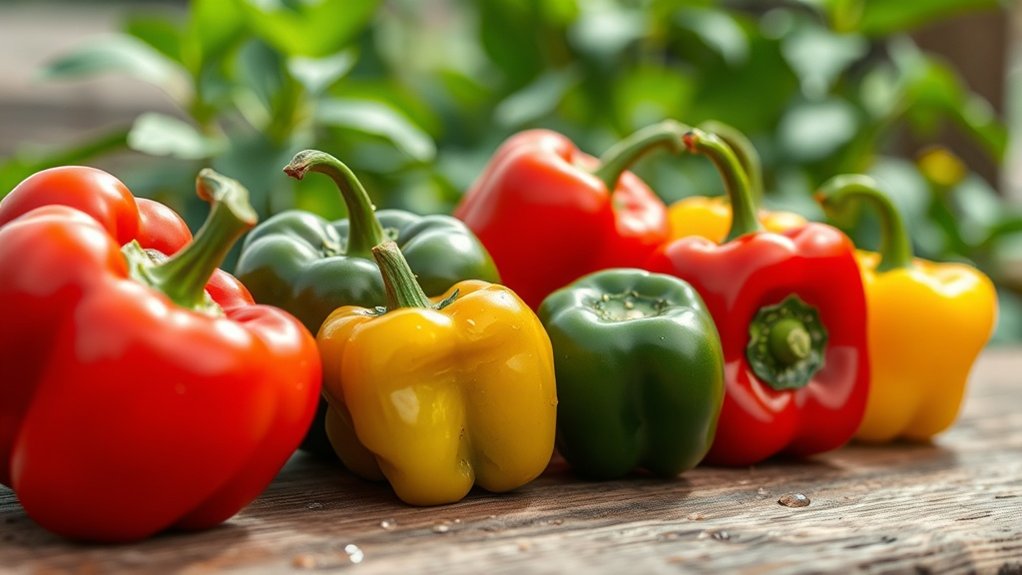
Bell peppers display chromatic variation—green, yellow, orange, and red—while maintaining non-pungent characteristics. Conversely, chili peppers contain capsaicin, an alkaloid compound that produces their characteristic heat, measurable through Scoville Heat Units.
Both types demonstrate significant nutritional density, particularly in ascorbic acid content; red bell peppers provide 158% of your recommended daily vitamin C intake per 100g serving.
Global cultivation has expanded substantially, with China dominating production at 46% of worldwide output in 2020, reflecting these vegetables’ agricultural and culinary significance.
Black Peppercorns: A Different Plant Entirely
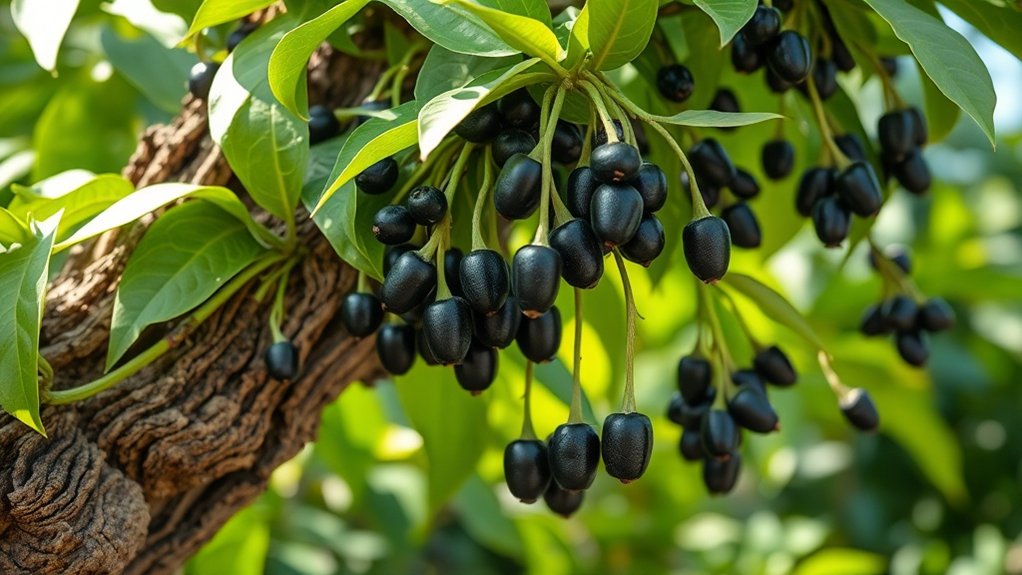
Despite sharing nomenclature with Capsicum varieties, black peppercorns derive from *Piper nigrum*, a flowering vine in the Piperaceae family that demonstrates no taxonomic relationship to bell or chili peppers.
You’ll find these dried berries contain piperine, the alkaloid compound conferring their characteristic pungency and heat sensation. Unlike Capsicum vegetables, you’re working with a spice when you use black pepper—a distinction rooted in culinary classification rather than botanical taxonomy.
Global production exceeds 400,000 tonnes annually, with Vietnam, India, and Indonesia serving as primary cultivators. You typically encounter this spice in ground form, where it functions as a flavor booster across savory preparations.
The fundamental botanical divergence between *Piper nigrum* and Capsicum species means you’re comparing entirely separate plant families.
Why Peppers Are Fruits According to Science
According to botanical classification systems, peppers qualify as fruits because they develop from the ovary of a flowering plant and contain seeds necessary for reproduction. This scientific designation distinguishes them from true vegetables, which comprise roots, stems, or leaves.
Peppers meet three essential botanical criteria that define them as fruits:
- Floral origin: They develop directly from the flower’s fertilized ovary after pollination occurs.
- Berry classification: Botanically, they’re berries—a fruit subcategory characterized by seeds embedded within a fleshy pericarp.
- Seed encasement: Their internal seeds facilitate plant reproduction and dispersal.
You’ll find this botanical framework applies to numerous culinary “vegetables,” including tomatoes, cucumbers, and pumpkins.
Understanding peppers’ fruit classification provides significant insight into their developmental biology and reproductive mechanisms.
Culinary Classification: When Peppers Become Vegetables
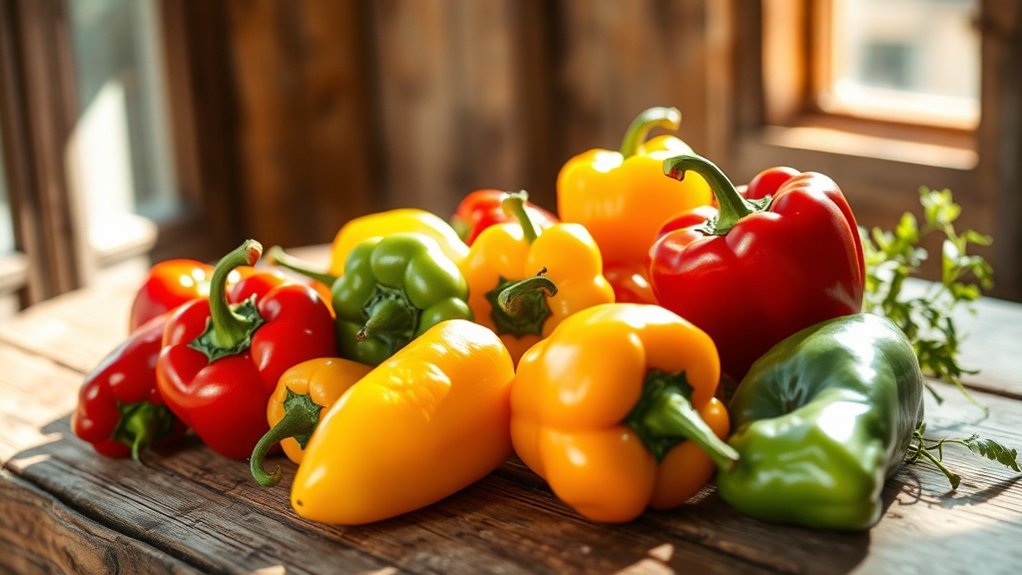
While botanical taxonomy establishes peppers as fruits based on their reproductive structures, culinary classification systems operate under fundamentally different parameters that categorize them as vegetables.
You’ll find peppers grouped with vegetables due to their savory flavor profile rather than the sweetness characteristic of culinary fruits. This classification directly correlates with their application in savory preparations: salads, soups, stir-fries, and stuffed dishes.
Their crunchy texture and mild taste align them with vegetables in professional kitchens and consumer perception. Chefs consistently pair peppers with other vegetables, reinforcing this culinary designation.
The classification system prioritizes preparation methods and flavor compatibility over botanical definitions. When you’re selecting ingredients for pizza toppings or vegetable medleys, peppers naturally occupy the vegetable category, demonstrating how culinary taxonomy shifts from scientific classification through practical, application-based criteria.
Nutritional Profiles and Health Benefits of Different Pepper Types
Beyond their botanical and culinary classifications, peppers exhibit distinct nutritional profiles that vary systematically by cultivar and maturation stage.
You’ll find that pigmentation directly correlates with micronutrient density, as red varieties contain considerably higher concentrations of vitamins A and C compared to their green counterparts.
Understanding the relationship between color phenotypes, antioxidant compounds, and macronutrient composition enables you to make evidence-based selections for ideal dietary intake.
Vitamin Content by Color
Bell peppers (*Capsicum annuum*) exhibit significant phytochemical variation based on chromatic maturation stages, with each color representing distinct nutritional profiles.
You’ll find that ripening progression directly correlates with improved micronutrient bioavailability:
- Green specimens (immature stage): 60% DV vitamin C per 100g, 10% DV vitamin K, notable folate and pyridoxine (B6) content
- Yellow-orange variants (intermediate maturation): 137-184% DV vitamin C, 17% DV vitamin A (yellow), supporting immune modulation and dermal integrity
- Red cultivars (fully mature): 158% DV vitamin C, maximal carotenoid concentration including β-carotene and lycopene
The chromatographic shift from chlorophyll dominance to carotenoid accumulation fundamentally transforms the nutritional matrix.
Red and orange phenotypes demonstrate superior ascorbic acid and retinol equivalents compared to earlier-harvested green counterparts, optimizing antioxidant capacity.
Antioxidant and Phytonutrient Properties
As oxidative stress mediators accumulate within cellular environments, peppers’ polyphenolic compounds and carotenoid arrays function as potent free radical scavengers.
You’ll find red bell peppers deliver 158% DV of vitamin C per 100g, establishing them as superior antioxidant sources. The carotenoid pigments—responsible for peppers’ chromatic variation—demonstrate disease-prevention properties while improving immune response mechanisms.
Flavonoid constituents, specifically quercetin and luteolin, exhibit anti-inflammatory activity that may suppress carcinogenic pathways. Capsaicin, exclusive to pungent varieties, triggers thermogenic processes that boost metabolic rate and facilitate weight regulation through increased energy expenditure.
Additionally, peppers’ fiber content supports gastrointestinal motility and satiety signaling, contributing to metabolic homeostasis. These bioactive compounds collectively position peppers as functional foods with measurable health-promoting attributes.
Caloric Density and Macronutrients
Peppers’ bioactive compounds work synergistically with their favorable macronutrient distribution to improve dietary quality.
Red bell peppers (*Capsicum annuum*) demonstrate exceptional caloric efficiency, delivering substantial micronutrient density at merely 26 kcal per 100g serving. Their composition consists mainly of water (94%), with carbohydrates representing 5% of total mass and negligible lipid content.
You’ll obtain significant nutritional value through three primary components:
- Vitamin C concentration: 158% DV per 100g serving, substantially exceeding green pepper variants
- Vitamin A content: 20% DV, supporting retinoid-dependent physiological processes
- B-complex vitamins: Including vitamin B6 (23% DV), riboflavin (12% DV), and folate (12% DV)
This macronutrient profile positions red bell peppers as ideal vegetables for calorie-restricted dietary protocols while maximizing micronutrient intake efficiency.
The Scoville Scale: Measuring Heat Levels Across Pepper Varieties
The Scoville Scale quantifies pepper pungency through Scoville Heat Units (SHU), which measure capsaicinoid concentration in Capsicum specimens.
You’ll find peppers classified from 0 SHU (bell peppers, *Capsicum annuum* var. *grossum*) to over 2.2 million SHU (select *Capsicum chinense* cultivars like Carolina Reaper).
This organoleptic assessment system, established in 1912, enables precise categorization of pepper varieties based on their capsaicin content and corresponding thermal sensation intensity.
Understanding Scoville Heat Units
When evaluating pepper heat levels, scientists and food specialists rely on Scoville Heat Units (SHU), a quantitative measurement system that determines capsaicin concentration in Capsicum varieties.
Pharmacologist Wilbur Scoville developed this methodology in 1912, establishing a dilution-based protocol where pepper extracts undergo successive sugar water dilutions until their heat becomes undetectable.
The SHU classification system categorizes peppers across distinct intensity ranges:
- Mild varieties (0-2,500 SHU): Bell peppers contain zero capsaicin, while poblanos register minimal heat.
- Moderate varieties (2,500-8,000 SHU): Jalapeños exemplify this category’s balanced spiciness.
- Extreme varieties (>2,000,000 SHU): Carolina Reaper peppers dominate the upper threshold.
You’ll find this standardized measurement invaluable for matching pepper selections to your capsaicin tolerance preferences, enabling informed culinary decisions based on empirical heat quantification rather than subjective assessment.
Mildest to Hottest Peppers
Maneuvering pepper heat intensities requires understanding how Capsicum varieties distribute across the Scoville spectrum‘s extensive range.
You’ll find bell peppers anchoring the baseline at 0 SHU, containing zero capsaicin and delivering no thermal sensation.
Poblano peppers occupy the mild classification at 1,000-2,000 SHU, providing subtle warmth without overwhelming your palate.
Jalapeños represent moderate heat intensity, measuring 2,500-8,000 SHU and demonstrating the variability inherent within cultivars.
At the spectrum’s extreme end, you’ll encounter the Carolina Reaper, averaging 1,641,183 SHU with documented peaks exceeding 2.2 million SHU.
This classification system enables you to predict capsaicin concentration accurately, facilitating informed culinary decisions.
Understanding this distribution pattern helps you guide pepper selection based on your desired heat threshold and recipe requirements.
Culinary Uses and Storage Tips for Every Type of Pepper
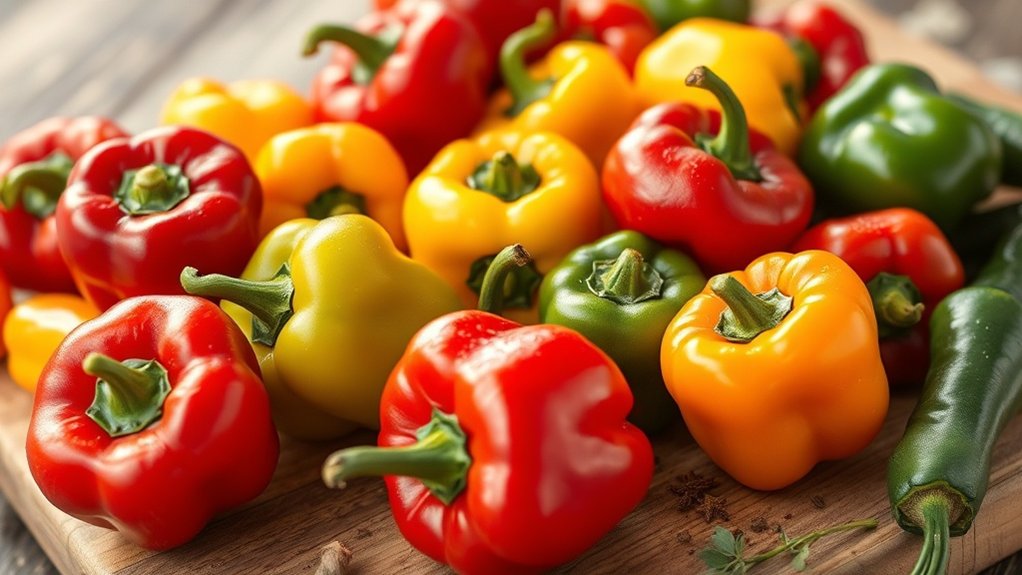
From a culinary taxonomy perspective, peppers (Capsicum spp.) demonstrate remarkable functional versatility across multiple food preparation methodologies.
You’ll find bell peppers ideally integrated into salads, stir-fries, and pizza applications. The stuffed pepper preparation technique involves cavity formation through coring, followed by ingredient matrix insertion. Capsicum varieties exhibiting sweet-to-spicy flavor profiles enable salsa, sauce, and marinade formulations.
Storage Protocol Guidelines:
- Short-term preservation: Maintain specimens in refrigeration crisper compartments at 7-10°C, yielding approximately seven-day viability.
- Extended preservation: Execute freeze-storage methodology following sequential washing, sectioning, and blanching procedures, achieving multi-month shelf stability.
- Environmental parameters: Alternative ambient storage requires cool, moisture-controlled conditions to prevent premature degradation.
These systematic approaches guarantee you’ll maximize pepper utilization efficiency while maintaining ideal organoleptic properties throughout their designated storage duration.
This article was reviewed by Nicole Anderson, RDN.