Last Updated: December 29, 2025
Are Wendys Fries Vegan
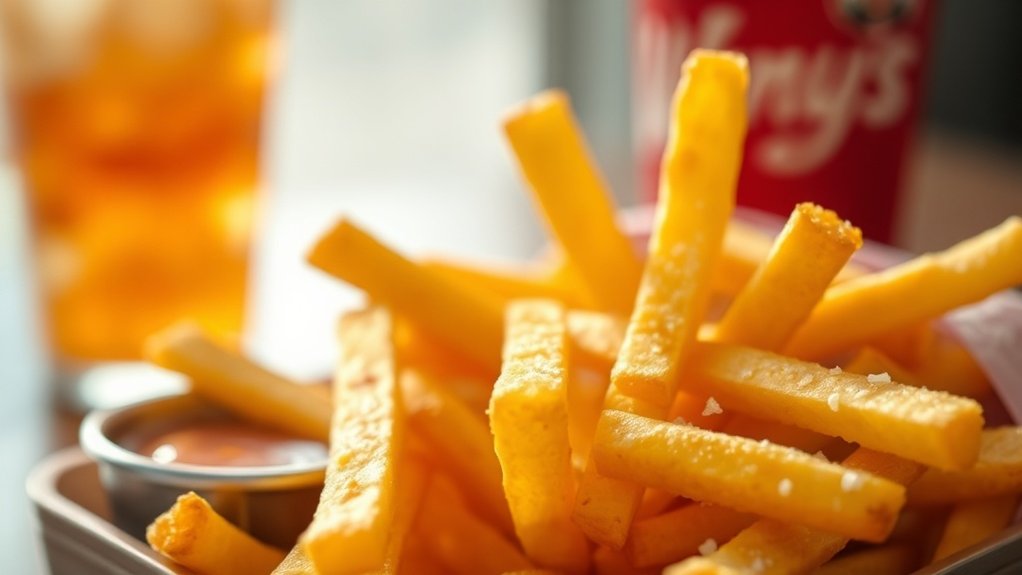
Wendy’s Natural-Cut Fries are technically vegan since they contain only potatoes, vegetable oil (canola and soybean), and sea salt—no animal-derived ingredients. However, you should know they’re cooked in shared fryers with chicken products, creating cross-contamination concerns if you follow a strict vegan diet. The vegetable oil itself remains plant-based, but microscopic particles can transfer during cooking cycles. Whether this matters depends on your personal dietary standards. Below, you’ll find detailed information about ingredients, cooking methods, and additional vegan-friendly options to help you make informed choices at Wendy’s.
Contents
show
What Makes Wendy’s Natural-Cut Fries Vegan-Friendly
While many fast-food fries contain hidden animal products, Wendy’s Natural-Cut Fries stand out for their straightforward ingredient list.
If you’re wondering “are Wendy’s fries vegan,” the answer is technically yes. These skin-on fries contain only potatoes, vegetable oil, and sea salt—no animal-derived ingredients.
The vegetable oil used doesn’t contain animal fats, which addresses the common question “is Wendy’s fries vegan” from a formulation standpoint.
However, you should know about potential cross-contamination, as they’re cooked in shared oil with non-vegan items.
Wendy’s sources their potatoes responsibly, adding ethical appeal for conscious consumers.
While you might ask “does Wendy’s have a vegan burger” for a complete meal, the fries themselves remain one of the chain’s most accessible vegan options.
Breaking Down the Ingredient List: Potatoes, Sea Salt, and Vegetable Oil
When you examine Wendy’s fries, you’ll find just three primary ingredients: natural-cut potatoes with skin intact, sea salt for seasoning, and vegetable oil for frying.
Each component is plant-derived, which technically qualifies these fries as vegan from an ingredient standpoint.
However, understanding the specific sourcing of these potatoes, the composition of the vegetable oil blend, and the minimal sea salt seasoning helps you make a more informed assessment of their nutritional profile and vegan suitability.
Natural-Cut Potato Sourcing
Wendy’s natural-cut fries contain just three core ingredients: whole potatoes with skin intact, sea salt, and vegetable oil. The company maintains responsible sourcing practices for their potatoes, with detailed information available on their website for those seeking transparency.
This skin-on approach delivers authentic potato flavor and texture while keeping the ingredient list minimal.
However, you’ll need to take into account cross-contamination risks. The fries cook in shared oil alongside animal products, which may concern strict vegans. While the fries themselves contain no animal-derived ingredients, this shared cooking method introduces potential cross-contact.
If you’re evaluating Wendy’s fries for a vegan diet, you’re technically choosing plant-based ingredients. Yet the cross-contamination factor requires personal assessment based on your dietary boundaries and ethical considerations.
Vegetable Oil Composition
The vegetable oil used to fry Wendy’s potatoes consists of a blend that typically includes corn oil, soybean oil, or canola oil—all plant-derived options that contain no animal products. This oil composition makes the fries technically vegan from an ingredient standpoint.
However, you should understand that these same oil vats cook other menu items throughout the day, creating potential for cross-contact with animal-based foods. If you follow a strict vegan diet where cross-contamination is a concern, this shared cooking method may present an issue.
The oil itself remains free from animal fats or additives, but the cooking environment doesn’t guarantee complete separation from non-vegan items. You’ll need to assess whether this shared-fryer situation aligns with your dietary standards.
Sea Salt Seasoning
Only two ingredients comprise the seasoning component of Wendy’s Natural Cut Fries: sea salt and a light coating of dextrose (a simple sugar derived from corn).
Sea salt, harvested through evaporation of seawater, contains no animal derivatives and qualifies as vegan. You’ll find it provides the fries’ primary flavor improvement without introducing problematic ingredients.
Dextrose, while technically plant-based from corn, serves as a browning agent during cooking rather than a flavor additive. Both ingredients meet vegan standards from a compositional standpoint.
However, you should note that seasoning simplicity doesn’t address cross-contamination concerns. The shared cooking oil remains the primary consideration for strict vegans, as these otherwise plant-based fries contact the same oil used for animal products throughout the day.
When vegan items share cooking equipment with animal products, cross-contamination becomes an unavoidable concern for those following plant-based diets. At Wendy’s, the Natural Cut Fries cook in the same oil used for chicken nuggets and other animal-based products, creating potential exposure to trace amounts of animal-derived substances.
Consider these cross-contamination factors:
- Shared fryers transfer microscopic particles between foods during cooking cycles
- Oil breakdown products from animal items mix with vegetable oil over time
- Temperature fluctuations can’t eliminate already-dissolved animal fats from shared oil
- Staff practices vary by location, affecting contamination levels
- No dedicated vegan fryer option exists at Wendy’s locations
Wendy’s hasn’t disclosed specific cross-contact protocols, so you’ll need to evaluate whether trace exposure aligns with your dietary boundaries.
What Type of Cooking Oil Does Wendy’s Use for Their Fries
Wendy’s cooks their fries in a blend of vegetable oils, primarily canola and soybean oil, which contains no animal fats.
You’ll find this oil composition technically suitable for vegan diets from a direct ingredient standpoint.
However, you should know these fries share fryers with chicken products, creating potential cross-contact that may concern strict vegans.
Vegetable Oil Blend Used
According to Wendy’s official nutritional disclosures, their fries are cooked in a vegetable oil blend primarily consisting of canola oil and soybean oil. This plant-based cooking medium eliminates animal fats from the frying process itself, which is a positive indicator for those following plant-based diets.
The vegetable oil blend offers several characteristics:
- Contains no animal-derived fats in the oil formulation itself
- Provides the crispy texture Wendy’s fries are known for
- Remains consistent across all restaurant locations
- Creates potential cross-contamination risks when shared with animal products
- Information is publicly available through Wendy’s nutritional resources
You’ll find this transparency helpful when making informed dietary choices, though cross-contamination concerns require additional consideration for strict vegan adherence.
Cross-Contact With Chicken
While Wendy’s uses a vegan-friendly vegetable oil blend, the fryers typically accommodate both french fries and chicken products, creating unavoidable cross-contact scenarios.
When frozen fries enter the oil, they’re exposed to residues from previously cooked animal-based items. This shared cooking environment means trace amounts of chicken particles may transfer to your fries during preparation.
Wendy’s acknowledges this cross-contact possibility and confirms their fries contain no animal-derived ingredients.
However, they can’t guarantee complete separation from animal products due to their operational practices. If you’re a strict vegan concerned about any animal product exposure, you’ll need to assess your personal comfort level.
The fries remain technically vegan by ingredient composition, but the shared fryer equipment introduces practical considerations for those avoiding all forms of animal contact.
How Wendy’s Fries Compare to Other Fast-Food Chains
When comparing vegan-friendly fries across major fast-food chains, several key differences emerge in ingredients, preparation methods, and cross-contamination risks.
Key Comparisons:
- McDonald’s uses beef tallow in their frying process, making their fries non-vegan, while Wendy’s uses vegetable oil with no animal-derived ingredients.
- Burger King offers multiple fry varieties, including onion rings and loaded options containing non-vegan ingredients, whereas Wendy’s keeps it simple with sea salt seasoning.
- Five Guys uses fresh potatoes like Wendy’s but fries them in shared oil with meat products.
- Taco Bell provides dedicated vegan menu items with extensive customization options, surpassing Wendy’s limited plant-based selections.
- Wendy’s Natural Cut Fries maintain a crispy texture and quality comparable to premium chains, though cross-contamination remains a consideration.
Complete Allergen Information and Ingredient Verification
Beyond comparing preparation methods across chains, verifying the exact ingredients and allergen profile of Wendy’s fries provides the concrete information you’ll need to make an informed dietary decision.
Wendy’s Natural Cut Fries contain only potatoes and sea salt—no dairy, meat, or animal-derived ingredients. You can access complete nutritional and allergen information on Wendy’s official website for verification.
However, there’s a critical caveat: these fries are cooked in shared vegetable oil with animal-based products. This cross-contact presents a potential concern if you maintain strict vegan standards.
While the ingredient list itself is plant-based, the preparation environment introduces contamination risks. You’ll need to assess whether shared cooking equipment aligns with your personal vegan principles and dietary boundaries before ordering.
Other Vegan-Friendly Menu Options at Wendy’s
Although Wendy’s doesn’t market itself as vegan-friendly, you’ll find several customizable options that meet plant-based requirements. Beyond fries, these menu items can accommodate your dietary preferences with simple modifications:
- Plain Baked Potato: Request this side with chives for a filling, plant-based option that provides complex carbohydrates and fiber.
- Garden Side Salad: Order without cheese and croutons, then dress with Italian Vinaigrette or Fat-Free French dressing for a lighter meal component.
- Southwest Avocado Salad: Remove chicken, cheese, and bacon, substituting salsa for ranch dressing to create a nutrient-dense entrée.
- Apple Bites: These provide natural fruit sugars and vitamins without modification, serving as a convenient snack.
- Seasoned Homestyle Potatoes: Available during breakfast hours, these offer a vegan-friendly morning alternative.
Always verify current ingredients with staff, as formulations may change.
Tips for Ordering Vegan at Wendy’s Locations
How can you guarantee your Wendy’s order aligns with vegan requirements while steering through a menu designed primarily for omnivores?
Start by explicitly requesting modifications: specify “no cheese, no croutons” for side salads, and choose Fat-Free French or Italian Vinaigrette dressings.
When ordering baked potatoes, clearly state “no butter, cheese, or sour cream”—opt for chives or avocado instead.
Create custom wraps using flour tortillas filled with lettuce, tomato, onion, pickles, and avocado while avoiding all meat and dairy.
Though Natural Cut Fries contain no animal ingredients, you’ll need to take into account they’re cooked in shared oil with animal-based products, potentially causing cross-contamination.
Always communicate your dietary requirements clearly to staff and verify ingredients, as menu formulations can change regionally or seasonally.
Regional Menu Differences and Seasoned Potato Varieties
When ordering at Wendy’s, you’ll find that regional variations can impact your vegan options beyond the standard Natural Cut Fries. While the Natural Cut Fries maintain consistent vegan status nationwide, other potato offerings vary by location.
Key considerations for regional vegan potato options:
- Seasoned Homestyle Potatoes are vegan-friendly breakfast items, though availability depends on your location’s breakfast menu offerings.
- Both fry varieties cook in shared oil with animal products, creating potential cross-contamination concerns.
- Regional locations may offer different seasoning variations on potato products.
- Individual franchise locations might’ve specific preparation methods that affect vegan suitability.
- Always verify ingredient lists and preparation practices at your specific Wendy’s location.
You should contact your local restaurant directly to confirm which vegan potato options they offer and understand their cooking procedures before ordering.
This article was reviewed by Nicole Anderson, RDN.