Last Updated: December 26, 2025
Is Rice Krispies Vegan
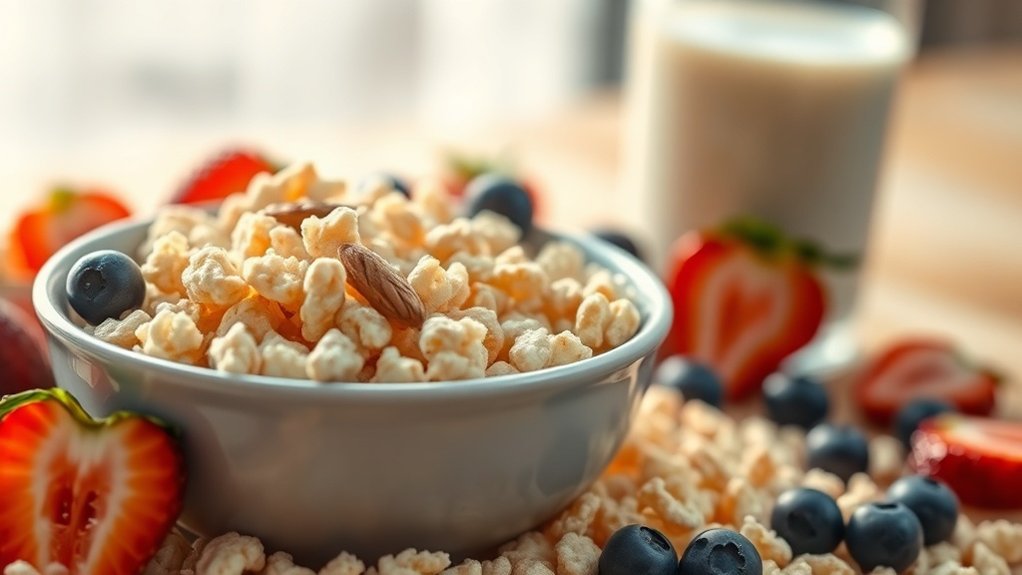
Rice Krispies cereal isn’t vegan in the United States. You’ll find two problematic ingredients: Vitamin D3, which is derived from lanolin (sheep’s wool), and sugar that may be processed using bone char from cattle bones. While the puffed rice itself is plant-based, these animal-derived additives disqualify it from strict vegan diets. Notably, UK formulations differ and may be vegan-friendly. Understanding these ingredient nuances, regional variations, and available plant-based alternatives will help you make informed breakfast choices.
Contents
show
What Are Rice Krispies and Their Core Ingredients
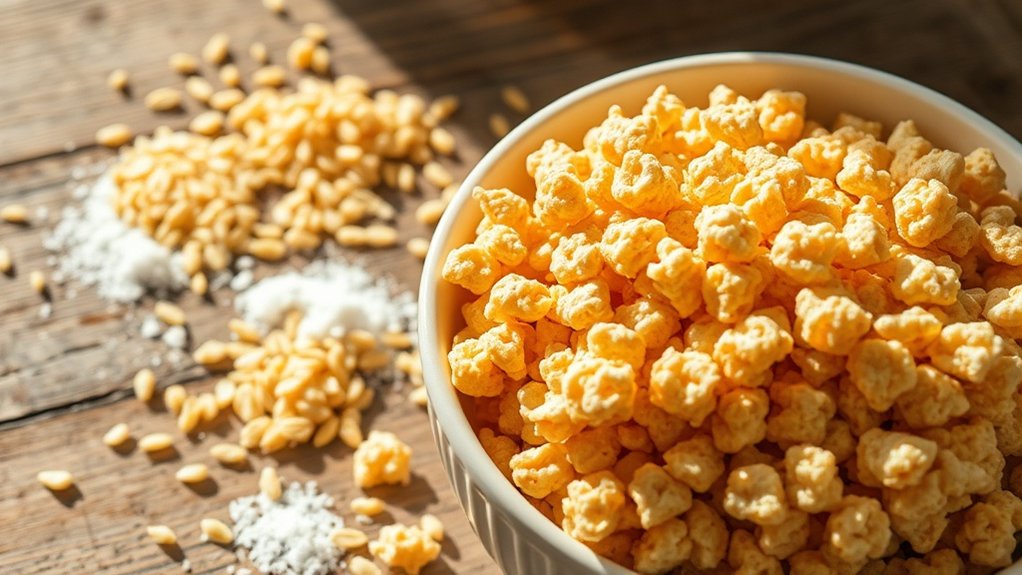
Rice Krispies are a puffed rice cereal manufactured by Kellogg’s since 1928, featuring small, berry-shaped grains of white rice that have been cooked, dried, and toasted to create their characteristic crispy texture.
When you’re determining “are Rice Krispies vegan,” you’ll need to examine their core ingredients beyond just rice. The cereal contains added sugar, salt, and fortified vitamins including B-complex vitamins (B1, B2, B3, B6, and B12).
However, two ingredients raise concerns for strict vegans: Vitamin D3, which is derived from lanolin (an animal-based source extracted from sheep’s wool), and the sugar, which is often refined using bone char from cattle.
These animal-derived components make Rice Krispies unsuitable for those following a strict vegan diet, despite rice being the primary plant-based ingredient.
Why Rice Krispies Are Not Vegan in the United States
If you’re following a strict vegan diet in the United States, Rice Krispies don’t meet your dietary requirements due to specific animal-derived ingredients.
The primary concerns include Vitamin D3 sourced from lanolin (a wool-derived substance) and sugar that’s likely processed using bone char from cattle.
These formulation choices differ from Rice Krispies produced in other regions, where manufacturers may use plant-based alternatives for fortification and sugar processing.
Vitamin D3 From Lanolin
The primary reason Rice Krispies aren’t vegan in the United States is their Vitamin D3 content, which manufacturers derive from lanolin—a waxy substance extracted from sheep’s wool during the wool harvesting process.
While this extraction doesn’t require killing the animal, it’s still classified as an animal-derived ingredient, making it incompatible with vegan dietary standards.
You’ll find this particularly significant if you’re a strict vegan, as Vitamin D3 from lanolin represents an often-overlooked animal product in processed foods.
Kellogg’s has confirmed that their U.S. Rice Krispies formulation contains this ingredient.
However, you should note that formulations vary by country—some international versions may exclude Vitamin D3.
If you’re seeking vegan alternatives, consider options like Nature’s Path Organic Crispy Rice Cereal, which doesn’t contain animal-derived vitamins.
Bone Char Refined Sugar
Beyond vitamin D3, another animal-derived processing agent compromises Rice Krispies’ vegan status: bone char-refined sugar.
You’ll find that U.S. sugar refineries commonly use bone char—charred cattle bones—to filter and decolorize cane sugar. This process doesn’t leave bone particles in the final product, but the manufacturing method involves animal materials, making it non-vegan by strict definitions.
Since Kellogg’s doesn’t disclose their sugar sourcing, you can’t verify whether Rice Krispies contain bone char-filtered sugar.
This lack of transparency creates significant challenges when you’re following a vegan diet. The prevalence of bone char processing in American sugar refining means most conventional cereals with refined sugar fall into this gray area.
If you’re seeking truly vegan alternatives, you’ll need cereals using organic cane sugar or beet sugar, which aren’t processed with bone char.
Regional Formula Differences
When examining Rice Krispies across different markets, you’ll find that Kellogg’s doesn’t maintain uniform formulations worldwide. The most significant variation affecting vegan status involves Vitamin D3. In the United States, Rice Krispies contain Vitamin D3 derived from lanolin, an animal-sourced ingredient extracted from sheep’s wool.
However, UK formulations often exclude this ingredient entirely, making them potentially vegan-friendly.
These regional differences stem from varying nutritional regulations, consumer preferences, and manufacturing standards across countries. You can’t assume that vegan status in one region applies elsewhere.
Each market’s specific formulation requires independent verification through ingredient label examination. If you’re purchasing Rice Krispies outside the U.S., check the packaging carefully, as the presence or absence of animal-derived additives will determine whether that particular product aligns with vegan dietary requirements.
The Vitamin D3 Controversy: Animal-Derived Fortification in Cereals
You’ll find that the primary non-vegan ingredient in Rice Krispies is Vitamin D3, a fortification additive derived from lanolin—a waxy substance extracted from sheep’s wool.
This animal-sourced vitamin differs considerably from Vitamin D2, which manufacturers can produce from plant-based sources like mushrooms and lichen.
Understanding this distinction becomes essential when you’re evaluating whether fortified cereals align with vegan dietary principles, as most manufacturers don’t clearly label which form of vitamin D they use.
What Is Vitamin D3?
Vitamin D3, or cholecalciferol, presents a significant challenge for vegans because manufacturers typically derive it from animal sources—specifically lanolin extracted from sheep’s wool or fish liver oil.
This fat-soluble vitamin serves essential functions in your body, primarily facilitating calcium absorption and maintaining bone density. Food manufacturers commonly use D3 for fortification because of its superior bioavailability compared to plant-based alternatives.
You’ll find it added to many breakfast cereals, including Rice Krispies, to improve nutritional value.
While Vitamin D2 (ergocalciferol) offers a plant-derived option, it’s less frequently used in mainstream food fortification.
This creates an ethical dilemma for strict vegans who must balance nutritional needs against their commitment to avoiding all animal-derived ingredients, regardless of how indirectly those ingredients are obtained.
Lanolin: The Sheep Connection
The manufacturing process behind Vitamin D3 fortification reveals why Rice Krispies fail vegan standards.
Kellogg’s sources this vitamin from lanolin, a waxy substance extracted from sheep’s wool during commercial shearing operations. While sheep aren’t harmed during wool collection, this animal-derived ingredient disqualifies the cereal from vegan classification.
You’ll find Vitamin D3 (cholecalciferol) listed on Rice Krispies packaging, though manufacturers aren’t required to disclose its lanolin origin. This lack of transparency creates confusion when you’re evaluating products.
Food companies prefer D3 over plant-based D2 (ergocalciferol) because it’s 87% more effective at raising blood vitamin D levels.
The sugar refining process adds another concern, as bone char filtration may be used, compounding the non-vegan status of this breakfast staple.
Vegan D2 Alternatives Exist
Although mainstream cereals rely heavily on animal-derived D3, plant-based alternatives don’t compromise nutritional adequacy.
Vitamin D2 provides equivalent fortification without animal involvement, making it the preferred choice for vegan-certified products.
When selecting fortified cereals, you’ll find reliable vegan options by:
- Checking ingredient labels for “Vitamin D2 (ergocalciferol)” rather than D3 (cholecalciferol)
- Seeking vegan certification marks that guarantee no animal-derived ingredients
- Choosing brands like Nature’s Path that explicitly use D2 in their formulations
- Contacting manufacturers directly when ingredient sources remain unclear
- Prioritizing naturally fortified options over those with ambiguous vitamin sources
Understanding these distinctions empowers you to maintain nutritional adequacy while adhering to vegan principles.
The availability of D2-fortified cereals demonstrates that plant-based fortification effectively meets dietary requirements without compromising ethical standards.
Sugar Refining and Bone Char: An Often-Overlooked Concern
When examining Rice Krispies’ vegan status, sugar refining emerges as a vital yet frequently overlooked factor. The sugar in Kellogg’s Rice Krispies is often refined using bone char—a substance derived from animal bones that removes impurities and creates the characteristic white color. This process directly conflicts with vegan principles, yet many consumers remain unaware of its presence in everyday breakfast cereals.
If you’re following a strict vegan diet, understanding ingredient sourcing becomes essential. While the label simply lists “sugar,” the refining method matters considerably from an ethical standpoint.
You’ll find vegan-friendly alternatives in organic cane sugar and beet sugar, which don’t use bone char during processing. This distinction underscores why scrutinizing manufacturing processes, not just ingredient lists, is vital for maintaining dietary adherence.
Regional Differences: How Rice Krispies Formulas Vary Globally

Where you purchase your Rice Krispies box matters greatly for vegan compliance. Regional formulations differ greatly, creating distinct nutritional profiles that impact dietary choices:
- US formulation contains Vitamin D3 derived from lanolin (sheep’s wool), making it non-vegan.
- UK version typically uses plant-based ingredients, making it vegan-friendly.
- Ingredient transparency varies by country, affecting your ability to make informed decisions.
- Local alternatives may offer specifically labeled vegan rice cereals in certain markets.
- Label vigilance remains essential since formulations change without warning.
You can’t assume Rice Krispies maintains consistent ingredients across borders. The presence of animal-derived Vitamin D3 in American boxes versus plant-based formulations elsewhere demonstrates why checking your specific region’s ingredient list is non-negotiable for maintaining vegan dietary standards.
Rice Krispies Treats: Additional Non-Vegan Ingredients to Consider
Rice Krispies Treats introduce multiple animal-derived ingredients beyond the cereal’s inherent non-vegan components. Traditional recipes require marshmallows, which typically contain gelatin—a protein extracted from animal connective tissues, bones, and skin.
This addition compounds the vegan concerns already present in the cereal itself, which contains Vitamin D3 from lanolin (sheep’s wool oil) and sugar potentially refined with bone char.
You’ll need to scrutinize every ingredient when preparing homemade treats. Fortunately, you can substitute conventional marshmallows with vegan alternatives like Dandies or Trader Joe’s brand, which use plant-based gelling agents instead of gelatin.
However, you must still address the cereal component by selecting genuinely vegan rice cereal brands. Reading ingredient labels carefully guarantees you’re avoiding all animal-derived additives in your finished product.
Kellogg’s Official Stance on Vegan Products and Ingredient Transparency
How transparent is Kellogg’s about its ingredient sourcing practices? The company has taken definitive steps to clarify vegan concerns regarding Rice Krispies:
- Vitamin D3 confirmation: Kellogg’s officially acknowledges that Rice Krispies contain Vitamin D3 derived from lanolin (sheep’s wool), making the cereal non-vegan.
- Consumer communication: The company encourages direct contact for specific ingredient inquiries, demonstrating commitment to transparency.
- Regional variations: Kellogg’s recognizes formulations differ by location, with some UK versions being vegan-friendly.
- Sugar sourcing ambiguity: The company hasn’t explicitly addressed whether bone char is used in sugar refining processes.
- Community response: Ongoing discussions reflect consumer demand for clearer labeling and expanded vegan options.
You’ll need to contact Kellogg’s directly for the most current regional ingredient information.
Vegan-Friendly Alternatives to Rice Krispies Cereal
Fortunately, several commercially available cereals replicate the classic puffed rice texture without animal-derived ingredients.
Nature’s Path Organic Crispy Rice Cereal offers a direct vegan-friendly alternative, using organic ingredients free from animal-derived additives.
For improved nutritional value, you’ll find 365 Organic Brown Rice Cereal and Barbara’s Organic Brown Rice Crisps provide higher fiber content through their brown rice base while maintaining organic certification.
One Degree Organic Foods Brown Rice Crisps deliver additional benefits as a non-GMO, gluten-free option that accommodates multiple dietary restrictions.
Likewise, Erewhon Crispy Brown Rice Cereal emphasizes clean ingredient sourcing suitable for vegan lifestyles.
These alternatives maintain the satisfying crunch and versatility of traditional puffed rice cereals while eliminating concerns about vitamin D3 or other animal-derived fortifications, making them reliable choices for plant-based diets.
Making Your Own Vegan Rice Krispies Treats at Home

Creating homemade vegan Rice Krispies treats requires just three primary ingredients: 3/4 cup vegan butter, two 10-ounce bags of plant-based marshmallows (such as Dandies brand), and 8 cups of vegan puffed rice cereal like Nature’s Path Organic Crispy Rice.
Follow this straightforward preparation method:
- Melt vegan butter in a large pot over low heat.
- Add marshmallows and stir continuously until smooth.
- Remove from heat and mix in 1/2 teaspoon pure vanilla extract.
- Fold in puffed rice cereal until evenly coated.
- Press mixture firmly into a lined 9 x 13 inch pan.
You’ll need to allow approximately one hour for cooling before cutting into squares.
Store your finished treats in an airtight container at room temperature, where they’ll maintain ideal freshness and texture for up to three days.
This article was reviewed by Nicole Anderson, RDN.